

01 Mar What Are Eastern Orthodox Palm Sunday Rituals?
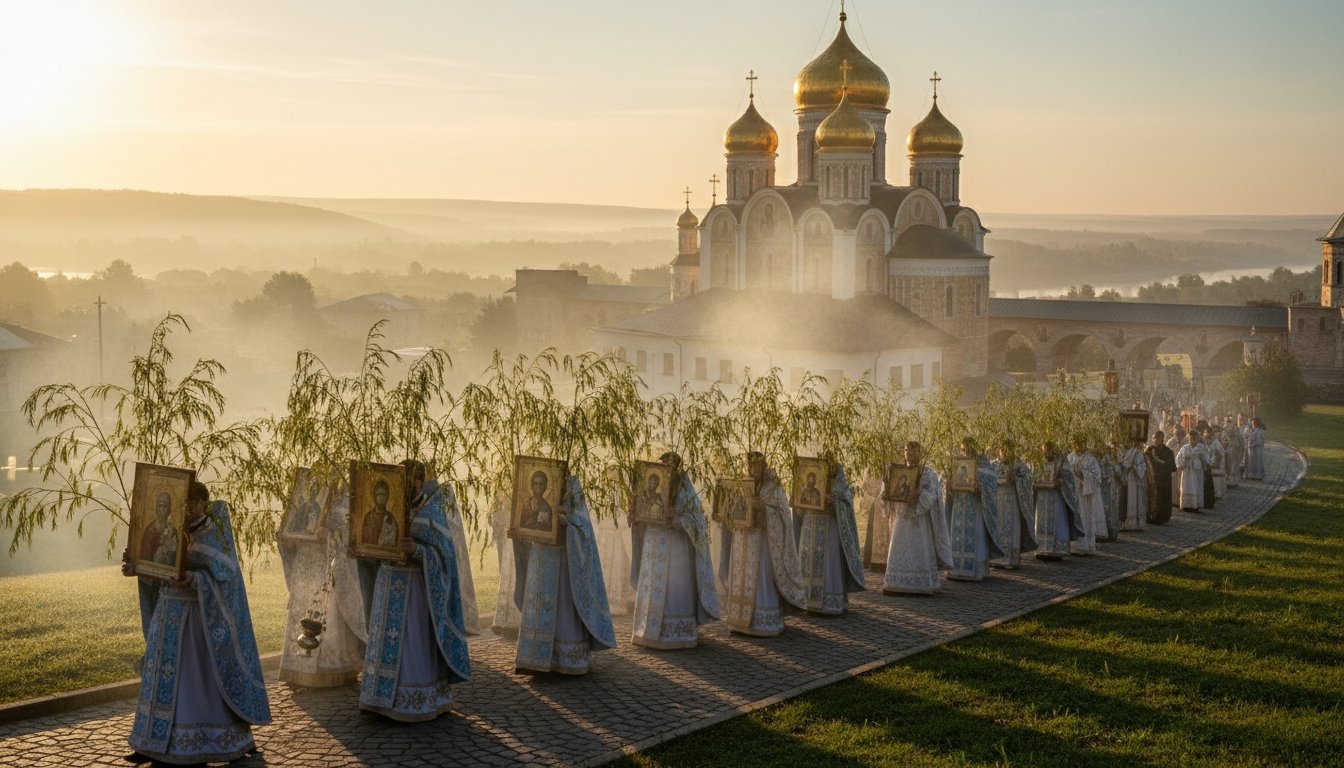
In Eastern Orthodox churches, you’ll find a variety of meaningful Palm Sunday rituals. You’ll see worshippers carrying blessed palm or willow branches in a procession reenacting Christ’s triumphal entry. The branches are often decorated with flowers and used to make the sign of the cross. Families will take the blessed branches home to adorn icons and doorways, seeking divine protection. While these rituals celebrate Jesus’ kingship, there’s more to uncover about their deeper theological significance.
Table of Contents
Key Takeaways
- Eastern Orthodox Christians bless palm or willow branches during Palm Sunday services to commemorate Jesus’ triumphal entry into Jerusalem.
- The blessed branches are carried in a procession to reenact the historical event and are later taken home for protection and decoration.
- At home, the branches adorn icons and are used to make the sign of the cross, invoking divine protection.
- Palm Sunday meals may include fish, fruit, and nuts, symbolizing renewal and the approaching Paschal feast.
- The rituals of Palm Sunday in Eastern Orthodoxy express both solemnity and celebratory joy, highlighting Christ’s kingship and the people’s welcome.
The Significance of Palm Sunday in Eastern Orthodox Christianity
Why is Palm Sunday so significant in Eastern Orthodox Christianity? For Orthodox Christians, Palm Sunday commemorates Jesus’ triumphant entry into Jerusalem, where the people welcomed Him as the Messiah by waving palm branches. This event marks the start of Holy Week, the most sacred time in the Orthodox liturgical calendar. During this time, the faithful reflect on Christ’s suffering, death, and resurrection. Palm Sunday services feature the blessing of palm or willow branches, which worshippers carry in procession to reenact Jesus’ entrance into Jerusalem. These branches are then taken home as a symbol of faith and a reminder of the joyous occasion. Palm Sunday’s blend of solemnity and celebration sets the stage for the solemnity of Good Friday and the triumphant joy of Pascha, or Easter Sunday.
Traditional Palm Sunday Processions in Eastern Orthodox Churches
The Palm Sunday procession is a central ritual in Eastern Orthodox churches. Worshippers gather holding palms or olive branches, reenacting Jesus’ triumphal entry into Jerusalem. They process around the church, singing hymns and following an icon of Christ on a donkey. The procession symbolizes Christ’s kingship and the people’s joyful welcome of Him. After the outdoor procession, the palms are blessed, and the faithful take them home, using them for protection and to decorate their homes. This lively, solemn ritual marks the beginning of Holy Week, preparing the faithful for the suffering, death, and resurrection of Christ. It’s a powerful expression of Eastern Orthodox spirituality and community.
Symbolic Palm Sunday Rituals and Customs in Eastern Orthodoxy
Commonly, Eastern Orthodox Christians incorporate a variety of symbolic rituals and customs into their Palm Sunday observances. They’ll bless palm or willow branches, representing Christ’s triumphal entry into Jerusalem, and distribute them to the congregation. The branches are often decorated with flowers and carried in procession. At home, worshippers will use the blessed branches to adorn icons and make the sign of the cross. Some families place the branches behind religious images or above doorways to invoke divine protection. Additionally, traditional Palm Sunday meals may feature foods like fish, fruit, and nuts – symbols of renewal and the approaching Paschal feast. These practices remind the faithful of Christ’s sacrifice and the promise of eternal life.
Frequently Asked Questions
What Is the History Behind Eastern Orthodox Palm Sunday Traditions?
Eastern Orthodox Palm Sunday traditions have their roots in the biblical account of Jesus’ triumphal entry into Jerusalem, where people welcomed Him with palm branches. Today, worshippers carry blessed palm or pussy willow branches, representing Christ’s kingship. They participate in processions and hymns, recalling that momentous event and looking forward to the passion and resurrection to come.
How Do Eastern Orthodox Churches Incorporate Music Into Palm Sunday Services?
Eastern Orthodox churches incorporate music into Palm Sunday services through the chanting of hymns and liturgical prayers. You’ll hear joyful processions with palms and the singing of the troparion, which celebrates Christ’s entry into Jerusalem. The choir may also perform special Palm Sunday anthems to set the triumphant tone of the day.
What Is the Significance of the Specific Flowers Used in Eastern Orthodox Palm Sunday Rituals?
The specific flowers used in Eastern Orthodox Palm Sunday rituals often include palm branches, pussy willows, and flowers like daffodils or hyacinths. These symbolize Christ’s triumphant entry into Jerusalem, with the palm branches representing victory, the pussy willows signifying the coming of spring, and the spring flowers representing rebirth and new life. These elements are incorporated into the processions and decorations of the Palm Sunday services.
How Do Eastern Orthodox Palm Sunday Celebrations Differ Across Different Countries?
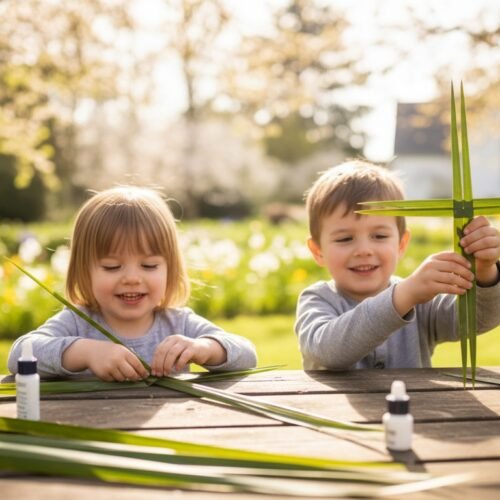
Eastern Orthodox Palm Sunday celebrations vary across different countries. In Greece, worshippers carry olive branches, while in Russia, they use willow branches. In some areas, people bake special breads or cakes. In others, they make crosses from the blessed branches. Regardless of the specifics, the focus remains on commemorating Christ’s triumphant entry into Jerusalem and anticipating His Passion.
What Are the Origins of the Eastern Orthodox Palm Sunday Feast and Feast Day?
The Eastern Orthodox Palm Sunday feast and feast day originates from the ancient Christian tradition of commemorating Jesus’ triumphal entry into Jerusalem. Believers carry palm or olive branches, symbolizing Christ’s victory, and participate in processions, bless the branches, and distribute them to the congregation. These rituals reflect the joy and anticipation of Holy Week leading up to Easter.
Conclusion
You’ll find that Eastern Orthodox Christians commemorate Palm Sunday with joyous processions, carrying palms, and reenacting Jesus’ triumphal entry into Jerusalem. These symbolic rituals and customs remind you of the significance of this holy day, celebrating Christ’s Passion and the promise of salvation. Through these age-old traditions, you’ll gain a deeper understanding of Eastern Orthodox spirituality and the rich heritage of the Christian faith.








No Comments