

27 Jan 7 Hidden Holy Days: Why Christians Are Ditching Christmas for These
You’re discovering what thousands of Christians already know: biblical festivals like Passover, Pentecost, and Yom Kippur offer profound spiritual connections that December traditions can’t match. These aren’t “hidden” holidays—they’re God’s appointed feasts from Leviticus 23 that Jesus himself observed. While Christmas celebrates Christ’s birth beautifully, festivals like Passover directly connect you to the Last Supper, and Pentecost aligns with the Holy Spirit’s descent. Understanding their historical significance reveals why many believers are integrating these ancient celebrations into their worship calendar.
Table of Contents
Key Takeaways
- Biblical festivals like Passover and Pentecost offer authentic worship experiences rooted in Scripture rather than later traditions.
- These seven feasts reveal God’s redemptive timeline and provide deeper spiritual meaning than commercialized holiday celebrations.
- Observing Yom Kippur’s fasting and repentance rituals creates profound spiritual disciplines absent in typical Christmas festivities.
- Jesus himself celebrated these appointed feasts, making them more historically connected to His actual practices and teachings.
- The biblical calendar offers year-round spiritual rhythm focused on atonement, harvest, and divine encounters rather than gift-giving.
Passover: How This Spring Festival Connects to Easter

When you trace Easter‘s origins, you’ll discover it’s inseparably linked to Passover through Jesus‘ final week. The Last Supper was actually a Passover Seder where Jesus reimagined the traditional meal, breaking bread as his body and pouring wine as his blood. His crucifixion occurred during Passover week around 30-33 AD, followed by resurrection on the third day.
These Passover Easter connections run deeper than timing. While Passover celebrates liberation from physical slavery in Egypt, Easter represents freedom from spiritual bondage through Christ’s victory over death. Early Jewish Christians naturally observed both festivals simultaneously, recognizing Jesus as the fulfillment of the Passover lamb sacrifice.
The hidden links between these celebrations remained until 325 AD when the Council of Nicaea deliberately separated Easter from Jewish calendar calculations. This decision severed Christianity’s connection to its Hebrew roots, creating the calendar divergence we see today. The Eastern Orthodox Church continues to use the Julian calendar, remaining out of sync with Western churches that adopted the later Gregorian calendar. Many Christians are now rediscovering these foundational connections.
Pentecost: Celebrating the Holy Spirit’s Biblical Holiday
You’ll discover that Pentecost stands on remarkably solid biblical ground, as Acts 2 provides one of the most detailed festival narratives in the New Testament, describing the Holy Spirit’s descent upon 120 disciples in Jerusalem.
This isn’t just historical documentation—it’s a blueprint for Spirit-filled worship that transforms how you approach corporate prayer, speaking in tongues, and prophetic ministry within your faith community.
When you celebrate Pentecost, you’re participating in the same supernatural empowerment that birthed the early church and resulted in 3,000 conversions in a single day.
Biblical Foundation for Pentecost
While many Christians focus solely on Christmas and Easter, Pentecost stands as one of Scripture’s most thoroughly documented supernatural events, with both Old Testament prophecies and New Testament fulfillment providing compelling evidence for its biblical significance.
The historical context reveals Pentecost’s strategic timing during the Jewish Feast of Weeks, when Jerusalem overflowed with pilgrims from every nation. This wasn’t coincidence—it fulfilled Joel’s prophecy about God’s Spirit being poured out on all flesh. The temple symbolism becomes striking when you realize the disciples’ upper room replaced Solomon’s temple as God’s dwelling place.
Peter’s sermon directly connected three Old Testament passages to prove Jesus’ messiahship, while the miraculous tongues enabled Gospel proclamation across language barriers. You’re witnessing Scripture’s most comprehensive documentation of supernatural intervention in human history.
Spirit-Filled Worship Practices
How can modern worship practices authentically capture the supernatural intensity that transformed the early Church at Pentecost? You’ll find that Orthodox traditions maintain powerful liturgical elements: red vestments symbolizing the Spirit’s fire, kneeling prayers marking consecration moments, and rose petals scattered from church rafters representing tongues of flame. These calendar customs resist secular critique by preserving biblical symbolism through deliberate visual and ceremonial choices.
Your spiritual preparation can include learning specific prayers like Veni Sancte Spiritus, practicing intentional breathing meditation, and engaging in nine-day novenas. Churches incorporate dove imagery, twelve-candle displays representing the apostles, and flower decorations symbolizing divine breath. The Divine Liturgy of Saint John Chrysostom, preceded by Great Vespers and Matins, creates structured worship that acknowledges the Holy Spirit’s transformative power while connecting contemporary believers to apostolic experience.
Rosh Hashanah: Why the Biblical New Year Matters
When September arrives, millions of Christians worldwide find themselves questioning why they celebrate January 1st as the new year while overlooking Rosh Hashanah, the biblical “Head of the Year” that carries profound spiritual significance. Unlike peripheral themes found in external calendars, Rosh Hashanah represents God’s original timing for spiritual renewal and judgment.
You’ll discover that Leviticus 23:24-25 commands this holy convocation with shofar blowing, marking what Talmudic scholars call “Yom Hadin”—the Day of Judgment when God decides humanity’s fate for the coming year. The shofar’s 100 blasts serve as your spiritual wake-up call to repentance, while traditional foods like apples and honey symbolize prayers for sweetness ahead.
This biblical new year begins the Ten Days of Repentance before Yom Kippur, offering you a scripturally-grounded alternative to secular celebrations. Many Christians now embrace this ancient practice, recognizing its theological depth over modern traditions.
Yom Kippur: Making Atonement Meaningful Today
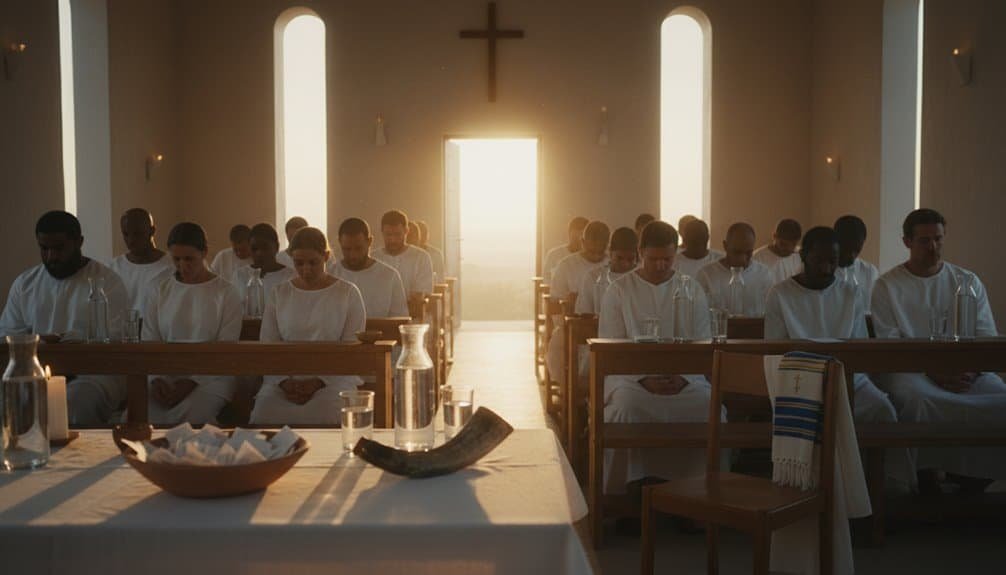
You’ll discover that Yom Kippur’s ancient atonement system, rooted in Leviticus 16’s high priest rituals, offers Christians a profound framework for understanding reconciliation that transcends denominational boundaries.
The day’s 25-hour fast and complete abstinence from worldly comforts creates space for the kind of deep repentance that modern Christianity often lacks in its hurried worship schedules.
When you examine the biblical evidence connecting Moses’ descent from Sinai with the second tablets to this day of forgiveness, you’re engaging with the same redemptive narrative that underlies Christian theology.
Understanding Biblical Atonement
While modern Christians often overlook Yom Kippur’s significance, this ancient Day of Atonement established in Leviticus 16 reveals the most comprehensive biblical framework for understanding how sin separates humanity from God and how that separation can be bridged.
Unlike Christmas celebrations that focus on an unrelated topic of gift-giving traditions, Yom Kippur’s dual goat system demonstrates atonement’s two essential components: payment through blood sacrifice and complete removal of sin.
You’ll discover that one goat’s death satisfied divine justice, while the scapegoat carried Israel’s transgressions into the wilderness, symbolizing sins removed “as far as the east is from the west.”
This ceremony wasn’t an unrelated theme to Christ’s work—it prefigured Jesus’s crucifixion, which accomplished eternal atonement, replacing temporary annual coverings with permanent redemption for all who believe.
Modern Fasting Practices
As modern Christians explore authentic biblical observance, many discover that Yom Kippur’s 25-hour fast offers a profound spiritual discipline absent from contemporary Christmas traditions.
Unlike typical holiday meals that emphasize consumption, this fast requires complete abstinence from food and water, creating space for genuine spiritual reflection and atonement.
Research demonstrates that 56% of Jewish adults participate in Yom Kippur fasting, with studies showing no adverse health effects for most individuals.
The practice correlates with improved cholesterol profiles and decreased body mass, indicating physical benefits alongside spiritual ones.
For Christians incorporating this observance, calendar planning becomes essential since the 25-hour commitment demands preparation.
The fast concludes with communal feasting, creating meaningful community connections that contrast sharply with commercialized Christmas celebrations.
Personal Repentance Rituals
Beyond the physical discipline of fasting, Yom Kippur‘s confessional prayers create structured opportunities for personal accountability that contrast sharply with Christmas’s focus on celebration and gift-giving. You’ll participate in five distinct prayer services, each designed to deepen introspection through specific ritual elements. The Kol Nidrei service releases you from unfulfilled vows, while morning confessional prayers address personal failings directly.
These subtopic nuances reveal Christianity’s growing attraction to Judaism’s systematic approach to spiritual renewal. The ritual symbolism of wearing white clothing represents your return to spiritual purity, while the kittel burial shroud forces confrontation with mortality. Ne’ilah‘s closing prayers create urgency as heaven’s gates symbolically close, compelling immediate spiritual decisions rather than delayed resolutions typical of secular New Year observances.
Feast of Tabernacles: God’s Harvest Celebration Guide
How does the final feast in God’s sacred calendar reveal His ultimate plan for humanity? The Feast of Tabernacles represents God’s complete restoration vision, moving beyond broken worship patterns that have disconnected believers from biblical rhythms.
The Feast of Tabernacles unveils God’s complete restoration vision, reconnecting believers with sacred biblical rhythms and His ultimate plan.
You’ll discover this seven-day celebration commands dwelling in temporary booths, symbolizing Israel’s wilderness dependence and God’s faithful provision. Unlike legalism critique often attached to feast observance, Tabernacles emphasizes joyous thanksgiving for harvest abundance and divine protection.
Historical evidence shows Jesus attended this feast, declaring rivers of living water would flow from believers on the final day. You’re witnessing prophetic fulfillment as Zechariah 14 promises all nations will eventually celebrate Tabernacles in Jerusalem during Messiah’s reign.
Modern Christians embracing this feast create outdoor worship spaces, share festive meals with marginalized communities, and participate in international praise gatherings. You’re connecting with God’s harvest calendar while anticipating the ultimate gathering when Christ establishes His kingdom.
Adding Biblical Festivals to Your Christmas Season

While God’s appointed feasts reveal His redemptive timeline, you can enrich your Christmas celebration by incorporating the rich biblical festivals that already surround this season. Understanding holiday origins shows December 25th represents Christianity’s triumph over pagan observances, while liturgical calendars preserve authentic scriptural celebrations.
You’ll discover the Twelve Days of Christmas (December 25-January 5) already include profound biblical commemorations: St. Stephen’s martyrdom, John the Evangelist’s witness, and Holy Innocents’ sacrifice. The Feast of Epiphany on January 6 celebrates Christ’s divinity revealed through the Magi, baptism, and first miracle.
Advent preparation (November 30-December 24) naturally builds anticipation through prophecy and Scripture reading. You can observe St. Nicholas traditions, participate in Las Posadas reenactments, and embrace the medieval understanding that different feast days honored various church roles—deacons, priests, and altar boys—creating a comprehensive celebration of Christ’s Incarnation within the church body.
Starting Small: Which Biblical Holiday to Try First
Where should you begin your journey into biblical feast-keeping when centuries of church tradition have obscured these ancient observances?
Passover presents the most accessible entry point for Christians transitioning from traditional holidays. You’ll find compelling evidence in Scripture—Jesus observed this 14th of Nisan celebration, directly connecting it to His last supper. The Passover symbolism of deliverance through sacrificial blood creates natural parallels to Christ’s atonement that you can easily grasp.
Following Passover, you can seamlessly transition into the Feast of Unleavened Bread. The Unleavened symbolism of removing sin from your household provides tangible spiritual practice over seven days. This progression mirrors how early Jewish Christians maintained these observances while recognizing their fulfillment in Christ.
Start with these consecutive celebrations rather than jumping to autumn festivals like Tabernacles. You’ll establish biblical rhythms gradually, allowing deeper understanding before attempting the complete annual cycle that Jesus and His disciples faithfully observed.
Frequently Asked Questions
Are Christians Who Celebrate Biblical Holidays Abandoning Their Faith in Jesus?
No, you’re witnessing spiritual deepening rather than faith abandonment. Christians exploring biblical holidays aren’t using excuse avoidance to reject Jesus—they’re seeking authentic connection beyond tradition erosion affecting mainstream Christianity. While 65% of Americans attend church infrequently and Christmas becomes increasingly secular, these believers pursue scriptural authenticity. You’ll find they’re strengthening their Jesus-centered faith through historical practices rather than diminishing it through contemporary cultural shifts.
How Do Pastors and Church Leaders Typically React to Biblical Holiday Observance?
Pastor reaction to biblical holiday observance varies significantly across denominations. You’ll find mainline church leadership stance generally more accommodating, while evangelical pastors often resist changes to traditional Christmas programming. Church of Christ leaders show particular resistance due to scriptural interpretation concerns. However, some pastors recognize biblical feasts’ evangelistic potential, noting how New Testament examples like Pentecost advanced gospel outreach effectively.
What’s the Financial Cost Difference Between Christmas Celebrations and Biblical Festivals?
You’ll find significant cost comparison differences between Christmas and biblical festivals. Christmas requires substantial retail spending on gifts, cards, decorations, and increased alcohol purchases, creating major budgeting challenges for families. Biblical festivals like Passover and Yom Kippur traditionally center on religious observance rather than commercial expenditure. You’re looking at discretionary spending versus essential religious costs, with Christmas functioning as a merchandise-driven celebration while biblical holidays emphasize communal gathering over consumer transactions.
Do Biblical Holidays Conflict With Established Church Calendar Events and Traditions?
Yes, biblical calendars do conflict with established church traditions. You’ll find Passover often overlaps Easter but focuses on liberation rather than resurrection, while biblical Pentecost emphasizes harvest versus the Spirit’s arrival. Christmas has no biblical equivalent, creating tension for those prioritizing scriptural authority. The timing, themes, and theological emphases differ significantly, forcing you to choose between following Mosaic commands or later church developments.
How Do You Explain Biblical Holiday Observance to Confused Family Members?
You’ll find explaining traditions becomes easier when you present historical evidence systematically. Start family conversations by showing Christmas wasn’t celebrated until 336 AD, while Jesus observed Passover and Tabernacles. Use Luke 2’s missing birth date versus Leviticus 23’s explicit holy day commands. Reference encyclopedias documenting pagan origins, then contrast with biblical feasts Jesus actually kept. Let scripture guide discussions rather than emotion.
Conclusion
You’ve seen how these seven biblical festivals offer deeper spiritual connections than modern Christmas traditions. The evidence shows they’re rooted in Scripture, provide historical context for Christ’s ministry, and create meaningful worship experiences. You don’t need to abandon Christmas entirely—start with one festival that resonates with your faith journey. Whether you choose Passover’s redemption theme or Tabernacles’ celebration of God’s provision, you’re reclaiming Christianity’s Jewish heritage while enriching your spiritual practice.









No Comments