

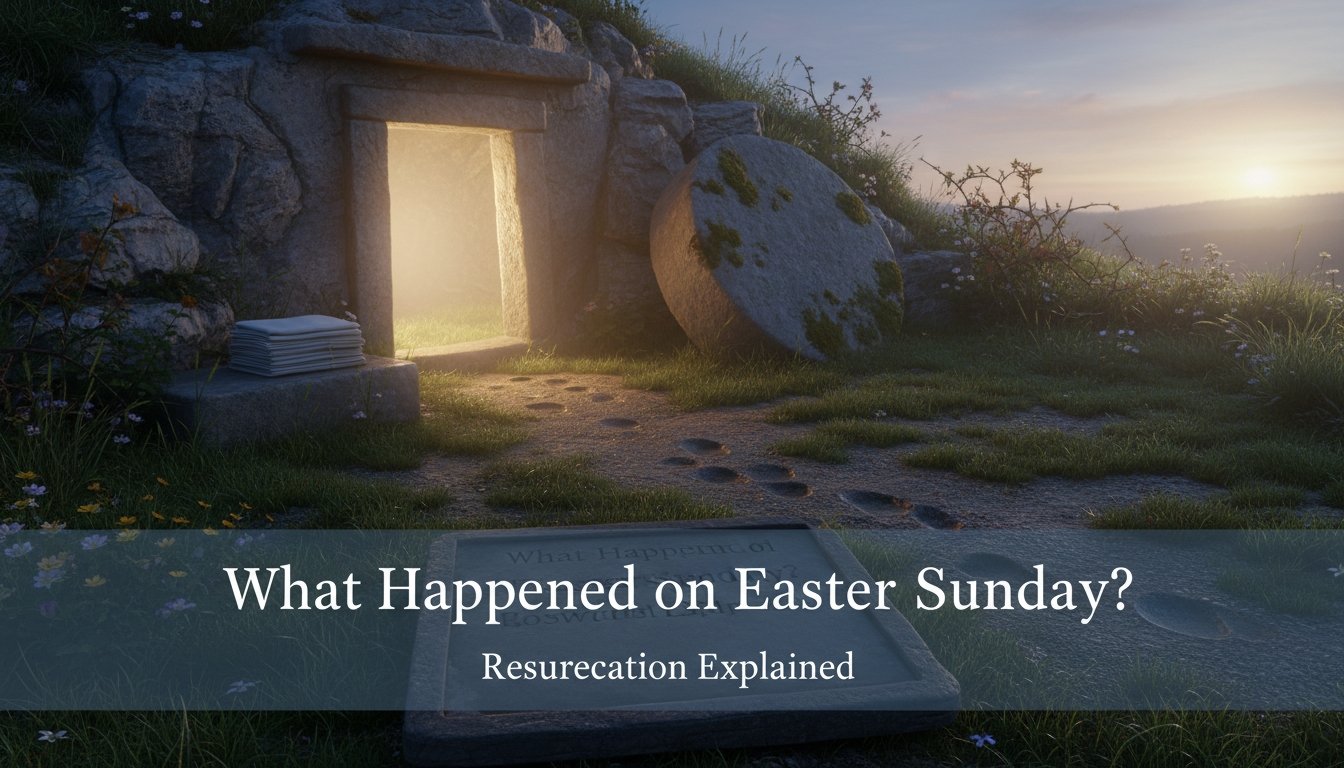
26 Feb What Happened on Easter Sunday? Resurrection Explained
On Easter Sunday, Jesus Christ rose from the dead, affirming His divine nature and offering you the promise of eternal life. The women, including Mary Magdalene, found the tomb empty, and Jesus appeared to them and His disciples, validating His risen status. This pivotal event lies at the core of the Christian faith, providing forgiveness, redemption, and a hope that extends beyond this life. To learn more about the significance and implications of the resurrection, continue exploring.
Table of Contents
Key Takeaways
- On Easter Sunday, the tomb of Jesus was found empty, as the women who visited the tomb early in the morning discovered that he had risen from the dead.
- The resurrection of Jesus affirmed his divine nature and validated his teachings, sacrifice, and the promise of eternal life for believers.
- The resurrection signifies the triumph of eternal life over death, offering salvation, redemption, and reconciliation with the divine for those who have faith in Jesus.
- The resurrection provides hope and assurance of eternal life beyond physical death, transforming the unknown of death into a promise of everlasting life.
- The resurrection lies at the core of Christian faith, serving as the foundation of eternal salvation and shaping the daily life, worship, and mission of believers.
The Significance of the Resurrection for Christian Believers
The resurrection of Jesus Christ is the cornerstone of Christian faith, as it affirms the divine nature of Jesus and the triumph of eternal life over death. For believers, the resurrection symbolizes the promise of salvation and the defeat of sin. It assures you that death has no lasting power, and that through faith in Christ, you can attain everlasting life. The resurrection demonstrates God’s supreme power and love, offering you hope, redemption, and the opportunity to be reconciled with the divine. It’s the foundation upon which the Christian church was built, inspiring you to live a life guided by the teachings of Jesus and to share the good news of his triumph over the grave.
The Biblical Account of the Resurrection on Easter Sunday
According to the Bible, the resurrection of Jesus occurred on the first day of the week, which we now know as Easter Sunday.
The Gospels tell us that early that morning, a group of women, including Mary Magdalene, went to the tomb where Jesus had been buried.
They found the stone rolled away and the tomb empty.
Soon after, Jesus appeared to the women and the disciples, proving He’d risen from the dead.
The resurrection is the cornerstone of Christian faith, for it demonstrates Jesus’ power over sin and death.
It’s the ultimate validation of His divine identity and the promise of eternal life for all who believe in Him.
How the Resurrection Offers Hope and the Promise of Eternal Life
Why does the resurrection of Jesus offer hope and the promise of eternal life? Through the resurrection, Christ conquered death, demonstrating His power over the grave. This pivotal event assures believers that though our bodies may perish, our souls will live forever. Jesus’ triumph over death means you, too, can have victory, transforming the unknown of death into the promise of eternal life.
With Christ’s resurrection, you need not fear the grave. Instead, you can take solace in the hope of reuniting with loved ones and dwelling with God forever. The resurrection affirms that this life isn’t all there’s – there’s a glorious eternity awaiting those who believe. This remarkable truth provides unshakable hope in the face of life’s difficulties and the certainty of death.
The Central Role of the Resurrection in the Christian Faith
Lies at the core of the Christian faith, the resurrection of Jesus Christ stands as the pivotal event that defines your belief and hope. It’s the culmination of Christ’s earthly ministry, confirming his divine identity and demonstrating his power over death. The resurrection gives credence to his teachings, validates his sacrifice, and serves as the foundation of your eternal salvation. Without it, the Christian message crumbles, leaving you without the assurance of life after death. Yet, with it, you’re promised forgiveness, redemption, and the promise of eternal life. The resurrection isn’t just a historical event – it’s a living reality that shapes your daily walk, inspires your worship, and fuels your mission to share the good news with the world.
Frequently Asked Questions
What Do the Easter Bunny and Eggs Represent?
The Easter bunny and eggs represent rebirth, fertility, and new life. The bunny is a symbol of fertility, while the eggs symbolize the resurrection and renewal associated with the spring season. These pagan symbols were incorporated into the Christian celebration of Easter, which commemorates the resurrection of Jesus Christ.
How Long Did Jesus Stay in the Tomb?
According to the Bible, Jesus stayed in the tomb for three days and three nights, rising from the dead on the third day, which is celebrated as Easter Sunday. After his crucifixion, Jesus was buried in the tomb, and on the third day, he rose from the dead, emerging alive and victorious over death.
What Is the Meaning of the Easter Lily?
The Easter lily symbolizes the resurrection of Jesus. It’s believed its pure white color and trumpet-shaped bloom represent the purity and light of Christ’s rising from the tomb.
The Easter lily is a popular decoration in churches and homes during the Easter season, serving as a reminder of the hope and new life Christ’s resurrection provides.
How Do Other Religions View the Resurrection?
Other religions don’t view Jesus’ resurrection the same way Christians do. Many faiths see it as a symbolic story, not a literal event. For instance, Jews and Muslims don’t believe in Jesus’ divinity or physical resurrection.
Hindus and Buddhists may interpret it metaphorically, emphasizing the spiritual rebirth and renewal it represents.
Ultimately, the resurrection’s significance is deeply rooted in Christian theology and belief.
Why Is the Date of Easter Different Each Year?
The date of Easter varies each year because it’s based on the lunar calendar. It’s celebrated on the first Sunday after the full moon that occurs on or just after the spring equinox, which falls between March 22 and April 25. This means the date can range from late March to late April, causing it to change annually.
Conclusion
You can find hope and the promise of eternal life in the resurrection of Jesus, which is the central event of the Christian faith. The biblical account shows how the resurrection occurred on Easter Sunday, offering believers the significance of this pivotal moment that shapes their faith and provides them with the ultimate triumph over death.








No Comments