

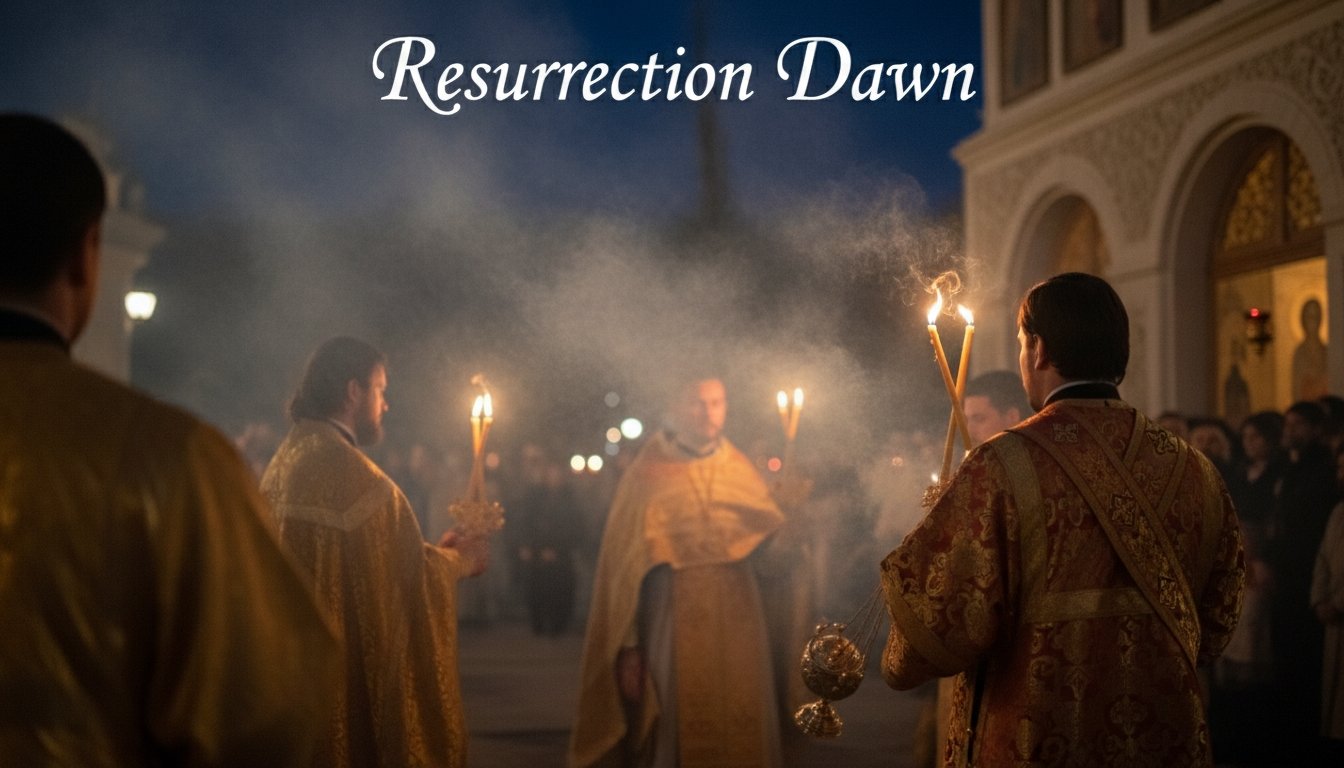
27 Feb Orthodox Paschal Liturgy: Traditions and Practices
The Orthodox Paschal Liturgy stands as the pinnacle of the liturgical year, commemorating Christ’s resurrection. You’ll prepare through purification, fasting, and repentance, readying your heart and mind. The transformative vigil features glorious candlelight, mystical hymns, and reverent procession. At midnight, you’ll witness the Risen Christ’s proclamation and receive His body and blood. Joyful Paschal hymnography and communal celebration enhance the sense of triumph over death. There’s more to discover about this profound experience.
Key Takeaways
- The Orthodox Paschal Liturgy is the pinnacle of the liturgical year, celebrating Christ’s resurrection with transcendent music, incense, and pageantry.
- Preparations for Pascha involve purification, fasting, and repentance to cultivate humility and renew commitment to the faith.
- The Paschal Vigil features glorious candles, mystical hymns, and reverent processions to foster a profound sense of awe.
- The Paschal Liturgy at midnight welcomes the Risen Christ with lit candles and the proclamation “Christ is risen!”
- Paschal hymnography and communal celebrations emphasize the triumphal joy of the Resurrection and the unity of the faith community.
The Significance of Orthodox Paschal Liturgy
The Orthodox Paschal Liturgy holds immense significance for the faithful. It’s the pinnacle of the liturgical year, commemorating Christ’s resurrection and triumph over death. Through this sacred ritual, believers are transported to the very heart of the Christian mystery – the promise of eternal life. The music, the incense, the pageantry, all work in harmony to create a transcendent experience, one that connects the faithful to the divine. It’s a time of profound joy, where sorrow is transformed into hope, and the faithful are renewed in their commitment to the faith. The Paschal Liturgy isn’t just a ceremony, but a living testament to the power of Christ’s resurrection, a celebration that echoes through the ages, uniting the faithful in a shared experience of grace and salvation.
Preparing for Pascha: Purification and Repentance
As the holiest feast of the Christian calendar approaches, Orthodox faithful eagerly prepare for the celebration of Pascha. This period is marked by purification and repentance, as believers strive to cleanse their souls and reconcile with God. Through fasting, prayer, and almsgiving, they seek to cultivate a spirit of humility and contrition. Confession is encouraged, allowing the faithful to unburden their conscience and receive absolution. Homes are cleaned, and icons are adorned, creating an atmosphere of reverence and anticipation. This spiritual renewal prepares the heart and mind to fully participate in the joyous paschal celebrations, embracing the triumphant resurrection of Christ. With unwavering faith, the faithful embark on this sacred journey, ready to embrace the transformative power of Pascha.
The Paschal Vigil: Transformative Worship
As the sanctuary is bathed in the glow of glorious candles, the mystical hymns of the Paschal Vigil resound through the procession. This transformative worship ushers you into the very heart of the Orthodox Paschal celebration. Immerse yourself in the sacred rituals that commemorate Christ’s resurrection and renew your spiritual being.
Glorious Candles Lighting Sanctuary
What’s it about the glorious candles lighting the sanctuary during the Paschal Vigil that makes this transformative worship experience so captivating? The flickering flames cast a warm, ethereal glow, illuminating the sacred space. As the faithful hold their candles, they become part of the illumination, their faces aglow with the light of Christ. This simple act symbolizes the resurrection, the triumph of light over darkness. The chanting, the incense, the reverent silence – all contribute to a profound sense of awe and wonder. You’re transported to a timeless realm, where the veil between heaven and earth seems to lift. This is sacred mystery made manifest, a transformative encounter with the divine.
Mystical Hymns Resounding Procession
Why do the mystical hymns that resound through the procession captivate you during the Paschal Vigil? The pulsating chants transport you to a realm beyond this world, evoking profound emotions. Their ethereal melodies rise and fall, drawing you deeper into the mystery of Christ’s resurrection. As the faithful process through the darkened church, the hymns echo, summoning you to join in the joyful celebration. Each note resonates with timeless truth, reminding you of the eternal life gifted through Christ’s triumph over death. In this sacred moment, the veil between heaven and earth thins, and you’re enveloped in the transformative power of the Paschal mystery.
The Paschal Liturgy: Celebrating the Risen Christ
How do Orthodox Christians celebrate the Paschal Liturgy, the pinnacle of their liturgical year? They gather at midnight on Easter to welcome the Risen Christ. The church’s candles are extinguished, then dramatically relit, symbolizing the light of Christ conquering darkness. Chanting the Paschal Troparion, the faithful process around the church three times, commemorating Christ’s three-day Resurrection. They then enter the church to celebrate the Eucharist, where they receive Christ’s body and blood. Throughout the service, the focus is on Christ’s triumph over death, culminating in the homily when the priest proclaims, “Christ is risen!” to which the people joyfully respond, “Indeed, He’s risen!” This solemn yet jubilant liturgy marks the high point of the Orthodox Christian calendar, a testament to their faith in the Resurrected Lord.
Paschal Hymnography: Joyful Proclamation
The Paschal hymnography, the liturgical poetry and chants that permeate the Orthodox Paschal Liturgy, joyfully proclaim the Resurrection of Christ. These hymns, sung throughout the services, echo the triumphal cry “Christ is risen!” They’re rich in biblical imagery and theological depth, celebrating Christ’s victory over death. From the Paschal Canon to the Paschal Stichera, the hymnography captivates worshippers, transporting them to the glory of the empty tomb. The Paschal hymns aren’t mere recitations – they’re a spirited proclamation of the good news. Their melodies reverberate, inviting the faithful to join the heavenly chorus. This hymnographic tradition is the Church’s joyful response to the Resurrection, a timeless liturgical expression of Paschal exultation.
The Paschal Feast: Communal Rejoicing
The Paschal feast is a time of communal rejoicing.
You’ll gather with your fellow believers to share a celebratory meal and chant the joyful Paschal hymns.
This communal celebration reinforces the togetherness of the Orthodox community.
Community Togetherness Celebration
Why does the Paschal feast represent a community’s joyous celebration of Christ’s resurrection? It’s the time when you gather with loved ones, sharing the sacred liturgy, breaking bread, and embracing the triumph of life over death. You trade sorrowful laments for exultant hymns, commemorating the Savior’s victory. The church glows with candlelight, and you process with the Paschal candle, symbolizing Christ’s radiant presence. Afterward, you feast on traditional foods, exchanging the greeting “Christ is risen!” These rituals foster a sense of unity, reminding you that you’re part of a vibrant, faith-filled community celebrating the most momentous event in human history.
Shared Meal Traditions
Why is the Paschal feast a communal celebration of rejoicing? The Paschal feast, or Easter meal, brings Orthodox Christians together to share in the joy of Christ’s resurrection. It’s a time to feast and fellowship, as families and parish communities gather around the table. The traditional Paschal meal features symbolic foods like eggs, lamb, and bread, each with deep spiritual significance. Sharing this meal is a unifying experience, reminding everyone of their common faith and salvation in Christ. It’s a moment to put aside differences, enjoy one another’s company, and collectively express gratitude for God’s blessings. The Paschal feast embodies the unity, fellowship, and joy at the heart of Orthodox Christian tradition.
Paschal Hymns Chanting
As the Paschal feast commences, the chanting of hymns becomes a centerpiece of the communal rejoicing.
You’ll hear the congregation resounding with the triumphant “Christ is risen!” as they sing the Paschal troparion.
The air fills with the joyous melodies of the Paschal canon, its hymns echoing the victory of Christ over death.
The ethereal tones of the Paschal stichera transport worshippers to the heavenly realms.
Throughout the liturgy, you’ll feel the power of these ancient hymns, which have been passed down for generations, uniting the faithful in their celebration of the Resurrection.
Frequently Asked Questions
What Is the Role of the Parish Priest in the Paschal Liturgy?
The parish priest plays a vital role in the Paschal Liturgy. They’ll lead the faithful through the service, performing sacred rituals, delivering the homily, and administering Holy Communion. They’re the shepherd guiding the congregation, ensuring the liturgy is celebrated with reverence and solemnity befitting this holiest of Christian feasts.
How Do the Paschal Customs Vary Across Different Orthodox Jurisdictions?
Paschal customs can vary across Orthodox jurisdictions. You might find different traditions in how the Holy Fire is received, the preparation of the Paschal basket, and the ringing of bells. Some may have unique processions or the blessing of waters. While the core liturgy remains the same, local traditions add richness to the celebration.
Can Non-Orthodox Christians Participate in the Orthodox Paschal Celebration?
Yes, non-Orthodox Christians can participate in the Orthodox Paschal celebration.
While some traditions may be unique to the Orthodox Church, the essential elements of the Paschal feast – the joyous celebration of Christ’s resurrection – are open to all Christians.
You’re welcome to join the liturgy, share the Paschal feast, and experience the rich, centuries-old traditions of the Orthodox Paschal celebration.
What Is the Significance of the Paschal Candle and Its Symbolism?
The paschal candle symbolizes the risen Christ, the light of the world. It’s lit during the Easter Vigil and remains lit throughout the Easter season, reminding you of Christ’s victory over sin and death. The candle’s flame represents the hope and joy of the Resurrection, inviting you to walk in the light of Christ and share it with others.
How Do Orthodox Christians Observe the Paschal Fast Leading up to Pascha?
Orthodox Christians observe the paschal fast leading up to Pascha by abstaining from certain foods and activities. You’ll typically avoid meat, dairy, and animal products, focusing on a plant-based diet. Additionally, you’ll limit entertainment and social engagements, dedicating more time to prayer, spiritual reflection, and charitable works. This period of fasting and self-denial helps prepare your heart and mind for the joyous celebration of Christ’s Resurrection.
Conclusion
You’ve now explored the profound significance of the Orthodox Paschal liturgy. From the preparatory period of purification and repentance to the transformative Paschal Vigil, you’ve witnessed the Church’s joyful celebration of Christ’s resurrection. The Paschal hymns and communal feast remind you that this is the pinnacle of the Christian year, a time to revel in the victory of life over death.









No Comments