

27 Feb What Are Catholic Easter Vigil Practices?
The Catholic Easter Vigil is a powerful celebration that you won’t want to miss. You’ll witness the blessing of the new fire and Paschal candle, hear the Liturgy of the Word, welcome new members into the Church, and conclude with a final blessing. This ancient liturgy reflects the renewal of faith and joy of Christ’s resurrection. If you’d like to learn more about the deeper significance and history of the Easter Vigil, keep reading.
Key Takeaways
- The Catholic Easter Vigil is the most significant liturgy, celebrating Christ’s resurrection and the promise of new life.
- The vigil begins with the blessing of a new fire and the lighting of the Paschal candle, symbolizing Christ’s triumph.
- The Liturgy of the Word features multiple readings from Scripture, culminating in the proclamation of the Gospel.
- Catechumens are baptized and confirmed, and all participants share in their first Eucharist, marking the high point of initiation.
- The concluding rites send forth the congregation to live the paschal mystery with renewed faith and Easter joy.
The Significance of the Catholic Easter Vigil
Why is the Catholic Easter Vigil so significant? It’s the most important liturgy in the Catholic Church’s calendar. During this service, the faithful celebrate Christ’s resurrection and the promise of new life. They light the Paschal candle, bless the holy water, and renew their baptismal vows. The vigil also includes the first Mass of Easter, where Catholics joyfully commemorate Jesus’ triumph over death. It’s a time of immense spiritual renewal, as believers reflect on the mysteries of their faith and the transformative power of God’s love. The Easter Vigil is the climax of the Triduum – the three days commemorating Jesus’ passion, death, and resurrection. It’s a profound and awe-inspiring experience that lies at the heart of Catholic identity and tradition.
The Blessing of the New Fire and the Paschal Candle
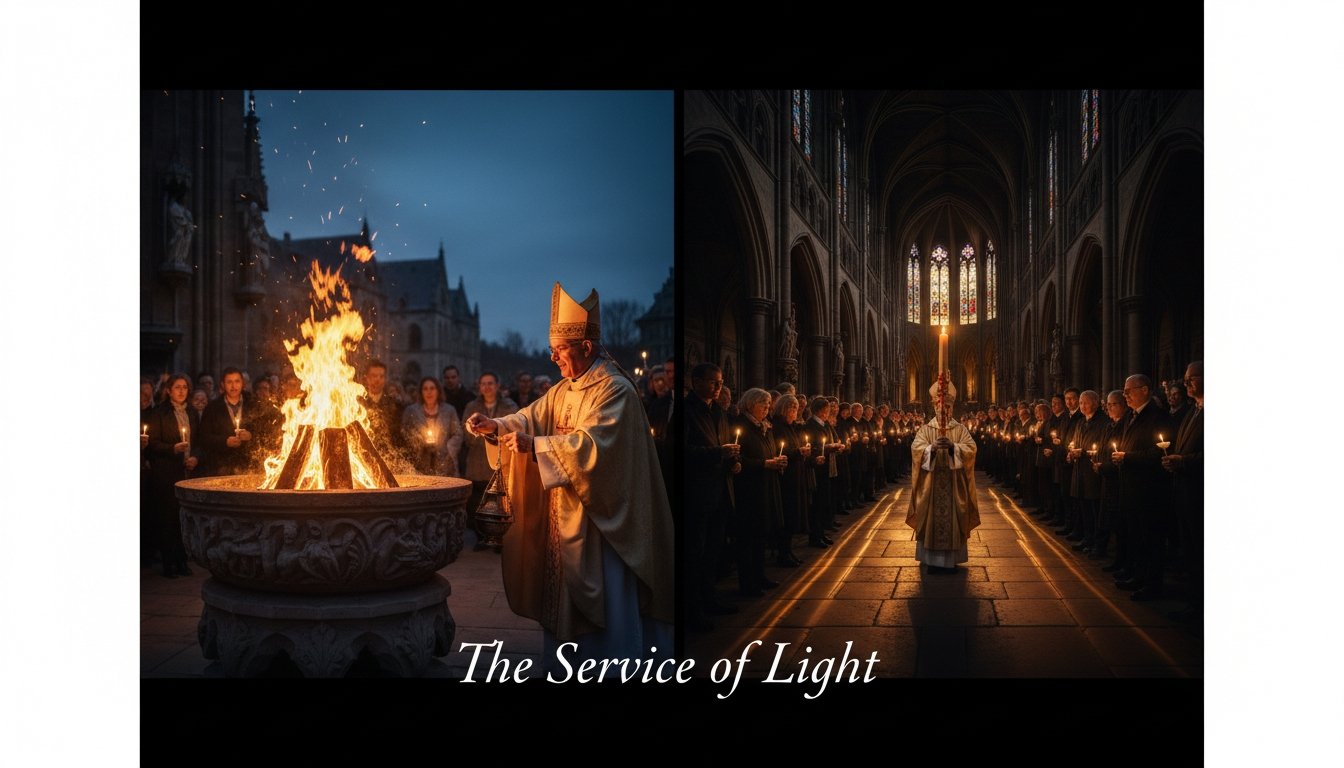
As the Easter Vigil begins, the congregation gathers outside the church in darkness. The priest blesses a new fire, symbolizing Christ’s triumph over sin and death. From this flame, the paschal candle is lit, representing the light of Christ. The candle’s procession into the dark church signifies the Risen Savior dispelling the world’s gloom. Parishioners light their own candles from the paschal candle, sharing the light. The priest then chants the Exsultet, an ancient hymn proclaiming Christ’s resurrection. This powerful ritual marks the shift from Lenten penitence to Easter joy, as the church basks in the glow of the paschal candle – the light of the world.
The Liturgy of the Word During the Easter Vigil
The Liturgy of the Word during the Easter Vigil features readings from Scripture, a recitation of the Responsorial Psalm, and the proclamation of the Gospel. These sacred texts recount the history of salvation and prepare the congregation for the celebration of Christ’s resurrection. Let’s take a closer look at these important elements of the Easter Vigil liturgy.
Readings From Scripture
During the Easter Vigil, the Liturgy of the Word features a series of readings from Scripture that trace the history of God’s saving work. You’ll hear up to nine readings, including selections from the Old Testament that foreshadow the salvation brought by Christ. The readings culminate in the proclamation of the Gospel, which joyfully announces the resurrection of Jesus. Through these sacred texts, you’ll be reminded of God’s faithfulness and the central mysteries of the Christian faith. The Liturgy of the Word prepares your heart to celebrate Christ’s victory over sin and death during this most holy night.
Responsorial Psalm Recitation
How does the Responsorial Psalm feature in the Liturgy of the Word during the Easter Vigil? The Responsorial Psalm is a critical part of the Easter Vigil service. After the first reading, the cantor leads the congregation in reciting a psalm, with the people responding with a repeated refrain. This ancient practice allows the faithful to actively participate in the Liturgy of the Word.
The Responsorial Psalm reinforces the themes of the scripture readings and prepares the congregation’s hearts for the Gospel proclamation. Through this responsive prayer, the community celebrates God’s mighty deeds and expresses their own faith and devotion.
The Responsorial Psalm is a vibrant expression of the people’s active engagement in the Easter Vigil celebration.
Proclamation of the Gospel
After the people have responded with the Responsorial Psalm, the Gospel is solemnly proclaimed.
The priest or deacon processes to the ambo, the sacred place from which the Scriptures are proclaimed, and announces the reading.
The congregation stands and listens attentively as the Gospel account of the Lord’s Resurrection is read.
This gospel reading is the climax of the Liturgy of the Word, as it announces the central mystery of the Christian faith – Christ’s victory over sin and death.
The Alleluia or another appropriate acclamation accompanies the Gospel, expressing the congregation’s joy at hearing this good news.
Welcoming New Members: The Sacraments of Initiation at the Easter Vigil
What does the Easter Vigil ceremony entail in welcoming new members through the sacraments of initiation? The Easter Vigil is when the church celebrates the sacraments of baptism, confirmation, and Eucharist for new members. Catechumens, those preparing for baptism, are baptized and confirmed, becoming full members of the church. Candidates, already baptized in other Christian traditions, are received into the Catholic Church and confirmed. Everyone then participates in their first Eucharist. It’s a joyous occasion as the community welcomes new believers and they’re fully initiated into the faith. The Easter Vigil is the highpoint of the church’s liturgical year, marking Christ’s resurrection and the new life it brings.
Closing the Easter Vigil Celebration: The Concluding Rites
As the Easter Vigil celebration draws to a close, the congregation participates in the Concluding Rites. The priest offers a final blessing, invoking God’s grace upon the assembly. Next, the congregation is dismissed, sent forth to live the paschal mystery they’ve commemorated. The priest, deacons, and other ministers process out, while the assembly joins in a recessional hymn, praising God for the gift of the Resurrection. The Easter Vigil culminates in this powerful moment – the faithful, strengthened by the sacraments and the Word, are commissioned to go forth as witnesses to Christ’s triumph over sin and death. Filled with the joy of the Risen Lord, they’re ready to share the good news with the world.
The Theological Significance and Historical Origins of the Easter Vigil
Why does the Easter Vigil hold such deep theological significance, and what’re its historical origins? The Easter Vigil is the Church’s most ancient and solemn liturgy, tracing its roots to the early centuries of Christianity. It commemorates Christ’s resurrection and celebrates the new life we receive through baptism. The vigil’s dramatic elements – the lighting of the Paschal Candle, the procession, and the renewal of baptismal promises – reflect the transition from darkness to light, death to life. This sacred ritual invites us to encounter the risen Lord and be transformed by his saving grace. The Easter Vigil’s rich symbolism and long tradition remind us of the timeless power of the paschal mystery to renew our faith and fill us with Easter joy.
Frequently Asked Questions
Is the Easter Vigil Mass Only for Catholics?
No, the Easter Vigil mass isn’t only for Catholics. While it’s a central Catholic liturgy, people of other Christian denominations can certainly attend and participate. The service celebrates Christ’s resurrection and is open to all who wish to commemorate this sacred event. However, the specific rituals and customs may differ for non-Catholic congregations.
How Long Does the Easter Vigil Mass Typically Last?
The Easter Vigil Mass typically lasts around 2-3 hours. It’s a lengthy service as it includes the lighting of the Paschal Candle, the Liturgy of the Word, the Liturgy of Baptism, and the Liturgy of the Eucharist. The duration can vary depending on the church and specific practices, but it’s generally a lengthy celebration of Christ’s resurrection.
Can Children Participate in the Easter Vigil Mass?
Yes, children can participate in the Easter Vigil Mass. The service is open to all Catholics, and many parishes encourage families to attend together. Children may take part in the liturgy, such as processing with candles or helping with readings. The service can be lengthy, typically lasting 2-3 hours, so parents may want to prepare their children for the duration.
Is Attendance at the Easter Vigil Mass Mandatory for Catholics?
While attendance at the Easter Vigil Mass isn’t mandatory for Catholics, it’s considered one of the most important liturgical celebrations of the year.
The Easter Vigil Mass is a beautiful and meaningful service that marks the transition from Lent to the joyous celebration of Easter, and many Catholics choose to attend to participate in this sacred tradition.
What Is the Appropriate Dress Code for the Easter Vigil Mass?
The appropriate dress code for the Easter Vigil Mass is generally more formal than a typical Sunday Mass. You should wear your “Sunday best” – clothes that are clean, neat, and modest. Avoid casual wear like jeans, t-shirts, or shorts.
Many people choose to wear suits, dresses, or other dressy attire to honor the solemnity of this important liturgy.
Conclusion
You’ll find the Easter Vigil to be a powerful and transformative celebration of Christ’s resurrection. It’s the highlight of the Church’s liturgical year, where you’ll witness the blessings of new fire, the Paschal candle, and the welcoming of new members through the sacraments of initiation. It’s a profound experience that connects you to the rich history and theology of the Catholic faith.









No Comments