

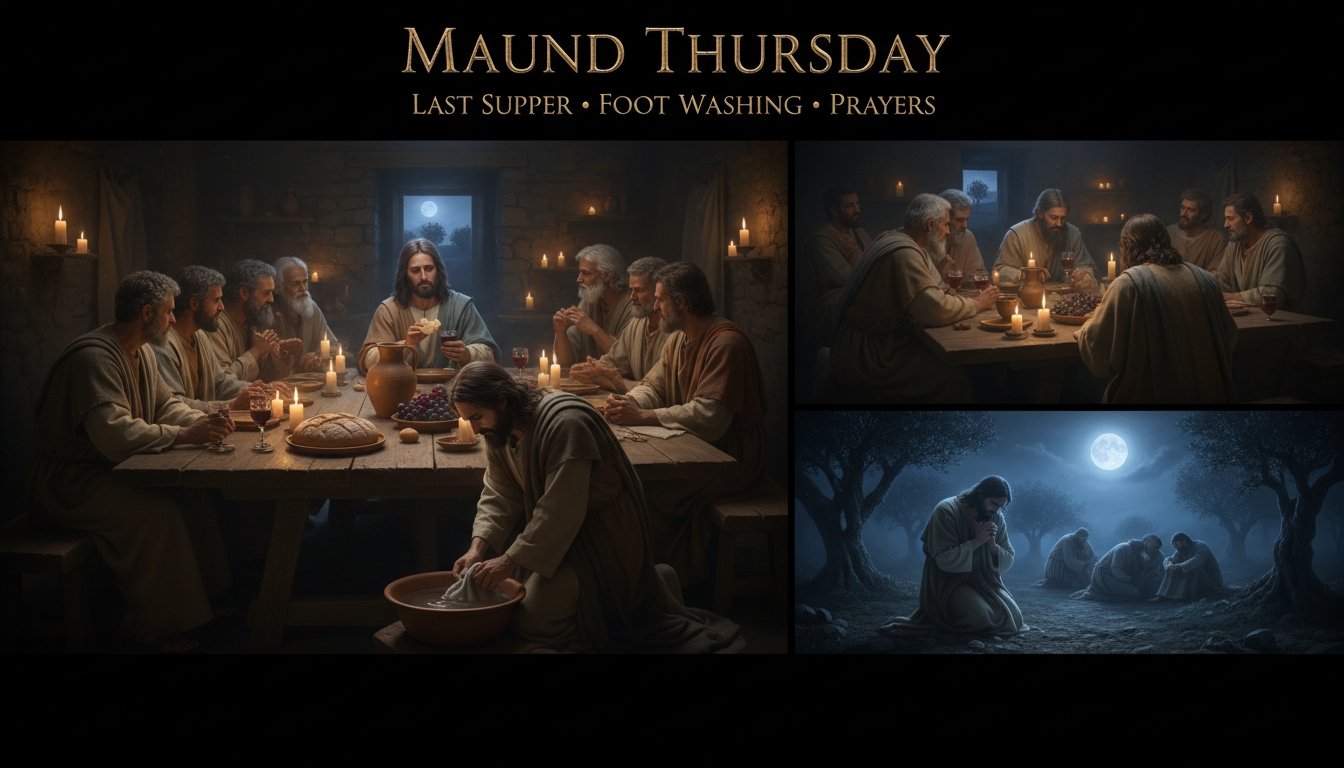
27 Feb Maundy Thursday Explained: Last Supper, Foot Washing, Prayers
Maundy Thursday commemorates Jesus’ final meal with his disciples before his crucifixion. During this Last Supper, he instituted the Eucharist and demonstrated servant leadership by washing his disciples’ feet. Afterward, Jesus sought solace through prayer in the Garden of Gethsemane, where he surrendered to God’s will. The events of Maundy Thursday foreshadow Jesus’ sacrifice and invite you to reflect on the deeper meaning behind these poignant traditions.
Key Takeaways
- Maundy Thursday commemorates the Last Supper, where Jesus instituted the Eucharist and commanded his disciples to “do this in remembrance of me.”
- During the Last Supper, Jesus demonstrated servant leadership by washing his disciples’ feet, modeling humility and a call to selfless service.
- In the Garden of Gethsemane, Jesus prayed earnestly for strength to endure his upcoming suffering, acknowledging God’s will with the plea “not my will, but yours be done.”
- The events of Maundy Thursday, including the betrayal and arrest of Jesus, foreshadow the Passion and crucifixion, fortifying Jesus for the trials to come.
- Maundy Thursday invites reflection on the themes of selfless service, the Eucharist, and surrendering to God’s will, which are central to Christian faith and practice.
The Significance of the Last Supper
Why is the Last Supper so significant? It’s the final meal Jesus shared with his disciples before his crucifixion. During this intimate gathering, Jesus instituted the Eucharist, commanding his followers to “do this in remembrance of me.” By sharing bread and wine, symbolic of his body and blood, Jesus established the sacrament at the heart of Christian worship.
Moreover, he washed his disciples’ feet, modeling servant leadership and self-sacrifice. This display of humility deeply impacted the apostles, who were to carry on his mission.
The Last Supper also marked the beginning of the Passion, as Judas left to betray Jesus. This pivotal event is commemorated annually by Christians on Maundy Thursday, the day before Good Friday, when Jesus was crucified.
The Ritual of Foot Washing
Why does the ritual of foot washing hold such deep significance for Christians? It’s a powerful act of humility and service, mirroring Jesus’ own example at the Last Supper. By humbly washing his disciples’ feet, Jesus demonstrated the importance of servant leadership and caring for one another.
Today, many churches reenact this ritual on Maundy Thursday, inviting worshippers to kneel and tenderly wash each other’s feet. It’s a profound reminder that we’re called to love and serve with the same selflessness as Christ. Through this simple yet symbolic act, Christians can deepen their connection to the final days of Jesus’ earthly ministry and recommit themselves to living out his teachings of compassion and sacrifice.
Jesus’ Prayers in the Garden of Gethsemane
After washing the disciples‘ feet, Jesus sought solace in prayer as he faced the looming trials to come. He led the disciples to the Garden of Gethsemane, where he fell to his knees and prayed for the strength to endure the suffering that awaited him. His anguish was palpable as he pleaded with God, “Father, if you’re willing, take this cup from me; yet not my will, but yours be done.” Despite his fear, Jesus’ devotion to God’s plan never wavered.
The disciples, weary from the Passover meal, couldn’t stay awake to support him. Yet, Jesus’ resolute prayers fortified him for the betrayal, arrest, and crucifixion that would soon follow, demonstrating his unwavering commitment to fulfill God’s purpose.
The Lasting Meaning of Maundy Thursday
The events of Maundy Thursday hold deep significance even today, as they remind us of Jesus’ selfless act of serving his disciples through the ritual of foot washing. This gesture of humility and love encapsulates the essence of Christian service, teaching us to put the needs of others before our own.
The ritual of foot washing on Maundy Thursday reminds us to put the needs of others before our own.
The Last Supper, too, carries lasting meaning, as it commemorates the institution of the Eucharist and foreshadows Jesus’ sacrifice on the cross.
Even his agonizing prayers in Gethsemane remind us of the weight of sin and the importance of surrendering to God’s will.
Maundy Thursday invites us to reflect on these profound truths and to embody the servant-leadership modeled by Christ.
Frequently Asked Questions
Why Is Maundy Thursday Celebrated on a Different Date Each Year?
Maundy Thursday is celebrated on a different date each year because it’s tied to the date of Easter, which falls on the first Sunday after the full moon that occurs on or just after the spring equinox.
Since the date of Easter changes annually, Maundy Thursday, which is the Thursday before Easter, also shifts from year to year.
How Long Does the Maundy Thursday Service Typically Last?
The Maundy Thursday service typically lasts around one to two hours.
The service includes the re-enactment of Jesus washing the disciples’ feet, followed by Holy Communion.
Some churches may also have additional elements like the stripping of the altar, marking the start of the Good Friday observance.
The duration can vary depending on the practices and traditions of the particular congregation.
Can Anyone Participate in the Foot Washing Ritual?
Yes, anyone can participate in the foot washing ritual on Maundy Thursday. The service typically includes the ritual of foot washing, where the clergy or congregation members wash each other’s feet, following Jesus’ example of humble service. It’s an opportunity for all attendees to engage in this meaningful tradition, regardless of their role or position in the church.
What Is the Significance of the Olive Trees in the Garden of Gethsemane?
The olive trees in the Garden of Gethsemane hold deep symbolic significance. They represent Christ’s humanity, as he sought solace and strength from the Father in that sacred place.
The olive trees also foreshadow the coming agony of the Crucifixion, as their oil was used for anointing, a precursor to Christ’s sacrificial death.
How Do Christians Commemorate Maundy Thursday in Their Homes?
Christians commemorate Maundy Thursday in their homes by re-enacting the Last Supper. They’ll gather around the table, share a meal, and remember Jesus’ final moments with his disciples.
Some may wash each other’s feet, following Jesus’ example of humble service. Families may also take time for reflection, prayer, and preparing their hearts for Good Friday and Easter.
Conclusion
You’ve learned about the significance of the Last Supper, the ritual of foot washing, and Jesus’ prayers in the Garden of Gethsemane. These events on Maundy Thursday hold deep meaning, reminding you of Christ’s sacrifice and His call to serve others humbly. As you reflect on this sacred day, allow its lessons to deepen your faith and inspire you to live with greater love and devotion.








No Comments