

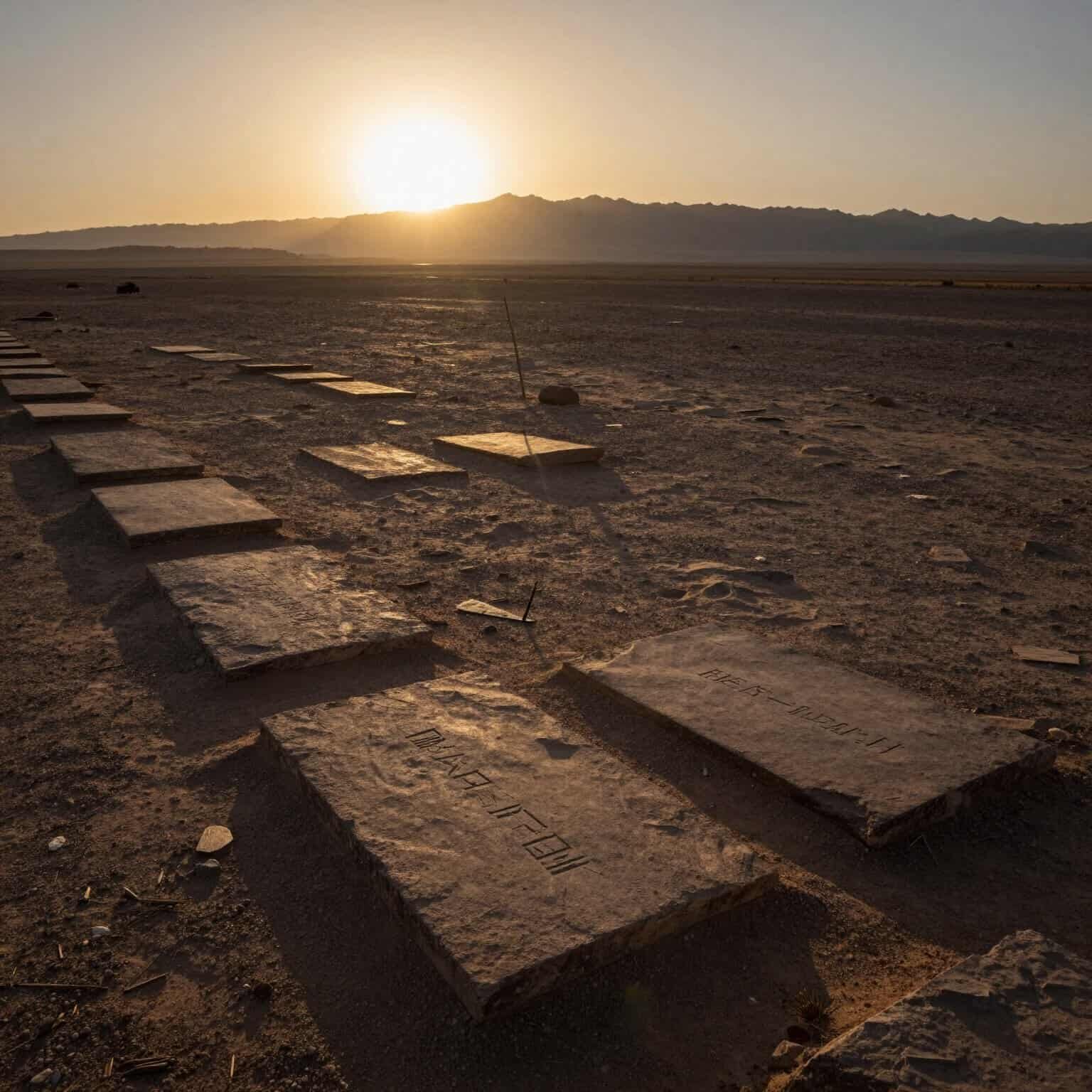
02 May 10 Tips on Moses Waterless Fast Biblical Significance
You’ll discover that Moses’ 40‑day water‑less fast isn’t just a historic footnote; it’s a template for covenant renewal, showing total reliance on God and the radiant face that proves supernatural sustenance. The number forty recurs as a divine testing interval, linking Moses to Elijah, Daniel, and Jesus. It underscores the Ten Commandments’ authority and God’s power over physical limits. Follow ten practical tips to emulate this model safely and deepen your intercession, and you’ll find even more insight ahead.
Table of Contents
Why Moses’ 40‑Day Dry Fast Matters for Covenant Renewal
Re‑entering the covenant after the golden‑calf scandal, Moses’ 40‑day dry fast spotlights Israel’s renewed commitment to God. You see the fast as a dramatic reset: Moses abandons food and water, mirroring the nation’s abandonment of divine law. By enduring physical deprivation, you recognize his role as the people’s intercessor, pleading for forgiveness while the tablets lie hidden. The dry fast creates a holy silence that forces attention away from everyday concerns toward the covenant’s core promises. You notice how the radiant face Moses displays upon descent proves that God sustained him beyond natural limits, confirming the covenant’s authenticity. This episode teaches you that renewal isn’t a casual promise; it demands total reliance on divine provision. When you apply this pattern, you understand that true covenant restoration requires surrender, prayerful dependence, and a willingness to let God rewrite the nation’s destiny.
How Moses’ 40‑Day Dry Fast Shows Total Dependence on God
Why does Moses’ forty‑day, water‑less fast matter? You see his survival proves that you can’t lean on flesh alone; you must cling to God. By refusing water, Moses stripped away every human safety net, exposing his need for divine sustenance. The text tells us his face glowed when he descended, a visible sign that God supplied life‑force beyond biology. When you emulate his dry fast, you’re reminded that true strength comes from the One who created you, not from your own stamina.
This dependence reshapes your prayer life, turning it from a ritual into a desperate, honest appeal for God’s power. It also mirrors the covenant’s demand: you must trust God completely, even when natural limits scream “stop.” In that way, Moses’ dry fast becomes a template for surrender, showing that total reliance on God is the only path to spiritual breakthrough.

How Moses’ Radiant Face Proves Supernatural Sustenance
What does Moses’ radiant face tell us about divine power? You see a man who survived forty days without water, yet his countenance shone like lightning when he returned from Mount Sinai. That glow isn’t a metaphor; it’s a physical testament that God supplied sustenance beyond biology. When you picture the sun’s glare on a polished shield, you grasp how the Spirit’s energy manifested on Moses’ skin, confirming that the miracle was real, not imagined. This radiance validates the covenant renewal he delivered, because only a divinely powered messenger could bear such a revelation without collapse. It also mirrors Elijah’s strength and Jesus’ wilderness triumphs, linking the men under a shared source of supernatural nourishment. By recognizing the visible evidence, you understand that God can sustain believers past natural limits, turning physical weakness into a sign of heavenly authority.
Why the Number Forty Repeats in the Moses 40‑Day Dry Fast Narrative
Moses’ radiant face showed that God can sustain a messenger beyond natural limits, and that same divine empowerment is underscored by the recurring number forty in the narrative. You’ll notice forty appears at pivotal moments: the flood, Israel’s wandering, and the Sinai covenant. This repetition signals a divinely‑ordained interval for testing, transition, and revelation. When you count the days, you see a complete cycle—long enough to break ordinary endurance but short enough to remain within a miraculous framework.
The number also links Moses’s dry fast to the broader biblical motif of purification before divine encounter. By using forty, Scripture frames the fast as a purposeful, covenant‑renewing pause rather than a random hardship. Recognizing this pattern helps you grasp why the author chose exactly forty days: it marks a divinely sanctioned period where human frailty yields to God’s sustaining power.
How Moses’ 40‑Day Dry Fast Sets the Pattern for Elijah, Daniel, and Jesus
How does a forty‑day, water‑less fast become a template for later holy encounters? You see Moses’ dry fast as the prototype: he steps out of the desert, empty‑handed, and God fills him with radiant power. Elijah mirrors that when he flees to Horeb, walking forty days on barely enough food, yet God supplies “the strength of a single loaf” (1 Kings 19:8). Daniel repeats the pattern in his three‑day fast, refusing meat and wine, and an angelic messenger appears (Daniel 10:2‑3). Jesus finally fulfills the archetype in the wilderness, denying Himself for forty days, surviving on Scripture’s “bread” (Matt 4:2‑4). Each leader adopts the same duration, the same total deprivation, and the same divine sustenance, proving that the forty‑day, water‑less fast is a covenantal key that unlocks prophetic revelation and spiritual authority.
Why the Moses 40‑Day Dry Fast Is a Model for National Intercession
After seeing how Moses’ dry fast set the pattern for prophetic encounters, you can recognize why it also serves as a template for national intercession. You notice that Moses entered a desolate mountaintop for forty days, leaving Israel’s sins hanging over him as he appealed to God. That isolation created a sacred space where the nation’s collective guilt could be presented and forgiven. By mirroring his posture—total dependence, relentless prayer, and a willingness to endure physical hardship—you can lead a people into a corporate cry for mercy. The fast’s duration signals seriousness, while its dryness underscores total reliance on divine sustenance rather than human resources. When you organize a national fast, model it on Moses’ focus: begin with confession, maintain continuous intercessory petitions, and expect God’s supernatural empowerment to manifest in the community’s renewal and protection.

How the Moses 40‑Day Dry Fast Highlights the Ten Commandments’ Authority
Ever wonder why a forty‑day, water‑less fast makes the Ten Commandments feel so unshakable? You see Moses hanging on Mount Sinai, deprived of food and water, yet his resolve never wavers. That extreme deprivation strips away worldly comforts, forcing his focus onto God’s law. As you imagine his thirst, the commandments become the only sustenance he can cling to, turning abstract rules into lifelines. The radiant face that greets the people (Exodus 34:29‑30) proves the divine endorsement of those statutes, reinforcing their authority beyond human frailty. When you consider that Moses survived beyond natural limits, you recognize the law’s power to sustain a nation even when physical strength fails.
His dry fast, therefore, isn’t a stunt; it’s a vivid demonstration that the Ten Commandments aren’t merely moral suggestions but a covenant anchored in God’s supernatural provision.
What the Moses 40‑Day Dry Fast Reveals About God’s Power Over Physical Limits?
Wondering why Moses could survive forty days without water? You see that his endurance isn’t a human feat; it’s a divine showcase. When the text says he “did not eat bread nor drink water” (Exodus 34:28), it signals God’s ability to suspend natural limits. Your body would normally fail after three or four days, yet Moses’ radiant face (Exodus 34:29‑30) proves supernatural sustenance. This miracle validates the covenant: if God can keep a leader alive, He can keep His promises. It also mirrors Elijah’s “strength of that food” (1 Kings 19:8) and Jesus’ wilderness experience (Matt 4:2), forming a pattern where God intervenes when physical law meets spiritual purpose. Recognizing this, you understand that God’s power isn’t confined to metaphor; it can literally override biology to fulfill His redemptive agenda.
How Modern Believers Can Apply the Moses 40‑Day Dry Fast Model
Seeing Moses’ miraculous endurance invites you to consider a practical, faith‑driven approach to dry fasting today. Begin by defining a clear spiritual aim—intercession, renewal, or deeper reliance on God—so the fast isn’t a stunt but a purposeful pilgrimage. Align your prayer schedule with biblical rhythms: pray at sunrise, midday, and sunset, echoing Moses’ continual communion. Use Scripture as sustenance; memorize verses that speak of God’s provision and recite them when physical cravings rise. Incorporate brief, reflective pauses to journal insights, allowing the Holy Spirit to shape your thoughts. Keep your community informed, inviting them to pray for you, which mirrors the corporate dimension of Moses’ covenant renewal. Finally, honor the conclusion with gentle re‑hydration and light nourishment, preserving the physiological lesson while celebrating the spiritual breakthrough you’ve experienced. This model translates ancient devotion into a modern, disciplined walk of faith.
What Practical Steps Keep a Moses 40‑Day Dry Fast Safe?
How can you keep a 40‑day dry fast safe while honoring Moses’ example? First, get medical clearance; a physician can assess kidney function, blood pressure, and electrolyte balance. Next, hydrate intensively for 3‑5 days before starting, drinking electrolyte‑rich fluids to maximize intracellular stores. Reduce food gradually, shifting to light, plant‑based meals to ease metabolic demand. During the fast, monitor vitals twice daily—pulse, temperature, and urine color (if any). Rest frequently, avoid strenuous activity, and stay in a cool environment to limit sweating. Use prayer or meditation to keep focus, but remain alert for dizziness, severe headache, or rapid heartbeat—signs you must break the fast. When you end the fast, rehydrate slowly with diluted coconut water, then introduce bland foods like broth and ripe bananas over 24‑48 hours. Keep a journal of symptoms and spiritual insights, and share progress with a trusted spiritual mentor.
Frequently Asked Questions
Did Moses Eat Anything Before the Fast Began?
You’ll find that Scripture doesn’t mention Moses eating anything right before his forty‑day, water‑less fast.
The narrative in Exodus 34:28 and Deuteronomy 9:9 jumps straight to his abstention, implying he started the fast empty‑stomached.
Since the text focuses on his divine sustenance and the covenant renewal, any prior meal isn’t recorded, so you can assume he began the fast without a preceding feast.
How Did Moses’ Clothing Affect His Endurance?
Your answer’s simple: the radiant, divine‑filled garments Moses wore didn’t boost his physical stamina, but they signaled God’s power, keeping you focused on spiritual endurance.
The glowing face described in Exodus 34:29‑30 reminded you that his strength came from divine sustenance, not from clothing.
What Biblical Evidence Shows Moses’ Physical Condition During the Fast?
You see that Exodus 34:28 says Moses went forty days and nights without food or water, yet his face shone “like lightning” when he descended, showing radiant health.
Deuteronomy 9:9 repeats the same duration, confirming his continued vigor.
The text notes his “hands were tired” (Exodus 34:29) but emphasizes that God sustained him, implying divine strength despite natural exhaustion.
Are There Any Historical Records Outside the Bible Confirming the Fast?
You won’t find any extra‑biblical chronicles that verify Moses’ forty‑day dry fast. Ancient Near‑Eastern records, Egyptian annals, or Assyrian inscriptions never mention Israel’s leader or his fasting. The only sources are the biblical texts themselves and later Jewish and Christian interpretations that echo them. Scholars treat the episode as theological narrative rather than historically corroborated event.
What Specific Prayers Did Moses Recite While Fasting?
You won’t find a verbatim prayer in Scripture; the text only says Moses interceded for Israel (Deuteronomy 9:18‑19).
You can infer he prayed for forgiveness, covenant renewal, and the people’s future, echoing the themes of Exodus 34:28‑29.
Conclusion
You’ve seen how Moses’s 40‑day dry fast isn’t just a dramatic story—it’s a blueprint for deep covenant renewal, total reliance on God, and the supernatural power that transcends physical limits. By embracing its principles—faith, obedience, and disciplined prayer—you can experience a fresh, transformative encounter with the divine. Apply the practical steps, stay safe, and let this ancient example fuel your modern walk with God.








No Comments