

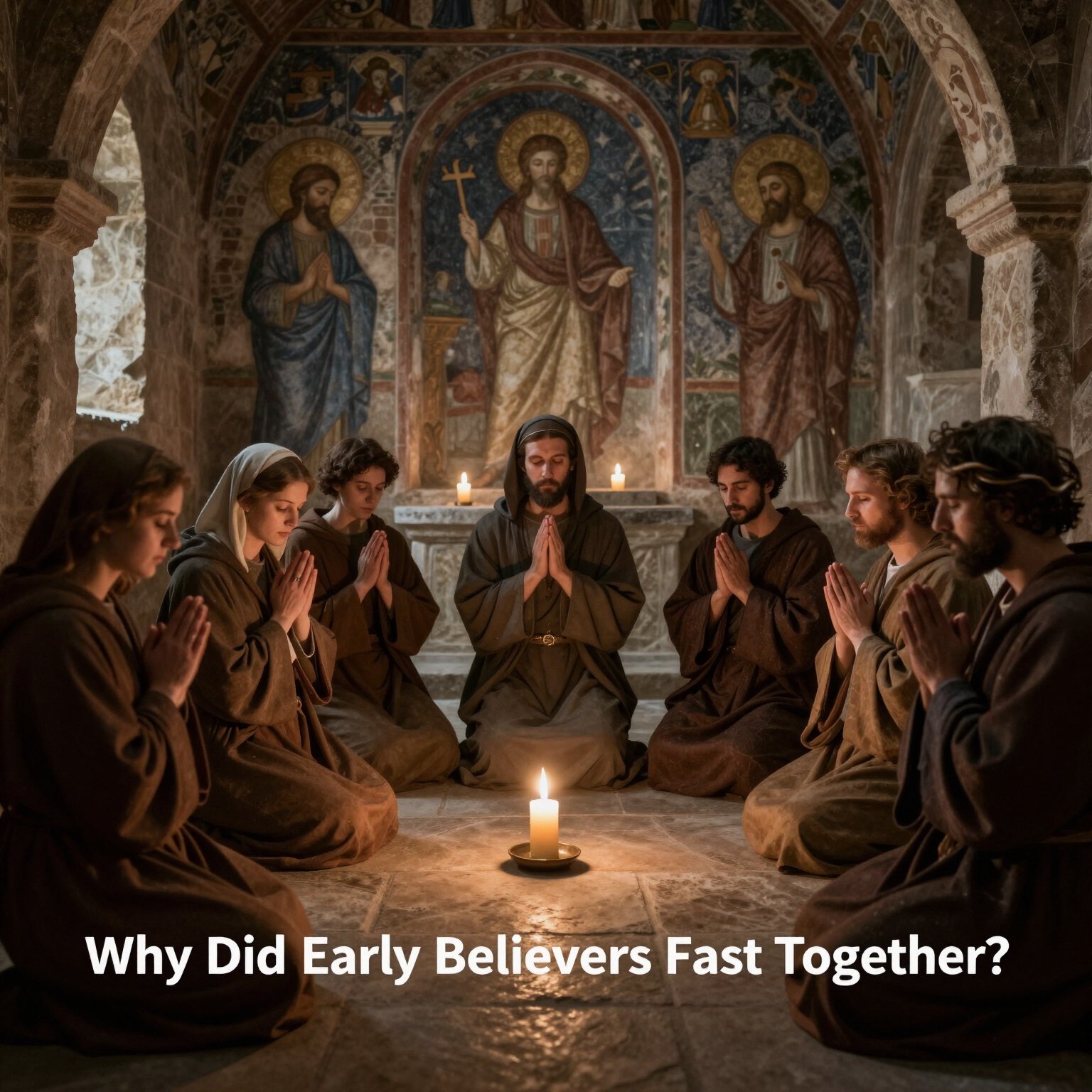
30 Apr Why Did Early Believers Fast Together?
You fasted together because early believers saw corporate fasting as a Scripture‑backed way to unite hearts, seek God’s direction, and embody the coming kingdom. They followed patterns in Acts, the Didache, and the Apostolic Constitutions, linking Wednesday and Friday to Judas’ betrayal and Christ’s crucifixion. The shared discipline purified hearts, curbed gossip, and strengthened mutual support, while surplus resources fed the poor. Continue, and you’ll discover how this practice shaped decisions, liturgical calendars, and lasting church legacy.
Table of Contents
Scriptural Foundations of Early Corporate Fasting
When you trace early corporate fasting back to Scripture, you quickly see that it wasn’t an optional devotion but a built‑in practice for the whole community. In Acts 13:2‑3, the Antioch church gathers prophets and teachers, prays, and fasts before the Holy Spirit commissions Barnabas and Paul. That pattern repeats in Acts 14:23, where elders are appointed “with prayer and fasting” in every congregation. Jesus himself models the discipline in Matthew 6:16‑18, demanding humility and secrecy, which sets the tone for communal expectation. The apostle Paul even authorizes shared fasting for spiritual focus in 1 Corinthians 7:5, showing that mutual abstinence is a legitimate means of seeking God. Early Christian manuals like the Didache and Apostolic Constitutions codify specific days—Wednesday and Friday—for corporate fasts, linking them to Judas’ betrayal and Christ’s crucifixion. These texts collectively embed fasting into the life of the early church, turning it into a communal act of worship, discernment, and solidarity.
Liturgical Calendar That Structured Weekly Corporate Fast Days
Because the early church needed a reliable rhythm for communal devotion, the liturgical calendar set fixed weekly fast days—most notably Wednesday and Friday—to embed fasting into the life of every congregation. You’ll notice that the Didache (c. 100 AD) linked Wednesday to Judas’ betrayal and Friday to the crucifixion, giving each fast a theological anchor. The Apostolic Constitutions later added Passover, Preparation, and a fourth‑day cycle, expanding the pattern without breaking its weekly core. By the time the Council of Nicaea affirmed these practices, churches across the empire synchronized their worship, so you could walk into any gathering and expect the same fasting discipline. Monastic rules, such as St. Basil’s, reinforced the schedule, turning Wednesday and Friday into communal checkpoints for prayer, repentance, and solidarity. This shared timetable created a predictable spiritual cadence that bound believers together, regardless of locale.
Spiritual Discipline Behind Corporate Fasting
Cultivating self‑control and humility, early Christians treated corporate fasting as a disciplined training ground for the soul. You learned that abstaining together sharpened your will, making cravings easier to master. By synchronizing hunger, you turned personal weakness into collective strength, allowing the Spirit to refine your character. The practice taught you to replace meat with prayer, gossip with gratitude, and anger with patience. When you fasted, you weren’t merely denying food; you were cultivating a habit of restraint that spilled into daily choices. The community’s shared discipline reminded you that holiness isn’t an isolated pursuit but a communal journey. You discovered that fasting served as a spiritual “gym,” where each day’s sacrifice built endurance for future trials. In this way, corporate fasting forged a disciplined heart, ready to serve God and neighbor with a clearer, more obedient mind.
Mutual Support: Charity and Fellowship in Early Corporate Fasting
Early Christians rallied around the fast, turning hunger into a shared mission of generosity; they passed their surplus to widows, orphans, and the poor, turning each day of abstinence into a concrete act of charity. You see how the fast became a conduit for mutual support. When you abstained, you felt the weight of others’ needs, and the community responded by pooling food, clothing, and money. Shared meals after the fast reinforced fellowship, turning a solitary discipline into a communal celebration. You participated in collective almsgiving, knowing that every token of generosity reflected the fast’s spiritual purpose. The practice created a network of care: the hungry received sustenance, the lonely found companionship, and the faithful deepened their bond. By linking fasting with charity, you helped build a resilient, compassionate body of believers that lived out the gospel together.
Practical Ways Early Christians Practiced Corporate Fasting
The shared meals that followed each fast turned generosity into a tangible habit, and believers soon formalized how they gathered, prayed, and abstained together. You’d meet in the house church on Wednesdays and Fridays, read the Didache’s schedule, and begin with a brief confession before the fast began. You’d set a common start time, often at sunrise, and agree to forgo meat, wine, or even water, depending on the season’s severity. The community appointed a steward to collect any surplus food, which was then distributed to widows and the poor that day. After the appointed hours, you’d break the fast with simple bread and oil, sharing a hymn and a short exhortation. Leaders recorded the date in a communal calendar, linking the fast to upcoming feasts or missionary prayers. This routine reinforced unity, ensured accountability, and kept the spiritual focus sharp.
How Corporate Fasting Guided God‑Directed Decisions
When believers gathered for corporate fasting, they didn’t just abstain—they sought God’s clear direction for the community’s next steps. You’d find them in Antioch, praying and fasting before the Holy Spirit commissioned Barnabas and Paul (Acts 13:2‑3). The shared hunger quieted chatter, sharpened ears, and made your petitions rise as a single voice. In those moments, leaders consulted the Spirit, and the church appointed elders (Acts 14:23) after collective prayer and fasting.
You’d notice that fast days aligned with the liturgical calendar, so when a major decision loomed—like sending missionaries or confronting a heresy—the whole congregation entered a fast, trusting that God would illuminate the path. The result was a unified, God‑directed choice that reflected humility, solidarity, and divine guidance, rather than individual ambition or political pressure.
Why Fasting Pointed to the Kingdom: Early Eschatological Hope
Corporate fasting didn’t just settle decisions; it also turned believers’ eyes toward the coming Kingdom. When you joined a communal fast, you weren’t merely denying hunger—you were entering a prophetic rehearsal. The early church linked the 40‑day desert fast of Christ to the eschatological “new creation,” treating each fast as a foretaste of the heavenly banquet. Hymns like the “Canon of the Great Fast” reminded you that the fast’s discipline echoed the anticipated arrival of God’s reign. Fathers such as Chrysostom taught that fasting purified the heart, preparing you to receive the Spirit’s final outpouring. The Didache’s call to “sanctify a fast” tied the practice to Joel’s covenant renewal, signaling that every fast was a step toward the consummation of God’s kingdom. Thus, your shared abstinence became a concrete expression of hope, a tangible anticipation of the kingdom’s fulfillment.
Legacy of Early Corporate Fasting for Contemporary Churches
Because the early church treated fasting as a communal discipline that shaped identity, decision‑making, and worship, its legacy offers today’s churches a blueprint for uniting believers around shared purpose, spiritual focus, and social responsibility. You can adopt regular corporate fasts to signal collective intent, just as Antioch did before sending missionaries. By scheduling fast days that align with your liturgical calendar, you create predictable moments for prayer, discernment, and mutual care. Encourage members to share resources during the fast, echoing the Didache’s “fast of the poor” and fostering tangible solidarity. Use the fast as a decision‑making tool: before major projects or leadership changes, gather the body in prayer and abstinence to seek divine guidance, mirroring the practice of Acts 13 and Acts 14. Finally, frame the fast as a spiritual medicine that purifies hearts, curbs gossip, and strengthens unity, allowing your congregation to embody the early church’s transformative discipline.
Frequently Asked Questions
Did Early Christians Fast for Health Reasons?
You’ll find that early Christians didn’t fast mainly for health. Their fasting aimed at spiritual discipline, prayer, communal solidarity, and seeking divine guidance. While occasional physical benefits may have emerged, the texts—Acts, the Didache, and patristic writings—stress humility, purification, and preparation for mission or liturgical events, not medical purposes. So, health wasn’t the primary motive.
Were Women Allowed to Lead Corporate Fasts?
You can see that early Christians generally didn’t appoint women as official leaders of corporate fasts. The church’s liturgical and hierarchical structures, reflected in the Didache and Apostolic Constitutions, reserved public fasting leadership for bishops, elders, or deacons—roles reserved for men. However, women participated actively, prayed, and sometimes guided private or charitable aspects of the fast, but they weren’t recognized as primary officiants.
Did Fasting Differ Between Jewish and Gentile Believers?
You’ll notice that Jewish believers kept the Torah‑based calendar, fasting on specific feast days and the Sabbath, while Gentile Christians adopted the church’s liturgical schedule—Wednesday and Friday fasts, Lent, and occasional “fast of the poor.”
Their motives overlapped—prayer, humility, solidarity—but the Jewish practice emphasized covenantal rites, whereas Gentile fasting followed the apostolic‑prescribed communal rhythm and theological symbolism.
How Were Fasts Financed in Poor Communities?
You’ll find that poor churches covered fast expenses by sharing what they had. When a community declared a fast, members pooled food, money, and clothing, then distributed the surplus to the needy. Wealthier believers often donated grain or fish, while the poor contributed what they could, such as a loaf or a modest sum. The church then used these collective gifts to feed the fasting faithful and support the destitute during the period.
Did Fasts Include Abstaining From Sexual Activity?
You’ll find that early Christians often paired fasting with sexual abstinence, especially during intense spiritual periods like Lent or before missions. They viewed chastity as a “dry fast,” a way to sharpen devotion and avoid temptation. While not every fast demanded celibacy, many fathers—Tertullian, Basil, and Chrysostom—encouraged couples to refrain from sexual activity, treating it as a complementary discipline that purified both body and soul.
Conclusion
You’ve seen how early believers fasted together to obey Scripture, align with the liturgical calendar, and deepen spiritual discipline. Their mutual support turned fasting into charity and fellowship, while collective prayer guided God‑directed decisions. By pointing toward the coming kingdom, these corporate fasts nurtured eschatological hope. Today, that legacy invites your church to embrace shared fasting as a powerful, unifying practice that strengthens faith, community, and mission.










No Comments