

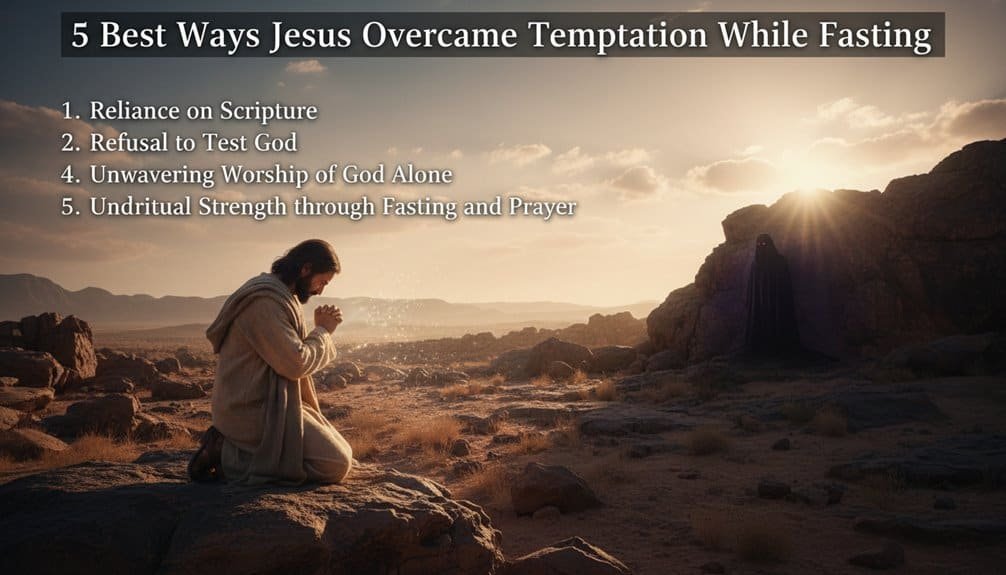
30 Apr 5 Best Ways Jesus Overcame Temptation While Fasting
You can beat temptation while fasting by naming its lure—pride, power, provision—so it loses its grip, then smash the devil’s lies with Scripture that directly contradicts his claims. Pause in prayer to let God’s perspective replace the liar’s promises, and lean on the Holy Spirit for guidance. Embrace humility, admit your limits, and choose obedience over instant gratification, turning each trial into worship. Keep going and you’ll discover deeper strategies for lasting victory.
Table of Contents
What Jesus’ Strategy Teaches Us About Defeating Temptation
How does Jesus’ approach to temptation guide you today? You see Him in the wilderness, hungry and isolated, yet He refuses to yield. First, He identifies the lure’s core—pride, power, provision—and calls it out by name. You can do the same: name the temptation, then strip it of its allure. Second, He leans on Scripture, quoting it like a shield that blocks deceptive arguments. When you face a snare, recall a verse that directly contradicts the lie. Third, He embraces prayer, not as a ritual but as a conversation that reorients his heart toward God’s will. You, too, can pause, breathe, and invite divine perspective. Fourth, He models humility, recognizing his dependence on the Father. Accept your limits; ask for help. Finally, He chooses obedience over instant gratification, trusting long‑term purpose. Apply these steps, and you’ll dismantle temptation’s grip with purpose and peace.
How Jesus’ Prayer Stopped the Devil’s Lies During Temptation
Ever wondered why Jesus turned to prayer the moment the devil whispered deceit? You see, when the tempter offered shortcuts and power, Jesus didn’t argue; He simply lifted His eyes to the Father. Your own heart can mirror that response—pause, breathe, and speak the Scriptures aloud. Prayer redirects focus from the liar’s promises to God’s truth, breaking the devil’s narrative loop. By invoking the Father’s authority, Jesus exposed the emptiness of the offers and reclaimed the battlefield. When you pray, you enlist divine power that the enemy can’t overcome. The act of prayer creates a spiritual firewall, turning temptation into a moment of worship rather than a trap. So, next time doubt creeps in, remember: a quick, sincere prayer can silence the devil’s lies and keep you anchored in the truth.
How Scripture Memorization Turned Temptation Into Testimony
Why does memorizing Scripture transform a moment of weakness into a powerful testimony? When you internalize God’s promises, the devil’s whispers lose their grip because you can answer with truth, not panic. You recall Psalm 91’s assurance of protection, and the temptation to doubt evaporates. Each verse you’ve stored becomes a shield you can wield instantly, turning a crisis into a witness of divine faithfulness.
During a fast, hunger sharpens the mind, but the familiar rhythm of John 3:16 steadies your heart, reminding you why you endure.
Later, when you share the story, listeners hear not just your struggle but the exact words that rescued you, reinforcing the power of Scripture. That personal testimony encourages others to memorize, creating a ripple effect: one memorized line defeats temptation, then inspires a community to lean on God’s living Word.
How Jesus Turned Weakness Into Strength During Temptation
Ever felt your resolve crumble under pressure? You see Jesus, when hunger gnawed and the devil whispered, didn’t let his physical frailty dictate his spiritual might. He recognized his human need for sustenance, then redirected that vulnerability into a prayerful dependence on God. By openly acknowledging his weakness, he invited divine power to fill the gap, turning a potential stumbling block into a platform for divine revelation. Each temptation became a mirror, reflecting his reliance on Scripture and the Father’s promise. He didn’t mask his hunger; he used it to demonstrate that true strength emerges when you surrender your limits to the One who’s limitless. In those moments, his humility became a conduit for authority, showing you that your own frailties can be the very fuel that powers victorious obedience. Embrace your weakness, and watch it transform into steadfast strength.
How the Holy Spirit Guided Jesus to Victory Over Temptation
When the desert’s heat pressed in, the Holy Spirit didn’t just linger—He actively whispered Scripture, steadied Jesus’s heart, and illuminated the path to obedience. You feel the Spirit’s presence as a gentle yet firm guide, turning each temptation into a teaching moment. As Satan offered “bread,” the Spirit reminded you of Deuteronomy 8:3, “Man doesn’t live by bread alone.” That reminder steadied your resolve, converting hunger into trust. When pride whispered “you shall be like God,” the Spirit countered with Philippians 2:6‑8, revealing humility’s power. Each scriptural echo sharpened your focus, preventing the mind from wandering into doubt.
The Spirit also supplied inner peace, a quiet confidence that the Father’s plan would prevail. By aligning your thoughts with divine truth, you experienced victory, not by might, but by the Spirit’s faithful guidance through every whisper and thought.
Frequently Asked Questions
What Historical Evidence Supports Jesus’ Fasting Practices?
You’ll find that the primary historical evidence for Jesus’ fasting comes from the New Testament itself—particularly the Synoptic Gospels, which recount his 40‑day desert fast (Matthew 4, Mark 1, Luke 4).
Early Christian writers like Josephus and the Apostolic Fathers echo these accounts, and the Jewish tradition of fasting on the Sabbath aligns with the practice.
While extra‑biblical archaeology is sparse, the consistency across these sources supports the historical likelihood of his fasting.
How Did Cultural Customs Influence Jesus’ Response to Temptation?
You’re shaped by the Jewish customs that surrounded you—fasting, prayer, and scriptural study were daily practices. When temptation struck, you’d recall the Sabbath’s holiness, the synagogue’s teachings, and the community’s reverence for obedience. Those traditions gave you a framework: you’d quote Scripture, rely on communal memory of Moses, and honor the covenant. By aligning your response with established rites, you turned personal trial into a public affirmation of faith.
Did Jesus’ Fasting Differ From Old Testament Examples?
You’ll see that Jesus’ fasting was more focused and purposeful than many Old Testament instances. He fasted for forty days in the wilderness, a brief, intense period designed to confront temptation directly, whereas Old Testament fasts often spanned weeks or months for mourning, repentance, or national crisis. His fast combined prayer, solitude, and divine reliance, emphasizing spiritual preparation over ritual length, showing a distinct, mission‑driven approach.
What Role Did Nutrition Play in Jesus’ Fasting Periods?
You’ll find that nutrition isn’t highlighted in the Gospel accounts; Jesus’ fasting is presented as a spiritual discipline rather than a dietary regimen. The texts focus on his reliance on prayer and divine provision, not on specific foods or caloric intake. So, while you might assume a strict diet, the narrative treats the fast as a means to deepen faith, not to explore nutritional effects.
How Do Modern Believers Apply Jesus’ Fasting Methods Today?
You follow Jesus’ example by setting clear spiritual goals, choosing short or intermittent fasts, and pairing them with prayer, Scripture meditation, and service.
You limit food or certain meals, then use the hunger moments to focus on God’s promises, resisting distractions.
You often fast with a community for accountability, and after the fast you give thanks, sharing testimonies that encourage others and deepen your own faith.
Conclusion
By following Jesus’ example—praying earnestly, memorizing Scripture, leaning on the Holy Spirit, and turning weakness into strength—you can confront temptation head‑on. His strategies show that victory isn’t about flawless resistance but about reliance on God’s power. When you adopt these habits, you transform each trial into a testimony, just as He did, and walk confidently toward a life free from the devil’s lies.











No Comments