

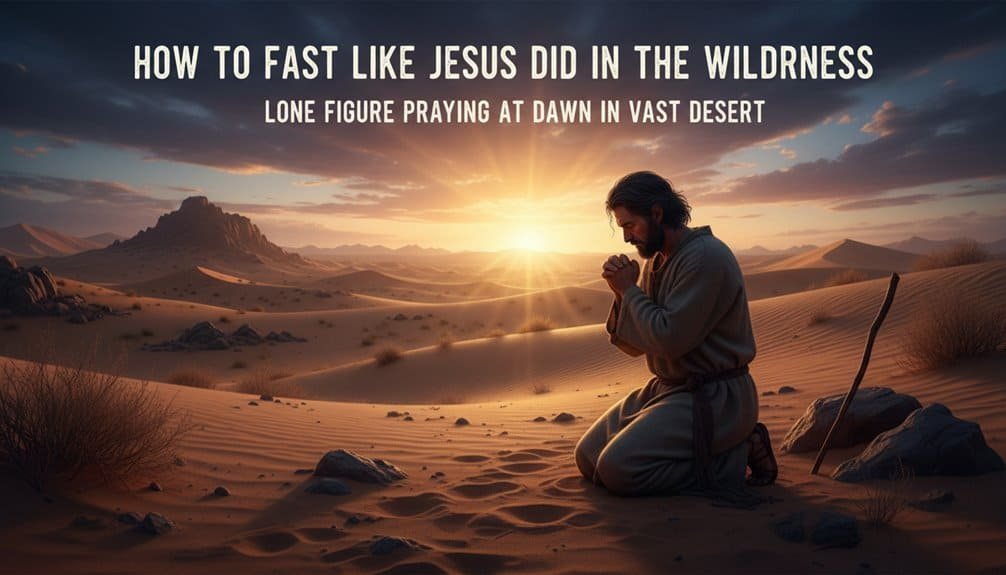
01 May How to Fast Like Jesus Did in the Wilderness
You’ll spend forty days in a barren spot, drinking only water while swapping meals for prayer, Scripture, and mindful breathing. Start by tapering your food intake, stay hydrated, and check with a health professional. Keep a simple journal to track cravings, mood shifts, and insights, and use a daily verse or short prayer to anchor yourself when temptation spikes. Move gently, breathe with a 4‑2‑6 rhythm, and rest when weak, then reintroduce food slowly after day 40. Continue and and you’ll discover deeper steps.
Table of Contents
Quick Overview: What Jesus’ 40‑Day Fast Entails
Ever wondered what a 40‑day desert fast actually looks like? You’ll spend four weeks in a barren setting, limiting yourself to water alone while abstaining from food. The goal is to mirror Jesus’ wilderness experience: a disciplined withdrawal from ordinary comforts, focusing on prayer and reflection. You’ll begin by preparing physically—gradually reducing meals, staying hydrated, and consulting a healthcare professional. Once you start, you’ll keep a simple journal, noting cravings, mood shifts, and moments of insight. Expect hunger pangs, fatigue, and heightened emotional awareness, but also a deepening sense of stillness. You’ll maintain a modest routine: waking early, drinking water, praying, and resting when needed. The fast ends only when you’ve completed the full forty days, then you’ll reintroduce food slowly to avoid shock. This structured approach lets you experience the same physical austerity Jesus endured, fostering resilience and focus throughout the journey.
Spiritual Benefits of Jesus’ 40‑Day Fast for You
When you emulate Jesus’ 40‑day desert fast, you open yourself to a profound shift in spiritual awareness. The silence of the wilderness strips away distractions, letting you hear God’s still, small voice more clearly. You’ll sense a deeper dependence on divine provision, realizing that true sustenance comes from prayer, not just food. This heightened reliance cultivates humility, softening pride and inviting grace. As you surrender everyday comforts, your heart aligns with God’s purpose, sharpening discernment and strengthening faith. The extended solitude creates space for repentance, allowing past burdens to surface and be released. You’ll experience a renewed sense of identity rooted in Christ rather than worldly achievements. Ultimately, the fast becomes a conduit for spiritual renewal, empowering you to live with greater compassion, patience, and unwavering trust in God’s plan.
Prepare Your Mind Like Jesus Did for a 40‑Day Fast
You’ll start by embracing solitude and prayer, letting silence sharpen your focus.
Then you’ll meditate on Scripture, letting its truths guide each moment of the fast.
Finally, set clear spiritual goals so every hour aligns with the purpose you’ve chosen.
Embrace Solitude and Prayer
Stepping into solitude, you’ll quiet the chatter of daily life and create a space where prayer becomes your compass, just as Jesus did before his 40‑day fast. Find a simple, distraction‑free spot—perhaps a corner of a room or a quiet bench outdoors—where you can sit undisturbed for at least fifteen minutes each day. Turn off notifications, silence the TV, and let the world fade. Begin with a brief breath prayer, inviting God’s presence to fill the silence. Speak honestly, confessing fears and hopes, then listen for the still, small voice that guides you. Keep a small notebook to jot any insights, but resist the urge to over‑analyze. This disciplined solitude sharpens your focus, steadies your heart, and prepares you for the physical demands of fasting.
Focus on Scripture Meditation
Why not let Scripture become the heartbeat of your fast, guiding every breath and thought as Jesus did in the wilderness? When you settle into the desert of your mind, choose a passage that speaks directly to hunger, dependence, and trust. Read it slowly, then pause to let each word settle like a stone in a still pond.
Memorize a single verse, repeat it through the day, and let its rhythm replace the chatter of cravings.
Visualize the scene—Jesus on the mount, the wind whispering the Word. Let the Holy Spirit illuminate hidden meanings, and write brief reflections in a journal. This focused meditation steadies your spirit, aligns your purpose, and transforms the fast into a living dialogue with God.
Set Clear Spiritual Goals
When Scripture settles into your heart, the next step is to define what you expect God to accomplish during the fast. Identify one or two concrete spiritual outcomes—perhaps deeper humility, sharper discernment, or a specific prayer request. Write them down, then break each outcome into measurable steps: a daily meditation focus, a verse to memorize, or a habit to pray at a set time.
Keep your goals realistic for a 40‑day stretch; avoid vague wishes like “be closer to God” without a clear indicator. Review your list each morning, visualizing the transformation you seek. This intentional mapping mirrors Jesus’ purposeful preparation in the wilderness, turning hunger into a catalyst for divine alignment.
Wilderness Discipline: Lessons From Jesus’ Desert Experience
You’ll discover that solitary dependence sharpens your focus and fuels your resolve.
By committing to daily spiritual discipline, you align your heart with the rhythm of the desert.
These practices together transform the wilderness into a training ground for lasting transformation.
Embrace Solitary Dependence
Ever wondered how solitude can sharpen your spirit? When you step into the desert of your daily routine, you learn to rely on God alone, not on the chatter of friends or the comfort of crowds. The barren landscape strips away distractions, forcing you to hear the still, small voice within. You’ll discover that dependence isn’t weakness; it’s a disciplined trust that fuels your fasting. Embrace the quiet, let your thoughts settle, and watch how your prayers deepen. As you walk alone, you’ll notice the rhythm of breath and heartbeat aligning with divine timing. This solitary dependence builds resilience, sharpens focus, and prepares you for the next phase of your spiritual journey.
Practice Daily Spiritual Discipline
A disciplined routine of prayer, Scripture, and silence can turn the desert of daily life into a training ground for spiritual stamina. You begin each morning with a brief, focused prayer, inviting God’s presence before the day’s noise arrives. Follow with a short passage of Scripture, letting its truth settle in your heart like water in a dry well. Then sit in silence for a few minutes, listening for the still, voice that guides you.
Repeat this pattern at midday and evening, adjusting length to fit your schedule. Consistency builds habit, habit builds resilience, and resilience fuels your fast. By treating each session as a small wilderness trek, you strengthen your spirit, sharpen discernment, and stay anchored amid temptation.
Managing Physical Hunger During Jesus’ 40‑Day Fast – Practical Tips
How can you keep your body steady when hunger gnaws during a 40‑day wilderness fast? First, hydrate. Drink water regularly; a small sip every hour steadies blood sugar and eases stomach cramps.
Second, use light, nutrient‑dense foods sparingly—think a few dates or a handful of nuts at sunrise and sunset. The limited calories signal your body that sustenance arrives, reducing panic.
Third, practice mindful breathing. Inhale deeply for four counts, hold two, exhale for six; this lowers cortisol and distracts from pangs.
Fourth, keep moving slowly. Gentle walks or light chores maintain circulation without draining energy.
Finally, rest when you feel weak. A brief nap restores glycogen stores and prevents irritability.
Overcoming Temptation in Jesus’ 40‑Day Fast – Proven Strategies
Why does temptation feel so intense when you’re alone in the desert? The silence amplifies every craving, and the barren landscape mirrors your inner void. To counter that, anchor yourself in purposeful prayer. Set specific, timed petitions—like “Give me strength at sunrise”—so your mind stays on divine rather than desire. Next, visualize the temptations as fleeting shadows; imagine them passing like wind over dunes. When a whisper of doubt arises, repeat a short Scripture verse aloud; the rhythm disrupts the mental loop. Physical movement also helps—walk a short distance, feel the sand, then return to your spot, reminding yourself that the body can endure. Finally, enlist a trusted companion for daily check‑ins, even if it’s a brief text. Their accountability creates a safety net, turning isolation into a shared mission. These strategies keep focus sharp, allowing you to press forward through the 40‑day trial.
Safely Replicate Jesus’ 40‑Day Fast in Modern Life
After mastering the mental tools that keep temptation at bay, you can now shape a practical, safe 40‑day fast that fits today’s schedule.
Begin by defining a clear objective—whether it’s spiritual clarity, health reset, or discipline—and set a realistic timeline.
Choose a modified fasting protocol: intermittent fasting, water‑only days, or a plant‑based broth regimen.
Consult your physician to verify that any pre‑existing conditions won’t be aggravated.
Schedule low‑stress activities during fasting windows; replace meals with prayer, meditation, or light exercise.
Stay hydrated, monitor electrolytes, and keep a journal to track cravings, mood swings, and insights.
If you feel dizziness, severe fatigue, or blood‑sugar dips, break the fast safely with a nutrient‑dense snack.
Gradually re‑introduce foods after day 40, honoring the transition with gratitude.
This structured, mindful approach lets you emulate Jesus’s dedication while protecting your body and mind.
Frequently Asked Questions
Can I Fast for 40 Days Without Medical Supervision?
No, you shouldn’t attempt a 40‑day fast without medical supervision. Your body needs electrolytes, vitamins, and regular monitoring to avoid dangerous complications like electrolyte imbalance, organ failure, or severe dehydration.
Even short intensive fasts can cause dizziness, fainting, or heart issues.
If you’re determined, consult a healthcare professional first, set up a monitoring plan, and consider a gradual, supervised approach rather than jumping straight into four weeks.
What Foods Are Allowed During a 40‑Day Fast?
You can sip clear water, herbal tea, or black coffee throughout a 40‑day fast, but if you choose a modified fast, stick to low‑calorie, nutrient‑dense foods like broth, diluted vegetable juice, and small amounts of fresh fruit or raw vegetables.
Avoid sugary drinks, processed snacks, and heavy meals. Keep portions tiny, focus on hydration, and listen to your body’s signals to stay safe.
How Do I Handle Social Events While Fasting?
You’ll navigate social events by planning ahead, communicating your fast, and setting clear boundaries.
Tell hosts you’re fasting and ask if low‑sugar, low‑calorie snacks are okay, or simply bring your own.
Keep a water bottle handy, and focus on conversation rather than food.
If temptation spikes, pause, breathe, and remember the purpose of your fast.
Stay confident, and let your commitment guide you without feeling isolated.
Is It Safe to Exercise During a 40‑Day Fast?
You can exercise during a 40‑day fast, but you should keep it light and listen to your body. Stick to gentle walks, yoga, or low‑intensity stretching, and avoid heavy lifting or high‑intensity cardio. Stay hydrated, monitor your energy levels, and stop if you feel dizzy, weak, or nauseous. If you have medical conditions, consult a healthcare professional before combining prolonged fasting with any workout routine.
What Biblical Passages Support Long‑Term Fasting?
You’ll find long‑term fasting in several passages. In Exodus 34:28 Moses fasted forty days and nights. In Numbers 13:25 the spies ate no food for forty days. In 1 Kings 19:8 Elijah went forty days without eating. In Matthew 4:2 Jesus fasted forty days in the wilderness. Daniel 1:12‑16 describes a ten‑day partial fast. Isaiah 58:6‑7 calls for fasting that leads to justice. These texts show biblical precedents for extended fasting.
Conclusion
You’ve seen how Jesus turned a 40‑day wilderness trek into a deep spiritual reset. By prepping your mind, honoring the body’s limits, and staying vigilant against temptation, you can experience similar renewal without risking health. Embrace the discipline, trust the process, and let the desert’s lessons shape a stronger, more focused you.









No Comments