

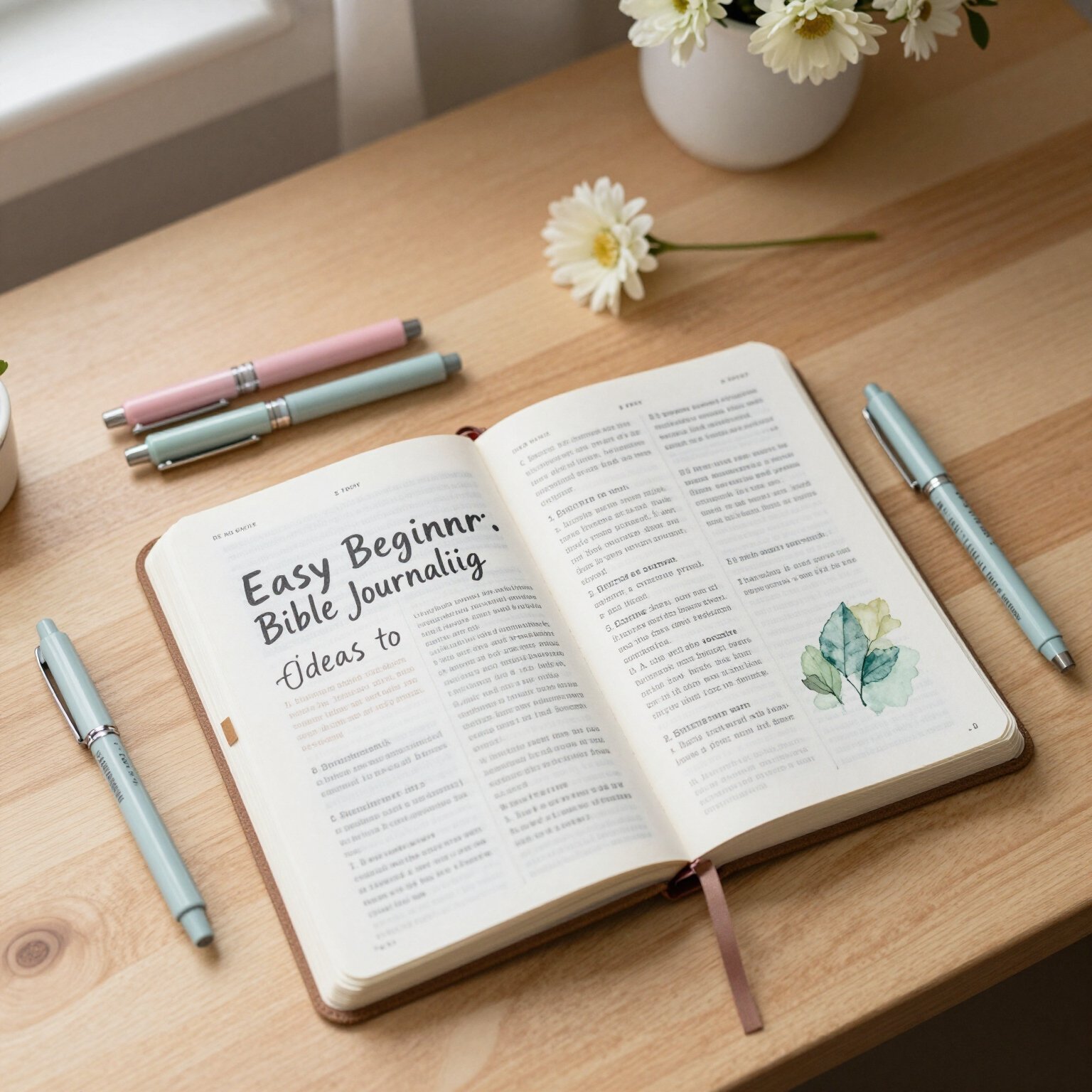
30 Apr Easy Beginner Bible Journaling Notebook Ideas to Copy
Pick a thick, acid‑free notebook that lies flat—wire‑o or sewn binding works best—so you can write, doodle, and add washi‑tape without bleed‑through. In the left margin, jot a one‑sentence summary, underline a key term, and add a quick question like “What does this mean for me today?” Use colored dots (red for warning, blue for promise, green for command) and tiny symbols to tag emotions, then follow the S.O.A.P. template (Scripture, Observation, Application, Prayer) for each entry. Consistent templates and simple stencils keep the layout tidy, and a monthly index plus habit tracker help you stay organized, plus you’ll discover even more tips as you go.
Table of Contents
Choose a High‑Quality Notebook for Your Bible Journal
Choosing a high‑quality notebook sets the foundation for a durable, enjoyable Bible journaling practice. You’ll want thick, acid‑free paper that won’t bleed when you use gel pens, watercolor, or fine‑tip archival inks. Look for a binding that lies flat—wire‑o or sewn binding works best—so you can write comfortably across the spread. A sturdy cover protects your notes from wear and tear, while a size that fits easily in your bag keeps you ready to journal anytime. Test the paper texture before buying; a smooth surface lets you doodle or apply washi‑tape without tearing. Consider a notebook with numbered pages or a built‑in index section; this makes it simple to locate verses later. Finally, pick a design you love—whether it’s a minimalist leather look or a vibrant patterned cover—so you’re motivated to open it and start writing each day.
Create Simple Margin Summaries for Each Scripture
When you write a one‑sentence summary in the left margin, you instantly capture the verse’s core message without breaking your flow. Keep it brief—focus on the main claim or promise, and use your own words to make it personal. Choose a fine‑tip archival pen so the text stays crisp, and underline one key term to highlight the theme. After the summary, add a quick question prompt: “What does this mean for me today?” This nudges reflection without crowding the page. If space allows, jot a one‑line prayer or application beneath the verse, linking the insight to daily life. Date each entry and note the location of your study; this creates a timeline for future review. By consistently using these margin notes, you’ll build a searchable map of Scripture that speeds up study and deepens retention.
Add Color‑Coding and Symbol Cues to Your Bible Journal
After you’ve nailed the one‑sentence margin summaries, add a layer of visual cues to make each entry pop. Use colored dots—red for warning, blue for promise, green for command—to tag emotions at a glance. Small symbols like hearts or stars can mark verses that speak personally to you, while arrows sketch quick links between related passages across the page. Draw thin line borders with a ruler to frame key texts, and slip washi‑tape strip between sections as a clean separator that won’t obscure ink. Assign a color to each theme: yellow for praise, purple for prophecy, orange for wisdom, and keep a matching tab on the page edge for fast navigation. Keep your palette limited to three or four hues so the journal stays cohesive and readable. These cues turn a plain entry into a vivid map of insight, helping you retrieve and reflect on God’s word with ease.
Write Entries Using the S.O.A.P. Method
If you want each study to be both thorough and quick to review, try the S.O.A.P. method. Start with Scripture: write the verse verbatim, underline the key phrase, and note the chapter and verse. Next, move to Observation: jot down what the text tells you—who’s speaking, what event unfolds, and any striking word choices. Keep it brief but precise, using a fine‑tip pen for clarity. Then, write Application: ask yourself how the truth speaks into your life today, and record a concrete step or attitude shift. Finally, add Prayer: turn the insight into a short, heartfelt petition, linking the verse to your request. Use bold headings for each section so you can scan later, and keep the layout consistent across pages. This structure lets you capture depth without drowning in notes, making each entry both meaningful and easy to revisit.
Use Printable Templates and Stencil Symbols for Consistency
Because consistency helps you stay focused, start each study with a printable template that outlines the verse, margins, and space for notes. Choose a thin tracing‑paper template that already marks a header for the reference, a line for the verse, and a shaded box for reflections. Print a set for each week and keep them in a folder so you never scramble for a fresh layout.
Next, use stencil symbols to add visual cues without breaking the flow. Cut out a dove, cross, or heart stencil and place it lightly on the margin before you trace it with an archival‑tip pen. The repeated symbols signal personal significance and create a uniform look across pages. Pair the stencils with simple line borders drawn with a ruler to frame key passages. By printing the same structure and tracing identical symbols, you build a rhythm that makes each entry feel organized, purposeful, and ready for deeper study.
Add Light Artistic Touches Without Overwhelming the Text
Ever wondered how a subtle splash of color can make a verse pop without drowning the word? You can add a faint watercolor wash to the top of the page, letting it dry completely before you write. Choose a single pastel hue that matches the verse’s mood, and keep the opacity low so the paper stays legible. Use a fine‑tip gel pen for tiny highlights on key phrases; a quick stroke of gold or silver draws attention without smudging. Sketch a simple icon—like a leaf, anchor, or lightning bolt—in the corner margin, limiting each doodle to a half‑inch square. If you want borders, apply a thin washi‑tape strip along the edge, ensuring it doesn’t cover text. Finally, sprinkle a few tiny dots of colored ink to denote emotion, but stick to one or two colors per page. These light touches enrich your journal while preserving the scripture’s clarity.
Protect Pages With Archival Paper & Photo Backups
After adding those delicate watercolor washes and tiny icons, you’ll want to keep the pages from getting damaged over time. Slip an archival‑quality, acid‑free sheet between each entry; it creates a barrier against moisture, ink bleed, and wear.
Use a lightweight, matte protective film on the outside of the notebook when you close it, so friction won’t scratch the surface.
At the end of each week, photograph the spread with a smartphone or scanner, then upload the image to a cloud folder organized by date and verse. This digital backup preserves the colors and details even if the physical page fades.
When you store the notebook, keep it upright in a dry, temperature‑stable box, and avoid direct sunlight. Periodically check the archival sheets for dust, gently brushing them off with a soft brush. These steps ensure your journaling art stays vibrant for years.
Set Up a Monthly Index and Simple Habit Tracker
When you finish each entry, jot the verse reference, date, and a brief takeaway in a dedicated monthly index page, then mark off a tiny habit‑tracker box to reinforce consistent journaling. Keep the index simple: a two‑column table works best—one column for the verse and date, the other for your insight. Use a fine‑tip pen so the lines stay crisp, and leave a small square beside each row for the habit tick. At month’s end, flip through the index to spot patterns, themes, or verses that resonated most. The habit tracker should be a 30‑day grid placed at the back of your notebook; shade a box each day you write, even if it’s just a quick note. This visual streak motivates you to stay on track and makes it easy to see gaps. By pairing the index with the tracker, you turn scattered reflections into an organized, habit‑forming system that fuels deeper study and steady growth.
Frequently Asked Questions
What Pen Type Prevents Ink Bleeding on Thin Tracing Paper?
You should use a fine‑tip archival gel pen; its pigment‑based ink sits on the surface instead of soaking into the fibers, so it won’t bleed through thin tracing paper.
Choose a pen with a waterproof, quick‑dry formula and a 0.3 mm or smaller nib for crisp lines.
Test a small area first, but most gel pens give clean, precise writing without smudging or bleed‑through.
Can I Use Reusable Stickers Instead of Permanent Symbols?
Yes, you can swap permanent symbols for reusable stickers, and they’ll keep your pages clean. Choose thin, acid‑free stickers that won’t damage the paper when you peel them off. They let you experiment with colors and icons without committing, and you can rearrange or replace them as your study evolves. Just press them firmly, and avoid over‑sticking to prevent residue on delicate tracing paper.
How Often Should I Replace Archival‑Quality Paper Pads?
You should swap out the archival‑quality paper pads every three to six months, depending on how often you write.
If you journal daily, aim for the three‑month mark; for weekly or occasional use, six months works fine.
Check for signs of wear—yellowing, moisture, or smudging—then replace the pad to keep your entries crisp and preserve the ink.
Regularly rotating pads also prevents ink bleed and maintains a clean, professional look.
Do Digital Backups Replace the Need for Physical Protective Sheets?
No, digital backups don’t eliminate the need for protective sheets. You still want a physical barrier to shield ink from smudging, moisture, and wear, especially if you use gel pens or watercolor washes. A clear sheet keeps each page pristine for future reference, while the cloud copy safeguards against loss or damage. Use both: the sheet preserves the tactile experience, and the backup secures the content long‑term.
Is a Monthly Index Necessary for a Small‑Scale Journal?
You don’t strictly need a monthly index for a small‑scale journal, but it’ll help you find quickly to..’ll write down, and you’ll see patterns over time.
If you prefer a minimalist approach, skip it and rely on dates or verse numbers.
However, a quick one‑page list saves you from flipping through pages later, especially when you want to reference a specific insight or theme.
Conclusion
You’ve got everything you need to turn a plain notebook into a vibrant, organized Bible journal. By picking a quality book, using margin summaries, color‑coding, the S.O.A.P. method, and printable templates, you’ll keep your thoughts clear and your pages beautiful. Add light artistic touches, protect your work with archival paper, and back it up with photos. Finally, a monthly index and habit tracker will keep you consistent and inspired all year long.











No Comments