

05 Mar Why Did Jesus Ride a Donkey on Palm Sunday?
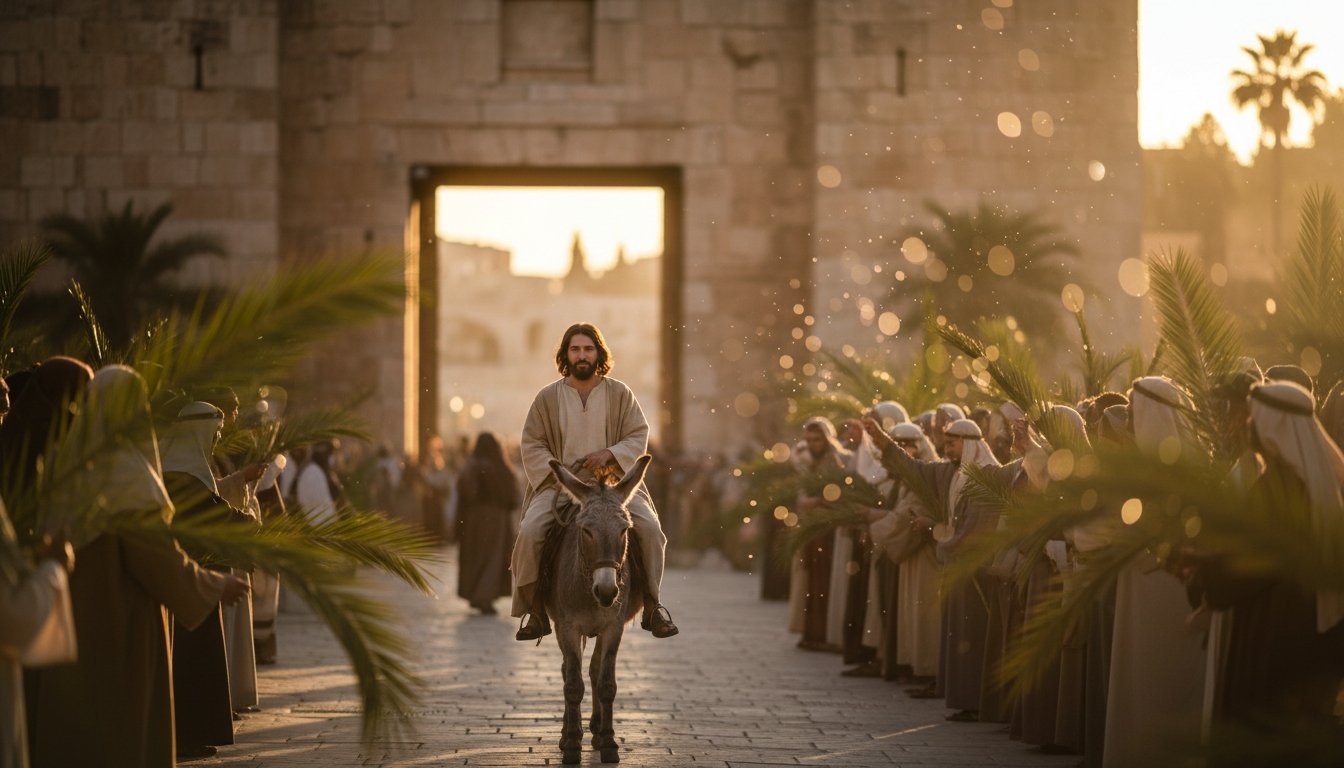
Jesus rode a donkey to demonstrate the humble, peaceful nature of his Messianic kingship, in contrast to worldly rulers. By fulfilling the Old Testament prophecy of the Messiah entering Jerusalem on a donkey, Jesus revealed his spiritual kingdom and sacrificial love. This pivotal event captured the paradox of triumph through humility – a glimpse into the deeper truths you’ll discover about Jesus’ mission.
Table of Contents
Key Takeaways
- Jesus rode a donkey to symbolize humility, peace, and the rejection of worldly power, in contrast with the imagery of a conquering warhorse.
- The donkey-ride fulfilled the Old Testament prophecy in Zechariah 9:9, identifying Jesus as the promised Messiah and the establishment of God’s eternal kingdom.
- The humble choice of a donkey over a horse demonstrated the nature of Messianic kingship, emphasizing servanthood and sacrificial love over earthly power and prestige.
- The donkey’s association with carrying burdens symbolized Jesus’ role in bearing the sins of humanity, aligning with the kingdom values of sacrificial love.
- The triumphant yet humble entry into Jerusalem on a donkey revealed the paradox of triumph through humility, fulfilling prophecy and signaling the plan to save humanity through divine love.
The Symbolic Significance of Jesus Riding a Donkey
Although the Bible doesn’t explicitly explain the symbolic meaning behind Jesus riding a donkey, scholars have proposed several interpretations. The donkey was a common mode of transportation, often associated with royalty and humility. By choosing this humble animal, Jesus demonstrated his meekness and rejection of worldly power. Additionally, the donkey’s association with peace contrasted the military imagery of a horse, suggesting Jesus’ kingdom wasn’t of this world. Furthermore, the donkey’s role in the Old Testament as a beast of burden may symbolize Jesus’ willingness to bear the sins of humanity. These symbolic connections reveal Jesus’ subversion of earthly expectations and his embodiment of a different kind of kingship – one marked by servanthood and sacrificial love.
Old Testament Prophecy and the Messianic Implications
Why did Jesus’ triumphal entry into Jerusalem on a donkey fulfill Old Testament prophecy and point to his Messianic identity? The prophet Zechariah had foretold that the coming Messiah would ride into Jerusalem on a donkey (Zechariah 9:9). By fulfilling this prophecy, Jesus demonstrated he was the promised Messiah who’d establish God’s eternal kingdom. Riding a lowly, humble animal rather than a majestic warhorse, Jesus showed his kingdom wasn’t of this world but a spiritual one. This act aligned with the Messianic vision of a king who’d bring peace, not conquer through military might. Jesus’ deliberate choice to fulfill the Zechariah prophecy affirmed his claim to be the long-awaited Messiah who’d save his people.
The Humble and Triumphant Entry Into Jerusalem
When Jesus entered Jerusalem on a humble donkey, he made a powerful statement about the nature of his Messianic kingship. He didn’t arrive on a warhorse, as a conquering general, but on a lowly beast of burden – a symbol of peace, not war. This fulfilled ancient prophecies and revealed Jesus as the long-awaited Messiah, the King of kings who’d establish God’s eternal kingdom. His triumphant yet humble entry captivated the crowds, who welcomed him with shouts of praise. Jesus didn’t seek earthly power or prestige, but a spiritual kingdom where he’d reign in the hearts of his people. This poignant scene underscores Jesus’ radical humility and the surprising way he’d fulfill his Messianic mission.

Frequently Asked Questions
Was Jesus Able to Ride Other Animals?
Yes, Jesus was likely able to ride other animals besides a donkey. As a skilled carpenter, He would’ve been adept at working with various materials and animals. However, the Bible focuses on His riding a donkey, which fulfilled an ancient prophecy and demonstrated His humility and status as the Messiah arriving in peace, not as a conquering king on a warhorse.
Why Did Jesus Not Choose a Horse?
Jesus didn’t choose a horse because riding a donkey had symbolic significance. Donkeys were associated with peace and humility, in contrast to the power and status of horses.
Did Jesus Have Experience Riding Donkeys Before?
No, there’s no indication that Jesus had prior experience riding donkeys.
He chose to ride a donkey into Jerusalem as a symbolic act, fulfilling the prophecy of the Messiah arriving on a humble donkey. This demonstrated His humility and His role as a king who came to serve, not to be served.
The donkey was a common animal used for transportation, not a powerful warhorse.

Were There Any Other Options for Jesus to Ride?
You know, Jesus could’ve ridden a horse, but that would’ve sent the wrong message. Riding a donkey was a symbolic gesture, showing he came in peace, not as a conquering king. It was a humble, relatable mode of transportation that aligned with his mission of service and sacrifice. So the donkey was the perfect choice for Jesus to make his triumphal entry into Jerusalem.
Did the Disciples Have Any Say in the Animal?
The disciples didn’t have much say in the animal Jesus rode. They simply followed Jesus’ instructions to find and bring him a donkey.
As the Messiah, Jesus chose to ride the donkey to fulfill the prophecy and make a powerful symbolic statement about his humble nature and his role as a peaceful king.
Conclusion
You can see that Jesus’ ride on a donkey wasn’t just a random choice. It fulfilled an Old Testament prophecy, signifying his role as the promised Messiah. By humbly entering Jerusalem on a donkey, Jesus showed his kingdom wasn’t about worldly power, but about a different kind of triumph – one that would ultimately lead to the salvation of all who believe in him.








No Comments