

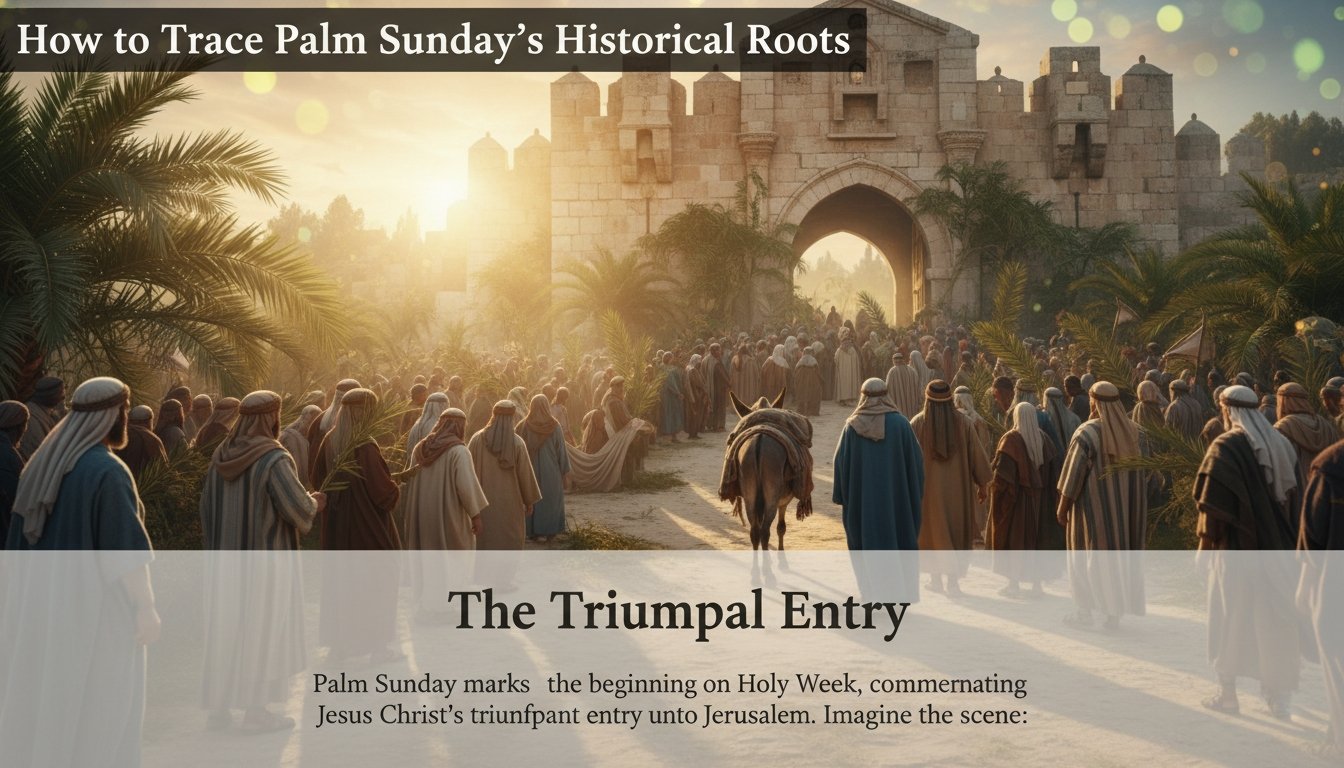
01 Mar How to Trace Palm Sunday’s Historical Roots
To trace the historical roots of Palm Sunday, start with the Gospels which recount Jesus’ triumphant entry into Jerusalem amidst cheering crowds waving palm branches – an event that set the stage for his passion and resurrection. This biblical foundation led to Palm Sunday becoming a central part of the Christian calendar, with diverse global traditions that preserve the core symbolic meaning of the palm branches. Dig deeper to explore how this ancient celebration continues to resonate with the promise of redemption.
Key Takeaways
- Examine biblical accounts in the Gospels, which describe Jesus’ triumphant entry into Jerusalem amidst crowds waving palm branches and shouting “Hosanna.”
- Investigate the historical context of the Passover festival and how Jesus’ entry fulfilled ancient prophecies.
- Analyze the liturgical significance of Palm Sunday as the start of Holy Week, a sacred period for reflecting on Jesus’ sacrifice and the promise of redemption.
- Explore the diverse global traditions surrounding Palm Sunday celebrations, which incorporate local customs and foliage reflective of regional cultures.
- Analyze the symbolic meaning of palm branches as a representation of victory, triumph, and eternal life, connecting to the themes of the Messiah’s recognition and the Resurrection.
The Biblical and Historical Foundations of Palm Sunday
What’re the biblical and historical foundations of Palm Sunday? The events of Palm Sunday are rooted in the Gospels, where Jesus triumphantly entered Jerusalem just days before his crucifixion. The crowds welcomed him by waving palm branches and shouting “Hosanna!” This tradition connects to the Jewish festival of Passover, commemorating the Israelites’ exodus from Egypt. By entering Jerusalem on a donkey, Jesus fulfilled ancient prophecies and asserted his role as the Messianic king. Historically, Palm Sunday marks the start of Holy Week, the most sacred period in the Christian calendar. It’s a time to reflect on Jesus’ sacrifice and the promise of redemption through his resurrection.
Global Diversity in Palm Sunday Traditions
While the biblical and historical foundations of Palm Sunday are rooted in the Gospels, the tradition has taken on diverse forms worldwide. From the Philippines’ vibrant processions with decorated bamboo poles to the elaborate rituals of the Eastern Orthodox Church, each culture has infused the celebration with unique elements. In parts of Latin America, worshippers don colorful costumes and masks, while in Italy, the day is marked by the blessing of olive branches. Even the choice of foliage varies, with palm leaves giving way to willow, box, or yew in regions where palms are scarce. These global interpretations reflect the universality of Palm Sunday, as the faithful commemorate Christ’s entry into Jerusalem through the lens of their own traditions and beliefs.
The Symbolic Significance of Palm Branches
Why are palm branches so deeply symbolic in the context of Palm Sunday? They represent victory, triumph, and honor. In ancient times, palm branches were carried by people to welcome and celebrate victorious leaders.
Palm branches symbolize victory, triumph, and honor, as they were carried to welcome victorious leaders in ancient times.
On the first Palm Sunday, crowds welcomed Jesus into Jerusalem by laying palm branches on the ground before him, acknowledging him as the Messiah.
The palm’s evergreen leaves also symbolize eternal life, a fitting motif for Jesus’ triumphal entry, which foreshadowed his ultimate victory over death through the Resurrection.
Today, palm branches remain a central symbol of Palm Sunday, reminding us of Christ’s kingship and the promise of eternal life that his sacrifice secured for all who believe.
Frequently Asked Questions
Is Palm Sunday Always Celebrated on the Same Date?
No, Palm Sunday isn’t always celebrated on the same date. It’s observed on the Sunday before Easter, and the date changes each year.
That’s because the date of Easter is determined by the lunar calendar, so Palm Sunday, which comes a week before, shifts around too.
You’ll find Palm Sunday falls anywhere from late March to mid-April depending on when Easter falls that year.
How Do Weather Conditions Impact Palm Sunday Celebrations?
Weather conditions can significantly impact Palm Sunday celebrations. If it’s raining or snowing, outdoor processions and gatherings may be disrupted. Warm, sunny weather, on the other hand, encourages larger crowds and lively festivities. The palms used in the ceremonies may also be affected by extreme weather, making them harder to obtain or less vibrant. Ultimately, the celebrations adapt to the day’s climate to ensure the traditions are properly observed.
Can Anyone Participate in the Palm Sunday Procession?
Anyone can participate in the Palm Sunday procession. It’s a public event, so you’re welcome to join in and commemorate Jesus’ triumphal entry into Jerusalem.
Whether you’re a Christian or not, you can take part in the symbolic march with palm branches or other greenery to celebrate this significant day in the Christian calendar.
What Should One Wear to a Palm Sunday Service?
You should wear your Sunday best to a Palm Sunday service. Opt for smart, modest attire that’s appropriate for the occasion. Avoid overly casual or flashy outfits. The focus should be on the religious celebration, not your appearance.
Feel free to add a touch of green or incorporate palm leaves into your ensemble to honor the day’s traditions.
Are There Any Health Concerns With Handling Palm Branches?
There aren’t any major health concerns with handling palm branches. However, you should avoid touching your face or eyes after handling them, as they can harbor bacteria or irritants. Wash your hands thoroughly after the service, and consider wearing gloves if you have sensitive skin.
Conclusion
You can trace the historical roots of Palm Sunday back to the biblical accounts of Jesus’ triumphal entry into Jerusalem. Though the traditions vary globally, the palm branches symbolize Christ’s kingship and the people’s joyful welcome. Examining these foundations can deepen your understanding and appreciation of this significant day in the Christian calendar.









No Comments