

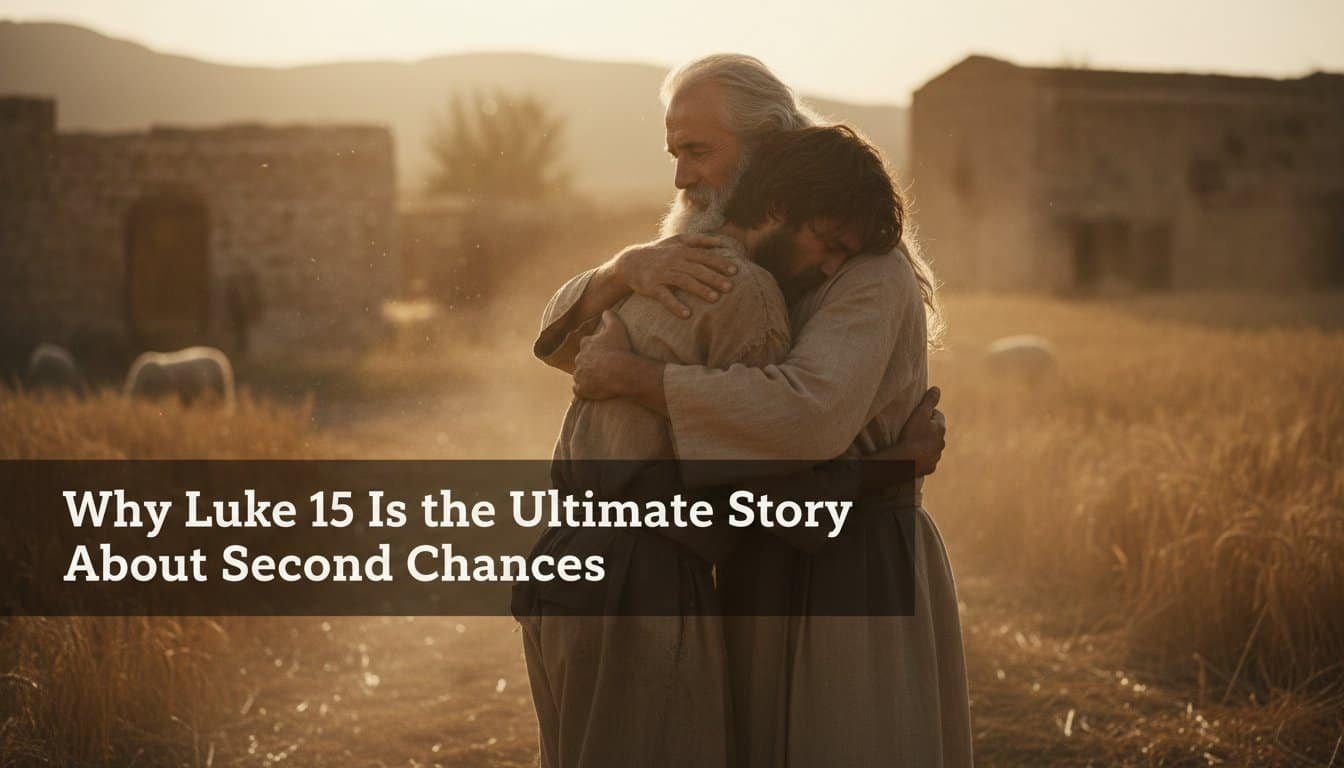
02 Feb Why Luke 15 Is the Ultimate Story About Second Chances
Luke 15 reveals God’s heart through three escalating parables where lostness triggers divine pursuit, not abandonment. You’ll discover that being “lost” means relational estrangement, yet the Father actively searches rather than passively waits. When the prodigal returns, restoration precedes confession—receiving a robe, ring, and feast before proving worthiness. This pattern demonstrates that God’s grace transcends cultural expectations, offering complete reconciliation over mere forgiveness. Understanding this sequence transforms how you’ll approach your own spiritual journey.
Key Takeaways
- Luke 15’s three parables show that no one is too lost for God’s redemptive love and restoration.
- The Father actively pursues the lost rather than waiting passively, demonstrating divine initiative in second chances.
- Restoration happens immediately upon return—robe, ring, and feast—without requiring proof of worthiness or extended probation.
- The celebration pattern in each parable reveals God’s joy over reconciliation, emphasizing grace over condemnation.
- Even the self-righteous elder brother receives invitation to join the feast, showing second chances extend beyond obvious sinners.
What Does It Mean to Be “Lost” in Luke 15?

When Jesus addresses the Pharisees’ criticism of His association with sinners and tax collectors, He employs three interconnected parables that progressively define what it means to be “lost.” The lost sheep represents those who’ve wandered from God’s protection through moral drift, finding themselves vulnerable in the wilderness of sin.
You’ll notice the escalating intimacy in these parables—from animal to object to child. Being “lost” isn’t merely physical separation; it’s relational and spiritual estrangement from divine provision. The lost coin, though inanimate, symbolizes those rendered spiritually lifeless through sin’s corrosive effects.
The prodigal son epitomizes ultimate lostness: deliberate rebellion against the Father’s authority, squandering divine inheritance, and experiencing complete moral degradation. Yet even the elder brother demonstrates lostness through self-righteous distance from the father’s heart. Each parable follows an identical narrative sequence of loss, search, recovery, and joy that reveals God’s redemptive pattern.
Christ reveals that lostness encompasses both blatant rebellion and religious presumption, showing that proximity to God’s house doesn’t guarantee intimacy with His heart.
How Does God Respond When We’re Far From Home?
How does divine love respond to human rebellion and separation? Luke 15 reveals God’s heart through the father’s vigilant watch. While you’re distant, consumed by selfish pursuits, God maintains constant attentiveness—scanning the horizon daily, monthly, yearly for your return. This isn’t passive waiting but active surveillance born from love.
When you finally turn homeward, distant compassion immediately springs into action. Before you’ve rehearsed your confession or proven your worthiness, God runs toward you while you’re still far off. He doesn’t wait for your approach—He initiates the reunion with embraces and kisses that override your sin with grace. The father’s willingness to run breaks cultural norms and demonstrates how divine mercy transcends social expectations.
Two word discussion ideas emerge: restoration precedes repentance, celebration supersedes condemnation. God interrupts your planned servant plea with immediate reinstatement—best robe, family ring, feast preparation. Your return from lostness to foundness, from death to life, triggers divine celebration that demonstrates how eagerly God pursues reconciliation over judgment.
What Does Biblical Repentance Actually Look Like?
God’s eager pursuit of reconciliation raises a fundamental question about the human response—what does genuine repentance look like when we encounter such overwhelming grace? Biblical repentance transcends mere emotional regret, demanding a complete reorientation of thought and purpose. It’s not simply feeling bad about consequences but involves deliberate turning away from evil while simultaneously pursuing God.
True repentance requires awareness of personal guilt and corruption, apprehension of God’s mercy in Christ, and radical hatred of sin with deliberate behavioral change. This two word discussion idea—genuine transformation—distinguishes authentic repentance from false alternatives that remain emotion-only or excuse-making.
The prodigal son exemplifies this process: recognizing his condition, understanding his father’s character, and taking decisive action toward home. Biblical repentance produces observable fruit—making amends, accepting consequences without blame-shifting, and demonstrating discernible character transformation. It’s God’s gift enabling complete redirection from self-destruction toward holy living.
Why Do Religious People Struggle With God’s Grace?
Why does accepting unmerited favor prove so difficult for those already familiar with religious concepts? The statistics reveal a troubling reality: only 41% of Christian adherents claim absolute commitment, while 26% struggle with Christ’s sinlessness—fundamental to grace’s foundation. This salvation paradox emerges because religious familiarity often breeds performance-based thinking rather than grace-centered transformation.
You’ll find that religious people frequently approach God transactionally, expecting spiritual effort to earn divine favor. When grace beyond doubt contradicts this merit system, cognitive dissonance occurs. The data shows 20 million Americans claim devotion to Christ yet report no life transformation—evidence that intellectual assent doesn’t guarantee grace acceptance.
Younger generations particularly struggle with this concept, showing 50% biblical worldview decline over three decades. Their resistance stems from grace’s offense to human autonomy and self-sufficiency. Grace demands acknowledging complete spiritual bankruptcy—a humbling reality that challenges religious pride and self-righteousness across all demographics.
Frequently Asked Questions
Why Did the Father Give the Prodigal Son His Inheritance Early?
The father granted early inheritance because you’re witnessing divine love that respects human freedom.
Though the son’s request essentially wished his father dead—culturally devastating—the father demonstrated parental forgiveness by allowing choice without coercion.
This mirrors God’s character: He doesn’t force relationship but permits rebellion.
The elder sibling dynamics reveal how grace operates beyond legal obligations, prioritizing reconciliation over inheritance rights when genuine repentance occurs.
What Happened to the Lost Sheep While the Shepherd Searched?
You’ll find the lost sheep remained in desperate peril throughout the shepherd search, wandering deeper into wilderness danger. While the shepherd searched relentlessly, you’d see the sheep growing increasingly exhausted and vulnerable, unable to save itself or return home. The forgotten flock stayed safely together, but this one sheep faced mounting threats—predators, terrain, exposure—making the shepherd’s active pursuit absolutely critical for survival.
How Much Were the Ten Silver Coins Worth in Today’s Money?
You’re examining coins that carried profound significance beyond their monetary worth. Each silver drachma represented roughly a day’s wages for common laborers, making ten coins equivalent to approximately $800-1,200 in today’s modern valuation. However, how much is worth here transcends economics—these weren’t merely currency but often part of a woman’s dowry or wedding headdress, representing security, identity, and covenant promises within first-century Palestinian culture.
Did the Older Son Eventually Join the Celebration?
You won’t find the answer in Luke’s text—the parable deliberately ends without resolution. This narrative focus creates a didactic tone that forces you to examine your own heart. Jesus leaves the elder son’s decision unresolved, mirroring the Pharisees’ response to His ministry. You’re meant to wrestle with whether resentment or grace will triumph, making this parable’s open ending its most powerful theological element.
Why Doesn’t the Parable Mention the Prodigal Son’s Mother?
You’ll notice the mother’s absence serves Luke’s theological purpose—the father represents God’s complete parental nature, embodying both paternal authority and maternal compassion. This narrative choice eliminates potential confusion about divine gender while highlighting the father’s extraordinary grace. The missing motherly influence actually intensifies the family dynamics, forcing you to see how the father alone provides nurturing love, protective embrace, and unconditional acceptance that characterizes God’s redemptive heart.
Conclusion
You’ve witnessed Christ’s masterful triptych revealing God’s relentless pursuit of the lost. When you’ve wandered into spiritual deadness, squandered divine gifts, or harbored elder-brother resentment, you’re confronted with the Father’s scandalous grace. You can’t earn restoration through religious performance—it’s freely given through repentance and faith. Luke 15 demolishes your self-righteous barriers and exposes God’s heart: He doesn’t merely tolerate your return; He celebrates it with eschatological joy.











No Comments