

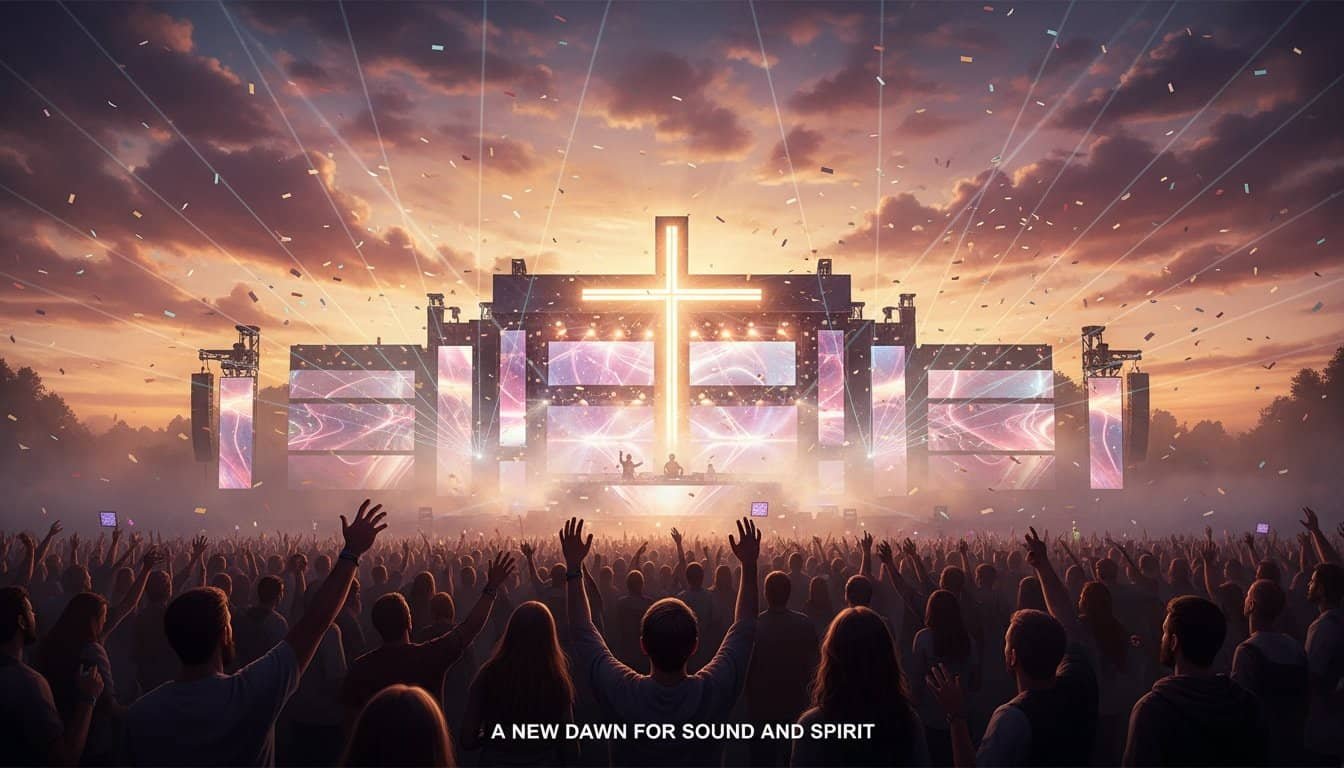
29 Jan This Christian EDM Festival Is Converting Electronic Music Forever
You’re witnessing Christianity’s boldest musical evolution as festivals like Jesus Loves Electro and Passion Conference’s electronic stages transform worship from traditional hymns into immersive spiritual experiences. These events blend EDM’s energy with devotional content, creating synchronized light shows, AI-enhanced production, and dance-driven prayer sessions that attract younger demographics while maintaining theological integrity. Traditional festivals are testing dedicated EDM zones, proving electronic music can preserve Christian identity while revolutionizing how faith communities experience collective worship and spiritual connection.
Table of Contents
Key Takeaways
- Christian EDM festivals like Jesus Loves Electro blend electronic production with worship content, creating new faith-based music experiences.
- Traditional festivals incorporate EDM through dedicated stages and specialized zones while preserving their core Christian programming and demographics.
- EDM worship maintains devotional integrity by transforming dance parties into spiritual journeys with curated visuals and communal prayer.
- AI technology democratizes Christian EDM production, with 48% of producers reporting reduced costs and increased creative accessibility.
- Christian EDM evolves beyond festivals into lifestyle integration, expanding into meditation, wellness, and daily routine contexts.
Do Christian EDM Festivals Actually Exist in 2025?
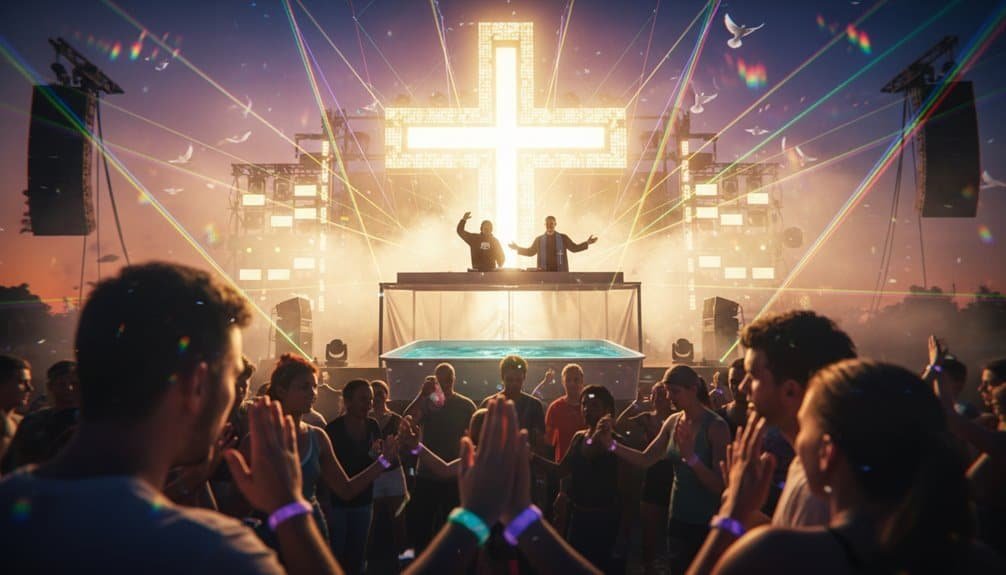
Where exactly do electronic dance music and Christian faith intersect in 2025’s festival landscape? You’ll find the answer isn’t straightforward. While traditional Christian festivals dominate—with over 20 major events like Lifest and Alive Music Festival scheduled across North America—dedicated Christian EDM festivals remain scarce.
However, you’re witnessing an emerging trend. Events like Jesus Loves Electro specifically blend EDM production with worship-focused content, signaling industry evolution. Youth-oriented festivals such as Strive To Be Festival incorporate uplifting electronic elements, testing audience reception for faith-based electronic music.
The Christian Festival Association‘s festival partnerships demonstrate growing openness to diverse musical styles within their member events. While mainstream Christian festivals like SoulFest feature traditional rock acts, you’ll notice subtle EDM integration at youth concerts and specialized events. Major festivals like Kingdom Bound now feature over 50 artists across four stages, creating more opportunities for genre diversity within Christian music events. The genre intersection exists, but you won’t find massive dedicated Christian EDM festivals yet—rather, strategic incorporation within existing faith-based music platforms.
How Traditional Christian Festivals Are Testing Electronic Music Elements
Across North America’s festival circuit, established Christian events are strategically incorporating electronic elements through dedicated EDM stages and specialized zones rather than overhauling their core programming. You’ll find Passion Conference leading this integration with electronic elements and dedicated after-parties, while Winter Jam and Creation Festival position EDM acts on side stages for evening dance parties. This calculated festival staging approach allows traditional organizers to test audience reception without alienating their core rock and pop demographics.
The transformation centers on EDM worship experiences that maintain devotional integrity through curated visual elements. You’re seeing synchronized light shows paired with LED screens displaying scripture and live lyrics, creating multi-sensory environments that encourage collective participation. Leaders facilitate group prayer and communal singing during vocal tracks, transforming dance parties into spiritual journeys. This hybrid model enables festivals like Spirit West Coast and LifeLight to gauge electronic music’s viability while preserving their established Christian identity and programming structure.
Why Christian Artists Are Experimenting With EDM Production
Behind this festival experimentation lies a fundamental shift in how Christian artists approach music production itself. You’re witnessing artists embrace EDM because it offers unprecedented creative freedom and cost efficiency. With 48% of Christian producers reporting AI reduced production costs, you can see why emerging artists gravitate toward electronic production—it’s accessible and affordable.
AI collaboration has become particularly transformative, with 45% of producers using artificial intelligence for mastering audio tracks. This technology democratizes professional-quality production, enabling bedroom producers to compete with established studios. Christian EDM artists leverage these tools to create sophisticated soundscapes that rival mainstream electronic music.
The viral marketing potential is equally compelling. Electronic tracks spread faster across TikTok and Instagram, with 33% of Christian fans embracing AI-generated CEDM content. You’re seeing artists like Forrest Frank achieve organic success through social platforms, proving EDM’s inherent shareability transcends traditional Christian music boundaries and reaches secular audiences effectively.
What Christian EDM’s Future Could Look Like
How will Christian EDM reshape worship culture over the next decade? You’re witnessing the emergence of collective brands that’ll redefine faith-based music consumption. The authenticity trend driving testimony-heavy tracks’ viral success in 2025 will evolve into experience-driven EDM worship where listeners connect through shared spiritual journeys rather than artist personalities.
Community building becomes central as cross-generational production partnerships unite seasoned producers with Gen Z worship leaders taking festival main stages. You’ll see worship houses operating as branded collectives, creating ambient-based experiences that blend deep house aesthetics with contemplative themes.
The wellness integration expanding into 2026 positions Christian EDM as functional content for meditation, workouts, and daily routines. Electronic worship tracks will serve multiple contexts simultaneously—prayer rooms, commutes, gaming sessions—making faith-based music a lifestyle choice rather than purely devotional material. This multi-use approach transforms Christian EDM from niche worship into mainstream wellness culture.
Frequently Asked Questions
How Does AI Technology Impact Christian EDM Festival Production Costs and Logistics?
You’ll see dramatic cost reductions through AI technology’s impact on Christian EDM festivals. AI budgeting systems optimize your financial planning with 50% accuracy improvements, while stage automation cuts technical staffing needs by 40%. You’re benefiting from streamlined logistics that reduce production timelines and equipment costs. Cultural integration remains seamless as AI enhances worship experiences without compromising Christian values, creating efficient festival environments that honor both technological innovation and spiritual mission.
What Percentage of Traditional Church Congregations Accept Electronic Worship Music Styles?
You’ll find that acceptance varies dramatically by denomination, with evangelical Protestant churches showing 57% satisfaction compared to mainline Protestant churches at only 47%.
Your opinion on worship styles largely depends on congregational demographics—younger members drive electronic music adoption while traditional members resist.
Effective youth engagement strategies increasingly incorporate contemporary elements, though most traditional congregations still maintain hybrid approaches rather than full electronic integration.
Are Christian EDM Festivals Attracting Younger Demographics Than Traditional Christian Music Events?
Yes, Christian EDM festivals are successfully attracting significantly younger demographics than traditional Christian music events. You’ll find CEDM’s core audience centers on ages 18-24, representing 23% of listeners, while traditional Christian music spreads across broader age ranges with only 22% Millennials. Through targeted Christian youth engagement strategies and strategic festival demographics positioning, CEDM specifically targets EDM club culture and festival audiences that traditional worship formats haven’t effectively reached.
Which Major Christian Record Labels Are Signing Electronic Dance Music Artists?
You’ll find that major Christian labels haven’t embraced EDM rosters as aggressively as secular counterparts. While Sparrow Records and Tooth & Nail have signed select electronic artists, most Christian labels remain cautious about Christianity and electronic dance music integration. Independent Christian labels like Dream Records show more openness, but mainstream Christian labels typically prefer rock and contemporary worship over EDM’s club-associated culture and production styles.
How Do Christian EDM Festivals Handle Noise Ordinances in Conservative Communities?
You’ll find Christian EDM festivals in conservative communities navigate noise ordinances through strategic venue selection and early permit acquisition.
They’re securing special event variances months ahead, implementing volume limiters to stay below 70-75 dB thresholds, and ending amplified sets by strict curfews.
These festivals leverage their religious exemptions while respecting residential proximity, using sound consultants to monitor perimeter levels and maintain community relations.
Conclusion
You’re witnessing a calculated expansion that’s reshaping both secular and sacred music landscapes. Christian EDM isn’t just borrowing production techniques—it’s creating hybrid worship experiences that challenge traditional denominational boundaries. This movement signals electronic music’s maturation beyond club culture into institutional spaces. The festival model you’re seeing will likely accelerate crossover collaborations, forcing the broader EDM industry to reconsider its relationship with faith-based audiences and their substantial economic influence.







No Comments