

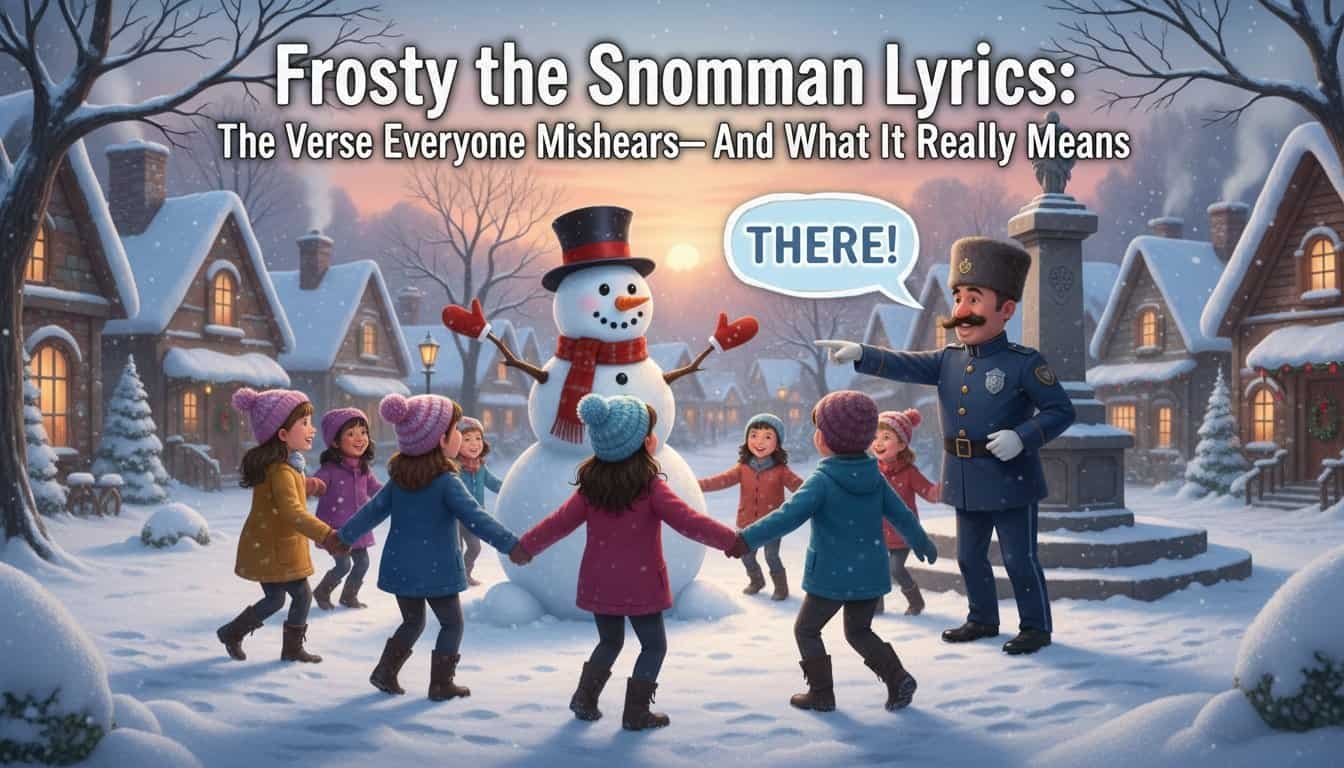
24 Dec Frosty the Snowman Lyrics Explained: the Verse Everyone Mishears – And What It Really Means
You’ve likely been singing “bunny nose” instead of “button nose,” joining millions caught in this cross-generational mishearing caused by phonetic similarity and children’s limited vocabulary processing. The original lyrics follow classical folklore‘s “magical animation” pattern, reflecting deeper themes about mortality and seasonal transformation through archetypal storytelling. The “thumpety thump thump” verse creates additional confusion with its syncopated rhythm and challenging consonant clusters that form tongue-twisters for performers. Understanding these linguistic patterns reveals why certain Christmas songs embed themselves so persistently in cultural memory.
Table of Contents
Key Takeaways
- The widely misheard “bunny nose” replaces “button nose” due to phonetic similarity and children’s preference for familiar animal imagery.
- “Thumpety thump thump” creates pronunciation difficulties through consonant clusters and syncopated rhythm that trips up most singers.
- The song follows classical folklore patterns of magical animation, exploring themes of creation, temporary existence, and dissolution.
- Mishearing occurs from children’s limited vocabulary, early auditory processing challenges, and phonetic similarities enabling alternative interpretations.
- Performance issues stem from rushing through complex dental fricatives and bilabial stops without proper articulation practice.
The Most Misheard Verse in Christmas Music History
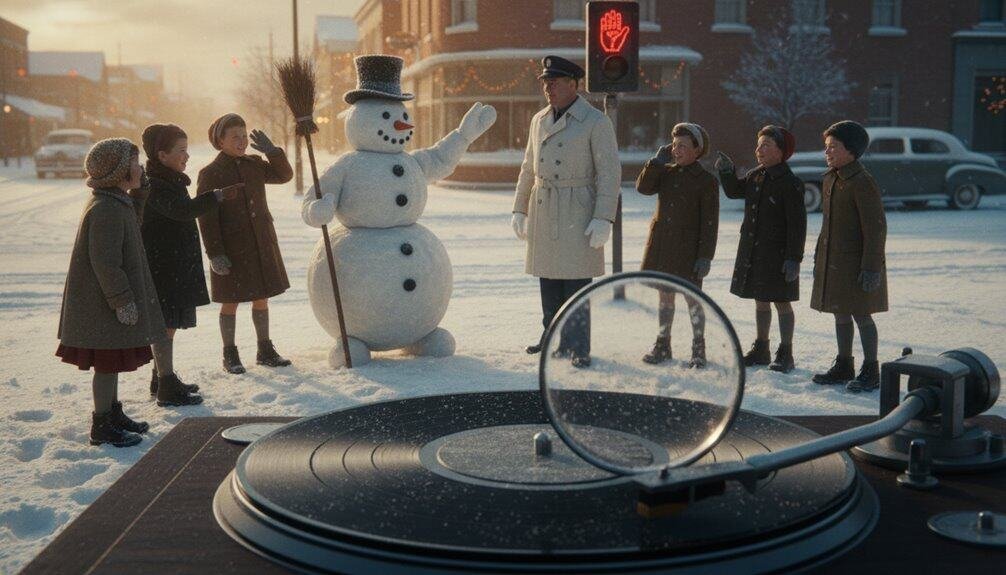
Why does nearly every child sing “with a corn cob pipe and a button nose” as “with a corncob pipe and a bunny nose” during their first encounters with this beloved winter anthem? You’re witnessing a fascinating phenomenon where phonetic similarity creates widespread mishearing across generations.
The “bunny nose” substitution stems from children’s limited vocabulary and auditory processing patterns. “Button” contains consonant clusters that young ears struggle to distinguish, while “bunny” offers familiar phonemes that align with their existing knowledge of cute, small creatures. This mishearing persists because it makes logical sense—rabbits possess tiny, adorable noses that children can easily visualize on a snowman.
Recording Errors from early performances occasionally reinforced these misinterpretations, while Urban Legends suggest some regional broadcasts intentionally altered lyrics for younger audiences. You’ll notice this pattern extends beyond Frosty—Christmas songs frequently undergo similar transformations as children reconstruct unfamiliar words using their personal linguistic frameworks, creating endearing alternative versions that sometimes outlast the originals.
Breaking Down the Original Lyrics and Their Hidden Meaning
When you examine Walter “Jack” Rollins and Steve Nelson’s 1950 composition beyond its surface-level cheerfulness, you’ll discover a sophisticated narrative structure that mirrors classical folklore traditions.
Beneath its cheerful exterior lies a sophisticated narrative echoing timeless folklore traditions and classical storytelling patterns.
The song follows the archetypal pattern of magical animation found in Pygmalion and Pinocchio—inanimate objects gaining consciousness through external forces.
The author intent becomes clear when you analyze the progression: creation, animation, temporary existence, and inevitable dissolution.
This cycle reflects humanity’s relationship with mortality and seasonal change.
The “magic hat” serves as a catalyst, drawing from cultural references to shamanic traditions where headwear symbolizes transformation and power.
You’ll notice the lyrics emphasize Frosty’s awareness of his temporary nature—”I’ll be back again someday.”
This acceptance of impermanence distinguishes the song from simple children’s entertainment.
The composers embedded themes of resurrection and cyclical renewal, transforming a playful winter tale into a meditation on life’s ephemeral beauty and the promise of return.
Why This Line Trips Up Singers and How to Get It Right
Although “Frosty the Snowman” appears deceptively simple in its melodic structure, professional vocalists consistently stumble over the phrase “thumpety thump thump, thumpety thump thump, look at Frosty go” due to its syncopated rhythm and rapid consonant clusters.
You’ll encounter difficulty because the repeated “th” and “mp” sounds create tongue-twisters that require precise articulation.
The “thumpety” syllables demand quick transitions between dental fricatives and bilabial stops, challenging your mouth’s muscle memory.
Many singers rush through these sections, sacrificing clarity for speed.
Effective pronunciation tips include practicing each consonant cluster slowly before attempting full tempo.
You should emphasize the “th” sound distinctly, avoiding lazy “fumpety” substitutions.
Focus on crisp “p” sounds without over-aspirating.
Breath control becomes crucial during this rapid-fire sequence.
You’ll need sufficient air support to maintain vocal clarity while navigating the rhythmic complexity.
Practice taking strategic breaths before entering the “thumpety” phrases, ensuring you don’t sacrifice articulation for breathlessness.
Professional performers recommend marking breath points in your score.
Frequently Asked Questions
Who Wrote the Original Frosty the Snowman Song?
You’ll find Walter “Jack” Rollins and Steve Nelson credited as the original songwriters of “Frosty the Snowman,” written in 1950.
Rollins brought extensive songwriters background from Tin Pan Alley, while Nelson contributed his broadcasting experience.
Their copyright history reveals the song’s immediate commercial success, recorded first by Gene Autry.
The duo’s collaboration reflects post-war America’s cultural shift toward family-oriented entertainment, establishing enduring seasonal mythology through precise melodic construction.
What Year Was Frosty the Snowman First Recorded?
You’ll find “Frosty the Snowman” was first recorded in 1950 by Gene Autry with the Cass County Boys. This initial recording’s release impact transformed a simple children’s song into an enduring holiday standard.
Autry’s chart debut with the track reached number seven on Billboard’s country charts, demonstrating remarkable commercial appeal. The recording’s technical precision featured Autry’s distinctive vocal style paired with orchestral arrangements that established the definitive interpretation still referenced today.
Are There Different Versions of Frosty the Snowman Lyrics?
You’ll find numerous versions spanning decades of recordings, each reflecting distinct artistic interpretations and cultural adaptations.
Language translations have produced localized variants across different countries, while holiday parodies have spawned comedic alternatives that subvert the original’s innocent themes.
These variations demonstrate how folk songs evolve through oral tradition and commercial reinterpretation, creating a complex textual genealogy that reveals shifting cultural values and musical practices within American holiday entertainment traditions.
What Instruments Are Typically Used in Frosty the Snowman Performances?
You’ll typically hear sleigh bells creating that quintessential winter percussion throughout performances, establishing the song’s seasonal authenticity.
The brass section—trumpets, trombones, and French horns—provides the melodic foundation while reinforcing the tune’s marchlike character.
Piano anchors most arrangements, with strings adding warmth in orchestral versions.
Woodwinds, particularly clarinets and flutes, often carry counter-melodies.
This instrumentation reflects 1950s popular music conventions, balancing festive percussion with traditional big-band elements.
Is Frosty the Snowman Considered a Traditional or Modern Christmas Song?
You’ll find Frosty’s cultural classification sits firmly in modern Christmas repertoire, written in 1950 by Walter “Jack” Rollins and Steve Nelson.
Your holiday perception might blur this distinction because it’s become so embedded in seasonal tradition.
You’re experiencing a song that’s achieved quasi-traditional status through decades of cultural penetration, yet it lacks the centuries-old folk origins that define truly traditional carols like “Silent Night.”
Conclusion
You’ve witnessed how cultural transmission distorts even beloved holiday traditions through oral repetition and regional variations. The phonetic similarities between correct and incorrect versions reveal how memory reconstructs familiar patterns, creating plausible alternatives that persist across generations. When you’re teaching or performing this classic, you’re participating in folklore preservation—ensuring authentic lyrical content survives while understanding why certain mishearings occur naturally within English phonology and musical rhythm patterns.











No Comments