

05 Mar Zechariah 9:9 and Jesus Triumphal Entry
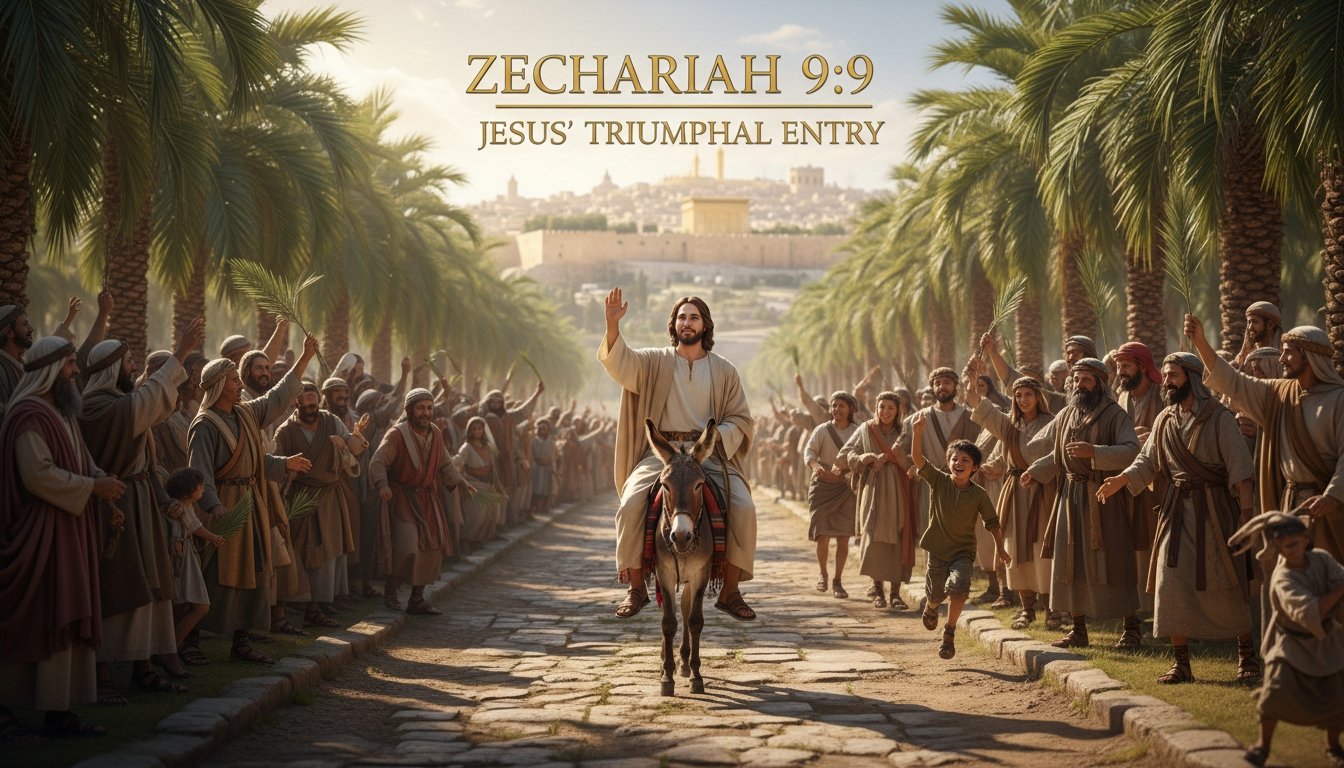
Zechariah 9:9 prophesied the Messiah’s humble, peaceful arrival, which Jesus fulfilled during his Triumphal Entry. Though the people expected a conquering king, Jesus rode a donkey, symbolizing his mission of redemption rather than earthly conquest. This pivotal moment marked a turning point in Jesus’ ministry, revealing his true identity as the promised Davidic ruler. If you’d like to explore this further, there’s more to uncover about the profound significance of Zechariah’s prophecy and Jesus’ intentional enactment of it.
Key Takeaways
- Zechariah 9:9 prophesied the coming of the Messiah, the King of Israel, who would arrive humbly riding on a donkey.
- Jesus’ Triumphal Entry into Jerusalem deliberately fulfilled Zechariah’s prophecy, demonstrating his identity as the promised Davidic ruler.
- Jesus’ choice of a donkey over a war-horse symbolized his reign as a king of peace, not military conquest.
- The humble, peaceful entry of Jesus contrasted with the expectations of a conquering Messiah, emphasizing his spiritual mission of redemption.
- The Triumphal Entry marked a pivotal moment in Jesus’ ministry, connecting prophecy to the unfolding divine plan of salvation.
The Prophetic Significance of Zechariah 9:9
What’s the prophetic significance of Zechariah 9:9? This passage foretells the coming of the Messiah, the King of Israel, who’ll arrive riding on a donkey. This humble mode of transportation contrasts sharply with the grandiose expectations of a powerful, military leader. Yet, it fulfills God’s promise to send a gentle, peaceful ruler to His people.
The imagery evokes a picture of Jesus’ triumphal entry into Jerusalem, where He was hailed as the Messiah but later rejected and crucified. This prophecy highlights the nature of Christ’s kingdom – one not of earthly power, but of spiritual redemption. It’s a profound reminder that God’s ways aren’t our ways, and His plan for salvation often defies human expectations.
Jesus’ Triumphal Entry as Messianic Fulfillment
How does Jesus’ triumphal entry into Jerusalem fulfill the prophecy of Zechariah 9:9? The Gospel accounts make clear Jesus deliberately enacted this event to present himself as the long-awaited Messiah. He rode a donkey, fulfilling Zechariah’s words about the coming king. This humble, peaceful entry stood in stark contrast to the conquering warrior king many expected. Yet it demonstrated Jesus as the promised Davidic ruler who’d bring justice and establish an everlasting kingdom. By willingly submitting to God’s plan, Jesus showed he was the true Messiah – the righteous and victorious King the prophets foretold. His triumphal entry was a symbolic declaration of his identity and mission, marking a pivotal moment in his ministry and the unfolding of God’s redemptive purposes.
The Symbolism of Jesus Riding a Donkey
The symbolic significance of Jesus riding a donkey during his triumphal entry can’t be overstated. Donkeys were considered humble, peaceful animals in the ancient Near East. Jesus’ choice to ride a donkey, rather than a horse, conveyed his role as a king of peace, not war. It stood in stark contrast to the conquering warrior kings who rode horses into battle.
Frequently Asked Questions
What Is the Historical Context of Zechariah’s Prophecy?
The historical context of Zechariah‘s prophecy is that he lived during the time of the return from the Babylonian exile. After the Persians conquered Babylon, they allowed the Jews to return to Jerusalem and rebuild the temple. Zechariah’s prophecies aimed to encourage the people and remind them of God’s plan for their restoration.
How Does Zechariah 9:9 Relate to Other Messianic Prophecies?
Zechariah 9:9 is connected to other messianic prophecies as it foreshadows the humble and peaceful nature of the Messiah’s rule.
This aligns with Isaiah’s prophecy of the suffering servant and Micah’s description of the Messiah as a shepherd-king.
Together, these prophecies paint a holistic picture of the Messiah’s character and mission to bring salvation and justice to the world.
What Was the Significance of Jesus’ Choice of Mount?
The significance of Jesus’ choice of mount was to fulfill the prophecy in Zechariah 9:9, which foretold the Messiah would come “lowly and riding on a donkey.” By riding a donkey instead of a warhorse, Jesus showed He came as a humble king of peace, not a conquering military leader. This symbolic act demonstrated Jesus’ true nature and mission.
How Did the Crowds Respond to Jesus’ Triumphal Entry?
The crowds responded enthusiastically to Jesus’ triumphal entry. They welcomed Him as the promised Messiah, waving palm branches and shouting “Hosanna!”
They laid their cloaks on the road, creating a makeshift red carpet for the King of kings. The people recognized the significance of Jesus’ arrival, hailing Him as the long-awaited Savior who’d bring about the kingdom of God.
What Was the Theological Importance of Jesus’ Humble Riding on a Donkey?
The humble riding of Jesus on a donkey during his triumphal entry was theologically significant, as it fulfilled the prophecy in Zechariah 9:9 and demonstrated his identity as the promised Messianic king – one who’d bring peace, not through military conquest, but through sacrificial service. This humble act challenged the people’s expectations of an earthly, conquering Messiah and pointed to Jesus’ true mission of spiritual liberation.
Conclusion
You can see how Jesus’ triumphal entry into Jerusalem fulfilled the prophecy of Zechariah 9:9. He rode a donkey, signifying His humility and peaceful nature as the Messiah. This event affirmed Jesus’ identity as the King promised in the Old Testament, coming to save His people. His arrival marked a pivotal moment in the unfolding of God’s redemptive plan.






No Comments