

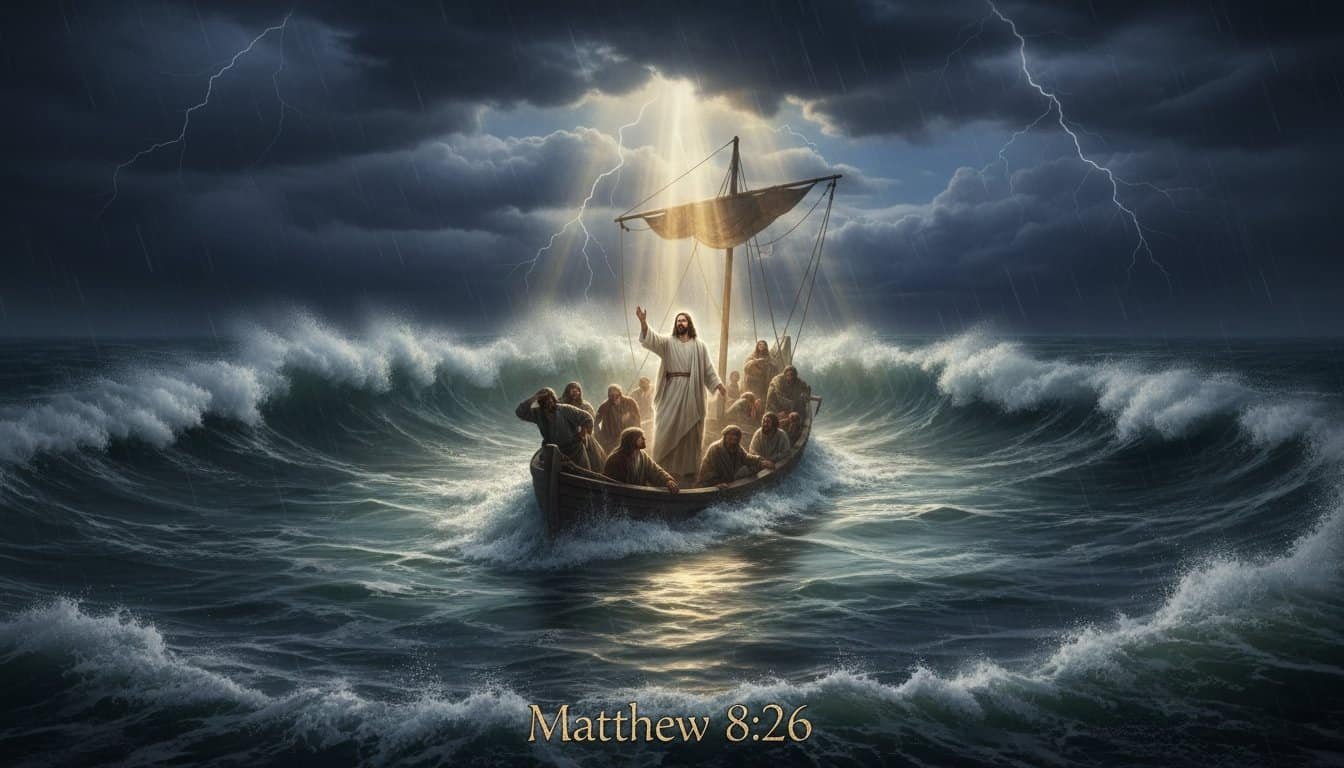
26 Jan Matthew 8:26 What Jesus Did to Stop a Deadly Storm Instantly
In Matthew 8:26, you’ll see Jesus directly rebuked the winds and sea with a verbal command that treated these natural forces as disobedient entities requiring correction. The Greek term indicates He commanded with authority and threat, producing instant obedience from creation’s fundamental elements. This wasn’t gradual calming—it was immediate transformation from deadly chaos to perfect stillness, demonstrating His divine prerogatives as Creator who sustains all things by His powerful word, revealing deeper theological truths about His nature.
Table of Contents
Key Takeaways
- Jesus first rebuked the disciples for their lack of faith before addressing the storm itself.
- He commanded the wind and waves with direct verbal authority, treating them as disobedient entities requiring correction.
- The storm stopped instantly and completely, creating “great calm” rather than a gradual subsidence of wind and waves.
- Experienced fishermen were astonished by Jesus’ absolute control over fundamental forces of nature through spoken word alone.
- The miracle demonstrated Jesus’ divine identity as Creator, showing authority over chaos that only God possesses.
When Jesus Calmed the Storm in Matthew 8:26
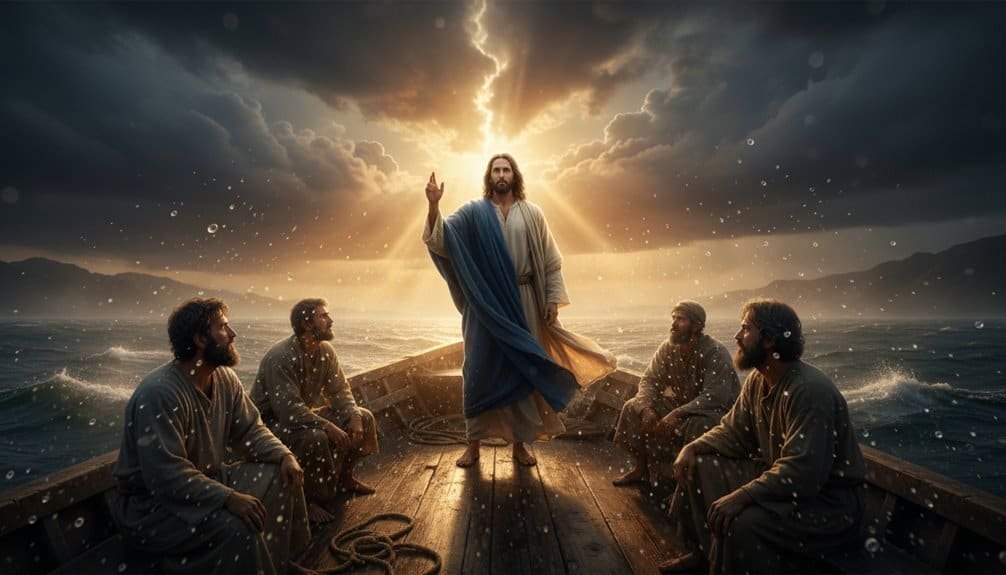
Notice Jesus’ deliberate sequence: He first addresses the disciples’ faithlessness before commanding nature’s elements. This order isn’t accidental—you’re seeing that spiritual storms require spiritual solutions. The “great calm” that followed wasn’t gradual improvement but instantaneous transformation, demonstrating absolute divine authority.
Through this miracle, you’re confronted with Jesus’ deity. Only God commands creation itself, yet here stands the carpenter’s son wielding cosmic power. These seasoned fishermen who knew the Sea of Galilee intimately were terrified enough to wake their sleeping teacher, revealing the storm’s unprecedented severity.
How Jesus Rebuked the Winds and Waves
The divine authority Jesus displayed becomes even more remarkable when you examine His specific method of confronting the tempest. Jesus addressed the storm through direct verbal command, using the Greek term meaning “to command with implication of threat.” He scolded the weather and water as one corrects a disobedient entity, demonstrating His weather authority over more than meteorological forces—addressing the being behind them.

The recorded words “Peace, be still!” produced instantaneous obedience. The winds and waves bowed to His command without gradual decline or warning. The terrible shaking ceased completely, transforming into great calm water conditions. What had been chaotic seas became smooth as glass, establishing Jesus’ mastery over natural elements that normally operate according to physical laws.
This rebuke paralleled Old Testament examples of God subduing chaotic waters, revealing Jesus as one possessing divine power itself made manifest in human form—capable of binding supernatural opposition through authoritative command.
Why the Disciples Marveled at Christ’s Authority
Why did seasoned fishermen who’d weathered countless storms react with such profound astonishment? You’re witnessing the disciples’ recognition of subtopic exclusivity—Jesus possessed authority unlike any earthly power they’d encountered. Their amazement stemmed from observing immediate obedience of natural forces to Christ’s verbal command.
When Jesus spoke “Peace, be still!” the winds and waves responded instantaneously, demonstrating divine timing that transcended natural processes. The disciples marveled because they recognized this wasn’t human intervention but divine authority over creation itself. Their verbal acknowledgment “Lord, save us!” revealed they understood Jesus’s lordship, yet their faith hadn’t fully grasped the implications.
The centurion earlier recognized that Jesus’s power flowed from his submission to God’s authority—a man under authority exercising divine delegation. This messianic demonstration fulfilled prophecy, establishing Jesus’s identity through unprecedented control over creation that only God possessed.

What Jesus’s Power Over Nature Reveals About His Divinity
How could mere humanity command the fundamental forces of creation with a word? You’re witnessing something that transcends human capability entirely. When Jesus rebuked the winds and sea, He exercised Creator authority as described in Colossians 1:16-17, where all things exist through Him and are sustained by His power.
This miracle carries profound literary symbolism—the storm represents chaos, while Jesus’s command establishes divine order. The immediate calm mirrors God’s intervention in Psalm 107:23-30, connecting Jesus directly to Yahweh’s nature-controlling power. You see His divine nature operating outside physical laws that bind humanity.
The ethical reflection here is crucial: Jesus doesn’t display raw power but compassionate authority, protecting His disciples from peril. His ability to forgive sins, raise the dead, and now calm storms demonstrates consistent divine prerogatives. The winds and sea obey because He’s their Creator, revealing His true identity as God incarnate—fully divine yet humbly present in human flesh.
Frequently Asked Questions
What Type of Storm Was It That Threatened the Boat?
You’re witnessing a seismos—a violent, earthquake-like tempest that erupted suddenly on Galilee’s waters. This wasn’t ordinary weather but chaotic forces threatening experienced fishermen’s lives. The storm symbolism represents cosmic disorder, while boat dynamics reveal complete vulnerability as waves covered their vessel. You’re seeing nature’s raw power: fierce winds, turbulent seas, and life-threatening conditions that defied human control, requiring divine intervention to restore order.
How Long Did the Storm Last Before the Disciples Woke Jesus?
The Gospels don’t specify storm duration before you’d wake Jesus, but vessel dynamics reveal crucial timing indicators. You’ll notice the narrative suggests enough time for experienced fishermen to exhaust their skills, water to accumulate dangerously, and fear to escalate from concern to desperation. The storm duration likely extended long enough for professional sailors to recognize their helplessness, indicating substantial time elapsed before awakening Christ.
Did Jesus Know the Storm Was Coming When They Departed?
Yes, Jesus knew the storm was coming when they departed. You’ll notice Matthew 8:18 shows Jesus deliberately ordering the crossing despite brewing weather conditions. His omniscience, confirmed in John 2:25, means he possessed storm awareness before departure.
Jesus intended this journey knowing what lay ahead—his calm sleep during the tempest and immediate divine rebuke demonstrate prior knowledge of both the danger and his sovereign control over it.
Why Was Jesus Sleeping During Such a Dangerous Storm?
Jesus slept because He possessed perfect calmness during chaos, demonstrating complete trust in His Father’s sovereignty. His rest revealed genuine humanity—physical exhaustion from ministry—while displaying divine faith under pressure.
Unlike panicking disciples, Jesus experienced no anxiety because He knew the storm remained under His control.
His peaceful sleep contrasted sharply with human fear, showing perfect alignment with God’s will and absolute confidence in divine protection and purpose.
What Happened to the Disciples After Witnessing This Miracle?
You’ll discover the disciples experienced profound awe after witnessing Christ’s instant storm-calming. Their initial disciples’ fear transformed into reverent amazement as they questioned “What manner of man is this?”
The contrast between Jesus’ sleep dynamics during danger and His absolute authority over creation deepened their recognition of His divine identity. This miracle catalyzed their growing faith, moving them from panic-stricken fishermen to witnesses of God’s incarnate power over nature’s forces.
Conclusion
You’ve witnessed Christ’s divine authority over creation itself. When you examine this passage, you’re seeing more than storm-calming—you’re observing the Creator’s sovereign word commanding His creationing The disciples’ astonishment reveals they’re beginning to grasp Jesus’s true identity. This miracle doesn’t just demonstrate power; it unveils deity. You can’t separate Christ’s authority over nature from His divine essence. The storm’s immediate obedience confirms what you must recognize: Jesus possesses the very nature of God.











No Comments