

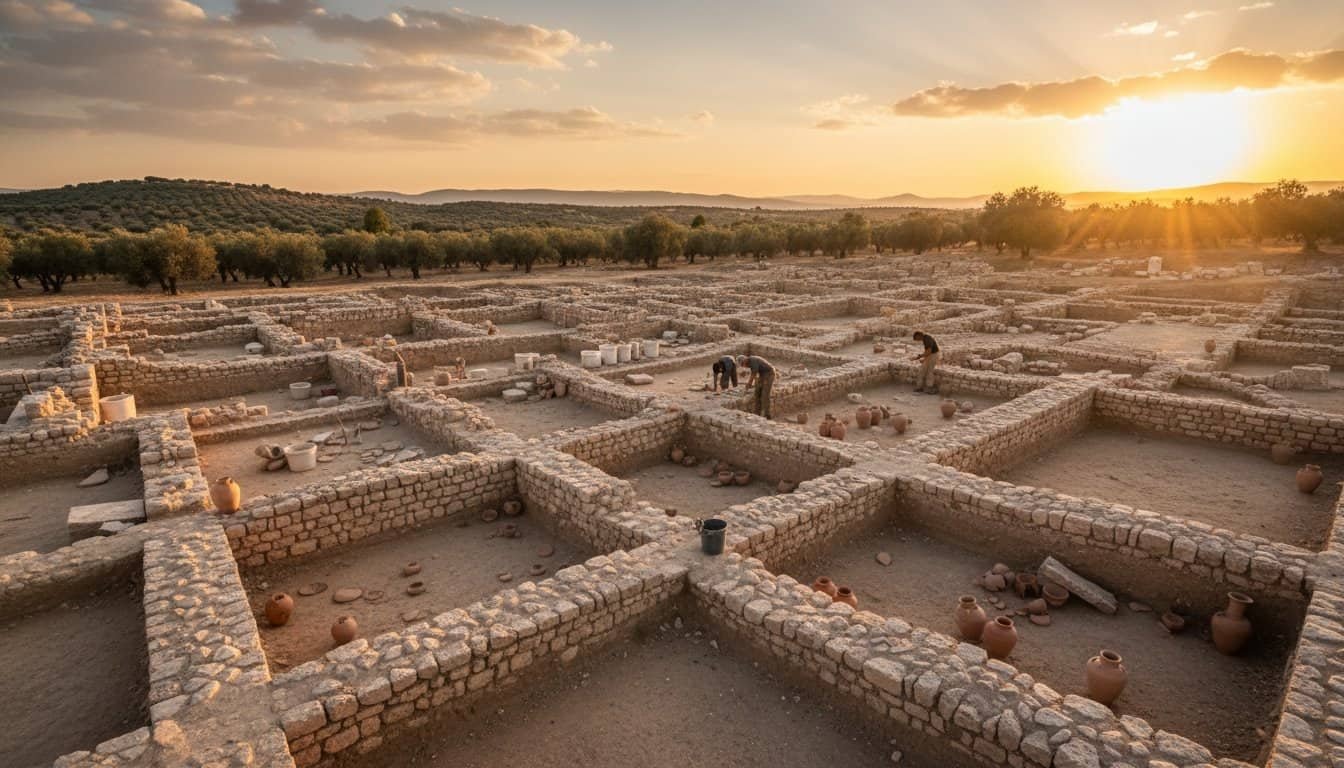
18 Dec Archaeology Just Revealed the Real Town Where Jesus Was Born — And Why It Still Matters Today
You’ll find that recent archaeological excavations beneath the Sisters of Nazareth Convent have revealed compelling evidence of first-century Jewish life in Nazareth, where Jesus grew up. Researchers discovered courtyard houses, Jewish purity vessels, and agricultural facilities dating to the late first century BCE through first century CE through radiocarbon analysis and coin dating. This evidence validates Gospel accounts and centuries of Christian tradition while confirming Nazareth’s existence as a thriving community of nearly 1,000 residents—discoveries that continue reshaping modern scholarship.
Table of Contents
Key Takeaways
- Archaeological excavations at Sisters of Nazareth Convent revealed a first-century Jewish household with typical Early Roman period architecture and purity observance.
- Radiocarbon dating of organic materials and coin evidence confirm the site’s occupation during the late 1st century BCE through 1st century CE.
- Byzantine churches built directly over the ancient house suggest continuous liturgical memory preserving the location’s significance across centuries.
- The discoveries challenge previous scholarly claims that Nazareth didn’t exist in the first century, reshaping academic consensus about Jesus’s hometown.
- Enhanced archaeological credibility strengthens pilgrimage traditions, supports interfaith dialogue, and benefits modern Nazareth’s tourism economy and cultural significance.
Excavating First-Century Nazareth: Archaeological Evidence Beneath the Convent
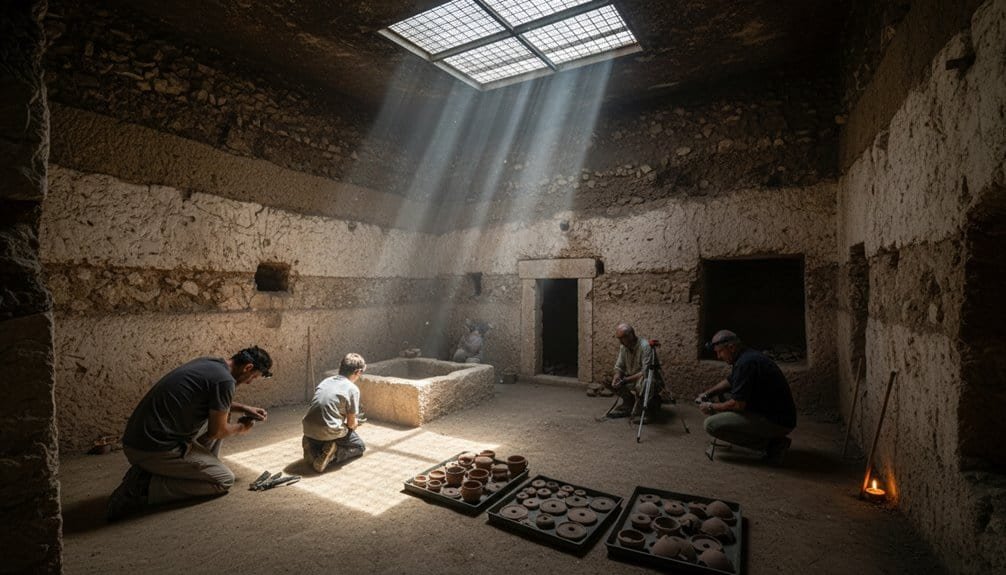
The excavations beneath the Sisters of Nazareth Convent have uncovered compelling evidence of first-century domestic life that transforms our understanding of Jesus’s childhood environment. You’ll find a remarkably preserved courtyard house featuring stone rooms, benches, and installations typical of Early Roman period architecture.
The dwelling’s modest construction materials and simple room layouts reveal a household of ordinary economic status rather than urban wealth.
What’s particularly striking is the abundance of chalk stone vessel fragments throughout the site. These artifacts demonstrate strict observance of Jewish purity laws among Nazareth’s inhabitants during the first century.
You can see evidence of daily activities through recovered pottery, cooking implements, and textile production tools that paint a picture of agrarian village life. The settlement also contained storage spaces and agricultural facilities that served the surrounding farming community. The absence of glass vessels or imported products further confirms the simple economic means of the dwelling’s occupants. The Nazareth Archaeological Project also uncovered two Jewish kokhim tombs that provide additional insight into burial practices of the period.
Conservation challenges continue to threaten these fragile remains, while community involvement has proven essential for ongoing preservation efforts. The stratigraphic relationship beneath later Byzantine churches suggests this location held special significance for early Christian communities.
Dating the Discovery: How Scientists Confirmed the Timeline
While these architectural remains provide compelling physical evidence, establishing their precise chronology required multiple scientific dating methods working in concert.
You’ll find that radiocarbon dating of charred seeds, charcoal, and bone from first-century Judean strata yielded calibrated ranges overlapping the late 1st century BCE through 1st century CE.
Radiocarbon analysis of organic materials from first-century archaeological layers confirmed dates spanning the late BCE through early CE period.
Bayesian modeling refined these broad radiocarbon ranges into tighter interval estimates for specific stratigraphic phases.
Scientists applied radiocarbon calibration using IntCal curves and reservoir corrections to account for regional carbon-offsets and possible reuse of older timber.
Coins of Herod the Great and his successors provided terminus post quem dates for archaeological layers, anchoring local occupation to the late-Herodian period.
Roman provincial coins and inscriptions referencing governors like Quirinius offered additional chronological anchor points.
The Temple Mount foundation stones reveal the massive scale of Herodian construction capabilities, with individual blocks weighing up to 415 tons compared to the Great Pyramid’s typical 15-ton blocks.
Together, these methods confirmed occupational horizons spanning the turn of the era, establishing the timeframe within which the Nativity tradition emerged at this specific location.
The fiscal bulla discovered by the Israel Antiquities Authority provided administrative evidence of Bethlehem’s economic activity during the 7th or 8th century BC.
From Ancient Stones to Sacred Tradition: Connecting Archaeology With Gospel Accounts
Beyond establishing when these ancient structures existed, archaeologists now face the profound question of how physical remains connect to the sacred narratives that have shaped two millennia of Christian faith.
You’ll find compelling evidence in how early Christians preserved these locations through oral traditions spanning three centuries before Constantine’s official recognition.
The Byzantine Church of the Nutrition, built directly over the Nazareth courtyard house, demonstrates liturgical memory in action.
Early believers didn’t randomly select sites—they maintained careful traditions identifying Jesus’s childhood home.
Similarly, Origen’s AD 248 reference to Bethlehem’s cave shows how oral traditions preserved birth narratives even among faith’s critics.
When Helena identified Bethlehem’s site in 325-326 AD, she wasn’t inventing locations but following established tradition.
The archaeological evidence at both sites validates what John McRay calls Bethlehem’s “long, solid, and trustworthy” tradition, revealing how ancient stones authentically preserve Gospel accounts.
Beyond the Dig: What This Find Means for Faith, Scholarship, and Modern Nazareth
Since archaeologists confirmed Nazareth’s first-century existence and uncovered potential remnants of Jesus’s childhood home, these discoveries have transformed three distinct but interconnected spheres of human understanding.
For believers, you’ll find that continuous pilgrimage traditions from the fourth century now rest on stronger archaeological foundations.
The excavations beneath the Sisters of Nazareth Convent and near the Church of the Annunciation vindicate biblical accounts while reinforcing early Christian veneration practices.
Archaeological discoveries beneath Nazareth’s sacred sites provide concrete validation for biblical narratives and centuries-old Christian worship traditions.
Scholarly consensus has shifted dramatically.
You’re witnessing how Ken Dark’s excavations since 2006 challenged absence claims, while Bart Ehrman’s defense of Nazareth’s existence gained archaeological support through first-century storage pits, cisterns, and houses confirming vibrant Jewish life.
Modern Nazareth benefits significantly from these findings.
The tourism economy flourishes as pilgrimage sites gain credibility, while archaeological evidence facilitates deeper interfaith dialogue.
You’ll discover that population estimates increased from 100-500 to nearly 1,000 residents, revealing a thriving first-century community rather than skeptics’ previously imagined uninhabited village.
Frequently Asked Questions
How Much Did the Excavation Cost and Who Funded the Research?
You’ll find excavation costs varied significantly across different biblical sites.
Bethlehem’s Church of Nativity project required $4-5 million, while Herod’s tomb research needed $100,000 initially.
However, Funding Transparency remains limited in many cases, with costs often unspecified for crucial digs like the 2015-2016 pottery excavations.
Donor Influence became evident when sponsors withdrew $100,000 pledges, and BAS expressed concerns about researchers’ sensationalism affecting scholarly integrity.
What Specific Artifacts Were Found That People Used in Daily Life?
You’ll find domestic pottery including handmade storage jars, wheel-thrown cooking pots with soot marks, and fine tableware bowls that reveal daily household routines.
Cooking implements like grinding stones for cereal processing and olive-press installations show food preparation methods.
Personal items include oil lamps with burn marks, bronze pins, beads, and coins from Herodian periods, demonstrating how residents lit their homes, dressed themselves, and conducted market transactions.
Are There Plans to Excavate Other Potential Jesus-Related Sites in Nazareth?
You’ll find several future digs are planned through scholarly coordination between the Israel Antiquities Authority, university teams, and religious custodians.
The IAA continues development-linked excavations when construction projects arise, while academic initiatives like the Nazareth Archaeological Project seek expanded access for systematic investigation.
Church stakeholders propose conservation projects that’ll include archaeological components, creating multiple pathways for excavating potential Jesus-related sites throughout Nazareth.
How Do Other Religions View These Archaeological Claims About Jesus’ Birthplace?
You’ll find Interfaith Reactions vary significantly across religious communities.
Jewish scholars typically assess these discoveries through Second Temple-period archaeological frameworks rather than theological lenses, emphasizing careful provenance and dating.
Islamic Perspectives generally view Jesus-related finds as comparative religious history, acknowledging his historical existence while focusing on shared Abrahamic heritage and multicultural antiquity rather than Christian doctrinal claims about his birthplace.
Can Tourists Visit the Actual Excavation Site Beneath the Convent?
You can visit the excavation site beneath the Sisters of Nazareth convent, but visitor access requires advance arrangements. The Nazareth Archaeological Project periodically offers guided tours through the conserved underground areas, though access isn’t continuous like typical tourist attractions.
You’ll need to contact convent administration or local pilgrimage operators beforehand, especially during peak seasons when liturgical events may restrict entry to these significant first-century remains.
Conclusion
You’re witnessing archaeology’s remarkable ability to illuminate ancient texts through tangible evidence. These first-century discoveries beneath Nazareth don’t prove faith—they provide historical context that enriches your understanding of Christianity’s origins. Whether you’re a scholar, believer, or curious observer, you can appreciate how scientific methodology validates the Gospel accounts’ historical setting. The stones themselves can’t answer questions of faith, but they offer concrete connections between ancient narratives and archaeological reality.











No Comments