

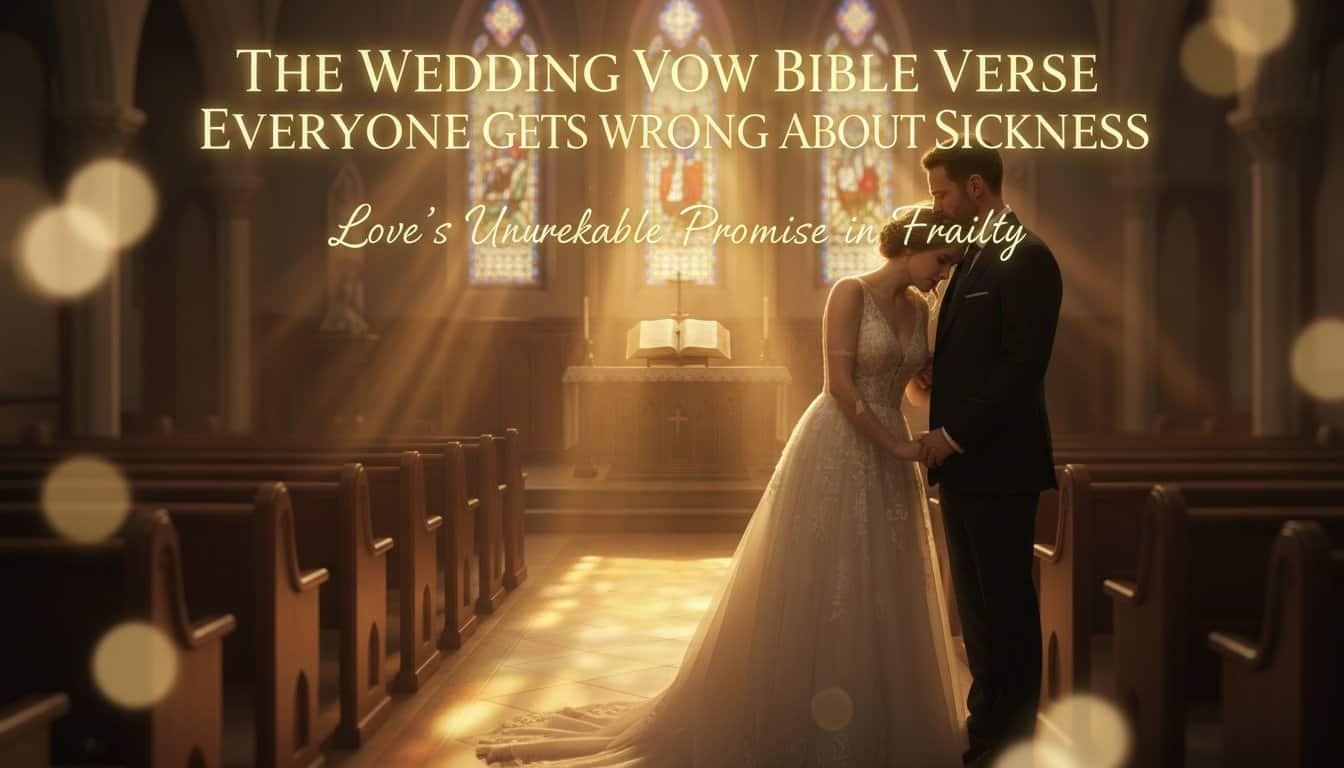
25 Jan The Wedding Vow Bible Verse Everyone Gets Wrong About Sickness
The wedding vow “in sickness and in health” isn’t actually found in Scripture—it comes from Thomas Cranmer’s 1549 Book of Common Prayer during the English Reformation. While this phrase reflects biblical principles about covenant faithfulness, it’s liturgical language, not a direct biblical quotation. The Bible emphasizes marriage through passages like Genesis 2:24’s “one flesh” unity and Ephesians 5:25-33’s Christ-like sacrificial love, but these authentic scriptural foundations for wedding vows offer even richer theological depth than traditional assumptions suggest.
Table of Contents
Key Takeaways
- The phrase “in sickness and in health” does not appear anywhere in Scripture despite widespread belief.
- These wedding vows originated from Thomas Cranmer’s 1549 Book of Common Prayer during the English Reformation.
- People mistakenly assume church-spoken vows derive from Scripture when they actually reflect biblical principles without direct quotation.
- Biblical marriage emphasis focuses on covenant permanence and one flesh unity rather than situational promises.
- Authentic biblical wedding language comes from Ephesians 5:25-33, Genesis 2:24, and Ruth 1:16-17 about covenant faithfulness.
In Sickness and in Health Isn’t Actually Biblical

Where exactly does the phrase “in sickness and in health” appear in Scripture? You won’t find it anywhere. This common wedding vow language represents a biblical misinterpretation that’s become deeply embedded in Christian ceremony tradition.
The phrase originates from the 1549 Book of Common Prayer, not biblical text. Thomas Cranmer crafted these wedding vows during the English Reformation, drawing inspiration from biblical principles rather than quoting Scripture directly. While the concept reflects biblical values about covenant commitment, it’s not a verse you can cite chapter and verse.
You’ve likely heard countless couples recite these words, assuming they’re biblically mandated. However, understanding this distinction matters for theological accuracy. The vow captures biblical wisdom about sacrificial love and commitment, but conflating liturgical language with Scripture creates confusion. When you recognize this difference, you’ll approach both biblical exegesis and wedding traditions with greater precision and understanding.
What the Bible Really Says About Marriage Vows
How do biblical marriage passages actually address commitment and covenant obligations? You’ll find Scripture emphasizes covenant faithfulness rather than specific circumstantial promises. Genesis 2:24 establishes the foundational principle: “Therefore a man shall leave his father and mother and hold fast to his wife, and they’ll become one flesh.” This covenantal unity transcends temporary conditions.
Ephesians 5:22-33 outlines marriage through faithful submission and mutual love, mirroring Christ’s relationship with the church. The passage focuses on sacrificial devotion and sanctification rather than enduring sickness specifically. Malachi 2:14-16 condemns covenant-breaking, emphasizing God’s hatred of divorce because marriage represents His faithfulness to Israel.
Biblical marriage vows center on covenantal permanence and spiritual partnership rather than situational clauses. You’re called to an enduring partnership that reflects divine covenant love—unconditional, sacrificial, and transformative. Scripture presents marriage as sacred covenant requiring faithfulness through God’s strength, not human promises about specific circumstances.
Why Christians Think This Phrase Comes From Scripture
Why do countless Christians confidently attribute “in sickness and in health” to biblical origin when it appears nowhere in Scripture? This widespread misinterpretation myth stems from several theological misconceptions that’ve persisted for generations.
Traditional wedding vows blend biblical principles with liturgical language, creating widespread confusion about their scriptural origins among Christians.
You’ve likely encountered this verse misattribution because traditional wedding ceremonies blend biblical principles with liturgical language. The Book of Common Prayer, first published in 1549, popularized these vows within Anglican worship. Many Christians assume anything spoken in church services must derive directly from Scripture.
Additionally, you’re hearing vows that reflect biblical marriage concepts without being actual biblical quotations. The phrase captures scriptural themes about covenant faithfulness and mutual support, making it feel authentically biblical. This creates cognitive association between familiar biblical marriage passages and liturgical language.
Your church tradition probably reinforced this connection through decades of wedding ceremonies, Sunday school lessons, and pastoral teaching that didn’t distinguish between biblical text and traditional Christian vows.
Biblical Verses Perfect for Wedding Vows
Scripture offers numerous passages that authentically capture God’s design for marriage without relying on traditional but non-biblical phrases. When you’re selecting biblical text for your vows, you’ll avoid wrong expectations by choosing verses that actually address marriage covenants.
Ephesians 5:25-33 provides foundational vow language about Christ-like love and mutual submission. Genesis 2:24 establishes the “one flesh” unity that defines biblical marriage. Ruth 1:16-17, though describing family loyalty rather than marriage, offers powerful covenant language about commitment.
First Corinthians 13:4-8 describes love’s characteristics without creating unrealistic promises about never experiencing illness or hardship. Ecclesiastes 4:12 speaks to partnership strength. Colossians 3:14 emphasizes love as the perfect bond.
These passages ground your vows in actual Scripture rather than cultural assumptions. They’ll help you make promises that reflect God’s Word while acknowledging marriage’s real challenges and joys within His design.
Frequently Asked Questions
When Did “In Sickness and in Health” First Appear in Wedding Ceremonies?
You’ll find “in sickness and in health” inception dates tracing back to 1549’s Book of Common Prayer under Archbishop Cranmer. This vow evolution emerged from medieval liturgical traditions, though earlier forms existed in pre-Reformation ceremonies. Cranmer’s Anglican reforms codified this specific phrasing, establishing theological precision about covenant faithfulness through physical trials. The phrase wasn’t biblically derived but reflected Christian understanding of marriage as enduring partnership through life’s challenges.
Do Other Religions Use Similar Non-Biblical Phrases in Their Wedding Vows?
You’ll find inspiration from other religions demonstrates widespread use of non-biblical phrases in wedding ceremonies. Jewish traditions include “according to the law of Moses and Israel,” while Islamic nikah ceremonies feature culturally-derived promises beyond Quranic text. Hindu wedding vows incorporate Sanskrit phrases rooted in ancient customs rather than Vedic scripture. These non-biblical phrases reflect universal human desires to articulate marital commitment through familiar, meaningful language across faith traditions.
Should Christians Avoid Using “In Sickness and in Health” in Their Ceremonies?
You shouldn’t avoid “in sickness and in health” despite its non-biblical origins. This phrase aligns perfectly with Scripture’s covenant marriage principles found in Genesis 2:24 and Ephesians 5:25-33. While vow language ethics matter, theological precision doesn’t require exclusively biblical wording. Consider these disclaimer considerations: your vows should reflect biblical truth about sacrificial love and lifelong commitment, regardless of specific phraseology used.
What Are Some Modern Alternatives to Traditional “In Sickness and in Health” Vows?
You can choose modern vows like “through life’s joys and challenges,” “in times of strength and vulnerability,” or “through seasons of abundance and struggle.”
These secular alternatives maintain covenant commitment while avoiding potentially problematic biblical misinterpretations.
Consider “supporting each other’s growth and healing,” “embracing life’s uncertainties together,” or “walking faithfully through all circumstances.” These options preserve sacrificial love’s essence without traditional baggage.
How Do Different Christian Denominations View Non-Biblical Wedding Vow Language?
Most Christian denominations accept non-biblical wedding vow language when it aligns with supporting scripture about marriage’s covenant nature. You’ll find Catholics emphasize church-approved liturgical language, while Protestants often allow personalized vows reflecting biblical principles. Orthodox traditions maintain stricter adherence to established forms.
Cultural influence shapes denominational flexibility—evangelical churches frequently embrace contemporary expressions that honor scriptural foundations, whereas liturgical traditions prioritize theological precision over modern adaptations.
Conclusion
You’ve discovered that “in sickness and in health” isn’t Scripture, yet God’s covenant design for marriage runs deeper than traditional vows. You’ll find biblical marriage passages like Ephesians 5:25-33 and 1 Corinthians 13:4-8 provide theologically richer foundations than cultural phrases. Don’t abandon meaningful traditions, but you’ll strengthen your vows by grounding them in God’s revealed Word rather than assuming church customs reflect biblical text. Scripture offers profound covenant language that surpasses human invention.








No Comments