

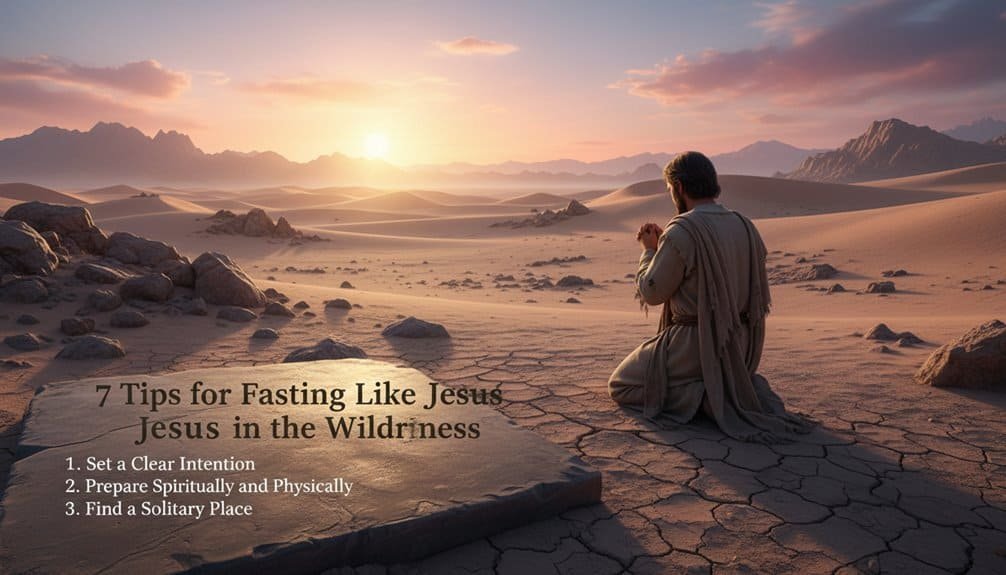
03 May 7 Tips for Fasting Like Jesus in the Wilderness
Set a clear spiritual goal and pick a biblical fast method that matches it, then choose a quiet, distraction‑free spot that feels like a desert oasis. Pack minimal gear—just shelter, water, simple food, and a journal. Start with a light broth, mark time by sunrise and sunset, and read passages like Matthew 4:1‑11 while meditating on temptations. When cravings hit, pause, breathe, and note emotions in your journal. Keep rituals simple, use short pauses throughout the day, and transition back gradually with micro‑goals; the next sections will show you how to deepen each step.
Table of Contents
How to Do a Wilderness‑Style Fast: Step‑by‑Step Overview
Ever wondered how to turn a wilderness‑style fast into a purposeful, spiritually grounded experience? First, pick a remote spot where you won’t be constantly interrupted—think a quiet woods or a desert edge. Pack minimal gear: a sturdy shelter, water filter, basic food for emergency, and a journal. Set a clear start date, then notify a trusted friend of your itinerary for safety. On day one, ease into the fast with a light broth to hydrate and gently reduce calories. Use sunrise and sunset to mark prayer, meditation, and Scripture reading, letting the natural rhythm guide your spiritual focus. Keep a simple log of thoughts, cravings, and revelations; this tracks progress and deepens insight. If you feel weak, sip water and consider a small, nutrient‑dense snack—your body isn’t a martyr, it’s a vessel. After the allotted days, break the fast slowly with gentle foods, reflecting on how the wilderness reshaped your faith.
Define Your Spiritual Goals and Choose a Biblical Method for the Fast
After you’ve set up your wilderness space and a how to ease into the fast, turn your attention to why you’re fasting. First, clarify the spiritual outcome you desire: deeper reliance on God, heightened prayer awareness, or repentance like Christ endured. Write the goal in a single sentence, then test it against Scripture—does it echo Jesus’ 40‑day purpose in Matthew 4? Next, pick a biblical method that aligns with that aim. If you seek humility, consider a partial fast (e.g., Daniel’s 10‑day abstention from rich foods). For repentance, follow Jesus’ complete fast, foregoing all nourishment for a set period. Record the method, duration, and any accompanying disciplines such as worship or Scripture meditation. Keep the plan simple; complexity breeds distraction. As you pray, ask the Holy Spirit to confirm the choice, and let the chosen method become the conduit through which your spiritual goal unfolds.
Prepare Your Physical Space for a Wilderness‑Style Fast
Clear out clutter and keep only what you truly need, so the space feels like a desert oasis.
Pick a comfortable spot—perhaps a cushion or low chair—where you can sit upright without strain.
This minimalist setup helps you focus on the fast rather than distractions.
Choose Minimalist Environment
When you strip away distractions and set up a simple, uncluttered space, your mind mirrors the wilderness that Jesus entered, making it easier to focus on prayer and the purpose of the fast. Choose a room with minimal décor; clear the floor, keep only a mat or low bench, and hide electronic devices out of sight. Dim the lighting or use a single candle to create a calm ambience. Store away books, papers, and clutter in a closed box so they don’t tempt you. Opt for neutral colors—soft whites or earth tones—to avoid visual overstimulation. Keep a small water jug nearby for hydration, but let it sit quietly. By surrounding yourself with only what you truly need, you cultivate a desert‑like stillness that supports spiritual concentration.
Secure Comfortable Seating Area
A simple, low‑profile seat—like a cushion, yoga mat, or modest wooden bench—helps you stay grounded and comfortable while you pray. Choose a spot on firm, level ground; clear debris, rocks, and moisture to prevent slipping.
If you use a cushion, place a thin waterproof liner underneath, protect against damp earth. A modest wooden bench should be sanded smooth and sealed with natural oil to resist moisture.
Keep a small blanket or shawl nearby for extra warmth on chilly mornings. Position your seat near a natural shade source—tree, rock over, or a portable tarp—to guard against sun glare.
Arrange a water container within arm’s reach, so you stay hydrated without breaking your contemplative rhythm.
Follow Desert‑Temptation Scripture Reading & Meditation Plan
Ever wondered how to turn the desert’s silence into a powerful spiritual workout? Grab a small notebook, a pen, and a printed list of the temptation passages—Matthew 4:1‑11, Genesis 3, and Psalm 91. Start each morning by reading a verse slowly, then pause to breathe deeply, feeling the heat on your skin. As you exhale, repeat the verse’s key promise in your own words, letting it settle like sand beneath your feet. Write a brief note on how the temptation mirrors a current struggle, then pray for the strength Jesus displayed. In the afternoon, return to the same passage, this time visualizing the wilderness scene: the scorching sun, the empty horizon, the whisper of the serpent. Let the imagery anchor your meditation, and finish with a short, heartfelt petition for perseverance. By repeating this cycle twice daily, you transform empty desert into a disciplined sanctuary of scripture‑filled focus.
Manage Hunger and Energy With Scripture‑Based Nutrition
Managing hunger and energy during a wilderness fast can be guided by biblical nutrition principles that honor both body and spirit. You’ll find that Scripture offers practical wisdom for sustaining yourself while you seek God.
First, prioritize simple, whole foods that Jesus himself ate—bread, figs, olives, and water. These items provide steady carbs, healthy fats, and electrolytes without overloading your digestive system.
Second, follow the rhythm of the day: eat a modest meal at sunrise, sip water regularly, and pause for prayer before each bite.
Third, lean on verses like Matthew 4:4 (“Man shan’t live on bread alone”) to remind yourself that spiritual nourishment supersedes appetite.
Finally, listen to your body’s signals; when fatigue creeps in, a small handful of nuts or a piece of fruit can restore vigor while keeping your fast purposeful.
Handle Cravings and Emotional Upsets During the Fast
Feeling the sting of cravings or sudden mood swings during a wilderness fast? Acknowledge them without judgment, then redirect your focus to the purpose of your journey. When a craving hits, pause, breathe deeply, and recite a verse that reminds you of spiritual nourishment. Physical sensations often mask deeper emotions; name the feeling—anger, loneliness, fear—and offer it to God in prayer. Use the environment: feel the wind, hear the birds, let nature’s rhythm ground you. If anxiety spikes, walk a short distance, letting each step become a small act of worship. Keep a simple journal, noting triggers and how you responded; patterns reveal where your mind seeks comfort. Remember, the fast is a training ground for self‑control, not a battle against yourself. By staying present, you transform cravings into opportunities for deeper reliance on divine strength.
Reflect on Your Wilderness‑Style Fast and Transition Back to Daily Life
After you finish your wilderness‑style fast, ease back into your normal routine while keeping the spiritual momentum you built. Notice how the lessons you learned can shape your daily choices, and let them guide you gradually. By integrating these insights step by step, you’ll sustain the growth without feeling overwhelmed.
Re‑Enter Normal Routine
How do you carry the stillness of the desert into your everyday rhythm? Begin by mapping one desert habit—like a morning prayer or a brief silence—onto a familiar daily cue, such as waking up or lunch. Use a journal to note how the fast reshaped your priorities, then set micro‑goals that honor those insights without overwhelming your schedule. Re‑introduce regular meals gradually, listening to hunger cues rather than old patterns. Keep a short “reset” ritual—perhaps a three‑minute breath pause—when stress spikes, reminding yourself that the wilderness still lives inside you. Finally, share a concise summary of your experience with a trusted friend; articulating lessons solidifies them and eases the transition back to normal life.
Maintain Spiritual Momentum
You’ve already woven desert stillness into your routine; now it’s time to keep that spiritual rhythm alive as you step back into everyday life. Begin by journaling the insights that surfaced during your fast—note recurring prayers, emotions, or revelations. Use those notes as a compass for daily decisions, allowing the desert’s clarity to guide work, relationships, and personal goals. Schedule brief, intentional pauses—five‑minute breaths or a quick prayer—throughout the day to reconnect with that stillness.
Incorporate a simple ritual, like lighting a candle at sunset, to signal the transition from ordinary tasks to sacred reflection. By anchoring these practices, you preserve the momentum you built in the wilderness, ensuring it fuels your ongoing spiritual growth.
Integrate Lessons Gradually
What can you carry from the desert into your ordinary days? Begin by listing the three most vivid insights you gained—whether it was stillness, dependence on prayer, or simplified meals. Then, map each insight onto a concrete habit: set a five‑minute morning silence, replace one snack with water, or schedule a brief gratitude journal after work. Keep the changes modest; adding too much at once overwhelms the rhythm you cultivated. Review weekly, noting how the habit feels and adjusting if it feels forced. Gradually expand the practice, letting the wilderness discipline seep into meetings, family time, and errands. By integrating lessons step‑by‑step, you honor the fast while enriching everyday life.
Frequently Asked Questions
How Can I Fast Safely With a Chronic Medical Condition?
You should first consult your doctor to tailor a plan that respects your condition. Start with short, gentle fasts—maybe 12 hours—while monitoring blood sugar, pressure, and medication timing. Stay hydrated, choose nutrient‑dense liquids, and listen to any warning signs like dizziness or fatigue. Adjust the length gradually, keep a symptom log, and never ignore professional advice. This cautious approach lets you fast safely without jeopardizing your health.
What Biblical Passages Support Fasting for Mental Health?
You’ll find biblical support for fasting that benefits mental health in several places. In Matthew 4:2, Jesus fasted 40 days, showing spiritual renewal through self‑discipline.
Psalm 35:13 describes fasting as a prayerful plea for inner peace.
Isaiah 58:6‑7 links fasting with compassion and relief from burdens, implying emotional healing.
Joel 2:12‑13 urges sincere fasting to turn hearts toward God, fostering clarity and calmness.
These passages suggest fasting can restore mental balance when practiced thoughtfully.
Can I Incorporate Modern Technology During a Wilderness Fast?
Yes, you can blend modern tech with a wilderness fast, but keep it minimal. Use a lightweight solar charger to power a basic GPS or emergency beacon, ensuring safety without constant distractions. A simple meditation app on a low‑energy device can guide breathwork, but silence notifications. Record thoughts in a voice memo if you need reflection, then delete it later. Prioritize solitude; let technology serve only essential, brief support.
How Do I Handle Extreme Weather While Fasting Outdoors?
You should layer clothing, stay hydrated, and keep moving to generate body heat. Dress in moisture‑wicking base layers, add an insulating mid‑layer, and finish with a wind‑proof outer shell. Seek shelter from wind and sun, and use a portable bivy or tarp for protection. Monitor your body for signs of hypothermia or heatstroke, and adjust your pace or break the fast if conditions become unsafe.
What Are the Legal Considerations for Overnight Camping Fasts?
You need to check local ordinances, land-use rules, and any permit requirements before you start an overnight camping fast. Some parks prohibit overnight stays or require reservations, and private property owners can deny access. Verify fire-safety regulations, especially if you’ll cook or light a fire, and be aware of noise curfews. Also, ensure you’re not violating trespassing laws or wildlife protection statutes, and carry proper identification in case authorities stop you.
Conclusion
You’ve walked the desert path, letting Scripture guide every step and every craving. By aligning your body, mind, and spirit with God’s promises, you’ve turned hunger into holy discipline. Now, carry the quiet confidence you found in the wilderness into daily life, remembering that the same strength that sustained you there still fuels every moment. Let this fast be a springboard, not a stop, and keep the desert’s lessons alive in your heart.










No Comments