

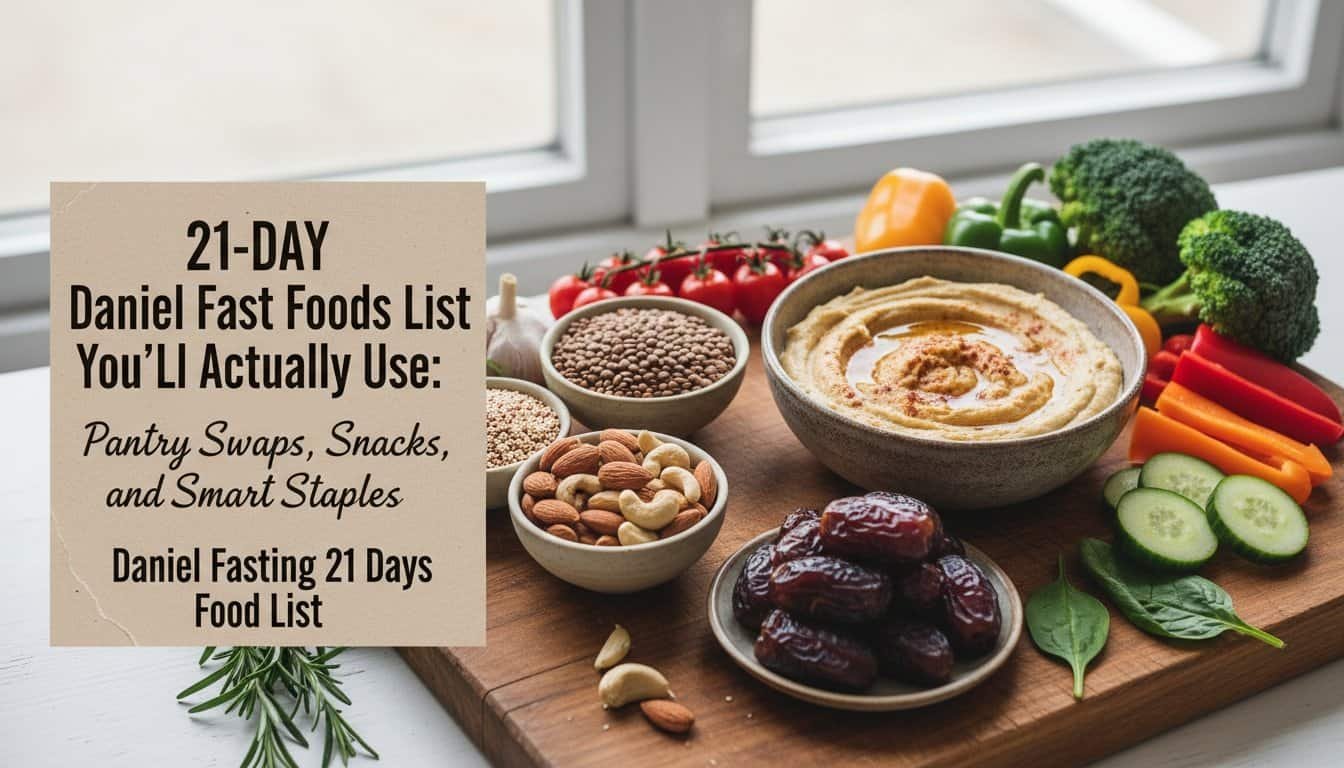
07 Jan 21 DAY Daniel Fast Foods List You Will Actually Use: Pantry Swaps, Snacks, and Smart Staples
You’ll need approximately 75-80 strategically selected whole foods to complete a nutritionally balanced 21-day Daniel Fast. Focus on diverse fruits like apples, berries, and citrus; nutrient-dense vegetables including leafy greens and cruciferous varieties; protein-rich legumes such as lentils and chickpeas; energy-providing nuts and seeds like almonds and walnuts; and ancient grains including quinoa, amaranth, and barley. Target 1,400-1,800 calories daily through smart pantry swaps and batch-prepped combinations that’ll transform your fasting experience into sustainable nourishment.
Key Takeaways
- Replace refined grains with whole grain alternatives like quinoa, amaranth, and barley for complete nutrition during your 21-day fast.
- Stock nutrient-dense snacks including pre-portioned almonds, walnuts, and canned legumes like chickpeas for quick protein sources.
- Batch-cook lentils, beans, and roasted vegetable medleys with Mediterranean seasonings for easy meal prep throughout the fast.
- Focus on essential fresh produce: leafy greens, cruciferous vegetables, seasonal fruits, and root vegetables for sustained energy.
- Use quality cooking oils like olive, avocado, and coconut oil paired with legumes delivering 14-31g protein per cup.
Essential Fresh Fruits for Your Daniel Fast Journey

Fresh fruits form the cornerstone of your Daniel Fast nutrition plan, providing essential vitamins, minerals, and natural energy while adhering to biblical fasting principles. You’ll access complete freedom with fresh, frozen, dried, and juiced varieties—ensuring sustained nutrition throughout your 21-day journey.
Fresh fruits provide the essential foundation for your Daniel Fast, delivering vital nutrients and sustained energy throughout your complete 21-day spiritual journey.
Focus on nutrient-dense staples: apples, bananas, berries, and citrus fruits. These provide consistent availability and versatile applications. Seasonal fruit selection maximizes nutritional density while reducing costs—choose strawberries and watermelon in summer, apples and oranges during winter months.
Stone fruits like peaches, apricots, and cherries offer concentrated vitamins when fresh or frozen. Tropical options including pineapple, mango, and kiwi diversify your micronutrient intake. Aim for a minimum of 1,400 to 1,800 calories per day to meet your individual nutritional needs during the fast.
Create fruit smoothie recipes combining berries, bananas, and citrus for convenient nutrition. Verify dried fruits contain no added sugars, and select canned varieties packed in natural juices. This strategic approach ensures optimal nutrient absorption while maintaining fasting compliance.
Vegetable Powerhouses That Keep You Satisfied
While fruits provide natural sugars and quick energy, vegetables deliver the sustained satiety and nutritional density you’ll need to thrive during your 21-day Daniel Fast.
Leafy greens like spinach and kale pack exceptional nutritional value while delivering satisfying fiber sources that promote fullness. These nutrient dense vegetables support digestion and provide anti-inflammatory compounds essential for sustained energy.
Cruciferous vegetables including broccoli, cauliflower, and Brussels sprouts offer high fiber content that creates lasting satisfaction between meals. Their dense nutrition supports heart health and reduces inflammation markers.
Root vegetables like sweet potatoes and beets provide complex carbohydrates for sustained energy release. Carrots deliver beta-carotene for skin health, while turnips offer low-calorie bulk for satiety.
Squash varieties such as zucchini and butternut squash supply high water content and fiber for prolonged fullness. Spaghetti squash particularly supports weight management through low-calorie volume.
Allium vegetables like onions provide prebiotics for gut health, while mushrooms deliver umami satisfaction and protein-like fullness.
Legume Varieties That Deliver Complete Nutrition
Legumes form the nutritional backbone of your Daniel Fast, delivering protein concentrations that rival many animal sources while providing complete amino acid profiles when properly combined. Soybeans lead with 31.3g protein per cooked cup, while their derivatives—tempeh (18g per 100g) and tofu (8-10g per 100g)—offer complete protein options without requiring combinations.
Lentils provide 17.9g protein per cup and excel as fiber rich bean varieties, though you’ll need to pair them with grains for amino acid completeness. White beans and Great Northern varieties deliver approximately 15g protein per cup, matching kidney beans’ 15.3g concentration.
Chickpeas contribute 14.5g protein per cup and combine perfectly with grains in dishes like hummus with whole grain pita. For maximum protein density, incorporate lupin beans at 25.8g per cup or adzuki beans at 17.3g. Strategic combinations like beans with brown rice create complete amino acid profiles essential for sustained energy during your fast.
Nuts and Seeds for Energy and Healthy Fats
You’ll find nuts and seeds serve as concentrated sources of monounsaturated and polyunsaturated fats that provide sustained energy during your Daniel Fast. These nutrient-dense foods deliver essential fatty acids, plant-based protein, and fat-soluble vitamins that support metabolic function while maintaining satiety between meals.
Strategic pairing of different nuts and seeds maximizes their complementary amino acid profiles and creates satisfying snacks that align with fasting guidelines.
Best Nuts for Energy
During your Daniel Fast, strategic nut and seed selections provide concentrated energy while supporting your body’s metabolic needs through sustained fasting periods. Almonds deliver 170 calories per 28g serving with 15g healthy monounsaturated fats and 45% DV vitamin E for energy metabolism. Pistachios offer 159 calories with 28% DV vitamin B6, enhancing energy release.
Walnuts provide omega-3 ALA fatty acids and polyunsaturated fats for sustained fuel. Brazil nuts pack 187 calories with high energy density and 989% DV selenium for antioxidant protection. These nuts work perfectly as portable on the go snacks or incorporated into easy make ahead recipes. Their protein-fiber-fat combination stabilizes blood sugar, prevents energy crashes, and maintains metabolic function throughout your fasting journey.
Essential Healthy Fat Sources
Beyond their energy-boosting properties, nuts and seeds serve as your primary sources of healthy fats during the Daniel Fast, delivering the monounsaturated and polyunsaturated fats your body requires for optimal function. You’ll achieve healthy fat preservation by selecting raw, unsalted varieties of almonds, Brazil nuts, cashews, and macadamia nuts, which provide approximately 14g monounsaturated and 8-9g polyunsaturated fats daily.
Proper nut quality assessment involves checking ingredient lists for added sugars, oils, or preservatives—you’ll want completely natural products. Seeds like pumpkin, sesame, and sunflower varieties contribute essential fatty acids while maintaining Daniel Fast compliance. Limit portions to 1.5 ounces or 2 tablespoons of natural nut butter, since these nutrient-dense foods contain 600-700 calories per cup.
Smart Snacking Combinations
Strategic nut and seed combinations transform simple snacking into powerful nutritional support during your Daniel Fast, delivering sustained energy through balanced macronutrient profiles that prevent blood sugar spikes and crashes.
Create portable snack combinations using almonds with pumpkin seeds for complete amino acid profiles, or pair walnuts with sesame seeds to optimize omega fatty acid ratios.
Trail mix featuring cashews, sunflower seeds, and unsweetened dried fruit delivers balanced macronutrient ratios while satisfying sweet cravings naturally. Pre-portion these combinations in small containers to eliminate decision fatigue during fasting periods.
Apple slices with almond butter and chopped pecans provide carbohydrates, healthy fats, and plant protein in one satisfying serving that maintains stable blood glucose levels throughout your day.
Whole Grains Beyond Brown Rice and Quinoa
While brown rice and quinoa dominate most Daniel Fast meal plans, your pantry can accommodate numerous whole grain alternatives that deliver comparable nutrition with distinct flavors and textures.
Unusual whole grains like amaranth and teff pack exceptional nutritional density into smaller formats, while freekeh contributes smoky flavor profiles that enhance meal variety. Barley transforms soups and salads with its chewy texture, and buckwheat provides gluten-free options despite its misleading name.
Ancient grains like amaranth and teff deliver concentrated nutrition while freekeh and buckwheat add unique textures to compliant meals.
Lesser known ancient grains including sorghum and millet offer mild-flavored foundations for diverse applications. Purple rice adds visual appeal alongside standard nutritional benefits, while wild rice delivers distinct texture characteristics that differentiate it from conventional varieties.
When selecting products, verify ingredient lists display “whole wheat” or “rolled oats” as primary items. Spelt flour enables compliant baking, and sprouted grain options expand nutritional profiles. Plain popcorn and grits prepared without butter serve as accessible alternatives for snacking and breakfast applications.
Ancient Grains Worth Adding to Your Pantry
You’ll discover that ancient grains like einkorn, teff, and spelt contain 11-17% protein compared to modern wheat’s lower levels, while delivering superior mineral bioavailability and complete nutrient profiles.
These nutritional powerhouses retain their bran, germ, and endosperm intact, providing concentrated sources of B vitamins, iron, magnesium, and antioxidant compounds that support blood sugar regulation and gut health.
Most ancient grains require simple cooking methods similar to rice preparation, making them practical additions to your Daniel fast meal planning.
Nutritional Powerhouse Grains
Five ancient grains stand out as nutritional powerhouses that’ll transform your Daniel Fast experience while delivering exceptional health benefits. These grains provide superior nutritional value compared to refined alternatives, offering complete proteins, essential minerals, and abundant fiber.
Amaranth delivers all essential amino acids alongside iron and calcium. Quinoa’s complete protein profile makes it an ideal meat substitute. Buckwheat provides gluten-free benefits with substantial magnesium content. Millet offers B-vitamins and antioxidants for cellular protection. Barley contains beta-glucan fiber that actively reduces cholesterol levels.
Research demonstrates significant health impacts from consuming these grains: 19% cholesterol reduction, improved blood pressure, and decreased inflammation markers. Their nutrient-dense composition supports cardiovascular health while providing sustained energy throughout your fasting period.
Easy Cooking Methods
Mastering these ancient grains becomes effortless when you understand the fundamental cooking principles that unlock their nutritional potential. Water absorption rates vary significantly—quinoa requires a 1:2 ratio while amaranth demands 1:2.5 for optimal texture. Stove top temperatures should maintain gentle simmers after initial boiling to prevent burning and ensure even cooking.
Rice cookers eliminate guesswork by automatically adjusting heat cycles based on moisture levels. Pressure cooking accelerates preparation while preserving nutrients through reduced exposure time. Pre-soaking for 12-24 hours enhances digestibility and reduces cooking duration by softening grain structures.
Always rinse grains thoroughly before cooking to remove surface starches and potential debris. Fluffing with a fork prevents clumping while maintaining individual grain integrity. These evidence-based techniques guarantee consistently perfect results every time.
Specialty Legumes for Recipe Variety
Beyond the standard black beans and lentils, specialty legumes can transform your Daniel Fast meals from repetitive to remarkably diverse. Garbanzo beans deliver exceptional versatility—you’ll create protein-rich hummus, add texture to salads, or roast them for crunchy snacks.
Cannellini and great northern beans provide creamy consistency perfect for hearty stews and Mediterranean-inspired dishes.
Black-eyed peas offer distinctive flavor profiles that complement vegetable-based recipes, while white beans blend seamlessly into soups without overpowering other ingredients. These specialty legume pairings expand your culinary options significantly beyond basic preparations.
Unique legume preparations include using chickpeas as flour alternatives, incorporating edamame for complete protein profiles, and utilizing split peas for satisfying comfort foods. Canned varieties work effectively when sodium-free, while dried options allow complete control over seasoning and texture. Each specialty legume contributes distinct nutritional benefits—from chickpeas’ folate content to black-eyed peas‘ potassium levels—ensuring comprehensive nutrient intake throughout your fast.
Approved Cooking Oils and Usage Guidelines
You’ll need specific oils that align with Daniel Fast principles while maintaining nutritional integrity and proper cooking functionality. Your oil selections should prioritize unrefined, plant-based options with appropriate smoke points for your intended cooking methods. You must also control portions carefully, as oils remain calorie-dense even when permitted within the fasting framework.
Best Oil Choices
Seven high-quality oils provide Daniel Fast participants with essential cooking fats while maintaining compliance with the fast’s plant-based principles. Avocado oil offers versatile heat applications, while coconut oil withstands high temperatures without breakdown. Olive oil remains universally recommended for lower-heat sautéing and minimal use.
Grapeseed oil reaches hotter cooking levels safely, and macadamia nut oil provides stability up to 425°F with beneficial monounsaturated fats.
You’ll want to consider smoke point compatibility when selecting oils for different cooking methods. Storage considerations include choosing organic, extra-virgin varieties and avoiding refined options. Walnut, almond, sesame, and sunflower seed oils expand your cooking repertoire while maintaining nutritional diversity. Use all oils minimally, emphasizing portion control to align with the fast’s health principles and spiritual focus.
Proper Cooking Methods
Mastering proper cooking methods during your Daniel Fast requires understanding how different oils perform under various heat conditions and application techniques. You’ll achieve optimal results by matching oil smoke points to suitable cooking temperatures. Olive oil excels at medium-heat sautéing, while coconut and macadamia oils handle roasting temperatures effectively. Sesame oil supports medium-high heat stir-frying applications.
Apply oils minimally to align with fasting principles. Use light coatings on baking sheets rather than deep-frying methods. Drizzle finishing oils like pumpkin seed oil over completed dishes to preserve nutritional compounds and prevent overcooking. Measure oil applications intentionally rather than using excessive amounts.
Store oils properly in cool, dark conditions using glass containers. Rotate your oil stock regularly to maintain freshness and prevent rancidity that compromises both flavor and nutritional benefits.
Portion Control Tips
While the Daniel Fast allows ad libitum consumption of approved foods, implementing strategic portion control enhances both spiritual discipline and physiological benefits. You’ll naturally reduce kilocalorie intake by approximately 20% when focusing on whole grains, fruits, vegetables, nuts, and seeds. Though no formal portion size limits exist, consider three moderate meals with two small snacks, or explore meal frequency alternatives like six smaller portions throughout the day.
High-fiber, low-glycemic foods naturally promote satiety while reducing overall energy intake. Emphasize self-denial—consume enough for sustenance without overeating. During reintroduction phases, start with smaller portions to prevent digestive discomfort. Protein-rich options like beans and nuts enhance meal completeness without excess calories, supporting adherence while maintaining the fast’s spiritual focus.
Herbs and Spices That Transform Simple Meals
The alchemy of herbs and spices becomes your greatest ally during the Daniel Fast, transforming basic vegetables, grains, and legumes into satisfying meals that won’t leave you longing for restricted foods. Flavor enhancing dried herbs like basil, parsley, and marjoram elevate nutrient density while maintaining compliance with fasting guidelines.
You’ll find that spice blend combinations create depth without compromising restrictions. Tony Chachere’s provides heat through red pepper and garlic, while salt-free blends combine onion, celery seed, and cayenne for complex flavor profiles. Old Bay and Italian seasoning transform sweet potato-chickpea dishes into restaurant-quality meals.
Strategic applications maximize impact: two teaspoons of cumin and paprika in quinoa-tomato chili, chili powder for bean-based dishes, and ginger root with garlic for vegetable preparations. Bragg’s Liquid Aminos adds umami depth. These seasonings increase meal satisfaction, supporting adherence while maintaining the spiritual discipline of your fast.
Hydration Options Beyond Plain Water
Just as strategic seasoning elevates your meals, proper hydration extends far beyond plain water during your Daniel Fast. Your beverage choices can significantly impact your fasting experience and nutritional intake.
Lemon infused waters provide vitamin C while enhancing palatability. LaCroix sparkling water with lemon or lime adds satisfying carbonation, and hot water with organic citrus supports digestion and immunity. These citrus combinations offer therapeutic benefits without compromising your fast.
Citrus-infused beverages naturally boost vitamin C intake while maintaining the spiritual integrity of your Daniel Fast journey.
Coconut water beverages deliver essential electrolytes, particularly magnesium and potassium, supporting optimal hydration. Iberia 100% Pure Organic Coconut Water serves as a low-calorie alternative to sports drinks while providing antioxidants and promoting cardiovascular health.
Approved nut milks include unsweetened almond milk and Pacific Foods Organic Oat Milk, which contributes dietary fiber for digestive support. Fresh-pressed vegetable juices and coconut kefir offer additional hydration variety. These strategic beverage selections ensure adequate fluid intake while supporting your spiritual discipline and physiological needs.
Pantry Swaps for Common Processed Foods
Your pantry transformation begins with swapping refined grain products like white bread, pasta, and cereals for whole grain alternatives such as brown rice, quinoa, and unleavened flatbreads that align with Daniel fast principles.
You’ll need to replace processed snack foods including chips, granola bars, and candy with nutrient-dense options like plain nuts, air-popped popcorn, and fresh fruit that provide sustained energy without additives. These strategic substitutions ensure you’re eliminating preservatives, added sugars, and artificial ingredients while maintaining adequate carbohydrate and protein intake throughout your 21-day journey.
Replace Refined Grain Products
Refined grain products dominate most pantries, but strategic swaps during your Daniel Fast transform these nutritionally depleted staples into nutrient-dense alternatives that support your spiritual discipline.
Replace white rice with brown rice to retain fiber, vitamins, and phytoestrogens. Quinoa provides complete protein while wild rice delivers antioxidants with lower glycemic impact. For whole grain tortilla swaps, choose products listing whole wheat as the first ingredient, avoiding yeast-containing options.
Naturally gluten free grain alternatives include millet’s high mineral content, amaranth’s calcium-rich profile, and sorghum’s antioxidant benefits. Exchange refined pasta for whole wheat versions, ensuring the first ingredient reads “whole wheat.”
Identify compliant grains by checking labels carefully—avoid brown-colored breads using molasses and yellow rice containing refined white rice with spices.
Swap Processed Snack Foods
Beyond grains, processed snack foods present the most challenging pantry overhaul during your Daniel Fast, requiring complete elimination of chemically-enhanced, preservative-laden options that dominate convenience food aisles. You’ll replace potato chips with air-popped popcorn seasoned with nutritional yeast, while tortilla chips give way to chemical-free baked corn tortillas. For satisfying salty swaps, roasted chickpeas with cumin and garlic powder deliver crunch without compromise.
Candy bars transform into medjool dates or date energy balls, providing natural sweetness without refined sugars. Store-bought cookies become almond oatmeal varieties or no-bake peanut butter energy balls. These portable snack ideas include brown rice cakes, dehydrated zucchini chips, and raw nut mixtures that maintain convenience while supporting your fasting objectives through whole-food alternatives.
Smart Snacking With Whole Food Options
When hunger strikes between meals during your Daniel Fast, choosing nutrient-dense whole foods ensures you’ll maintain steady energy levels while honoring your spiritual commitment.
Establish snack rotation options that combine protein, healthy fats, and complex carbohydrates for optimal satiation. Mixed nuts with almonds, walnuts, and pecans provide essential omega-3 fatty acids and plant-based protein. Roasted chickpeas seasoned with cumin and garlic powder deliver fiber and sustained energy release.
Fresh fruit paired with nut butters creates balanced blood sugar response—try sliced apples with almond butter or banana with sunflower seed butter. Raw vegetables with oil-free hummus or black bean dip offer fiber and micronutrients while satisfying cravings for crunch.
Practice mindful portions consumption by pre-portioning trail mix and energy balls made from dates and nuts. Air-popped popcorn with nutritional yeast provides B-vitamins and satisfying volume. These whole food combinations prevent energy crashes while supporting your fasting journey.
Plant-Based Protein Combinations That Work
Although animal proteins contain all essential amino acids, strategic plant-based combinations during your Daniel Fast will deliver complete protein profiles that support muscle maintenance and cellular repair.
Strategic plant-based combinations during your Daniel Fast deliver complete protein profiles that support muscle maintenance and cellular repair.
Complete protein combinations work through amino acid complementarity. Quinoa paired with chickpeas provides all nine essential amino acids in Mediterranean-style bowls. Brown rice with black beans delivers substantial protein—½ cup beans equals 2 oz protein equivalent. Lentils combined with barley ensure you’re accessing balanced amino acid sources from varied food groups.
Nut-seed pairings amplify protein density efficiently. One ounce almonds (6g protein) with chia seeds (5g) creates powerful combinations. Pumpkin seeds mixed with sesame seeds enhance nutritional completeness.
Vegetable-legume blends maximize nutrient absorption. Spinach (5g per cup) with lentils forms high-protein bases, while broccoli paired with kidney beans increases mineral bioavailability.
For higher protein needs, plant-based powders like Garden of Life’s pea-flax blend provides 20g per scoop without compromising fast guidelines.
Meal Prep Staples for Busy Weekdays
Create overnight oats with apple cinnamon for grab-and-go mornings. Pre-portion toppings like berries, nuts, and seeds into containers for quick assembly.
Batch-cook chickpeas, lentils, and various beans to provide versatile protein across multiple meals.
Roasted vegetable medleys prepared in bulk offer customizable bowl foundations. Mediterranean spice blends (cumin, coriander, paprika) and Moroccan seasonings (cinnamon, ginger) ensure flavor profile variety without repetitive meals. Pre-cut stir-fry vegetables store well refrigerated.
Assemble convenient snacks by portioning trail mix, preparing chia seed puddings in mason jars, and pairing sliced apples with almond butter in separate containers. This systematic approach eliminates daily cooking decisions while maintaining nutritional balance and taste satisfaction.
Emergency Foods When You’re Short on Time
Even with careful meal planning, you’ll face moments when hunger strikes and time runs short during your Daniel fast. Smart pantry organization becomes your lifeline during these urgent situations.
Smart pantry organization becomes your lifeline when hunger strikes and time runs short during your Daniel fast.
Stock pre-portioned almonds and walnuts in grab bags for instant protein delivery. Keep canned legumes accessible—rinse black beans or chickpeas directly from the can for immediate consumption.
Fresh fruits require zero preparation: apples, bananas, and grapes provide quick energy without cooking time. Raw vegetables like carrots, cucumbers, and cherry tomatoes offer satisfying crunch when paired with hummus or eaten plain.
Your meal plan shortcuts should include rice cakes topped with avocado, microwave oatmeal packets, and whole grain tortillas filled with beans. Air-popped popcorn satisfies volume cravings within minutes. These emergency options maintain nutritional balance while respecting Daniel fast guidelines, ensuring you won’t compromise your commitment when time constraints challenge your resolve.
Budget-Friendly Bulk Buying Strategies

Smart emergency food choices become even more accessible when you implement strategic bulk purchasing methods that can reduce your Daniel fast grocery expenses by 30% to 75%. You’ll achieve maximum savings by purchasing grains like quinoa, millet, and wheat berries in 25 or 50-pound increments. Food banks demonstrate this principle, securing 60% to 80% savings through truckload purchases.
Bulk supply sharing through group buying networks splits costs effectively. Form group chats with friends and family to divide large quantities of legumes, nuts, and seeds. Local co-ops and Amish bulk stores offer reasonable mark-ups on divided portions.
Food storage optimization extends your investment’s lifespan. Store grains and legumes in airtight containers, freeze nuts and flours to prevent rancidity, and use glass jars to reduce plastic waste. Purchase whole forms like wheat berries over refined flour for enhanced longevity and nutritional retention during extended storage periods.
Seasonal Produce Planning for Maximum Nutrition
You’ll maximize your Daniel fast‘s nutritional impact by aligning your produce choices with seasonal availability, as in-season fruits and vegetables contain significantly higher levels of vitamins, minerals, and phytochemicals compared to out-of-season alternatives.
Spring and summer offer antioxidant-rich berries, tomatoes, and leafy greens at their peak nutrient density, while fall and winter provide vitamin C-packed citrus fruits and cruciferous vegetables like Brussels sprouts and cauliflower.
Understanding peak ripeness timing ensures you’re consuming produce when its nutritional profile is most concentrated and bioavailable for optimal health benefits during your 21-day commitment.
Spring Summer Produce Picks
Strategic seasonal eating maximizes your nutritional intake while supporting the natural rhythms of the Daniel Fast. Understanding peak produce seasons and prime ripening schedules ensures you’ll access fruits and vegetables at their nutritional zenith.
Spring delivers powerhouse options like asparagus, rich in vitamins A, C, and K, plus folate for digestive health. Strawberries provide immune-boosting vitamin C, while leafy greens offer antioxidant protection. Don’t overlook apricots—they’re underutilized sources of heart-healthy potassium and fiber.
Summer expands your choices dramatically. Stone fruits like peaches and plums deliver peak flavor alongside essential nutrients. Berries—blueberries, blackberries, and raspberries—provide concentrated antioxidants. Zucchini, bell peppers, and tomatoes offer versatile vegetable options that’ll keep your Daniel Fast meals vibrant and nutritionally dense throughout these abundant seasons.
Fall Winter Harvest Planning
As temperatures drop and growing seasons shift, fall and winter produce becomes your nutritional foundation during the Daniel Fast‘s cooler months. Strategic seasonal produce planning maximizes nutrient density when fresh options diminish.
Fall selections like Brussels sprouts deliver vitamin K, C, folate, and iron, while beets provide nitrates for blood pressure regulation. Pomegranates and cranberries supply antioxidants supporting cardiovascular health and inflammation reduction.
Winter’s healthy wintertime harvesting focuses on citrus fruits—oranges, clementines, and kiwis—delivering vitamin C to strengthen immune function during cold months. Root vegetables including sweet potatoes offer vitamin A, potassium, and fiber as nutritional powerhouses. Leafy greens like kale and collards maintain vitamin A, C, K availability. In-season produce reaches peak nutrient content, exceeding imported alternatives harvested prematurely for enhanced nutritional benefits.
Peak Ripeness Timing Guide
Identifying peak ripeness maximizes nutrient density and flavor compounds in seasonal produce during your Daniel Fast. Visual cues of peak ripeness include tomatoes transitioning from green to full red coloration, peaches developing yellow ground color beneath red blush, and strawberries showing complete red coverage without white tips.
Tactile firmness indicators provide additional confirmation—ripe peaches and nectarines yield slightly to gentle pressure while maintaining sweet aroma, watermelons produce hollow thump sounds with creamy yellow field spots, and muskmelons separate readily from stems at full-slip stage. You’ll need taste tests for grapes and blueberries since color changes precede optimal sweetness.
Harvest during morning hours using sharp tools to preserve maximum nutritional content and extend storage life.
Kitchen Tools That Make Daniel Fasting Easier

Several essential kitchen tools can significantly streamline your Daniel Fast meal preparation and cooking process. You’ll need minimal prep tools that maximize efficiency while maintaining nutritional integrity. Sharp, good-quality knives enable precise chopping of fruits and vegetables, reducing preparation time during your fast. Dedicate separate wooden cutting boards exclusively to plant-based ingredients to prevent cross-contamination with non-compliant foods.
Quality kitchenware essentials include an 8-inch and 12-inch nonstick skillet for quick vegetable cooking without excess oil. A blender creates smooth textures for sauces and smoothies using only approved ingredients, while a food processor expedites chopping nuts and vegetables for batch preparation. An Instant Pot supports fast meal prep through pressure cooking, enabling you to prepare healthy recipes efficiently.
Small tools like mini serving spatulas provide accurate portioning for Daniel Fast dishes. These durable, versatile utensils withstand high-heat plant-based cooking while facilitating easy food release from nonstick surfaces.
Storage Solutions for Fresh and Dry Goods
Proper storage systems directly impact your ability to maintain fresh, nutrient-dense foods throughout your 21-day Daniel Fast. Glass airtight containers preserve prepared items and salsa-based snacks for up to five days in refrigeration, while maximizing shelf life extension for your compliant foods.
Organize your refrigerator strategically by designating specific areas for vegetables and fruits. Frozen vegetables and fruit options, including mango chunks and bananas, provide extended usability without preservatives. Store these in gallon-sized bags using layered freezer preparation techniques.
Create designated pantry shelves for Daniel Fast-compliant foods, separating them from non-compliant household items. Use airtight food storage containers for legumes, whole grains like quinoa and brown rice, raw nuts, and dried fruits. This systematic approach prevents cross-contamination and simplifies daily food choices.
Remove refined whites including flour, sugar, and white rice before beginning your fast to eliminate temptation and streamline decisions.
Quick Recipe Building Blocks
Efficiency becomes your greatest asset when mastering foundational components that transform simple ingredients into satisfying Daniel Fast meals. Whole grain versatility emerges through strategic base preparation—cook ¾ cup dry quinoa for chili foundations, utilize brown rice for hearty casseroles, and incorporate old-fashioned oats cooked in apple juice for natural sweetness.
Your vegetable preparation follows consistent patterns: sauté onions, garlic, carrots, celery, and bell peppers in olive oil for five minutes to create aromatic foundations. Roast cruciferous vegetables with garlic or stir-fry with ginger for varied textures.
Bean integration requires simple techniques—drain and rinse black beans and kidney beans before adding to dishes. Chickpeas and lentils enhance salads and soups with plant-based protein.
Varied grain combinations maximize nutritional density when paired with nuts, seeds, and strategic seasoning. Blend cashews with lemon juice for creamy sauces, while spices like cumin, paprika, and turmeric provide depth without compromising fast guidelines.
Troubleshooting Common Food Challenges
Most practitioners encounter predictable obstacles when transitioning to Daniel Fast guidelines, yet strategic preparation minimizes these disruptions significantly. Your digestive system requires gradual adjustment when increasing fiber intake from vegetables, beans, and whole grains.
Reduce processed foods, fast food, and caffeine seven days prior while maintaining 64-96 ounces daily water intake to prevent discomfort.
Ingredient quality assessment becomes crucial during shopping trips. Dried fruits often contain added sugars, seasonings include dairy derivatives, and plant-based milks frequently contain non-compliant additives. Focus on sustainable food sourcing by selecting products with minimal ingredients: organic tahini containing only sesame seeds and salt, Kikkoman soy sauce with water, soybeans, wheat, and salt exclusively.
Combat cravings strategically by replacing sweeteners with date paste, using fresh lemon water for juice alternatives, and preparing nutrient-dense snacks like roasted nuts, hummus, or curry chickpeas. Stock protein-rich legumes, nuts, and organic plant protein powder to maintain satiation throughout your fasting period.
Frequently Asked Questions
Can I Eat Foods That Contain Natural Yeast Like Sourdough Starter?
You can’t consume naturally fermented foods containing wild yeast cultures during your fast. Sourdough starter is specifically prohibited because it harbors active yeast colonies through natural fermentation processes.
These dietary restrictions during fast apply universally to all yeast forms, whether commercial or naturally occurring. Instead, you’ll need to choose unleavened alternatives like whole grain flatbreads or rice cakes that comply with the fast’s requirements.
Are Fermented Foods Like Sauerkraut and Kimchi Allowed During Daniel Fast?
Fermented foods like sauerkraut and kimchi aren’t universally permitted during Daniel Fast. While their base vegetables are allowed ingredients, the fermentation process creates alcohol traces that violate strict interpretations.
Some variations permit these foods since they’re vegetable-based, while others exclude them entirely due to fermentation. You’ll need to check your specific guidelines, as churches and individuals vary in their approach to fermented products during fasting.
What Should I Do if I Accidentally Eat Something Not Allowed?
If accidentally consumed non-compliant foods, immediately return to fast guidelines without self-condemnation. Drink water to aid digestion and hydrate your system.
Make amends through prayer and recommitment to your spiritual purpose. Resume strict adherence from your next meal—don’t wait until tomorrow. Log the incident in your journal to identify triggers. Prepare compliant snacks like nuts or vegetables to prevent future lapses during vulnerable moments.
Can I Take Vitamins or Supplements While Following the Daniel Fast?
Yes, you can take vitamin supplements during the Daniel Fast. Choose supplemental nutrition that’s free from sweeteners, artificial sugars, fats, oils, and protein additives. Multivitamins, minerals, and herbal supplements are permitted when they contain clean ingredients. Read labels carefully to ensure compliance.
Consider vitamin B-12 for longer fasts, and vitamin C can enhance iron absorption from plant-based foods you’re consuming.
Is It Safe to Do Daniel Fast While Pregnant or Breastfeeding?
You shouldn’t attempt the Daniel Fast while pregnant or breastfeeding without your doctor’s approval. Potential health risks include inadequate protein intake and nutrient deficiencies that could affect your baby’s development.
Nutritional considerations during these periods require specific protein, calcium, and iron levels that strict plant-based eating may not provide. Your physician may recommend modifications like adding lean proteins or supplements to ensure optimal maternal and fetal health.
Conclusion
You’ll succeed on your Daniel Fast by preparing strategically with nutrient-dense whole foods. Stock your pantry with diverse legumes, nuts, and ancient grains while keeping fresh produce rotated weekly. Don’t overlook essential kitchen tools—they’ll streamline meal prep and reduce decision fatigue. When cravings hit, reach for your pre-planned snacks rather than breaking protocol. Your body needs consistent fuel from complete proteins and healthy fats to maintain energy throughout all 21 days.












No Comments