

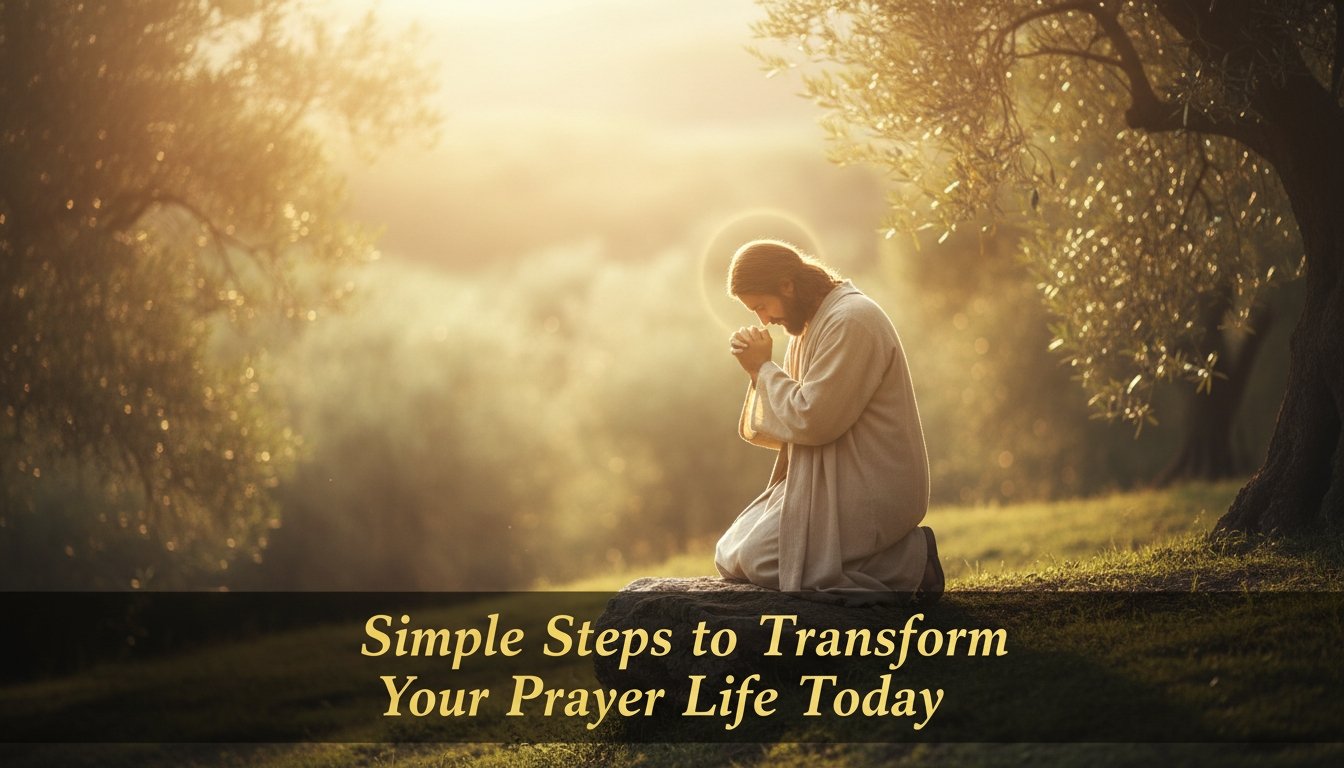
22 Dec The Powerful Way Jesus Prayed: Simple Steps to Transform Your Prayer Life Today
Jesus transformed prayer through four powerful practices you can start today. He regularly withdrew to solitary places for sacred communion with the Father, rising early and finding lonely spaces away from distractions. He aligned his body with his spirit through intentional postures—kneeling in surrender, standing with raised hands in praise, and prostrating in reverence. His words flowed from intimate trust, calling God “Abba” while surrendering his will completely. He prayed persistently and reverently, weaving prayer throughout daily rhythms rather than limiting it to crisis moments. These timeless practices will revolutionize your spiritual life as you discover the deeper dimensions of Christ-centered prayer.
Table of Contents
Key Takeaways
- Jesus established a regular rhythm of withdrawing to solitary places for prayer, especially early mornings and before major decisions.
- He used specific physical postures like kneeling, standing with raised hands, and prostration to align his body with prayer intentions.
- Jesus prayed with intimate trust using “Abba” and surrendered language like “not my will but yours” in communion with God.
- He practiced persistent, bold prayer as demonstrated in his parables about the widow and midnight friend, building faithful endurance.
- Jesus integrated prayer into daily routines before meals and ministry moments, modeling “pray without ceasing” as relational knowledge of God.
The Sacred Art of Withdrawing: Finding God in Solitude Like Jesus
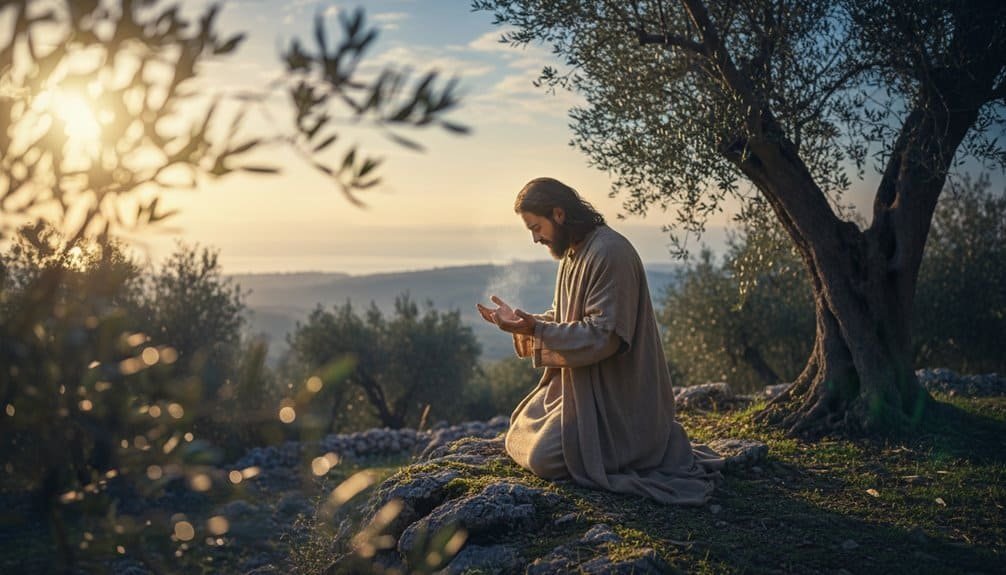
While the world around Him buzzed with constant activity and endless demands, Jesus consistently chose a different path—one that led away from the crowds and into the sacred silence of solitude.
Mark 1:35 reveals His pattern: rising “very early, while it was still dark” to find a solitary place for prayer.
Before dawn breaks and the world stirs, find your sacred space for intimate communion with the Father.
You can follow Christ’s example by creating your own wilderness retreats.
Jesus withdrew to mountainsides (Matthew 14:23), desolate places (Luke 5:16), and spent entire nights in prayer before major decisions (Luke 6:12).
He understood that soul care with the Father propelled ministry outward.
Consider implementing digital sabbaths—turning off devices to mirror Jesus’ complete withdrawal from distractions.
Luke 5:16 shows He “often withdrew” to lonely places, establishing this as regular practice, not occasional escape.
Your spiritual strength depends on these sacred pauses.
When crowds pressed in, Jesus pulled away.
When ministry demands peaked, He retreated.
This rhythm of withdrawal and reentry will transform your prayer life today.
Matthew 6:6 instructs us to “go into your room, close the door, and pray to your Father” as a model for private prayer.
His ongoing intimate relationship with Abba became the wellspring of His compassion, wisdom, and power for ministry.
At Gethsemane, Jesus demonstrated that solitude provides space for honest expression of emotions and struggles before God, even in His most agonizing moments.
Body, Mind, and Spirit: How Jesus Used Physical Postures to Deepen Prayer
Kneeling in Gethsemane’s shadows, Jesus demonstrated that authentic prayer engages more than just your mind—it involves your entire being. His embodied prayer reveals profound truth: your physical posture shapes your spiritual receptivity.
Throughout Scripture, Jesus employed varied positions—standing with uplifted eyes, kneeling in submission, even praying from the cross.
Each posture carried meaning.
When you kneel, your body expresses humility and dependence. Standing with raised hands declares praise and openness to God’s presence. Prostration communicates reverence and surrender.
This postural theology isn’t mere ritual—it’s transformative practice.
Your body and spirit work together, not separately. When you align your physical position with your prayer intention, something powerful happens: your entire being focuses on God.
Early Christians understood this, developing prayer traditions that unified breath, movement, and words. The ancient Philokalia teaches that prostration enables descent to the heart and naturally helps those who are fidgety find deeper spiritual focus.
They recognized what Jesus modeled: authentic prayer engages your complete self, creating space for deeper communion with the Father. Your body becomes a temple of the Holy Spirit, transforming every prayer session into sacred encounter where the divine presence dwells within you.
When Words Become Worship: Learning Jesus’ Language of Surrender and Intercession
Your body’s posture prepares the temple, but the words you speak become the offering itself.
Jesus mastered the art of Scriptural Brevity—using short, powerful phrases that carried theological weight.
His “Abba” expressed complete filial trust, while “not my will but yours” became the language of surrender you can echo in your own struggles.
Notice how Jesus quoted Scripture in prayer, especially the Psalms.
This wasn’t mere recitation but worship-shaped speech that aligned his heart with covenant promises.
You can follow this pattern by praying biblical language, letting God’s words become your words.
Jesus also practiced Representative Pleading—interceding for others rather than focusing solely on personal needs.
He prayed for his disciples, the crowd, even his executioners.
His intercession prioritized God’s name and kingdom first, then moved to specific, concrete needs.
Transform your prayer by adopting Jesus‘ surrender-language and Scripture-informed petitions that turn requests into worship.
Beyond Single Prayers: The Persistent and Reverent Rhythm Jesus Practiced
Jesus consistently taught that prayer isn’t meant to be a single, desperate cry but a faithful rhythm that shapes your entire spiritual life.
Through parables like the persistent widow and midnight friend, He showed you that bold, repeated requests demonstrate faith rather than doubt.
Your prayers shouldn’t manipulate God but express unwavering trust in His character and timing.
Jesus modeled these Ritual Rhythms through regular withdrawals to pray, consistent communion before major decisions, and unbroken prayer even under pressure.
He integrated prayer into daily routines—before meals, healings, and ministry moments—creating a seamless pattern of dependence on the Father.
This persistent approach develops Intercessory Endurance within you.
When you “pray without ceasing,” you’re not merely repeating requests but cultivating deeper relational knowledge of God.
Your consistent prayers prepare you for His perfect timing while strengthening your faith to withstand delays and opposition.
Frequently Asked Questions
Did Jesus Pray in Languages Other Than Aramaic During His Ministry?
Yes, Jesus likely prayed in multiple languages during His ministry. You’ll find He was multilingual, speaking Aramaic primarily but also Hebrew and Greek.
He’d have used Hebrew liturgy in synagogue worship and Greek prayers when ministering to Gentiles or Roman officials. This demonstrates how you can adapt your prayer language to reach different people while maintaining authentic communion with God.
How Long Did Jesus Typically Spend in Prayer Each Day?
Scripture doesn’t specify Jesus’s exact Prayer Duration, but you’ll notice His Private Discipline included rising before dawn for morning prayer and withdrawing to solitary places regularly.
He’d sometimes pray all night before major decisions, like choosing the twelve apostles.
You can follow His pattern by establishing consistent morning prayer times and extending your prayer during significant life moments or decisions.
What Specific Times of Day Did Jesus Prefer for Prayer?
Jesus favored early mornings while it was still dark, seeking solitary places before dawn’s light.
He also held midnight vigils, praying all night before major decisions like choosing disciples.
Evening prayers followed His public ministry, and He prayed during midday hours.
You can follow His pattern by establishing consistent prayer times—whether you’re drawn to quiet early mornings or contemplative midnight vigils for deeper communion.
Did Jesus Teach Different Prayer Methods to Different Disciples Individually?
Scripture doesn’t record Jesus giving personalized instruction or conducting individual mentorship sessions for prayer.
Instead, He taught prayer corporately when His disciples asked, providing the Lord’s Prayer to the entire group (Luke 11:1-4).
You’ll notice Jesus modeled prayer publicly—during the Transfiguration, before choosing the Twelve, and in Gethsemane.
His consistent pattern was group instruction, making prayer accessible to all His followers equally.
How Did Jesus Handle Distractions or Interruptions During His Prayer Times?
You’ll see Jesus maintained Sacred Boundaries by withdrawing to deserted places for prayer, yet practiced Gentle Reengagement when interrupted.
He didn’t become frustrated with seeking crowds or desperate disciples finding Him. Instead, He’d transition from prayer to ministry with compassion, viewing interruptions as divine appointments.
You can follow His example by protecting prayer time while remaining flexible when God redirects your attention to serve others’ needs.
Conclusion
You’ve discovered Jesus’ prayer blueprint—now it’s time to live it. Start withdrawing to quiet places daily, letting your body posture reflect your heart’s surrender. Speak His language of worship and intercession, making prayer more than requests. Embrace persistent, reverent rhythms that mirror Christ’s own practice. Don’t just pray like Jesus occasionally—transform your entire prayer life. When you follow His steps, you’ll find the same intimate connection with the Father that sustained Him.







No Comments