

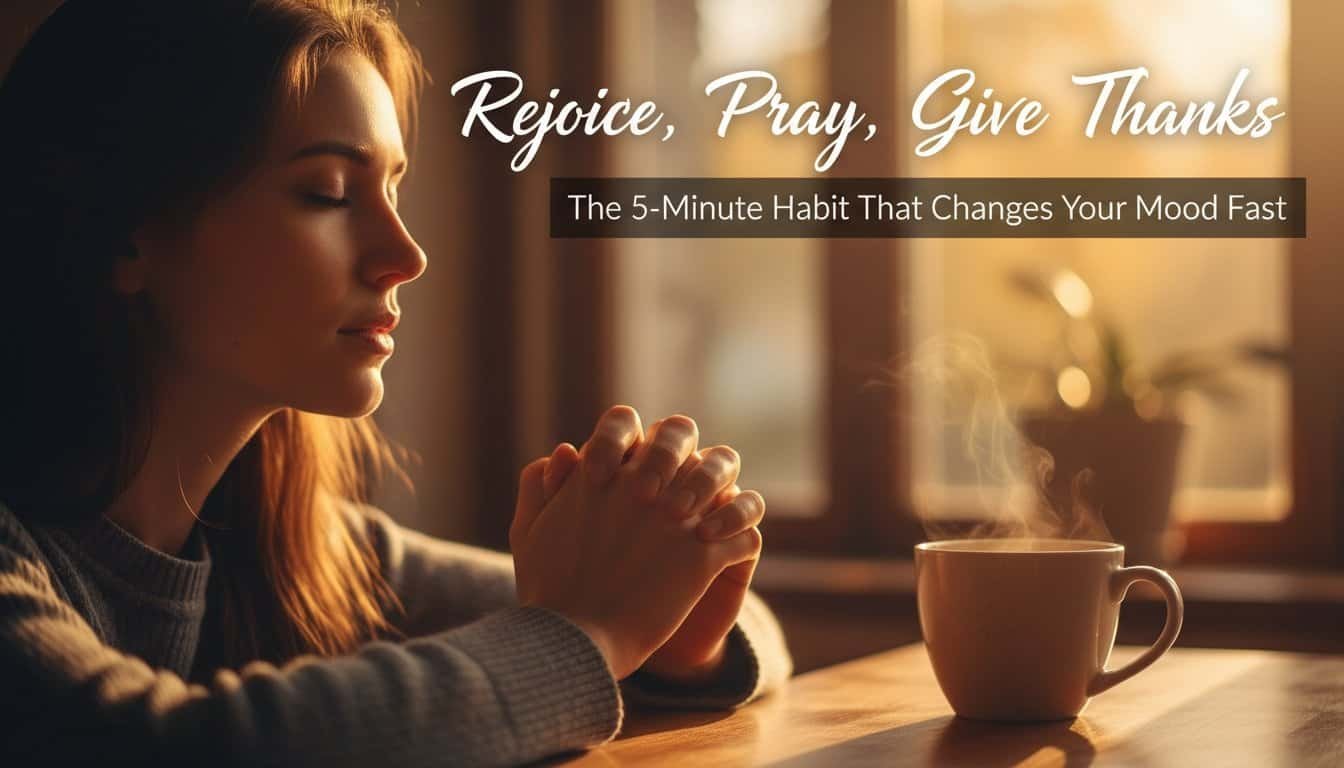
07 Jan Rejoice, Pray, Give Thanks: The 5 Minute Habit That Changes Your Mood Fast
You can transform your mood in just five minutes using a three-step practice backed by neuroscience research. First, rejoice by deliberately noticing small joyful moments, which triggers dopamine release and shifts your brain’s focus from problems to possibilities. Next, pray authentically to activate your parasympathetic nervous system and reduce cortisol by up to 23%. Finally, express specific gratitude to rewire neural pathways and strengthen emotional regulation. This simple sequence creates measurable neurological changes that enhance your well-being and build long-term resilience.
Table of Contents
Key Takeaways
- This three-step practice triggers measurable brain changes within minutes by activating the prefrontal cortex and reducing stress hormones.
- Deliberately finding joy in small moments for 30 seconds rewires your brain to focus on possibilities instead of problems.
- Prayer reduces cortisol levels by 23% in five minutes while activating your calm parasympathetic nervous system.
- Expressing specific gratitude strengthens positive neural pathways and reduces activity in your brain’s alarm system.
- Practice consistently for 21-66 days by linking it to existing morning routines for automatic mood transformation.
The Science Behind This Three-Step Mood Transformation
Neuroscientist Dr. Andrew Huberman’s research reveals how gratitude practices create measurable neurological impacts within minutes. When you engage in thankfulness, your prefrontal cortex activates while stress-response areas quiet down. This shift enhances emotional regulation by strengthening neural pathways associated with positive mood states.
Prayer triggers the release of dopamine and serotonin, your brain’s natural mood stabilizers. Studies show that focused prayer reduces cortisol levels by up to 23% in just five minutes. The repetitive, meditative aspects activate your parasympathetic nervous system, promoting calm and clarity.
Rejoicing amplifies these effects through positive visualization and celebration. Your brain doesn’t distinguish between imagined and real positive experiences, so intentional joy creates authentic neurochemical changes. The combination of gratitude, prayer, and rejoicing forms a powerful trifecta that rewires your default mood patterns.
This three-step sequence creates lasting changes in your brain’s emotional processing centers, making positive states more accessible over time.
Step One: Rejoice – Finding Joy in Small Moments
When you deliberately seek moments of joy, you activate neural networks that instantly shift your emotional state toward positivity. This first step requires you to pause and identify something—anything—that sparks even mild appreciation in your current environment.
You don’t need major life events to rejoice. Notice sunlight streaming through your window, appreciate a warm beverage, or acknowledge a completed task. These micro-moments of recognition trigger dopamine release, creating immediate mood elevation.
Set gratitude reminders on your phone every few hours to prompt this practice. When the alert sounds, scan your surroundings for one thing worth celebrating. Combine this with positive affirmations like “I notice good things around me” or “Joy exists in ordinary moments.”
The key lies in intentionality. Your brain naturally focuses on problems and threats, but conscious rejoicing interrupts this pattern. Even thirty seconds of deliberate joy-seeking rewires your attention toward possibilities rather than problems, establishing the foundation for lasting mood improvement.
Step Two: Pray – Creating Connection and Releasing Control
Prayer taps into powerful psychological mechanisms that reduce cortisol levels and activate the parasympathetic nervous system, regardless of your religious beliefs. This practice shifts you from reactive thinking into receptive awareness, creating mental space between you and your circumstances.
Intentional prayer doesn’t require specific words or postures. You’re simply acknowledging that something greater exists beyond your immediate concerns. This acknowledgment activates what researchers call “self-transcendence,” which correlates with reduced anxiety and increased emotional regulation.
The act releases your grip on outcomes you can’t control while deepening intimacy with your inner wisdom. Whether you’re addressing the universe, a higher power, or your deepest values, you’re engaging in perspective-taking that moves you beyond narrow self-focus.
Focus on expressing genuine concerns rather than perfect phrases. This authentic communication creates psychological distance from problems, allowing solutions to emerge naturally while fostering connection to something meaningful beyond yourself.
Step Three: Give Thanks – Rewiring Your Brain for Positivity
Gratitude fundamentally rewires neural pathways through a process called neuroplasticity, creating lasting changes in how your brain processes emotional information. When you’re expressing gratitude regularly, you strengthen connections in the prefrontal cortex while reducing activity in the amygdala, your brain’s alarm system.
This third step involves deliberately identifying three specific things you appreciate. Research shows that specificity amplifies gratitude’s impact—rather than “I’m grateful for my family,” try “I’m grateful my daughter helped with dinner without being asked.” This precision activates more neural networks and deepens the emotional response.
The practice works by shifting perspective from what’s missing to what’s present. Your brain’s natural negativity bias scans for problems and threats, but expressing gratitude actively counters this tendency. Studies demonstrate that consistent gratitude practice increases dopamine and serotonin levels, improving mood within weeks while building resilience against future stress and depression.
Making It Stick: Your Daily 5-Minute Practice Guide
Success depends entirely on consistency, and transforming this knowledge into an automatic daily routine requires strategic implementation. Research shows that building habits requires 21-66 days of repetition before they become automatic behaviors.
Choose the same time each day for your 5-minute practice. Morning sessions work best because they set a positive tone and face fewer scheduling conflicts. Link this habit to an existing routine—after brushing your teeth or before drinking coffee.
Start with just two minutes if five feels overwhelming. Daily consistency matters more than duration. Track your progress using a simple calendar checkmark system or habit-tracking app.
Create environmental cues that trigger your practice. Place a journal beside your bed or set a phone reminder. When you miss a day, restart immediately without self-judgment.
Within three weeks, you’ll notice this practice becoming second nature, requiring less conscious effort while delivering consistent mood improvements.
Frequently Asked Questions
What if I Don’t Have Religious Beliefs – Can I Still Pray?
You can absolutely practice prayer without religious beliefs by reframing it as secular mindfulness or non-religious meditation. Research shows that expressing gratitude, setting intentions, and reflecting on positive experiences activates similar neural pathways regardless of spiritual context.
You’re essentially engaging in focused contemplation that reduces stress and improves mood. The psychological benefits don’t require faith—just intentional practice of gratitude and mindful reflection.
How Long Before I Notice Real Changes in My Mood?
You’ll likely notice initial mood improvements within 3-7 days of consistent practice. Research shows gratitude interventions produce measurable effects after one week.
For deeper, lasting changes, expect 3-4 weeks of daily implementation. You can accelerate progress through daily mood tracking, which helps you recognize subtle shifts you might otherwise miss. Regular personal growth reflections will also enhance your awareness of positive changes as they develop gradually.
Can This Practice Help With Clinical Depression or Anxiety Disorders?
While gratitude practices can support neurotransmitter regulation and complement cognitive behavioral therapy, they’re not standalone treatments for clinical depression or anxiety disorders. You’ll need professional mental healthcare that may include therapy, medication, or both.
These practices can enhance your treatment plan by promoting positive thinking patterns, but you shouldn’t rely on them alone for serious mental health conditions requiring clinical intervention.
What’s the Best Time of Day to Do This 5-Minute Routine?
You’ll find optimal benefits practicing this routine twice daily.
Research suggests a morning routine helps establish positive intentions and resilience for upcoming challenges. Evening reflection allows you to process the day’s experiences and cultivate gratitude before sleep, which can improve rest quality.
If you can only choose one time, mornings typically provide stronger mood-regulating effects throughout your day.
Is It Normal to Feel Awkward or Silly When Starting This Practice?
Yes, you’ll likely experience initial discomfort when beginning this practice. Research shows most people feel self-conscious during new mindfulness routines, regardless of their perceived lack of spirituality.
This awkwardness stems from unfamiliarity with introspective practices, not personal inadequacy. Studies indicate these feelings typically diminish within one to two weeks of consistent practice as your brain adapts to the new neural pathways being formed.
Conclusion
You’ve learned how a simple three-step practice can shift your mental state in just five minutes. Research confirms that rejoicing, praying, and giving thanks activate neural pathways associated with well-being and stress reduction. You don’t need complex techniques or lengthy sessions—consistency matters more than duration. Start with one minute per step tomorrow morning. Your brain’s neuroplasticity will strengthen these positive patterns with regular practice, creating lasting mood improvements through this evidence-based approach.












No Comments