

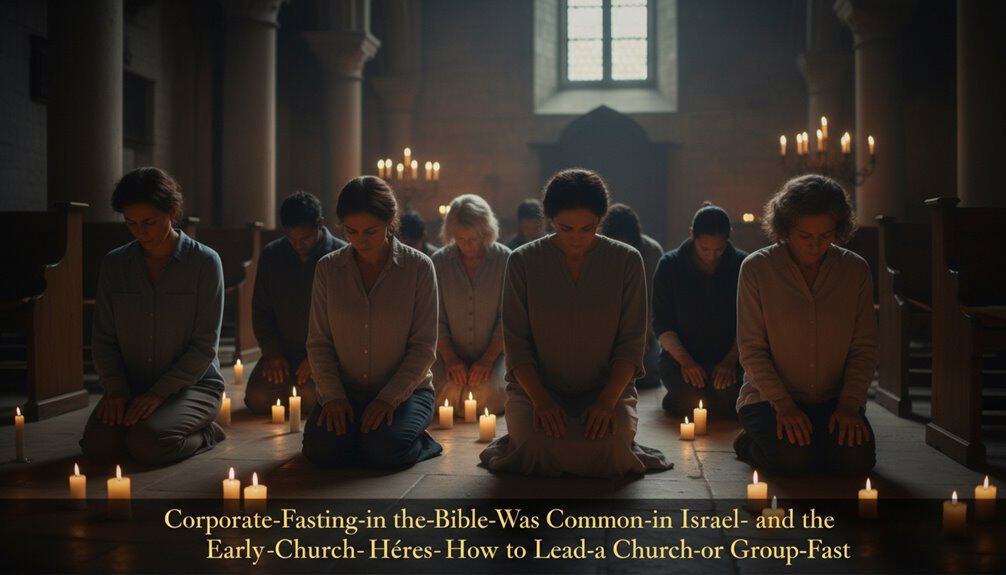
19 May Corporate Fasting in the Bible — Group Fasting Examples & How to Lead One
Disclosure: Some of the links on this website are affiliate links. If you click a link and make a purchase, the Website Operator may earn a small commission at no extra cost to you.
Table of Contents
Group fasting has deep roots in various traditions, including its historical practice in Israel, where it was woven into the calendar through observances such as the Day of Atonement and periods of national crisis. This practice was adopted by the early church, which would fast prior to sending out missionaries and making important leadership decisions.
When organizing a group fasting event, it’s essential to establish a clear purpose, set a defined structure, and provide practical health guidelines. This ensures that everyone in your congregation can participate meaningfully and safely. There are many examples of group fasting that can inspire your community to engage in this powerful spiritual practice. As you delve deeper into the topic, you’ll find even more insights to explore.
Key Takeaways
- Corporate fasting was a regular biblical practice in Israel, from the Day of Atonement to national crises requiring communal prayer and repentance.
- The early church fasted during critical moments, including missionary commissioning in Acts 13 and elder appointments in Acts 14.
- Define a single clear purpose, set a specific duration, and communicate start and end dates before launching a church fast.
- Structure multi-day fasts with morning Scripture, midday worship, and evening reflection, allowing modified participation for health or age limitations.
- Close the fast with a consecration prayer built around gratitude, dependence, desired fruit, and a benediction sending participants forward.
Corporate Fasting Was Normal in Israel, Not Rare
When you read through the Old Testament, corporate fasting stands out not as a rare emergency measure but as a woven-in feature of Israel’s covenant life. The Day of Atonement required the entire nation to fast annually, making it a calendar norm rather than a crisis response. Israel also fasted in connection with sin, danger, direction, and renewal, showing how broadly the practice applied.

These weren’t private disciplines reserved for priests or prophets. The whole community participated together, often during sacred assemblies where fasting joined public worship and obedience. Ezra called for a fast at the river Ahava. Nehemiah records national fasting tied to Scripture reading and covenant renewal. Joel summoned a solemn assembly with communal fasting as a standard prophetic call. Even the people of Nineveh responded collectively, turning from their ways through fasting and repentance when the prophet Jonah delivered God’s warning.
Corporate fasting appears across the Torah, Prophets, and Historical Books too consistently to treat as exceptional. For Israel, it was simply part of what it meant to be God’s people.
What Corporate Fasting Is Actually Meant to Accomplish
Knowing that corporate fasting was woven into Israel’s regular covenant life raises a natural follow-up question: what was it actually supposed to do?
Corporate fasting accomplishes several interconnected purposes. First, it humbles the group before God, replacing self-reliance with expressed dependence. Second, it positions you to seek direction. Acts 13:2–3 shows the Antioch church fasting before the Holy Spirit assigned Barnabas and Saul, and Ezra 8:21–23 links fasting directly to seeking God’s guidance through uncertainty.
Third, fasting intensifies prayer by redirecting time normally spent on meals toward intercession and Scripture. It’s a companion to prayer, not a substitute for it. Fourth, shared abstinence unifies a congregation around one burden, one request, or one season of seeking God.

Finally, corporate fasting positions your group for action—commissioning, mission, and breakthrough. The goal isn’t fasting itself. It’s what God does when a community seeks him together with focused, humble devotion.
The Most Powerful Corporate Fasts in the Old Testament
The Old Testament records several corporate fasts so striking that they still serve as models for what God can do when His people seek Him together.
Esther’s three-day fast rallied the Jewish community in Susa around a life-or-death crisis, while Jehoshaphat led all of Judah in fasting and prayer when three armies threatened to overwhelm them.
Perhaps most surprising of all, the pagan city of Nineveh responded to Jonah’s warning with a citywide fast that moved God to withhold the judgment He’d declared.
Esther’s Three-Day Fast
Few corporate fasts in the Old Testament match the urgency and scale of Esther’s three-day fast. When Haman’s edict threatened every Jew in Susa, Esther didn’t act alone. She called all the Jews in the city to fast with her and her maidens—no food or water for three full days and nights (Esther 4:16).
This wasn’t private devotion. It was collective intercession under national threat, and it demonstrates what you can mobilize when a community fasts together with unified purpose. The fast expressed humility and dependence on divine deliverance before Esther took a courageous, dangerous step toward the king.
The outcome was total reversal—Haman’s decree failed, and the Jewish people survived. That’s the power you’re drawing from when you lead a group fast.
Jehoshaphat Sought God Together
Esther’s fast shows what happens when urgency binds a community together—but she wasn’t the only leader in Israel who called an entire nation to seek God under threat. When Moab, Ammon, and the Meunites marched against Judah, Jehoshaphat didn’t reach for military strategy first. He called a national fast, and people from every city gathered to seek God together (2 Chr. 20:3–4).
His prayer didn’t open with a battle plan—it opened with worship and an honest confession: “We don’t know what to do, but our eyes are on you” (2 Chr. 20:12). God answered through a prophet, commanded them to stand firm, and won the battle himself. Corporate fasting turned national panic into collective praise before a single sword was drawn.
Nineveh’s National Repentance Fast
When a foreign prophet walked into one of the ancient world’s most powerful cities and declared its destruction in forty days, no one would have predicted what happened next. Nineveh believed God, proclaimed a fast, and repented collectively from the greatest to the least.
The king himself descended from his throne, exchanged his robe for sackcloth, and sat in ashes. He then issued a decree requiring every person and animal to fast, cry out to God, and abandon violence and evil.
God saw their works and relented. This wasn’t ritual performance—it was genuine moral transformation paired with fasting and humility. Nineveh remains the Bible’s most striking example of what corporate fasting, joined with real repentance, can produce in response to divine judgment.
How the Early Church Fasted for Mission and Leadership
The early church didn’t treat fasting as a private spiritual exercise reserved for personal crises. It was woven into the life of the community, especially during moments of mission and leadership transition.
In Acts 13, the church at Antioch was worshiping and fasting when the Holy Spirit directed them to send Barnabas and Saul. They fasted again before commissioning them. In Acts 14:23, Paul and Barnabas appointed elders with prayer and fasting. These weren’t isolated moments — they reflect a pattern.
When you lead your church through a corporate fast tied to mission or leadership decisions, you’re following that same pattern. Fasting slows you down, quiets human strategy, and creates space to hear the Spirit’s direction. It reinforces that leadership selection and missionary sending are spiritually weighty, not merely administrative.
The Didache confirms early Christians fasted regularly, not only in crises, making it a sustained communal rhythm.
How to Structure a Church Fast From Start to Finish
When you’re ready to lead a church fast, the most important step you can take is defining a single, clear purpose before you announce anything to the congregation.
Once you’ve tied the fast to a specific biblical theme and chosen the length and type, you can communicate the details with confidence and direction.
You’ll also want to plan a intentional closing gathering—a time of prayer, testimony, or communion—so the fast ends with the same spiritual seriousness with which it began.
Setting a Clear Purpose
Before launching a church fast, you need to establish a clear spiritual purpose—because without one, participants will struggle to endure discomfort and the fast risks becoming an empty ritual.
Frame the entire fast as an act “unto the Lord,” keeping God as the central focus. Common purposes include:
- Seeking God’s guidance for major decisions
- Corporate repentance and renewed devotion
- Intercession for salvation, healing, or breakthrough
- Spiritual protection over the church and its mission
Your purpose statement should be concise enough to repeat throughout the fast. Write it down, announce it repeatedly, and connect it directly to your church’s current needs. When everyone understands the why they fast with unity rather than individual agendas—and that shared focus transforms a group discipline into genuine corporate prayer.
Choosing the Fast Duration
How long should your church fast? Common options include half a day, one day, three days, one week, or twenty-one days. If your congregation hasn’t fasted corporately before, start small—a single meal or a 24-hour fast is a practical entry point before attempting anything longer.
Match the duration to your people’s spiritual and physical capacity. Youth and children shouldn’t be pushed into extended fasts. Longer fasts demand greater preparation and prayerful consideration.
For multi-day fasts, plan a daily structure in advance—morning Scripture and prayer, midday worship, and evening reflection. You can also consider partial formats like the Daniel Fast or sunrise-to-sunset fasting. Whatever you choose, publish the start date, end date, and fast type clearly so everyone participates with confidence.
Closing With Prayer
The closing prayer is the final act of consecration that seals everything your congregation experienced during the fast. Keep it concise, scripture-grounded, and purposeful so people leave with spiritual momentum rather than ceremonial closure.
Structure your closing prayer around these four movements:
- Gratitude – Thank God specifically for His presence, provision, and what He revealed during the fast
- Dependence – Acknowledge where hunger and discipline exposed weakness and deepened reliance on Him
- Fruit – Ask for lasting wisdom, holiness, and compassion to grow from this season
- Benediction – Release the congregation with blessing language, drawing from passages like Isaiah 58 or 2 Corinthians 13:14
End with a clear “Amen,” reinforcing that what God began during the fast continues beyond it.
Health, Duration, and Participation Guidelines for Group Fasts
When planning a corporate fast, you’ll need clear health guidelines, realistic duration options, and a participation structure that accommodates your whole congregation. Recommend medical clearance for anyone managing ongoing conditions or medications. Exclude pregnant and nursing mothers, and advise those with diabetes, gout, kidney disease, liver disease, ulcers, hypoglycemia, cancer, or blood diseases to avoid fasting. Emphasize wisdom so the fast doesn’t cause physical harm.
For duration, common options include 24-hour fasts, 6 a.m. to 6 p.m. daily windows, or 21-day Daniel fasts for seasonal consecration periods. Define your fast type clearly—total, Daniel, or partial—and specify what foods or beverages are permitted.
Structure participation around both private devotion and scheduled group prayer, incorporating Scripture reading and daily prayer points. Allow modified participation for those with health, age, or family limitations. Set clear start and end times, remind participants to hydrate, and account for medication schedules when needed.
Frequently Asked Questions
Can Children Participate in a Church Fast Alongside Their Parents?
Yes, your children can participate in a church fast alongside you, but you’ll want to adapt it to their age and health needs. Instead of restricting food, let them fast from sweets, screens, or favorite toys. Pair the fast with prayer and Bible reading so they understand it’s about focusing on God, not punishment. Always supervise their participation and use your parental wisdom.
Should a Church Fast Be Announced Publicly or Kept Within the Congregation?
You can announce a church fast publicly or keep it within the congregation—it depends on your purpose and audience. If you’re calling the whole church to a united effort, announce it clearly so everyone can participate.
If the fast involves sensitive matters, keep it internal.
Either way, guard against turning the announcement into performance. Your goal’s collective prayer, not public recognition.
How Do You Handle Members Who Feel Guilty for Not Completing the Fast?
When members feel guilty for not completing the fast, remind them that repentance matters more than perfect performance.
Encourage them to confess honestly, receive God’s forgiveness, and rejoin the fast with fresh intention.
Let them know that missing a portion doesn’t disqualify them.
Point them back to Christ’s mercy, not their failure.
A brief pastoral conversation can help clarify their conscience and restore their confidence.
Can a Corporate Fast Be Done Online or Remotely With a Virtual Group?
Yes, you can absolutely run a corporate fast online with a virtual group. Start with a kickoff video call to explain the guidelines, then create a shared chat channel for prayer updates and encouragement. Schedule brief check-ins throughout, and close with a virtual prayer gathering. Unity of purpose matters more than physical location, so your group’s shared commitment keeps the fast meaningful regardless of where everyone is.
Is It Appropriate to Combine Corporate Fasting With a Fundraising or Giving Campaign?
Yes, you can combine corporate fasting with a giving campaign, but you’ll want to keep the spiritual purpose primary. Frame giving as worship and solidarity, not as a transaction or pathway to divine favor.
Clearly name the campaign’s goal, recipient, and accountability structure before it begins.
Keep fasting instructions separate from giving instructions so participants don’t feel pressure to do both to be fully included.
Conclusion
Leading a corporate fast isn’t complicated, but it does require intentionality. You’ve seen how Israel and the early church treated fasting as a normal, powerful practice—not an occasional spiritual experiment. When you structure it well, communicate clearly, and keep the focus on God rather than the fast itself, you’ll guide your congregation into something genuinely transformative. Don’t overthink it. Just start, stay humble, and trust that God honors the collective hunger of His people.












No Comments