

17 May Partial Fast in the Bible — What You Can & Cannot Eat
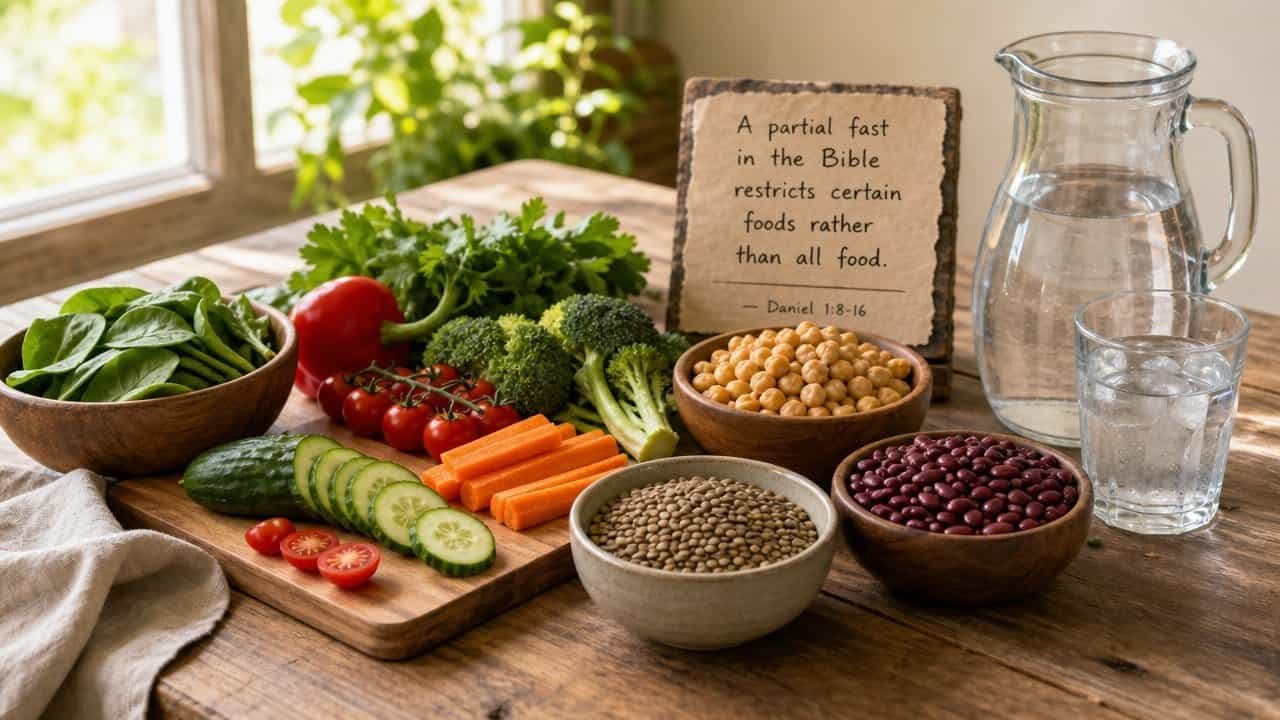
When you fast in the Bible, you don’t always give up all food—sometimes you simply set aside certain kinds of it. A partial fast restricts specific foods rather than eliminating eating entirely. In Daniel 1, Daniel and his companions chose vegetables and water over the king’s rich food and wine. In Daniel 10, Daniel abstained from meat, pleasant bread, and wine for 21 days. Keep going to discover exactly what this means for you.
Table of Contents
Key Takeaways
- A partial fast restricts certain foods rather than eliminating all eating, as seen in two distinct passages in the Book of Daniel.
- In Daniel 1, Daniel, Hananiah, Mishael, and Azariah chose vegetables and water over the king’s food and wine.
- In Daniel 10, Daniel alone fasted for 21 days, abstaining from pleasant bread, meat, and wine during a period of mourning.
- The two accounts are separate events with distinct participants, durations, and spiritual contexts, with no unified eating plan across both.
- The core purpose of biblical partial fasting is spiritual humility and repentance, not strict dietary adherence or nutrition.
What Is a Daniel Fast and How Does It Work?
The Daniel Fast is a partial fast grounded in two passages from the book of Daniel. Daniel 1 describes Daniel choosing vegetables and water over the king’s food and wine. Daniel 10 records a three-week period where he avoided choice food, meat, and wine. Together, these passages form the biblical foundation for the fast.
In practice, you’ll eat simple plant-based meals for a fixed period, typically 10 to 21 days. Fruits, vegetables, whole grains, legumes, nuts, and seeds are allowed. Animal products, sugar, refined foods, and alcohol are excluded. Water is your primary beverage.
The fast isn’t about calorie counting or weight loss. It’s a spiritual discipline focused on prayer, humility, and drawing closer to God. You pair it with Bible reading and intentional prayer. Some churches offer slight variations in guidelines, but the core structure stays consistent.

Yeast-containing breads are not permitted during the fast, with whole grain flatbread serving as the acceptable alternative for those who want a bread option.
Who Practiced the Daniel Fast in Scripture?
Now that you understand how the Daniel Fast works, it’s worth looking at who actually practiced it in Scripture.
Two distinct passages identify the key participants:
- Daniel refused the king’s food and wine during Babylonian court training (Daniel 1:8)
- Hananiah, Mishael, and Azariah joined Daniel in eating only pulse and water during that same test (Daniel 1:11–16)
- The steward tested all four youths together, making the dietary restriction a group practice
- Daniel alone practiced the later 21-day partial fast described in Daniel 10:2–3
- No other individual is explicitly named as joining Daniel’s mourning fast in Daniel 10
What the Bible Actually Says About Daniel’s Fast
When you examine Scripture closely, you’ll find that Daniel’s fasting appears in two separate passages — Daniel 1 and Daniel 10 — each describing a distinct situation with different foods restricted.
In Daniel 1, he eats vegetables and drinks water for 10 days to avoid defilement, while in Daniel 10, he abstains from pleasant bread, meat, and wine for 21 days during a period of mourning.

What the Bible doesn’t do is combine these accounts into a single, standardized eating plan or fill in the gaps that modern Daniel Fast guidelines typically address.
Daniel’s Two Fasting Accounts
Before diving into the popular concept of the “Daniel Fast,” it’s worth stepping back to examine what the Bible actually says — because Daniel’s story involves two separate fasting accounts, not one.
Here’s what distinguishes them:
- Daniel 1 occurs during his youth, as a court test in Babylonian training
- Daniel 10 happens later, during a personal period of grief and revelation
- Daniel 1 focuses on food purity and faithfulness under pressure
- Daniel 10 involves 21 days of mourning, prayer, and seeking spiritual insight
- Both accounts reflect discipline and devotion but serve entirely different purposes
You can’t collapse these two events into a single fast without losing the distinct meaning each account carries.
Foods Daniel Avoided
What did Daniel actually avoid eating? According to Daniel 1:8 and 1:12, he refused the king’s rich food and wine. That’s it. The text doesn’t give you an itemized menu or a detailed exclusion list.
What he requested instead was vegetables and water for ten days. The Hebrew word for vegetables can also mean seeds, herbs, or seed-grown food, so his diet was plant-based but not calorie-free. He wasn’t fasting completely—he was eating selectively.
Animal-based royal foods were likely excluded by default, since he only asked for vegetables. Wine was explicitly refused. Any food connected to ritual defilement was off the table. But the Bible doesn’t mention caffeine, processed food, or dairy—those exclusions come from modern interpretations, not Scripture.
Scripture’s Interpretive Gaps
3 explicitly mentions fasting—but none of these passages present a unified, named dietary practice. When you read Daniel carefully, you’ll notice the biblical record leaves significant interpretive gaps:
- Daniel 1:12 describes a ten-day vegetable-and-water test without calling it a fast
- Daniel 10:3’s “choice food” remains debated—translations vary between luxury foods, delicacies, or simplified eating
- Daniel 9:3 uses the word “fasting,” but centers on prayer, confession, and mourning
- Scripture never supplies an expanded permitted-food list that modern Daniel Fast guides provide
- The 21-day template comes from inference, not an explicit biblical command
You’re working with two separate narrative events that modern practice combines into one model. The Bible describes real moments of restraint—it doesn’t prescribe a standardized ritual.
Foods Allowed on a Daniel Fast
When following a Daniel Fast, you’ll center your meals around vegetables, fresh fruits, whole grains, and legumes. You can also include nuts and seeds, which provide healthy fats and protein to sustain you through the fast. Water serves as your primary beverage, keeping the fast simple and focused on whole, unprocessed foods.
Vegetables and Fresh Fruits
Fresh fruits and vegetables form the foundation of the Daniel Fast, and knowing which ones are allowed—and how to prepare them—keeps you on track.
You can eat a wide variety of both, including:
- Fruits: apples, bananas, grapes, berries, and citrus fruits
- Vegetables: leafy greens, cruciferous vegetables, root vegetables, garden vegetables, and starchy options like potatoes and corn
- Preparation methods: raw, steamed, juiced, or frozen
- Frozen produce: accepted as-is, without seasoning blends or additives
- Packaged produce: always check labels for added sugar, syrups, preservatives, or artificial flavors
Canned fruit is only acceptable when packed without added sugar or syrup. Dried fruit is often allowed, but watch for added sweeteners. When in doubt, fresh or plain frozen is your safest choice.
Whole Grains and Legumes
Whole grains and legumes serve as the carbohydrate and protein backbone of the Daniel Fast. Grains like amaranth, barley, brown rice, buckwheat, bulgur, millet, oats, quinoa, spelt, and wild rice are fully acceptable. They replace refined grains, which aren’t allowed.
Legumes, including black beans, kidney beans, lentils, chickpeas, pinto beans, and split peas, supply the protein and fiber your body needs without animal products. Peanuts, edamame, tofu, and soy nuts also fall within this category.
When combining grains and legumes in meals, you’re building a more nutritionally complete plate. Always check ingredient labels, though. Whole grain products must contain only Daniel Fast-friendly ingredients, and packaged legume products shouldn’t include additives, preservatives, or artificial flavorings.
Nuts, Seeds, and Water
Nuts and seeds round out the plant-based protein sources that grains and legumes already provide. Stick to raw, unsalted options and check labels carefully before eating anything packaged.
Allowed nuts and seeds typically include:
- Almonds, cashews, walnuts, pecans, pistachios, and macadamia nuts
- Sunflower seeds, pumpkin seeds, chia seeds, flax seeds, and sesame seeds
- Natural nut butters made with only one ingredient, like Smucker’s natural peanut butter
- Plain, unsweetened seed mixes with no added oils, sugar, or artificial flavoring
- Almond butter and other minimally processed nut butters without hydrogenated oils or preservatives
For beverages, water is your only standard option. Daniel 1:12 specifically mentions vegetables and water. Sweetened drinks, coffee, tea, and alcohol are all excluded from the Daniel Fast.
Foods Restricted During a Biblical Partial Fast
When practicing a biblical partial fast, you typically restrict several categories of food rather than abstaining from all eating. The Daniel account associates fasting with avoiding meat and rich, indulgent foods, and modern fasting guides have expanded this into broader category-based restrictions.
You’d commonly avoid all animal products, including beef, lamb, pork, poultry, fish, dairy, and eggs. Added sugars, sweeteners like honey and agave, and desserts are also excluded, reflecting the “no pleasant food” pattern described in Daniel 10. Leavened breads, pastries, cakes, and packaged baked goods fall into the restricted category as well.
Processed and fried foods, including chips, packaged snacks, and foods containing artificial additives, are typically off-limits. For beverages, you’d avoid alcohol, coffee, soft drinks, and energy drinks, with water remaining the most consistently permitted option. Some traditions also permit natural fruit juice.
How the Daniel Fast Is Practiced in the Church Today
Understanding what foods to restrict is only part of the picture — how the fast is actually carried out in church settings shapes the practice just as much. Most churches treat the Daniel Fast as a voluntary, 21-day spiritual discipline rather than a biblical command, and they pair it with intentional devotional habits.
Common features of the church-based Daniel Fast include:
- Prayer and Scripture reading woven into daily practice
- Church-wide launch, often at the start of the calendar year
- Guided devotionals or small-group materials supporting participants
- Flexibility in food rules, varying by congregation
- Broader spiritual goals, including repentance, humility, and seeking God’s direction
You’ll notice that churches consistently emphasize spiritual hunger over menu precision. The specific food guidelines matter less than the posture of intentional self-denial. The fast functions as one part of a larger congregational season of renewal, not a standalone dietary program.
Frequently Asked Questions
Can Children or Pregnant Women Safely Participate in a Daniel Fast?
Children and pregnant women can potentially participate in a modified Daniel Fast, but you should consult a doctor, midwife, or pediatrician first. Pregnancy increases nutritional demands, making strict restriction risky, while children need adequate calories and nutrients for growth. If you proceed, watch for dizziness, fatigue, or dehydration. A carefully planned, medically supervised modification is far safer than following the standard Daniel Fast restrictions strictly.
How Long Should a Daniel Fast Typically Last?
A Daniel Fast typically lasts 10 to 21 days, though there’s no strict biblical rule setting an exact length.
Most churches follow a 21-day format, drawing from Daniel 10:2–3, while others use a 10-day version based on Daniel 1.
You can also choose a shorter period if needed.
What matters most isn’t the number of days—it’s your commitment to drawing closer to God.
Does Breaking a Daniel Fast Early Affect Its Spiritual Validity?
Breaking a Daniel Fast early doesn’t erase its spiritual validity. Scripture doesn’t treat fasting as a legal contract where an early stop cancels all prior prayer and devotion. What matters most is your heart, your reason for breaking it, and how you respond afterward. You can repent, restart, or adjust your approach. The spiritual benefit you’ve gained through humility and seeking God remains intact.
Can a Daniel Fast Be Combined With Other Spiritual Disciplines Like Prayer?
Yes, you can combine a Daniel Fast with other spiritual disciplines, and Scripture shows that’s exactly how it’s meant to work. Daniel paired fasting with prayer, confession, and Scripture in Daniel 9 and 10. Prayer gives the fast its purpose, while Bible reading and praise deepen your focus on God. Rather than treating it as only a dietary change, you’re using it to intensify your dependence on Him.
Are There Medical Conditions That Make a Daniel Fast Unsafe?
Yes, certain medical conditions can make a Daniel Fast unsafe for you. If you have diabetes, chronic kidney disease, an eating disorder, or you’re pregnant or breastfeeding, you’re at higher risk. Your medications, like insulin or blood pressure drugs, may also need adjustment. You should consult your doctor before starting, and stop immediately if you experience severe weakness, fainting, or confusion.
Conclusion
Whether you’re drawn to the Daniel Fast for spiritual discipline or deeper prayer, you’re following a practice rooted in scripture. You’ve seen how Daniel and others restricted certain foods rather than fasting completely, and you’ve learned how today’s church applies these principles. As you consider this partial fast, let it connect you to something ancient, intentional, and genuinely transformative in your walk with God.









No Comments