

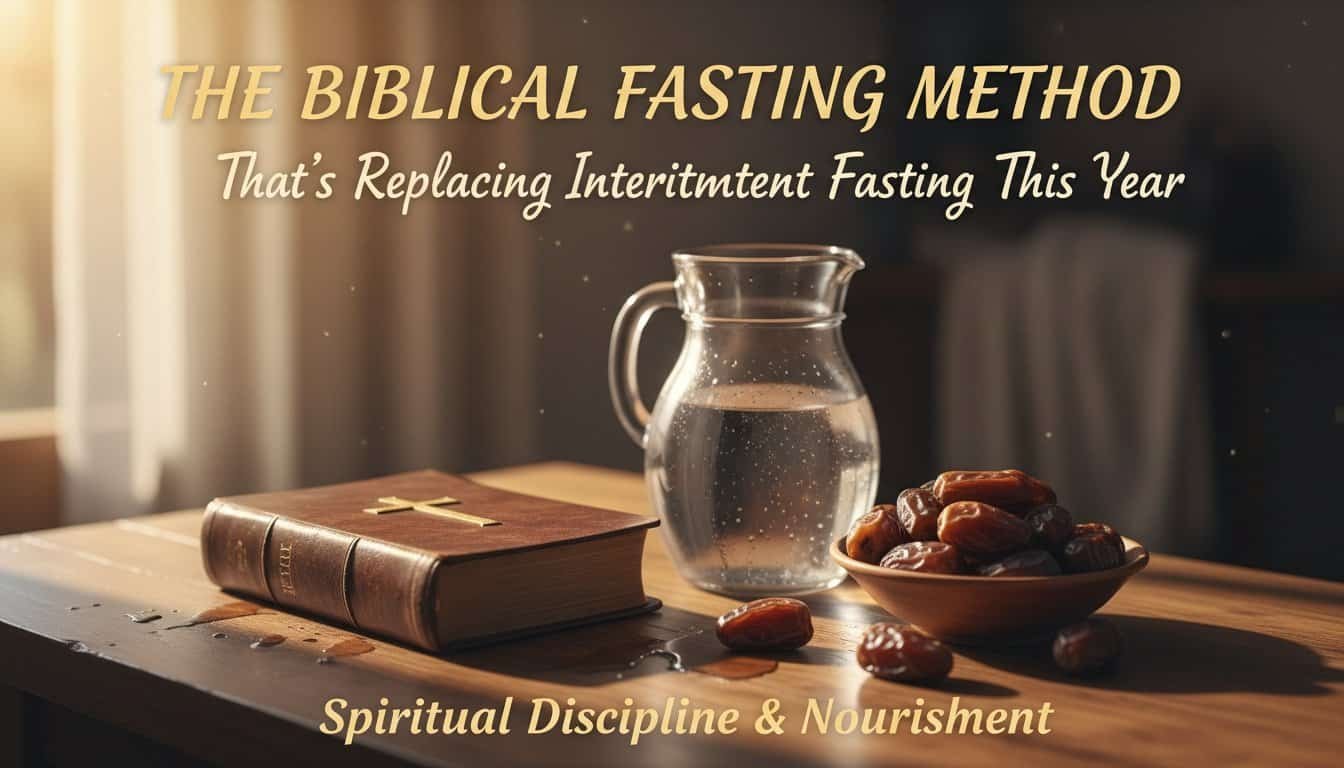
20 Jan The Biblical Fasting Method That’s Replacing Intermittent Fasting This Year
Biblical fasting differs fundamentally from intermittent fasting by prioritizing spiritual communion with God over physical results. You’ll choose from three primary types: normal fasts (food abstinence), partial fasts like Daniel’s 21-day vegetables-and-water approach, or absolute fasts (no food or water). Scripture presents fasting as spiritual discipline in Matthew 6:16, emphasizing “when you fast” rather than “if.” This practice heightens spiritual sensitivity, enables breakthrough prayer, and aligns your heart with heaven’s purposes through intentional abstinence that transforms both spirit and body.
Table of Contents
Key Takeaways
- Biblical fasting prioritizes spiritual communion with God over physical benefits, unlike intermittent fasting’s focus on health outcomes.
- The Daniel Fast allows fruits, vegetables, and water while eliminating meat, sweets, and processed foods for twenty-one days.
- Three biblical fast types exist: normal (food abstinence), partial (restricted foods), and absolute (no food/water) for different purposes.
- Fasting enables spiritual breakthroughs, divine revelations, and deeper prayer life as demonstrated in Daniel’s angelic encounters.
- Begin with Daniel’s partial fast for safety, consult physicians when necessary, and prioritize spiritual readiness over physical results.
What Is Biblical Fasting And How Does It Work?

When you examine the scriptural foundations of fasting, you’ll discover that biblical fasting differs fundamentally from modern intermittent fasting trends in both purpose and practice. While intermittent fasting focuses on physical benefits, biblical fasting concepts center on spiritual communion with God through voluntary abstinence from food.
You’ll find three primary types in Scripture: absolute fasts (no food or water), normal fasts (no food, water permitted), and partial fasts like Daniel’s (limited foods only). The Daniel Fast, detailed in Daniel 1:12-16 and 10:3, restricts you to vegetables, fruits, and water while eliminating meat, sweets, and wine.
Biblical fasting operates through humbling your flesh to heighten spiritual sensitivity. As Jesus demonstrated in Matthew 4:1-4, fasting isn’t about weight loss but about seeking God’s face, repentance, and spiritual breakthrough. These spiritual disciplines create space for prayer, meditation, and deeper scriptural study.
4 Types Of Biblical Fasts You Should Know About
Biblical fasting encompasses several distinct forms, each serving specific spiritual purposes and following scriptural precedents established throughout God’s Word.
You’ll find three primary types rooted in biblical fasting history. The normal fast involves abstaining from food while drinking water, exemplified by Christ’s 40-day wilderness experience (Matthew 4:2). This fundamental approach appears throughout Scripture as believers seek God’s direction.
The partial fast, demonstrated by Daniel’s vegetable-and-water diet (Daniel 10:3), restricts certain foods rather than eliminating all consumption. You’re focusing on spiritual discipline while maintaining basic nutrition.
The absolute fast represents complete abstinence from food and water, typically lasting no more than three days for safety. Esther’s pre-audience fast (Esther 4:16) illustrates this intensive approach during critical spiritual warfare.
Understanding proper fasting terminology helps you distinguish between these methods. Each type serves different spiritual seasons and personal calling, allowing you to select the appropriate biblical model for your spiritual journey and physical capabilities.
The Daniel Fast: Your Complete 21-Day Guide
How can you embark on one of Scripture’s most transformative fasting journeys? The Daniel fast follows the prophet’s example from Daniel 1:8-16, where he chose vegetables and water over the king’s rich foods for twenty-one days.
Your Daniel fast eliminates meat, dairy, sweets, leavened bread, and processed foods. You’ll consume fruits, vegetables, whole grains, legumes, nuts, and water. This mirrors Daniel’s commitment to spiritual purity while maintaining physical health.
The Bible science behind Daniel’s approach proves remarkable. His diet provided complete proteins through legume-grain combinations, essential nutrients from colorful produce, and sustained energy from complex carbohydrates. After twenty-one days, Daniel appeared healthier than those eating royal delicacies (Daniel 1:15).
Start each day with prayer and Scripture reading. Plan meals around fresh, whole foods. Track your spiritual insights alongside physical changes. This isn’t mere dietary restriction—it’s consecration through intentional eating that honors God while transforming your relationship with food.
Why Biblical Fasting Offers More Than Physical Benefits
Why does Scripture consistently link fasting with profound spiritual breakthrough rather than mere physical improvement? You’ll discover that biblical fasting transcends dietary restrictions to become a powerful catalyst for spiritual growth.
When you engage in biblical fasting, you’re following Christ’s expectation in Matthew 6:16, where He says “when you fast,” not “if you fast.” This practice heightens your spiritual sensitivity, creating space for God’s voice to penetrate worldly distractions.
Daniel’s twenty-one-day fast produced divine revelations and angelic encounters (Daniel 10:2-12). Similarly, your fasting opens pathways for breakthrough prayer, enhanced discernment, and deeper intimacy with God. You’re not merely restricting food—you’re positioning yourself for spiritual transformation.
Biblical fasting breaks strongholds, brings clarity to God’s will, and intensifies your prayer life. Unlike secular fasting focused on physical results, this sacred discipline aligns your spirit with heaven’s purposes, producing lasting spiritual growth that impacts every area of your life.
5 Safety Guidelines For Your First Biblical Fast
Where should you begin when preparing for your first biblical fast to ensure both spiritual fruitfulness and physical safety? Start by consulting your physician, especially if you have diabetes, heart conditions, or take medications. Medical advisories emphasize that certain health conditions require modified approaches or complete avoidance of extended fasting.
Begin with shorter fasts like Daniel’s partial fast (Daniel 10:3), avoiding choice foods rather than complete abstinence. This reduces safety concerns while building spiritual discipline. Gradually progress to longer periods as your body adapts.
Stay hydrated throughout your fast, as Scripture doesn’t prohibit water consumption in most contexts. Listen to your body’s signals – dizziness, severe weakness, or chest pain warrant immediate breaking of the fast.
Remember Ecclesiastes 3:1: “To every thing there’s a season.” Your fasting season should align with both spiritual readiness and physical capability. Prepare your heart through prayer and Scripture study before beginning.
Frequently Asked Questions
Can I Drink Coffee or Tea During a Biblical Fast?
You’ll need to abstain from coffee and tea during biblical fasting, as Scripture emphasizes complete food and drink abstinence (Ezra 10:6, Esther 4:16).
While modern coffee traditions and tea rituals seem harmless, they contradict the biblical principle of total consecration. You’re called to depend solely on God’s sust sustenance, not comfort beverages.
True biblical fasting requires sacrificing all physical nourishment for spiritual breakthrough and divine communion.
How Does Biblical Fasting Differ From Intermittent Fasting for Weight Loss?
Biblical fasting prioritizes spiritual transformation over weight loss differences, unlike intermittent fasting’s primary focus on metabolic benefits. You’ll fast with prayer and Scripture meditation (Joel 2:12), seeking God’s presence rather than just caloric restriction. While both methods can produce weight loss, biblical fasting emphasizes heart posture and spiritual discipline.
You’re denying flesh to draw closer to God (Matthew 6:16-18), making weight loss a secondary benefit rather than the primary goal.
What Should I Do if I Break My Fast Accidentally?
Don’t condemn yourself—God’s grace covers your weakness (Romans 8:1).
Approach breaking your fast with a stewardship mindset: acknowledge what happened, receive His mercy, and recommit to your spiritual discipline.
Unlike secular fasting focused on perfection, biblical fasting emphasizes heart posture over performance.
Confess any lack of self-control (1 John 1:9), then continue your fast or adjust your approach.
God’s mercies are new every morning (Lamentations 3:23).
Can Children or Pregnant Women Participate in Biblical Fasting?
You shouldn’t encourage children or pregnant women to participate in biblical fasting due to critical children safety and pregnancy considerations. Scripture emphasizes protecting the vulnerable (Psalm 82:3-4), and their nutritional needs take precedence over spiritual disciplines. Instead, they can pursue alternative forms of consecration like media fasts or increased prayer. God desires mercy over sacrifice (Hosea 6:6), making their health paramount.
How Often Should I Practice Biblical Fasting Throughout the Year?
You should establish a yearly rhythm of biblical fasting based on scriptural patterns. The Old Testament prescribes the Day of Atonement annually (Leviticus 16:29-31), while Jesus fasted forty days before His ministry began. Consider how often you’ll practice seasonal fasts, weekly discipline, or special occasions requiring spiritual breakthrough. Start with quarterly three-day fasts, then develop your personal rhythm through prayer and biblical study.
Conclusion
You’ve discovered how biblical fasting transcends mere dietary restrictions to become a powerful spiritual discipline. When you combine prayer with intentional abstinence, you’re following Christ’s example (Matthew 4:2) and Daniel’s devotion (Daniel 10:3). Don’t approach this lightly—seek God’s guidance and prioritize safety. Remember, biblical fasting isn’t about achieving physical results but drawing closer to the Lord. “When you fast” (Matthew 6:16), you’ll experience spiritual breakthrough that intermittent fasting simply can’t provide.











No Comments