

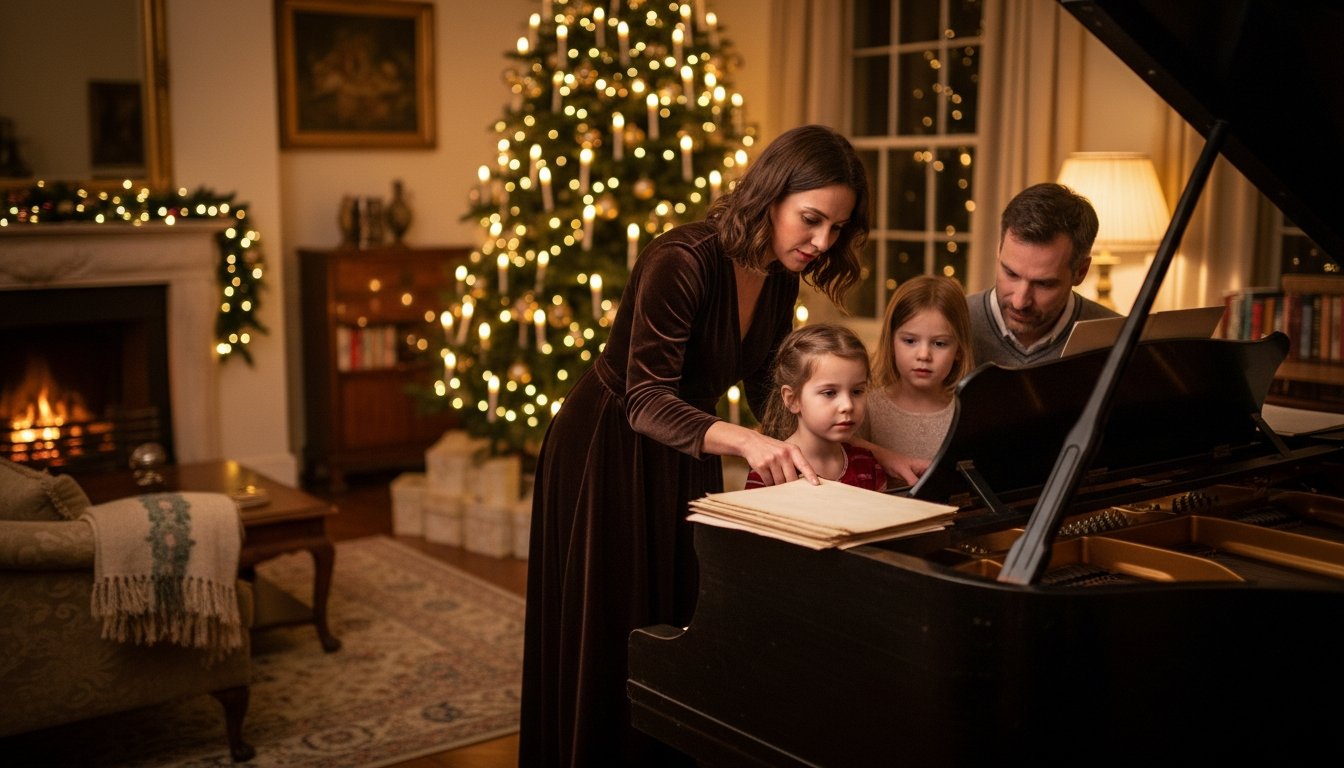
05 Dec Christmas Songs and Lyrics Printable Carols for Family Sing-Alongs
You’ll find success with printable Christmas carols by selecting songs with simple harmonic structures like “Silent Night” and robust melodic patterns such as “O Come, All Ye Faithful” that accommodate mixed-age groups. Choose carols with accessible vocal ranges spanning one octave, repetitive refrains, and predictable chord progressions that help novice singers participate confidently. Organize your collection by difficulty level and key signature while ensuring large, readable fonts on your printed sheets. The following comprehensive guide explores traditional hymns, modern favorites, international selections, and proven strategies for creating unforgettable family holiday traditions.
Table of Contents
Key Takeaways
- Choose carols with simple harmonic structures and accessible one-octave vocal ranges like “Silent Night” and “Jingle Bells” for mixed-age participation.
- Include repetitive refrains and predictable chord progressions in songs like “O Come, All Ye Faithful” to accommodate novice singers.
- Create printable song sheets with large, readable fonts and chord charts to support both vocalists and instrumentalists during sing-alongs.
- Balance traditional carols, modern holiday favorites, and international songs to bridge generational preferences and maintain family engagement throughout sessions.
- Organize carol collections by difficulty level and key signature, maintaining both PDF and editable formats for easy customization and distribution.
Classic Christmas Carols Everyone Should Know

When you explore the foundation of Western Christmas music, you’ll discover that classic carols form the cornerstone of seasonal celebrations across cultures and denominations. These timeless compositions originated from medieval religious traditions, evolving through centuries of liturgical and folk influences.
You should prioritize learning “Silent Night,” composed in 1818, which demonstrates simple harmonic structures perfect for family singing. “O Come, All Ye Faithful” offers robust melodic patterns that strengthen vocal projection and group participation. “The First Noel” provides excellent practice for maintaining pitch through extended verses.
These joyful songs feature accessible vocal ranges, typically spanning one octave, making them suitable for mixed-age groups. Their repetitive refrains and predictable chord progressions create confidence in novice singers. The merry melodies incorporate traditional major keys that naturally encourage participation.
Master these foundational carols first: they’ll provide the technical framework and cultural literacy necessary for expanding your family’s Christmas repertoire effectively.
Popular Holiday Songs for Modern Families
While classic carols form the foundation of Christmas music, you’ll find that modern holiday hits have become equally important for today’s family celebrations. These contemporary songs blend traditional Christmas themes with current musical styles, creating accessible options that appeal to multiple generations within your household.
Understanding both chart-topping modern Christmas songs and selecting age-appropriate content ensures you’ll build a holiday playlist that engages every family member during seasonal gatherings.
Modern Christmas Hits
Although traditional carols remain beloved staples of the holiday season, contemporary Christmas music has evolved to reflect modern musical styles and family dynamics.
You’ll find today’s Christmas hits incorporate diverse genres, from upbeat dance tunes that get everyone moving to soulful r&b covers that bring fresh interpretations to classic melodies. Modern artists create songs that resonate with current family experiences while maintaining holiday spirit.
These contemporary tracks often feature accessible lyrics and memorable hooks that make them perfect for family sing-alongs. You can easily find printable versions online, allowing you to create custom songbooks mixing traditional carols with modern favorites. This blend ensures your family celebrations include both timeless classics and current hits that reflect today’s musical landscape.
Family-Friendly Song Choices
As families gather to celebrate the holidays, selecting appropriate songs becomes crucial for creating inclusive, enjoyable experiences that span multiple generations. You’ll want to prioritize inclusive carols that welcome diverse backgrounds and beliefs while maintaining traditional holiday spirit. Classic choices like “Jingle Bells,” “Let It Snow,” and “Winter Wonderland” offer universal appeal without specific religious content.
When choosing family oriented lyrics, consider age-appropriate themes that children can understand and adults appreciate. Songs featuring simple melodies and repetitive choruses work best for group singing. “Rudolph the Red-Nosed Reindeer” and “Frosty the Snowman” exemplify perfect family selections with their storytelling elements and memorable refrains.
You should also include gentle religious carols like “Silent Night” if your gathering embraces such traditions, ensuring everyone feels comfortable participating in your holiday celebrations.
Traditional Religious Christmas Hymns
You’ll find that traditional religious Christmas hymns form the foundation of sacred holiday music, encompassing both classic sacred carols and timeless worship songs that have shaped Christian Christmas celebrations for centuries.
These hymns typically feature theological themes of Christ’s birth, salvation, and divine love, often written in formal musical structures with rich harmonies that support congregational singing.
When you examine these works, you’ll notice they maintain liturgical significance while preserving doctrinal accuracy, making them essential components of church services and family worship during the Christmas season.
Classic Sacred Carols
When you explore the foundation of Christmas musical tradition, classic sacred carols emerge as the cornerstone that’s shaped centuries of holiday worship and celebration. These reverent hymns carry profound theological significance while maintaining accessible melodies for congregational singing.
Sacred melodies like “O Come, All Ye Faithful” and “Angels We Have Heard on High” demonstrate sophisticated musical structures with their Latin refrains and ascending vocal lines. You’ll notice these carols typically feature SATB (soprano, alto, tenor, bass) harmonizations that create rich, resonant textures. Their enduring popularity stems from balanced musical complexity—challenging enough for trained choirs yet simple enough for family gatherings.
Understanding their historical context enhances your appreciation of their liturgical purpose and cultural impact on Christmas celebrations worldwide.
Timeless Worship Songs
Building upon the foundation of classic sacred carols, traditional religious Christmas hymns represent a broader category of worship songs that have sustained Christian communities through generations of holiday observance.
You’ll discover these seasonal worship hymns originated from formal liturgical traditions, incorporating sophisticated theological themes beyond simple nativity narratives. Unlike folk carols, these compositions feature complex harmonies and structured verses designed for congregational participation.
When you examine celebratory praise songs like “Angels We Have Heard on High” or “Hark! The Herald Angels Sing,” you’ll notice their emphasis on doctrinal proclamation rather than storytelling. These hymns serve dual purposes: they educate worshippers about Christian theology while providing musical frameworks for collective worship. Their enduring popularity stems from their ability to unite diverse congregations through shared musical expression and spiritual reflection.
Fun and Festive Children’s Christmas Songs
Dozens of beloved Christmas songs capture children’s imagination through playful melodies, simple lyrics, and themes that resonate with young audiences. You’ll find that silly songs like “Grandma Got Run Over by a Reindeer” and “I Want a Hippopotamus for Christmas” create memorable experiences through humor and unexpected storylines. These festive melodies often feature repetitive choruses that encourage participation and help children learn quickly.
Traditional favorites such as “Rudolph the Red-Nosed Reindeer” and “Frosty the Snowman” combine storytelling with musical elements, making them perfect for family sing-alongs. You can enhance children’s engagement by incorporating simple instruments like jingle bells, tambourines, or rhythm sticks during performances.
Modern additions include “Santa Shark” and “Must Be Santa,” which blend contemporary musical styles with classic Christmas themes. When selecting children’s Christmas songs, you’ll want to consider age-appropriate vocabulary, repetitive structures, and interactive elements that promote active participation rather than passive listening.
Nostalgic Christmas Standards From the Golden Age
The golden era of American popular music, spanning roughly from the 1930s through the 1950s, produced an extraordinary collection of Christmas standards that continue to define holiday sophistication and emotional resonance. You’ll recognize these vintage yuletide melodies as the soundtrack to countless family gatherings and romantic winter evenings.
Irving Berlin’s “White Christmas” (1942) remains the best-selling single of all time, while Mel Tormé’s “The Christmas Song” showcases sophisticated jazz harmonies with its opening line “Chestnuts roasting on an open fire.” You’ll find that “Silver Bells” captures urban Christmas charm, contrasting with rural-themed carols.
These nostalgic holiday favorites feature complex chord progressions, professional orchestrations, and lyrics emphasizing adult themes of love, memory, and longing. When you’re selecting songs for family sing-alongs, consider including “Let It Snow! Let It Snow! Let It Snow!” and “Baby, It’s Cold Outside” to bridge generational musical preferences.
International Christmas Songs From Around the World
While American standards dominate holiday playlists in English-speaking countries, you’ll discover that Christmas celebrations worldwide feature distinctive musical traditions that reflect unique cultural perspectives and regional instrumentation. These multicultural holiday celebrations showcase diverse musical styles that’ll enrich your family’s seasonal repertoire.
In Germany, you’ll find “O Tannenbaum,” which celebrates the evergreen tree’s symbolism. France contributes “Il est né le divin enfant,” featuring traditional folk melodies. From Latin America, “Los Peces en el Río” brings Spanish guitar accompaniment and regional rhythms.
You can explore Caribbean influences through “Mary Had a Baby,” which incorporates call-and-response patterns. Eastern European traditions offer “Carol of the Bells,” originally Ukrainian. These global yuletide traditions demonstrate how different cultures interpret Christmas themes through their musical heritage.
When selecting international carols for family sing-alongs, you’ll provide children with cultural education while expanding their musical horizons beyond familiar English-language repertoire.
Tips for Organizing Successful Family Sing-Along Sessions

Building on these rich international traditions, successful family sing-alongs require strategic planning to accommodate different ages, vocal ranges, and musical abilities within your household. Start by selecting songs with repetitive choruses that younger children can master quickly.
Arrange seating in a circle to encourage participation and eye contact, fostering natural harmony development. Create song sheets with large, readable fonts and consider using chord charts for family members who play instruments. Designate a song leader who can set tempo and guide transitions between pieces.
You’ll find success by mixing familiar carols with simple international songs from your previous repertoire. When engaging guests, provide brief cultural context for unfamiliar songs to enhance appreciation. Schedule breaks between longer pieces to maintain energy levels.
Focus on building community rather than perfect performances – encourage participation over precision. Keep sessions to 45-60 minutes to prevent vocal fatigue and maintain enthusiasm throughout your gathering.
Creating Your Own Printable Christmas Carol Collection
After you’ve mastered organizing memorable sing-along sessions, you’ll want to curate a personalized collection that serves your family’s specific needs and preferences. Creating your own printable carol collection begins with compiling digital files from reliable sources like public domain repositories, music education websites, and digital libraries.
Start by identifying songs that match your family’s vocal ranges and skill levels. Focus on traditional carols with simple melodies for younger participants, while including harmonized versions for advanced singers. When customizing carol collections, organize sheets by difficulty level, key signature, or thematic groupings like religious versus secular songs.
Format your documents with clear, readable fonts like Times New Roman or Arial in 12-14 point size. Include chord symbols for instrument accompaniment and consider adding lyric-only versions for easy reading. Store files in organized digital folders labeled by category, and maintain both PDF and editable formats for future modifications.
Frequently Asked Questions
What Are the Copyright Restrictions for Printing Christmas Songs at Home?
You can print copyrighted Christmas songs for personal home use under fair use provisions, but you can’t engage in commercial distribution rights without licensing.
Traditional carols like “Silent Night” and “O Come, All Ye Faithful” fall under public domain usage, meaning you’re free to print them without restrictions.
However, modern songs written after 1928 typically require permission for anything beyond personal, non-commercial printing at home.
How Can I Transpose Christmas Carols to Different Keys for Singers?
You can transpose Christmas carols using key transposition techniques like the interval method or circle of fifths. Count semitones between original and target keys, then move each note accordingly. Digital tools like MuseScore or Finale simplify sheet music arrangements automatically.
For manual transposition, identify the key signature first, then adjust each note by the same interval. Practice with simple carols before tackling complex harmonies.
What’s the Best Font Size for Elderly Family Members Reading Lyrics?
You’ll want to use 14-16 point font as the minimum large font size for elderly readers, though 18-20 point works even better.
Choose sans-serif fonts like Arial or Calibri for maximum clarity.
Create an easy to read layout by using 1.5 or double line spacing, wide margins, and high contrast between text and background.
Avoid italics or decorative fonts that reduce legibility for aging eyes.
Can I Legally Share Printed Christmas Carol Collections With Neighbors?
You can legally share traditional Christmas carols that are in the public domain, making community copyright sharing straightforward for most classic songs like “Silent Night” or “Jingle Bells.” However, you’ll need permission for modern arrangements or contemporary Christmas songs still under copyright protection.
When creating neighborhood holiday traditions through carol sharing, verify each song’s copyright status first. Always credit original arrangers and consider fair use guidelines for educational purposes.
How Do I Handle Forgotten Verses During Family Sing-Along Sessions?
When you encounter forgotten verses, pause and encourage sharing memories about the song’s meaning or family traditions associated with it.
You can improvise forgotten verses by humming the melody or creating simple lyrics together. Keep printed lyrics nearby as backup, or designate someone to look up missing words on their phone.
These moments often become cherished family memories themselves.
Conclusion
You’ve now acquired the foundational knowledge to establish meaningful Christmas musical traditions in your home. Start by selecting three to five songs from different categories that match your family’s preferences and skill levels. Practice proper vocal techniques, including breath control and pitch matching, to enhance your sing-along experience. Remember that consistent repetition builds familiarity and confidence. Create your personalized songbook using the organizational strategies discussed, and don’t hesitate to expand your repertoire gradually as your family’s musical comfort grows.











No Comments