

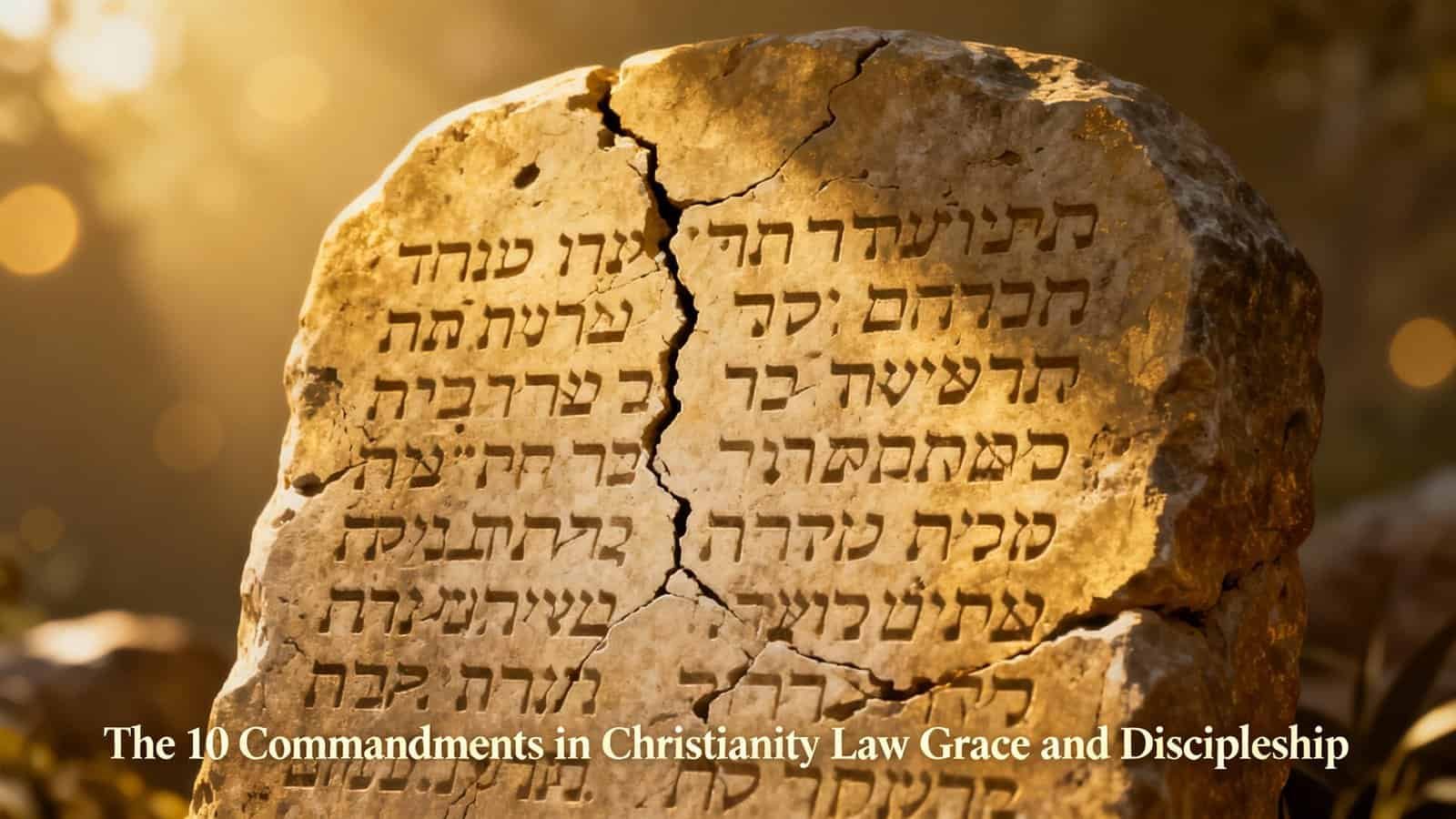
03 Dec The 10 Commandments in Christianity Law, Grace, and Discipleship
You’ll find the Ten Commandments at Christianity’s moral foundation, where divine law meets transformative grace. Given to Moses at Sinai, these commands established God’s covenant with Israel before Christ fulfilled their requirements through His perfect sacrifice. While you’re no longer bound by the law’s condemning power, the commandments continue guiding Christian discipleship through Spirit-enabled obedience. Their principles shape both personal formation and ethical decisions, offering timeless wisdom for navigating today’s complex moral challenges.
Table of Contents
Key Takeaways
- The Ten Commandments established God’s covenant with Israel but were fulfilled through Jesus Christ’s sacrifice and new covenant of grace.
- Jesus expanded the commandments’ meaning in the Sermon on Mount, emphasizing heart transformation over external rule-keeping.
- Christians view the commandments as moral guidelines for discipleship, motivated by gratitude rather than legal obligation.
- The commandments remain relevant for spiritual formation, shaping both personal ethics and community relationships through Spirit-led transformation.
- Grace reframes the commandments from strict laws into pathways for loving God and neighbor through Christ-centered discipleship.
Historical Context of the Ten Commandments

According to biblical accounts, the Ten Commandments were given to Moses by God on Mount Sinai during the Israelites’ exodus from Egypt, around 1446-1406 BCE. You’ll find these commandments documented in two biblical passages: Exodus 20:1-17 and Deuteronomy 5:6-21, forming the cornerstone of God’s covenant with Israel.
While Sinai archaeology hasn’t produced direct physical evidence of the tablets, you can trace their profound influence throughout ancient Near Eastern legal codes and religious practices. The commandments established a unique covenant theology that defined Israel’s relationship with God and transformed their social structure.
You’ll notice that these laws weren’t just religious rules but served as the foundation for civil, moral, and spiritual life. They represented a revolutionary concept: a monotheistic faith with ethical obligations, distinguishing Israel from surrounding polytheistic cultures. This divine law code continues to influence legal and moral frameworks in Western civilization today.
Understanding Law and Grace in Christian Theology
Before Christ’s arrival, you’d have found God’s people living under the strict regulations of Mosaic Law, including the Ten Commandments as the moral foundation.
Through Jesus’s sacrificial death and resurrection, you’ve received a new covenant of grace that fulfills and transcends the old legal requirements.
While you’re no longer bound by the law’s condemnation, God’s moral principles remain as a guide for righteous living under grace, demonstrating your love for Him and others.
Law Before Grace Era
While God’s moral standards existed since creation, the formal Law period began when Moses received the Ten Commandments at Mount Sinai, marking humanity’s first comprehensive written code of divine legislation.
You’ll find that this era established detailed Covenant Rituals between God and Israel, including animal sacrifices and ceremonial cleansing.
The Priestly Codes regulated worship practices, dietary restrictions, and social conduct, while Sabbath Origins were firmly established as a weekly observance.
Within the Exodus Context, these laws served to distinguish Israel as God’s chosen people and provided a framework for holy living.
The Law demonstrated humanity’s inability to achieve righteousness through works alone, ultimately pointing to the need for a perfect sacrifice that would come through Christ.
Grace Through Jesus Christ
Through Christ’s sacrificial death and resurrection, the relationship between divine law and human redemption underwent a fundamental transformation. You’ll find that Jesus fulfilled the law’s requirements perfectly, becoming the ultimate sacrifice that the Old Testament’s atonement themes had foreshadowed. His work established a new covenant based on grace rather than legal adherence.
Under this covenant, you’re no longer bound by the law’s condemning power, but you’re empowered by Christ’s sanctifying presence to live righteously. The commandments haven’t lost their moral authority; instead, they’ve become guideposts for grateful obedience rather than means of salvation. You now follow them not to earn God’s favor but because you’ve already received it through faith in Christ’s completed work. This shift from law-based righteousness to grace-based relationship defines Christian theology.
Living Under Divine Grace
Since the advent of Christ’s new covenant, Christians have embraced a dynamic relationship with divine law that differs markedly from the Old Testament’s legal framework. You’ll find that living under grace doesn’t mean abandoning moral principles but rather experiencing transformation through Christ’s redemptive work.
Understanding grace paradoxes is essential to your Christian walk. While you’re freed from the law’s condemnation, you’re called to a higher standard of living through the Spirit’s guidance. Your freedom in Christ comes with responsibilities – not as burdensome obligations, but as natural responses to God’s love. You’re no longer bound by external rules but motivated by an internal transformation that enables you to fulfill the law’s righteous requirements through faith and love.
The Role of Divine Commands in Modern Faith
When you consider how divine commands shape modern faith, you’ll find a dynamic interplay between ancient rules and contemporary grace-based living.
You’re challenged to interpret Biblical commandments through both their historical context and their enduring moral significance in today’s world.
While God’s laws remain unchanged, you’re called to apply these timeless principles within modern ethical frameworks, finding balance between strict observance and the transformative power of grace.
Living Faith Through Rules
As modern Christians navigate an increasingly secular world, many wonder how ancient divine commands like the Ten Commandments remain relevant to their daily lives. You’ll find that these divine laws aren’t mere restrictions but serve as guideposts for personal obedience and spiritual formation.
They provide a framework through which you can express your faith practically and meaningfully.
When you embrace these commandments, you’re not just following rules—you’re participating in a transformative process that shapes your character and deepens your relationship with God. They help you develop discernment in moral decisions, foster healthy relationships with others, and maintain spiritual discipline in a world that often challenges your faith.
The commandments continue to serve as vital tools for Christian discipleship, bridging the gap between ancient wisdom and contemporary living.
Grace Meets Divine Law
The relationship between divine law and grace stands at the heart of Christian theology, particularly in understanding how the Ten Commandments apply to believers today. While you’re no longer bound by the law’s condemnation, these commandments continue to guide your spiritual journey as expressions of God’s unchanging character.
Through Christ’s fulfillment of the law, you’ll find that grace doesn’t abolish divine commands but transforms your relationship with them. This covenant renewal establishes a new framework of mercy ethics, where you follow God’s precepts not from fear of punishment, but from love and gratitude. You’ll discover that the Ten Commandments serve as guardrails for Christian living, helping you navigate moral choices while experiencing the freedom that comes through grace.
Modern Moral Applications
Modern believers face unique challenges in applying ancient divine commands to contemporary life. In today’s world of ethical pluralism, you’ll find that the Ten Commandments provide timeless principles that transcend cultural shifts. While the specific applications may evolve, the core values remain relevant.
Your digital conscience now extends to virtual interactions, where honoring God, respecting others, and maintaining truthfulness take on new dimensions. You’re called to apply these commands in contexts like social media conduct, digital property rights, and online relationships. The commandments against stealing now encompass cybercrime, while bearing false witness relates to online misinformation.
Whether you’re navigating workplace ethics or digital spaces, these divine principles continue to offer moral clarity in an increasingly complex world.
Jesus’ Teaching and the Mosaic Law
While Jewish religious authorities often questioned Jesus about Mosaic Law, His responses consistently emphasized its deeper spiritual meaning rather than mere literal observance. You’ll find numerous Sermon Parallels where Jesus expands the commandments beyond their surface interpretation, particularly in the Sermon on the Mount. When He declares that hatred equates to murder and lust to adultery, He’s revealing the Law’s true intent.
In Parable Contexts, Jesus demonstrates how the Law serves as a gateway to understanding God’s character and will. You’ll notice He doesn’t abolish the commandments but fulfills their purpose by highlighting the heart’s condition over ritualistic compliance. When asked about the greatest commandment, He summarizes the entire Law through love of God and neighbor, showing you how the Ten Commandments remain relevant through a lens of grace and spiritual transformation.
Applying Ancient Wisdom to Contemporary Life
You’ll find that modern moral challenges test the enduring relevance of the Ten Commandments in areas like digital ethics, biomedical advances, and evolving social structures.
While the specific situations Moses couldn’t have imagined, the core principles of respect for God, life, truth, and property remain remarkably applicable to contemporary dilemmas.
You can practice these biblical principles daily through mindful decisions about online behavior, workplace integrity, and how you honor both God and others in an increasingly complex world.
Modern Moral Challenges Today
Despite being written thousands of years ago, the Ten Commandments continue to provide moral guidance for contemporary ethical dilemmas. You’ll find their principles deeply relevant in addressing modern challenges like technology ethics, where questions of truth, privacy, and digital theft emerge. The commandment against bearing false witness, for instance, speaks directly to today’s concerns about online misinformation and digital identity.
In bioethics debates, you’re confronted with questions about the sanctity of life that relate directly to the commandment “You shan’t kill.” These ancient precepts help you navigate complex issues like genetic engineering, artificial intelligence, and end-of-life decisions. When you examine these modern challenges through the lens of the Commandments, you’ll discover timeless wisdom that transcends their historical context.
Living Biblical Principles Daily
Integrating the Ten Commandments into daily life requires practical wisdom and intentional application. You’ll need to develop spiritual routines that align with these timeless principles, transforming biblical mandates into lived experiences. This means establishing ethical habits that honor God and serve others.
You can begin by examining your daily choices through the lens of these commandments. When you’re tempted to compromise truth, remember the command against false witness. As you manage your time and resources, reflect on the principles of Sabbath rest and not coveting. In your relationships, practice loyalty to God first, while showing respect to parents and avoiding actions that harm others. These ancient guidelines remain relevant, offering a framework for faithful living in today’s complex world.
Moral Authority in Christian Ethics Today
While modern Christians widely accept the Ten Commandments as foundational moral principles, debates persist about their precise role and interpretation in contemporary ethical decision-making. You’ll find that ethical pluralism and secular influences have challenged traditional interpretations, leading many Christian denominations to reexamine how these ancient laws apply to modern dilemmas.
In today’s complex moral landscape, you’re faced with questions the biblical world never encountered – from digital ethics to biomedical challenges. The Ten Commandments continue to provide a framework for moral reasoning, but you’ll need to consider how their underlying principles extend beyond their literal applications. Christian ethicists emphasize that these commands weren’t meant as mere rules but as guidelines reflecting God’s character and will for human flourishing.
When you navigate modern ethical challenges, you’ll discover that the Commandments remain relevant by illuminating fundamental values of respect, honesty, and divine authority in new contexts.
Living the Commandments in a Secular World
As modern society grows increasingly secular, Christians face unique challenges in upholding the Ten Commandments within environments that may not share their religious convictions. You’ll often encounter ethical pluralism in workplaces, schools, and social settings where multiple belief systems coexist. This requires navigating complex situations while maintaining biblical integrity.
You can bridge this divide by finding common ground through secular compassion – demonstrating how the Commandments’ principles promote human dignity and social harmony. For instance, prohibitions against stealing and bearing false witness align with universal ethical standards. When you honor your parents or respect others’ marriages, you’re not just following religious rules but strengthening society’s fabric.
The key isn’t to impose religious beliefs but to live them authentically. You can uphold these timeless principles while engaging respectfully with those who hold different views, showing how biblical wisdom enriches modern life through practical application and genuine relationships.
Biblical Interpretation and Cultural Context
Throughout history, biblical scholars have examined the Ten Commandments through different cultural lenses, recognizing that these divine laws transcend their ancient Hebrew origins. When you study the Commandments, you’ll find that their textual interpretation has evolved across different societies and eras while maintaining their core spiritual significance.
Understanding cultural hermeneutics helps you grasp how these laws functioned in their original context and how they apply today. You’ll notice that while ancient Israelites understood these commandments within their agrarian society, modern Christians interpret them through contemporary ethical frameworks. The prohibition against stealing, for instance, now encompasses digital theft and intellectual property rights.
You’re encountering these ancient texts through your own cultural filters, but their fundamental principles remain constant. Modern biblical scholarship encourages you to balance historical context with present-day application, ensuring these divine laws remain relevant and meaningful in your faith journey.
Discipleship Through Divine Guidelines

Living out the Ten Commandments embodies Christian discipleship by providing divine guidelines for spiritual growth and moral conduct. When you follow these precepts, you’re engaging in intentional obedience that transforms your relationship with God and others.
Through relational discipleship, you’ll discover that the Commandments aren’t merely rules but pathways to spiritual maturity. They guide you in loving God supremely (commandments 1-4) and loving your neighbor justly (commandments 5-10). This dual focus reflects Jesus’s summary of the law in Matthew 22:37-40.
The Commandments serve as a framework for your daily decisions and spiritual formation. They teach you to honor God’s name, respect authority, protect life, maintain sexual purity, practice honesty, and guard your heart against covetousness. By integrating these principles into your life, you’re participating in a centuries-old tradition of faithful discipleship that shapes both individual character and community ethics.
The Future of Biblical Law in Christian Practice
While contemporary Christianity continues to evolve, the Ten Commandments remain foundational for modern biblical ethics and moral reasoning. You’ll find these divine precepts increasingly relevant in addressing emerging ethical challenges, from digital morality to bioethical dilemmas.
The Eschatological Relevance of the Commandments extends beyond their historical context, as they continue to shape Christian understanding of God’s eternal standards. You’re witnessing how these principles adapt to new cultural contexts while maintaining their core truth. Through Liturgical Reform movements, you’ll observe churches finding fresh ways to incorporate these ancient laws into worship and discipleship.
You’ll recognize that the future of biblical law in Christian practice isn’t about rigid legalism but rather about applying timeless wisdom to contemporary challenges. As you navigate an increasingly complex moral landscape, these commandments will serve as enduring guideposts for faith and practice.
Frequently Asked Questions
Did God Write the Ten Commandments With His Own Finger?
Biblical accounts tell you that God’s divine authorship involved literal inscription of the Ten Commandments on stone tablets, as mentioned in Exodus 31:18.
You’ll find that God wrote them “with His finger” twice – first on tablets Moses broke, then again on replacement tablets.
While some interpret this as prophetic symbolism, others view it as direct divine writing, though Mosaic mediation played a key role in delivering them to the Israelites.
Can Breaking One Commandment Make You Guilty of Breaking Them All?
Yes, you’re guilty of breaking them all because God’s law represents moral consistency as a unified whole. This principle comes from James 2:10, which teaches that stumbling at one point makes you accountable for all.
It’s not about legalism critique but rather heart motivation – your attitude toward God’s authority. The ethical implications suggest that the commandments aren’t a checklist but reflect God’s unified character and standards.
Were There Other Commandments That Didn’t Make It Into the Final Ten?
You’ll find numerous lost laws and forgotten stipulations throughout the biblical texts that didn’t make it into the final ten. The Book of Exodus alone contains over 600 additional commands, while apocryphal commands appear in non-canonical texts.
Many extra prescriptions were given to the Israelites regarding daily life, worship practices, and social conduct. These additional laws helped shape the comprehensive Mosaic covenant beyond the Decalogue.
Do the Ten Commandments Apply to Non-Christians Who Believe in God?
The Ten Commandments’ ethical duties extend beyond Christianity, as they represent a universal moral law that’s influenced many cultures and belief systems.
If you’re a non-Christian who believes in God, you’ll find these principles reflected in Judaism and Islam, which share Abrahamic roots.
While religious pluralism acknowledges different paths to God, these commandments remain fundamental guidelines that transcend specific faiths, addressing basic human relationships with the divine and others.
Why Are There Different Versions of the Ten Commandments Among Christian Denominations?
You’ll find different versions because of varying traditions in numbering and organizing the same biblical text from Exodus 20. The Jewish numbering considers “I am the Lord your God” as the first commandment, while Protestant ordering starts with “You shall have no other gods.”
Catholics and Lutherans combine some commandments differently, particularly those about coveting. These differences emerged through historical interpretations but don’t change the core ethical message.
Conclusion
When you examine the Ten Commandments through Christian theology, you’ll find they’re more than ancient rules – they’re guideposts for authentic discipleship. While you’re no longer bound by the law for salvation, these divine principles continue to shape your spiritual formation. They bridge historical Judaism and Christian practice, offering you timeless wisdom for navigating modern ethical challenges while deepening your relationship with God.


No Comments