

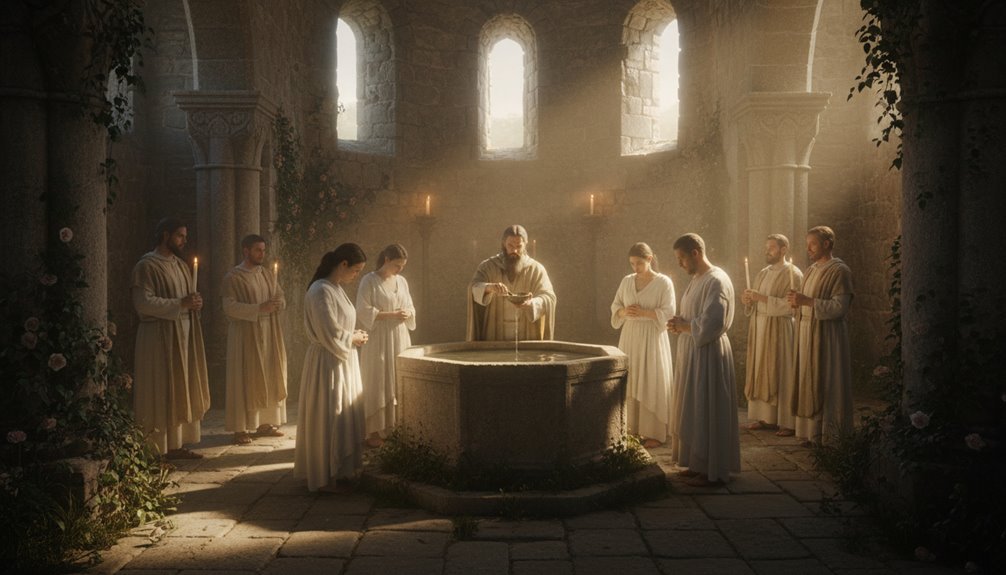
21 Apr Early Church Baptism Customs on Whit Sunday
You’ll see that early‑church Whit‑Sunday baptisms tied the rite to Pentecost, using full immersion to symbolize death to the old self and rebirth in the Spirit. The bishop or priest led solemn prayers, invoked the Holy Spirit, and often anointed the newly baptized with chrism. Regional variations—Roman triple immersion, Alexandrian river dip, Syrian chant‑filled rite—still kept the core elements of water, prayer, and Spirit invocation. The “living water” motif emphasized ongoing transformation, and if you keep going, you’ll discover how these ancient practices shape today’s liturgy.
Table of Contents
Whit‑Sunday’s Primacy for Early Pentecost Baptisms
Why did early Christians prioritize Whit‑Sunday for baptism? You see, the day marked Pentecost, when the Holy Spirit descended on the apostles, symbolizing divine empowerment. By aligning baptism with this event, you linked each convert’s initiation to the same outpouring that energized the early church. The timing reinforced the belief that the Spirit’s gifts were accessible to all believers, not just the original disciples. Moreover, Whit‑Sunday fell after Easter, giving catechumens time for instruction while still capitalizing on the liturgical climax. You also noticed that communal celebrations amplified the ceremony’s visibility, encouraging conversions and strengthening communal identity. The theological logic was clear: baptism on Pentecost signified entry into the Spirit‑filled community, echoing the apostles’ experience. This strategic alignment helped cement the practice, making Whit‑Sunday the preferred day for early Pentecost baptisms.
Core Pentecost Baptism Rituals: Immersion, Prayer, and Spirit Invocation
You’ll see immersion as a vivid symbol of new life, while prayer anchors the ceremony in reverent focus.
The invocation of the Spirit then guides the blessing, linking the act to divine presence.
Together these elements shape the core Pentecost baptism ritual.
Immersion Symbolizes New Life
How does immersion convey the promise of new life? You step into the water, feel its cool embrace, and emerge renewed, just as Christ rose from the tomb. The act of submerging symbolizes death to the old self, while rising signifies resurrection and the Spirit’s indwelling. Early believers linked each splash to the Holy Spirit’s outpouring on Pentecost, trusting that the same power cleanses and transforms.
You witness the congregation’s collective gasp as the water swirls, a visual reminder that sin is washed away and a fresh identity begins. This tangible ritual reinforces the theological claim that baptism isn’t merely symbolic—it’s a divine initiation into a vibrant, Spirit‑filled existence.
Prayer Anchors the Ceremony
The splash of water fades, and the congregation turns its focus to spoken petition, because prayer is what steadies the whole rite. You feel the murmuring of voices blend with the rustle of robes, each petition a thread that weaves the community together. The priest lifts his hands, and you notice how the words become a bridge between the physical act of immersion and the unseen promise of renewal. You join the cadence, letting the ancient formulas settle into your heart, anchoring your thoughts amid the ceremony’s rhythm. This shared prayer not only affirms the baptized’s entry into the faith but also reinforces the collective resolve of believers, grounding the rite in reverence and unity.
Spirit Invocation Guides Blessing
What lifts the rite beyond mere immersion is the moment the priest calls upon the Holy Spirit, turning water into a conduit for divine blessing. You feel the priest’s voice rise, invoking the Spirittheto descend like a gentle wind over the baptismal pool. As you step into the cool depth, the invocation transforms the act into a sacred exchange: the Holy Spirit imparts grace, cleanses sin, and seals the believer’s new identity. You witness the congregation’s prayers intertwine with the priest’s plea, creating a palpable aura of reverence. The Spirit’s presence guides the blessing, ensuring that each immersion carries not only symbolic purification but also a living, empowering encounter with God’s fire.
Participants in Whit‑Sunday Pentecost Baptisms?
You’ll notice that new converts step into the water alongside seasoned believers, creating a shared experience of renewal. Their presence signals the community’s openness to growth, while baptized members guide the rite with prayers and affirmations.
This dynamic partnership highlights how early Christians balanced fresh faith with established tradition.
New Converts’ Participation
When the early church gathered on Pentecost, new converts stepped forward to receive baptism, signaling their full entry into the community. You’d stand among the crowd, heart racing as the bishop raised the water.
The rite began with a brief confession, then the laying on hands, and finally immersion. You felt the cold splash and the warm welcome of the gathered believers, confirming your new identity as a follower of Christ. The ceremony emphasized obedience, repentance, and the Holy Spirit’s empowerment.
After emerging, you were clothed in white, a visual reminder of your cleansing. The congregation sang hymns, and the elders prayed for your spiritual growth, affirming your place within the body of believers.
Baptized Members’ Role
After the water settles, the newly baptized don’t just fade into the crowd; they become active participants in the Pentecost celebration. You’ll stand beside the elders, holding the candle that symbolizes the Holy Spirit’s fire. Your voice joins the hymn, echoing the “Spirit, come” prayer, and you assist in distributing the oil of chrism to fellow believers. You’re asked to testify briefly, sharing how the baptism reshaped your life, which reinforces community solidarity. As the congregation lifts its hands, you help usher the new converts into the worship circle, guiding them to the altar for communion. Your participation signals that baptism isn’t a one‑time event but an ongoing commitment to serve, witness, and nurture the early church’s vibrant faith.
Regional Baptismal Practices: Roman, Alexandrian, and Syrian
Where did the early church’s baptismal rites diverge across the Mediterranean? In Rome, you’d experience a solemn, catechumen‑focused ceremony. Elders gathered in the basilica, recited the creed, and then immersed the candidate three times in the baptismal font, symbolizing death, burial, and resurrection. The rite emphasized episcopal authority; the bishop personally performed the immersion, often accompanied by a chrism oil anointing after the water.
In Alexandria, you’d encounter a more elaborate, mystically oriented practice. The candidate first underwent a period of rigorous instruction, then entered a flowing river or large pool for a single, deep immersion. Afterward, the priest poured chrism over the head while reciting the Trisagion, linking baptism to the divine liturgy.
Syrian communities combined these elements. You’d be baptized by triple immersion in a river, followed immediately by a chrism anointing and a communal chant of the “Alleluia.” The bishop’s presence remained essential, yet local clergy often administered the water rite, reflecting a balance between hierarchical oversight and regional tradition.
Key Prayers and Texts for Pentecost Baptisms
Although the Pentecost feast already fills the church with hymn and fire, the baptismal rite still hinges on three core prayers: the renunciation of Satan, the creed of faith, and the invocation of the Holy Spirit. You begin by leading the candidate through the traditional renunciation, often phrased, “I renounce Satan and all his works.” This short, decisive formula clears the spiritual field.
Next, you recite the Nicene Creed, allowing the candidate to affirm belief in the Father, Son, and Holy Spirit; the creed’s concise yet comprehensive statements anchor the baptism in orthodox doctrine.
Finally, you invoke the Holy Spirit, typically using the formula, “Come, Holy Spirit, and fill us.” You may echo the Pentecost narrative, recalling the tongues of fire that descended on the apostles. These prayers, together with the accompanying scriptural citations—Acts 2:1‑4 and Matthew 28:19—structure the rite, ensuring theological continuity and communal participation.
What “Living Water” Meant for Early Pentecost Baptisms
The prayers you just recited set the stage, but the symbol that follows—“Living Water”—carries its own weight in early Pentecost baptisms. You’d feel the cool stream flow over your head, recalling Jesus’s promise that the Spirit would spring forth like a torrent. That water wasn’t merely a cleansing agent; it signified the indwelling Holy Spirit, the source of new life that quenched spiritual thirst. When you emerged, the community proclaimed you a “new creation,” marked by the Spirit’s fire and the water’s flow. Baptismal formulas linked the water to the “river of life” described in John, reinforcing the belief that the Spirit would sustain you beyond the ritual. You understood that “Living Water” meant an ongoing, dynamic relationship with God, not a one‑time rite. This vivid imagery helped early Christians grasp the transformative power promised at Pentecost.
Legacy of Early Pentecost Baptisms in Modern Liturgical Tradition
Because early Pentecost baptisms linked the rite to the out of the Holy Spirit, modern liturgies still echo that connection in their baptismal prayers and water‑blessing rituals. You’ll notice that many churches now invoke the Spirit when they sprinkle or immerse, echoing the ancient “outpouring” motif. The language of “living water” resurfaces, but it’s framed as a symbol of the Spirit’s continual presence rather than a one‑time miracle. In your own celebration, the priest or minister often says, “May the Holy Spirit fill this water, as it did at Pentecost,” before the candidate steps into the font. This phrasing ties the sacrament to the biblical event while affirming the Spirit’s ongoing work in the community. You also see the practice of laying on hands after the water, a direct nod to the early rite where the Spirit descended upon the baptized. These elements keep the Pentecostal legacy alive in contemporary worship.
Frequently Asked Questions About Whit‑Sunday Baptism Practices
Wondering how Whit‑Sunday baptism differs from regular rites? You’ll find that this celebration ties directly to Pentecost, so the rite emphasizes the Holy Spirit’s descent. You’re usually baptized by full immersion, symbolizing the Spirit’s fire that ignited the early church. The water is often blessed with oil and incense, linking the sacrament to the apostolic experience. You might wonder about timing: most congregations schedule baptisms during the morning service, after the reading of Acts 2, to highlight the biblical foundation. Dress code is modest; you’ll wear a white garment that represents purity and the new life promised by the Spirit. If you’re a candidate, you’ll be asked to affirm your faith and understand the baptism’s meaning. The congregation typically sings “Come, Holy Spirit” as you’re submerged, reinforcing communal participation. Afterward, you receive a candle, a reminder that the Spirit’s light continues within you.
Frequently Asked Questions
Did Early Christians Baptize Infants on Whit Sunday?
You’d be surprised—early Christians didn’t regularly baptize infants on Whit Sunday. Most of the first‑century church reserved baptism for adult converts who could profess faith, and they linked the rite to Pentecost’s outpouring of the Holy Spirit. Infant baptism became common later, especially in the 3rd‑4th centuries, as theological ideas about original sin and household baptisms spread. So, in the early church, Whit‑Sunday baptisms were adult‑focused, not infant ceremonies.
How Were Catechumens Prepared Before Pentecost Baptism?
You prepared catechumens through a rigorous period of instruction, prayer, and community involvement.
You attended weekly catechumenate classes where elders taught Scripture, doctrine, and moral living.
You participated in the Scrutinies, undergoing examinations of faith and repentance.
You kept a fast, received regular confession, and joined the liturgy, observing the Eucharist without partaking.
Were Specific Musical Chants Used During the Immersion?
Yes, you’ll find that early Christians sang specific chants during immersion. They usually intoned simple psalm verses or the “Kyrie” in a low, reverent tone, matching the rhythm of the water’s movement. These chants reinforced the theological symbolism of death and rebirth, helped focus the catechumens’ minds, and created a communal atmosphere of prayerful solemnity. The music was brief, repetitive, and meant to accompany the physical act rather than dominate it.
Did Women Serve as Sponsors in Early Pentecost Baptisms?
Yes, women did serve as sponsors in early Pentecost baptisms. You’ll find that the patristic records mention women standing beside the candidates, laying hands, and praying for them. Their participation reflected the communal nature of the rite and the belief that spiritual authority wasn’t limited to men. Though later church law restricted the role, the early practice shows women were active, recognized sponsors during those Whit‑Sunday ceremonies.
How Long Did the Entire Whit‑Sunday Baptism Ceremony Last?
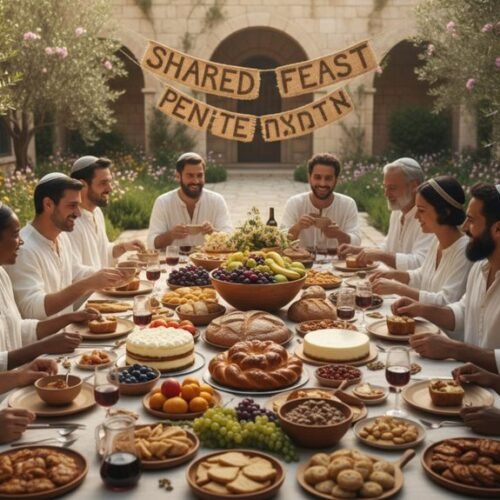
You’ll find the whole Whit‑Sunday baptism ceremony typically lasted around thirty to forty minutes. You’d start with a brief gathering and prayer, then the catechumen’s confession, followed by the immersion performed by the sponsor. After the water rite, the congregation sings a hymn and the priest delivers a short sermon. Finally, you’d share a communal meal, wrapping the ceremony up within that half‑hour window.
Conclusion
You’ve seen how Whit‑Sunday became the focal point for early Pentecost baptisms, with immersion, prayer, and Spirit invocation shaping the rite. Regional variations—Roman, Alexandrian, Syrian—added local flavor, while “living water” symbolized the Holy Spirit’s life‑giving flow. These ancient practices still echo in today’s liturgies, reminding you that the baptismal tradition on Pentecost remains a vibrant, living link between the early church and contemporary worship.







No Comments