

18 Apr What Happened When Jesus Was Transfigured?
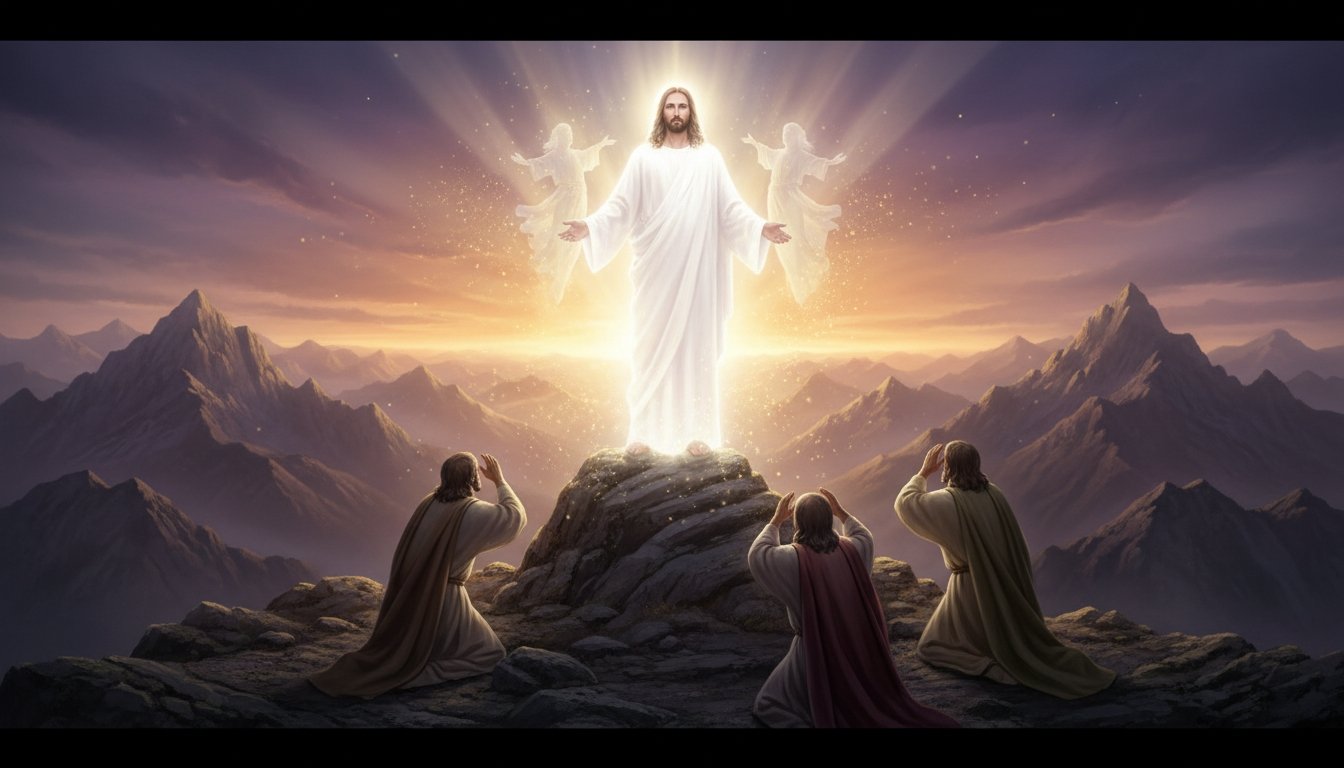
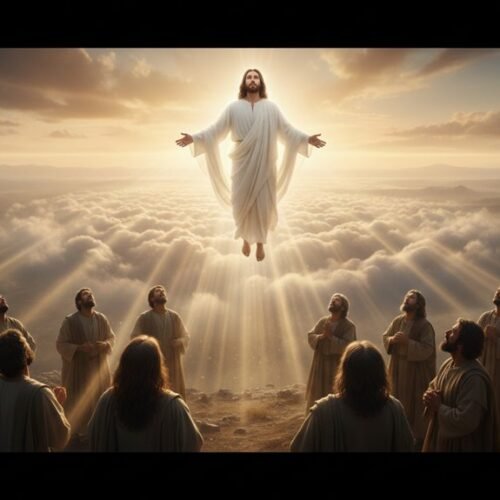
When Jesus climbed a high mountain with Peter, James and John, his face suddenly shone like the sun and his clothes turned dazzling white. Moses and Elijah appeared beside him, and a cloud voiced, “This is my beloved Son; listen to him.” The disciples fell to the ground in awe and fear, while Peter suggested building tents for the three figures. This moment reveals Jesus as the fulfillment of Law and Prophets, and it sets the stage for deeper insight into his divine identity.
What Is the Transfiguration? A Quick Overview
What exactly is the Transfiguration? You see Jesus stepping onto a high mountain with Peter, James, and John, and then his appearance changes dramatically. His face shines like the sun, his clothes become dazzling white, and two figures—Elijah and Moses—appear beside him, conversing. A voice from a cloud declares, “This is my beloved Son; listen to him.” The event shows that Jesus fulfills the Law (Moses) and the Prophets (Elijah), confirming his divine sonship. It marks a shift from his earthly ministry toward the upcoming passion and hints at his resurrected glory. The disciples react with awe and fear, falling face‑down after the voice, while Peter suggests building tents for each figure. Jesus comforts them, urging, not to be afraid, and instructs them to keep the vision secret until after his resurrection. This concise snapshot captures the core of the Transfiguration.
The Core Event: Who Was on the Mountain and What They Saw
The mountain scene gathers just three disciples—Peter, James, and John—while Jesus ascends, and there his appearance transforms: his face radiates like the sun, his clothes blaze white, and Elijah and Moses appear beside him, conversing with the Lord. You watch their awe as the radiant figure stands between the two great prophets, the air humming with divine presence. Peter, unable to contain himself, whispers about building three tents, one for each, while James and John stare, trembling. Their eyes catch the brilliance of the white garments, the glow that outshines the summit. Elijah, representing the prophetic tradition, and Moses, embodying the Law, exchange words with Jesus, confirming his role as the fulfillment of both. The vision leaves you breathless, the mountain’s height echoing the heavenly revelation unfolding before you.
What the Voice From the Cloud Declared About Jesus?
Ever wondered how the divine voice framed Jesus’ identity on the mountain? You hear it echo through the cloud: “This is my beloved Son, in him listen.” The declaration does more than label; it confirms the Son’s unique relationship with the Father and calls you to obey his teaching. By calling Jesus “beloved Son,” the voice echoes the baptismal affirmation, reinforcing his divine authority.
The command to “listen” isn’t a suggestion—it’s an imperative that pushes you to prioritize his words over every other voice. The cloud’s presence adds weight, linking the revelation to Old‑Testament the of God’s presence. As the disciples fall terrified, the proclamation steadies you, reminding you that Jesus stands as the fulfillment of the Law and the Prophets, the one through whom God’s plan unfolds. This moment anchors your faith in his identity and authority.
Why Moses and Elijah Appear – Law and Prophets Fulfilled
Why do Moses and Elijah materialize on the mountain? You see, they represent the two pillars of Israel’s covenant—Moses the Law and Elijah the Prophets. Their sudden appearance signals that Jesus fulfills both.
When you read the scene, you notice Moses holding the tablets, reminding you of the Torah’s demands, while Elijah, the herald of the coming Day of the Lord, points to the prophetic promise of a Messiah.
By standing beside Jesus, they confirm that He’s not a new teacher but the long‑awaited fulfillment of what the Law prescribed and what the Prophets foretold. This visual testimony convinces the disciples that the old and new covenants converge in Christ.
It also prepares you for the next phase of His ministry, showing that the divine plan moves from law‑keeping to grace‑filled redemption, all under the same heavenly authority.
What Peter Said When He Saw the Glory?
What did Peter say when the mountain blazed with divine light? You hear him gasp, “Lord, it’s good for us to be here. Let’s put up three tents—one for you, one for Moses, and one for Elijah.”
His voice trembles, yet he’s eager to honor the radiant scene. He imagines a permanent shelter for each divine figure, as if the mountain could hold their glory forever. Peter’s suggestion reveals his instinct to preserve the moment, to give it a tangible home. He doesn’t grasp the full theological weight, but his heart reacts with reverence and a desire to protect what he’s witnessed. The proposal also hints at his later role as a builder of the early church, turning vision into structure. In that instant, Peter’s words capture both awe and a practical impulse to anchor the heavenly encounter.
Modern Liturgical Celebrations of the Transfiguration
You’ll notice the priest’s incense‑capped thurible moving in a slow, deliberate arc, symbolizing the ascent to the high mountain. In many parishes, the rite includes a brief reading of 2 Peter 1:16‑18, followed by a silent moment for personal reflection on the promised transformation.
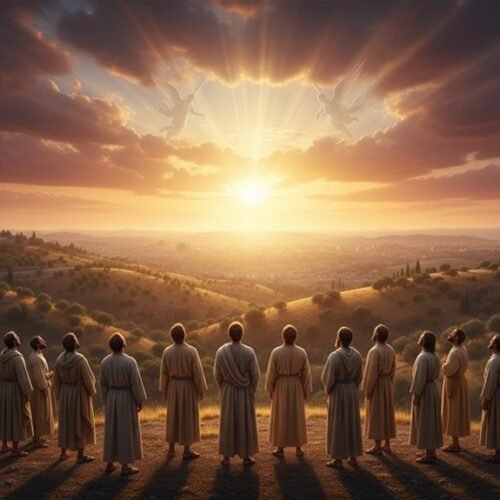
Contemporary liturgies may also project abstract visuals of sunlight breaking over a peak, reinforcing the scriptural vision while engaging modern sensibilities. This fusion of tradition and innovation helps you encounter the Transfiguration anew, deepening your faith and sense of divine presence.
Frequently Asked Questions
Why Did the Disciples Fall Face‑Down After Hearing the Voice?
You fell face‑down because the voice’s divine authority overwhelmed you, and the radiant glory of Jesus terrified you. The sudden, thunderous proclamation—“My beloved Son, listen to him”—hit you like a shock, making your hearts race and your knees weaken. Your fear and reverence merged, forcing you to collapse, while Jesus immediately reassured you, urging calm and reminding you of his protective presence.
What Is the Significance of the Mountain’s Name in Each Gospel?
You’ll notice each gospel names the mountain differently, and those names shape its meaning.
Matthew calls it “the high mountain,” stressing the event’s lofty authority.
Mark simply says “the mountain,” letting the miracle speak for itself.
Luke mentions “the mountain” but adds “the place where Elijah and Moses appeared,” linking the site to prophetic fulfillment.
These variations guide you to see the mountain as both a physical summit and a theological peak.
How Does the Transfiguration Relate to the Concept of “Glorified Bodies”?
You see the transfiguration as a preview of the glorified bodies believers will receive—Jesus’s radiant, white‑clad form shows the transformed, imperishable state awaiting the faithful.
The event links the present flesh to the future resurrection, where believers will share in Christ’s divine glory.
It assures you that your mortal body will be renewed, shining with heavenly light, just as Jesus shone on the mountain.
Why Is the Event Considered a “Preview” of the Resurrection?
Because you see Jesus bathed in dazzling light, clothed in white like a glorified body, you recognize a foretaste of the resurrection.
The voice declares him “my beloved Son,” confirming his divine status, while Moses and Elijah—symbols of law and prophecy—stand beside him, showing the fulfillment of salvation history.
This radiant transformation hints at the glorified, incorruptible state you’ll receive after the resurrection.
What Role Does the Transfiguration Play in the Luminous Mysteries of the Rosary?
You see the transfiguration as the second Luminous Mystery, showing Christ’s glorified glory before His Passion. It lets you contemplate how his divine radiance anticipates the Resurrection, reinforcing the mystery of light that follows the darkness of the Cross. By meditating on this event, you connect the shining mountain scene with the ultimate triumph of life over death.
Conclusion
You’ve seen how the Transfiguration reveals Jesus’s divine glory, confirming Him as the fulfillment of the Law and the Prophets. The voice from the cloud affirms Him as God’s beloved Son, while Moses and Elijah illustrate the continuity of salvation history. Peter’s awe‑filled confession underscores the mystery you encounter. Today’s liturgies keep that revelation alive, inviting you to witness the radiant promise of Christ’s kingdom.







No Comments