

01 Feb Why This Ancient Memory Technique Makes Scripture Stick Forever
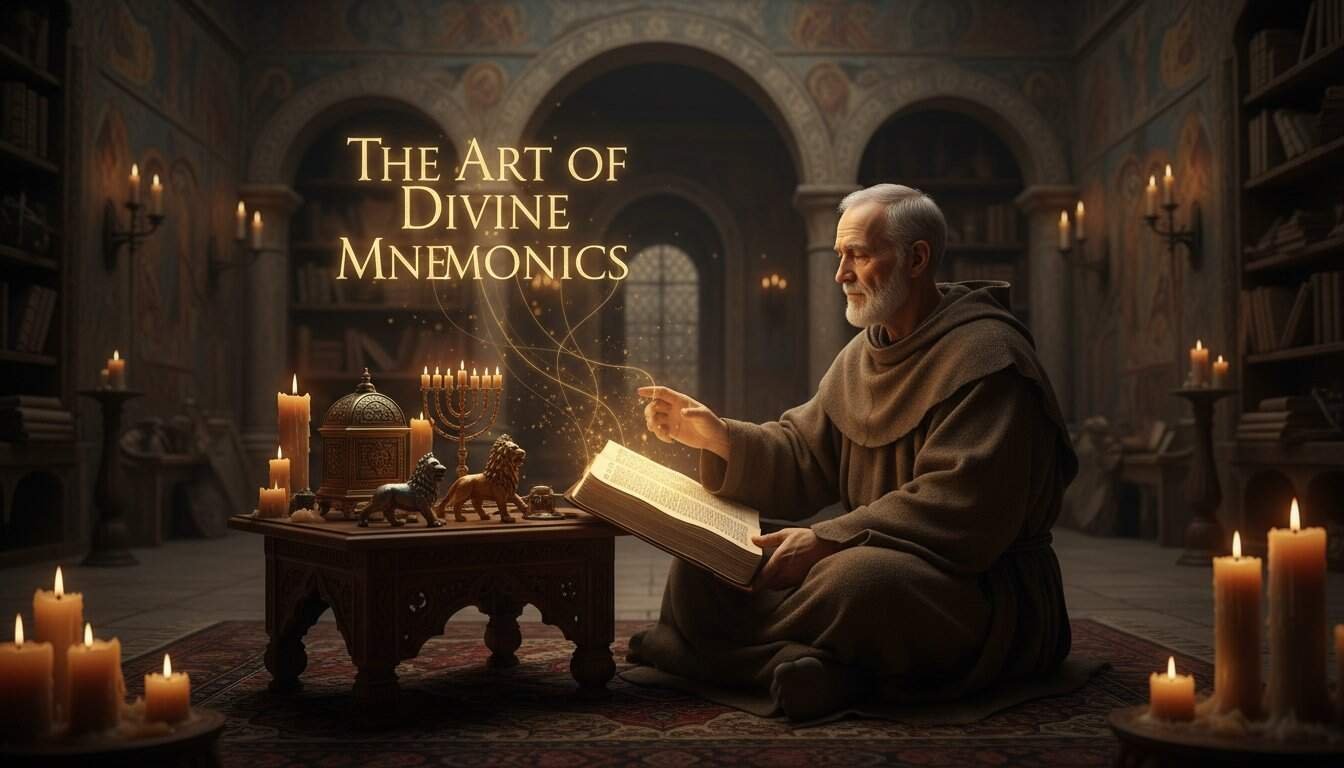
The Method of Loci—used by ancient Greek orators for hours-long speeches—transforms scripture memorization by anchoring verses to familiar physical spaces in your mind. You’ll create memory palaces where each biblical passage occupies a specific location, enabling non-sequential verse retrieval without reciting preceding text. This spatial anchoring mirrors your brain’s natural information processing, making memorization faster and more permanent than traditional rote methods. Consistent daily practice with this technique will unlock advanced strategies for memorizing entire chapters.
Key Takeaways
- Memory palaces transform abstract verses into concrete spatial relationships, leveraging how the brain naturally processes and stores location-based information.
- The Method of Loci enables non-sequential access to any verse without requiring recitation of preceding text for retrieval.
- Spatial anchoring provides permanent mental coordinates that make scripture memorization faster, more reliable, and sustainable long-term.
- Daily practice for six to eight weeks followed by monthly reviews strengthens neural pathways and preserves accessibility permanently.
- Ancient spatial memory techniques reduce anxiety, improve emotional well-being, and increase hope scores through consistent scripture engagement.
How Memory Palaces Turn Bible Verses Into Mental Maps

How can ancient philosophers’ memory techniques transform your approach to Scripture memorization? The Method of Loci, employed by classical thinkers and modern world memory champions, creates powerful mental maps that revolutionize biblical retention. When you construct a memory palace, you’re leveraging familiar physical spaces—your home, office, or well-traveled route—as scaffolding for Scripture storage.
This technique transforms abstract verses into concrete spatial relationships. You’ll divide your chosen location into sequential points: doorways, furniture, architectural features become loci for specific passages. Verse anchoring occurs when you attach biblical content to these predetermined spots, creating permanent mental coordinates for retrieval. However, multiple Memory Palaces are recommended rather than relying on a single palace, as space constraints may necessitate additional palaces or extensions to accommodate larger passages or entire books.
Unlike linear rote memorization, memory palaces enable non-sequential access to any verse. You can navigate directly to specific passages without reciting preceding text. This spatial organization mirrors how your brain naturally processes information, making Scripture memorization faster, more reliable, and surprisingly intuitive for long-term retention.
Simple Memory Techniques That Work for Any Scripture
Why do some believers struggle with Scripture memorization while others effortlessly retain entire chapters? The difference lies in employing proven memory aids that leverage your brain’s natural learning patterns.
Chunking transforms overwhelming passages into manageable segments linked to familiar concepts. You’ll retain verses more effectively by grouping them thematically rather than memorizing isolated fragments. Combine this with spaced repetition—reviewing material at increasing intervals using flashcards or recitation—to exploit your brain’s spacing effect.
Integrate Scripture into daily routines through strategic placement of Post-It notes on mirrors, laptops, or desks. You’ll encounter verses during teeth brushing, work breaks, and routine activities, reinforcing memorization through repeated exposure.
Active application strengthens retention significantly. Select verses addressing personal struggles or gospel truths, then read surrounding context across multiple translations. Recite passages aloud repeatedly—up to fifty times—while listening to audio Bibles during commutes. Track your progress daily, building foundation through repetition before attempting rote memorization.
Scripture serves as your primary offensive weapon in spiritual warfare, requiring memorization that goes beyond mere possession of the Bible to enable effective application when facing opposing circumstances.
Your Daily Bible Memory Practice: What Actually Sticks
When you commit to reading Scripture at least four days weekly, you cross a critical threshold that transforms casual Bible engagement into lasting spiritual formation. Research spanning 100,000 participants over eight years demonstrates that this frequency produces 407% higher odds of successful memorization compared to sporadic engagement. Those reading one to three days weekly show no statistically significant behavioral differences from non-readers.
Your memory maintenance strategy determines long-term retention. Newly memorized verses require daily recitation for six to eight weeks, followed by monthly reviews to preserve accessibility. This spaced repetition strengthens neural pathways while preventing cognitive decay.
Verse motivation emerges through consistent practice. Scripture memorizers experience 30% reduced anxiety and enhanced emotional well-being, while stress levels drop from 9.6 to 8.0. Hope scores increase from 16.8 to 18.6, reflecting measurable psychological benefits. The cognitive rehearsal involved in memorization stimulates neuroplasticity, improving overall brain function and mental agility through systematic engagement.
Advanced Methods for Memorizing Entire Chapters
Building upon these foundational practices, memorizing complete chapters requires systematic approaches that accommodate the exponential complexity of longer passages. Advanced methods demand strategic selection: the Andrew Davis Method proves effective for structured books like Ephesians, requiring six-month commitments with daily ten-repetition cycles. However, backward memorization offers superior retention for extensive texts, beginning at passage endpoints and progressively incorporating earlier material—ensuring later sections receive maximum repetitions.
Memory palaces provide spatial anchoring essential for chapter-length passages. You’ll anchor each chapter to familiar locations, creating unique palaces with distinct sections and precise loci for individual verses. Combine these spatial techniques with phrasing methods that strip verse numbers while emphasizing original language structures through indentation and color-coding.
Recording recitations at accelerated speeds exposes memorization gaps, while systematic card advancement from daily to weekly review slots maintains long-term retention. These methodologies transform chapter memorization from overwhelming endeavor into manageable, systematic practice.
Frequently Asked Questions
How Long Does It Take to Memorize an Entire Book of the Bible?
How long you’ll need depends entirely on the book’s length and your chosen memory techniques. You can memorize shorter epistles like Titus or Philemon within 6-11 months using conventional weekly verse schedules.
However, you’ll dramatically accelerate this timeline by employing advanced memory techniques like the memory palace method, potentially completing even longer books like Romans or Matthew within 2-4 months through systematic daily practice and strategic association patterns.
Can Children Use Memory Palaces Effectively for Scripture Memorization?
Yes, children can effectively use memory palaces for scripture memorization when you implement child friendly memory palace techniques with age appropriate imagery. You’ll anchor verses to familiar locations like their bedroom or playground, breaking passages into manageable chunks. Children’s naturally spatial brains excel at connecting biblical concepts to concrete environments. You’re leveraging their inherent cognitive strengths, making abstract theological truths memorable through vivid, location-based associations.
What Should I Do When I Forget Verses I’ve Already Memorized?
When you’ve lost memorized verses, implement immediate forgotten verse recovery protocols: revisit your original memory palace locations and reconstruct the visual anchors you’d established. Memory palace maintenance requires systematic review—walk through each location weekly, reinforcing weakened associations. If verses remain elusive, rebuild them completely using fresh imagery. Don’t simply re-memorize; strengthen your palace’s structural integrity through consistent spatial rehearsal and contextual reinforcement.
Is It Sacrilegious to Use Vivid or Unusual Images for Sacred Text?
No, it’s not sacrilegious when you understand sacred imagery’s theological heritage. You’re following established memory ethics rooted in centuries of Christian tradition—from Roman catacomb art to medieval Biblia Pauperum. Artists like Rembrandt and Chagall used vivid, unusual interpretations for deeper scriptural engagement without controversy. Your creative memory techniques honor this legacy, transforming abstract concepts into memorable images that enhance rather than diminish reverence for sacred text.
How Do I Maintain Hundreds of Memorized Verses Without Constant Review?
You’ll maintain hundreds of verses through systematic spacing intervals rather than constant review. Establish daily routines incorporating the ancient technique of graduated repetition—daily practice for 60 days, weekly for one year, then monthly. Memory techniques like multi-verse practice and audio reinforcement create deeper neural pathways. This biblically-grounded approach mirrors how ancient scribes preserved sacred texts through structured, decreasing frequency reviews over years.
Conclusion
You’ve discovered how ancient mnemonics transform scriptural engagement from rote repetition into sophisticated cognitive architecture. By constructing memory palaces, you’re not merely storing verses—you’re creating neural pathways that mirror the interconnected nature of biblical theology itself. These techniques don’t just preserve text; they cultivate deeper hermeneutical understanding through spatial and associative learning. When you embed scripture within carefully constructed mental frameworks, you’re participating in a tradition that recognizes memory as fundamental to faithful interpretation and spiritual formation.









No Comments