

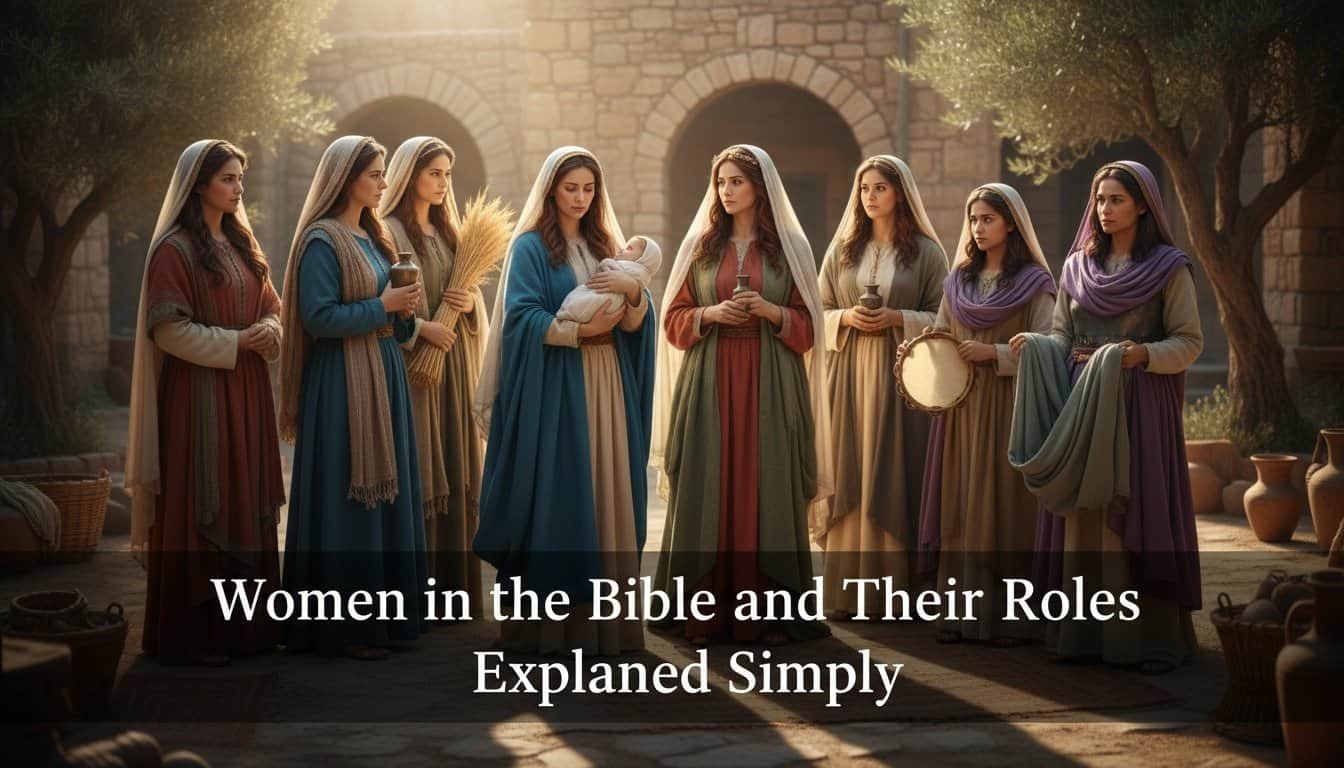
22 Apr Women in the Bible and Their Roles Explained Simply
You’ll find that the women in Scripture aren’t just background characters; they’re decisive leaders, bold diplomats, and steadfast supporters who shape their communities. From Deborah’s courtroom authority to Esther’s life‑saving courage, their stories offer clear, practical lessons on faith‑driven leadership. The New Testament adds further depth with Mary Magdalene’s testimony, Priscilla’s teaching, and Phoebe’s deaconship. Their examples challenge modern assumptions and invite you to explore how those timeless principles can apply today.
Table of Contents
Why Biblical Women Matter for Leadership
Why does the story of Deborah, Esther, or Mary Magdalene still matter to you as a leader today? You see their courage, vision, and influence breaking gender expectations, showing that leadership isn’t bound by gender. Deborah’s strategic mind and willingness to command an army teach you to blend spiritual insight with decisive action. Esther’s risk‑taking diplomacy reminds you that personal sacrifice can protect a whole community. Mary Magdalene’s role as the first witness to the resurrection demonstrates how humility and authenticity can reshape narratives. When you internalize these examples, you recognize that authority can arise from empathy, foresight, and moral conviction. Their stories invite you to cultivate inclusive environments, value diverse perspectives, and act boldly when stakes are high. By modeling their traits, you empower yourself and your team to lead with purpose, resilience, and integrity.
Biblical Women’s Leadership Lessons From the Old Testament
When you examine the Old Testament, you’ll see women like Deborah, Esther, and Miriam turning vision into decisive action, proving that leadership isn’t confined to a single gender. Deborah’s dual role as prophetess and judge shows you can blend spiritual insight with practical governance; she rallied troops, settled disputes, and inspired a nation.
Esther’s courage illustrates strategic risk‑taking—she leveraged her royal position, prayed, and approached the king despite personal danger, ultimately saving her people. Miriam’s leadership during the Exodus demonstrates how worship and morale boost a community; her song after crossing the Red Sea galvanized the Israelites.
Huldah’s authority in authenticating the Book of Law teaches you the value of expertise and integrity in decision‑making. Jael’s decisive act against Sisera reminds you that bold, timely action can overturn oppression.
Together, these stories model confidence, wisdom, and resilience, urging you to lead with purpose regardless of gender.
What New‑Testament Women Teach About Witness and Service
Ever wondered how the New Testament models women as witnesses and servants? You see Mary Magdalene rushing to the tomb, becoming the first person to announce the resurrection—her testimony reshapes history. Joanna funds Jesus’ ministry, showing that financial support is a vital service. Priscilla mentors Apollos, proving that teaching isn’t limited by gender. Lydia opens her home to believers, turning hospitality into a mission hub. Dorcas stitches garments for the poor, then rises from death, illustrating that compassionate work endures beyond life. Phoebe carries a letter to Rome, acting as a deacon and patron, while Junia is listed among the apostles, confirming leadership roles. The Samaritan woman shares “living water” after her encounter, turning personal encounter into public proclamation. Each story invites you to witness boldly and serve faithfully, blending proclamation with practical love. Your witness and service, like theirs, can transform communities.
Frequently Asked Questions
Why Do Some Biblical Women Lack Explicit Titles Despite Their Influence?
You notice that many biblical women aren’t labeled with titles because the ancient texts focus on actions rather than formal designations. Their influence shows through stories—like Ruth’s loyalty, Deborah’s leadership, or Mary Magdalene’s witness—so you recognize that cultural norms often omitted official titles while still preserving their impact. This narrative style lets you see their authority and significance without needing explicit labels.
How Did Cultural Context Shape the Actions of Women Like Rahab?
You see, the Canaanite culture prized hospitality and survival, so Rahab’s decision to hide the spies reflected both personal fear and a pragmatic grasp on power. She leveraged her marginal status to negotiate safety for herself and her family, turning a hostile environment into an opportunity for alliance with Israel. Her actions illustrate how cultural expectations of cunning, secrecy, and protecting one’s household shaped her bold, decisive move.
What Biblical Evidence Supports Women’s Roles in Early Church Finances?
You’ll find biblical evidence for women handling early‑church finances in Romans 16:1‑2, where Paul commends Phoebe as a deacon and patron of the church, implying she managed resources.
Acts 16:14‑15 mentions Lydia, a “seller of purple,” who hosted the believers, suggesting she supported them material‑ally.
Also, 1 Timothy 5:10 references widows who gave to the church, showing women contributed financially and oversaw charitable distributions.
Do the Stories of Female Judges Suggest a Precedent for Modern Political Leadership?
You can see a clear precedent: Deborah’s role as prophetess, judge, and military commander shows that biblical narratives already legitimize women leading nations and making strategic decisions. Her authority wasn’t limited to domestic spheres; she commanded armies and settled disputes. By studying her example, you recognize that female leadership isn’t a modern invention but rooted in ancient precedent, offering a biblical foundation for today’s political inclusion.
How Do “Eshet Chayil” and “Ezer Kenegdo” Differ in Describing Women’s Strengths?
You’ll see “eshet chayil” praises a woman’s valor, competence, and industriousness—she runs a household, conducts business, and leads with wisdom.
“Ezer kenegdo,” by contrast, frames her as a complementary helper, a strong partner who supports and balances her counterpart.
Both celebrate strength, but the first highlights her own achievements, while the second emphasizes her role in a collaborative, supportive relationship.
Conclusion
You’ve seen how biblical women blend faith, courage, and service into powerful leadership. Their stories show that true influence isn’t bound by gender but rooted in conviction, wisdom, and compassion. By learning from Deborah’s decisiveness, Esther’s diplomacy, Miriam’s encouragement, and the New Testament women’s witness, you can lead with confidence, humility, and purpose—just as they did. Let their examples guide you to make a lasting, positive impact.












No Comments