

20 Apr What Were Sacred Fasting Rituals in Old Testament Worship?
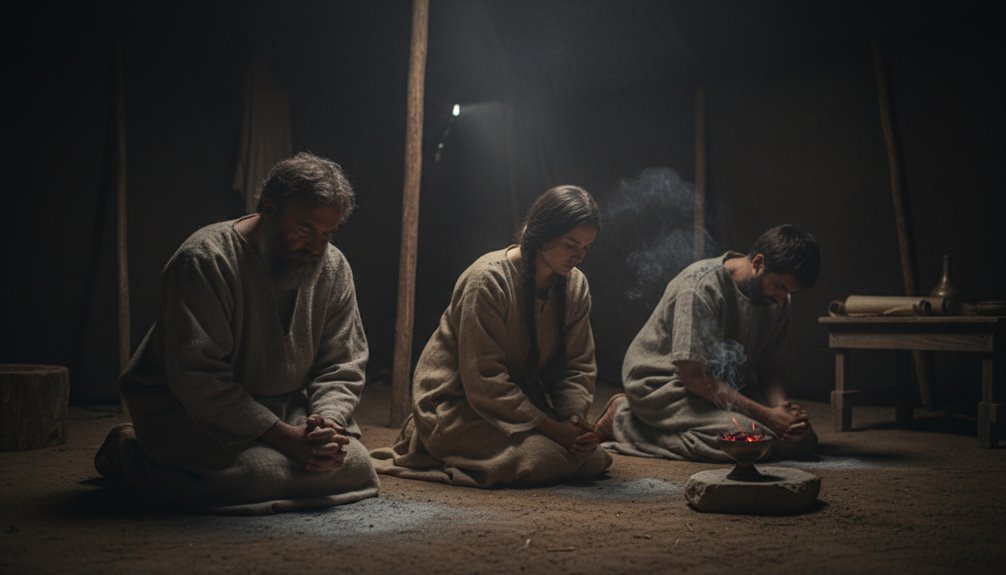
You’ll find that Old‑Testament worship featured four sacred fasting rituals: absolute fasts that ban food and drink during crises, partial fasts that allow water but no solid food for personal humility, partial‑day fasts that limit eating from sunrise to sunset for repentance, and communal fasts where the nation gathers to mourn or thank God. Each type served a distinct covenantal purpose—drawing nearer to God, expressing collective contrition, or sealing a vow. Keep exploring to discover how these ancient practices can shape your own spiritual discipline.
Table of Contents
Four Major Types of Old‑Testament Fasting
Where do you begin when exploring the four major types of Old‑Testament fasting? You first encounter the absolute fast, a complete abstention from food and drink, often imposed during crises or divine judgment—think of the famine in Egypt (Exodus 1) or the plague in David’s household (2 Sam 12).
Next, the partial fast permits water but bans solid food, allowing sustenance while maintaining spiritual focus; this is the model of Moses on Sinai (Exodus 34) and the Israelites at the dedication of the temple (2 Chronicles 30).
The partial‑day fast limits intake to a specific time, usually sunrise to sunset, exemplified by the Day of Atonement (Leviticus 16) and the fast of Esther (Esther 4).
Finally, the communal fast gathers a group for shared repentance or thanksgiving, evident in the national fast after the defeat at Ai (Joshua 7) and the collective mourning for Saul (1 Sam 31).
Each type serves distinct covenantal purposes while shaping Israel’s collective identity.
Spiritual Goals Behind Each Biblical Fasting Ritual
What drives Israel to fast? You fast to draw nearer to God, to let your heart echo His holiness. In a national fast, you seek collective repentance, pleading for divine mercy when the nation strays. A personal fast sharpens humility, urging you to confess sin and request restoration. A mourning fast expresses grief, turning sorrow into a solemn appeal for comfort and justice. A vow fast binds your promise to God, demonstrating resolve to fulfill a sacred pledge. Each type channels your inner devotion outward, aligning your will with divine purpose. You abandon food not for its own sake but to empty yourself, making space for prayer, worship, and divine revelation. The discipline cultivates reverence, teaches dependence on God’s provision, and signals sincerity to the covenant community. By fasting, you embody the biblical call to seek God with all your being, trusting His response will transform both heart and circumstance.
Bible Stories That Show Each Fasting Type
Ever wondered which biblical narratives illustrate each kind of fast? When you read Moses on Mount Sinai (Leviticus 16), you see a complete fast—no food, no water—signifying national at and purification. David’s partial fast in 2 Samuel 12, where he ate nothing but honey, shows personal repentance without total abstinence. Esther’s fast for protection (Esther 4) involves a communal, limited abstinence, seeking divine deliverance. Daniel’s partial fast (Daniel 1) of vegetables and water demonstrates devotion while maintaining health for service. The fast of affliction (Jonah 3) where Jonah and the Ninevites abstained from meals, illustrates corporate sorrow and turning back to God. Finally, the fast of mourning (Job 2) where Job refuses food while he suffers, reflects deep personal grief. Each story gives you a concrete model of how the Old Testament distinguished fasting purposes, helping you match your own spiritual need to the appropriate type.
Modern Lessons From Biblical Fasting
How can ancient fasting practices shape today’s spiritual routine? You can treat biblical fasting as a template for intentional pause, not just abstention. First, set a clear purpose—whether it’s seeking guidance, expressing repentance, or deepening gratitude—so the fast becomes a focused prayer session rather than a vague diet.
Second, pair the fast with Scripture meditation; reading the passages that inspired the original fast helps you align your heart with the same divine intent.
Third, keep the duration realistic; a short, disciplined fast often yields stronger spiritual momentum than an overly long, unsustainable one.
Fourth, incorporate community accountability—share your intention with a trusted friend or small group to stay honest and encouraged.
Finally, transition back gently, using the post‑fast period for reflection and actionable steps.
Frequently Asked Questions
Did Ancient Israelites Fast for Health Reasons?
You didn’t fast for health in the way modern wellness trends suggest. Ancient Israelites fasted mainly to mourn, repent, or seek divine intervention, seeing it as a spiritual discipline rather than a medical remedy. While fasting could incident affect the body, the biblical texts tie it to covenantal obedience and prayer, not to physical health benefits. Their focus was on humility before God, not on curing ailments.
Were Specific Foods Prohibited During Old‑Testament Fasts?
You won’t find a detailed menu of prohibited foods in the Old Testament; instead, fasting meant abstaining from all food and drink, sometimes even water, for a set period.
The scriptures focus on the act of self‑denial and prayer, not on specific items you must avoid.
How Long Could a Typical Biblical Fast Last?
You can fast anywhere from a single day to several weeks, depending on the purpose and the individual’s strength.
Typical biblical fasts often lasted forty days—think of Moses on Sinai or Jesus in the wilderness—but shorter fasts of one or three days were common for repentance or prayer.
The duration always reflected the seriousness of the request, the health of the participant, and the guidance of the community or priest.
Did Women Participate in the Same Fasting Rituals as Men?
You’ll find that women did join the same fasting rituals as men. The Old Testament presents fasting as a communal, gender‑inclusive act of humility and repentance, so both sexes observed fasts during national crises, mourning, and covenant renewals.
Scripture doesn’t separate the practice by gender; instead, it calls all Israel—women and men alike—to fast, pray, and seek God’s mercy together.
Were There Regional Variations in Fasting Practices Across Israel?
You’ll find that fasting differed by region. In Judah, fasts were often communal, tied to national crises and temple rites, while in the northern kingdoms they blended with local festivals and tribal customs.
Rural areas sometimes observed shorter, agricultural‑linked fasts, whereas urban centers emphasized longer, prophetic fasts. These variations reflected each community’s political ties, priestly influence, and surrounding cultures.
Conclusion
You’ve seen how each fasting type—partial, absolute, corporate, and penitential—served a distinct spiritual purpose, from seeking divine guidance to expressing remorse. The biblical narratives illustrate that fasting isn’t just abstaining from food; it’s a focused, heartfelt plea for God’s presence and direction. Today, you can adopt these principles, using fasting as a disciplined, prayerful practice that deepens your relationship with God and aligns your heart with His will.










No Comments