

20 Apr 10 Best Trinity Sunday Liturgical Calendar Feast Day Traditions
You’ll find ten cherished Trinity Sunday traditions that bring the mystery of the Father, Son, and Holy Spirit to life. Light the three‑flame candle, display a shamrock or Triquetra, and recite the Athanasian Creed at Mass. Sing triadic hymns like “Holy, Holy, Holy,” and hear the Great Commission reading from Matthew 28. Serve a three‑layer cake symbolizing each Person, and enjoy a potluck that turns food into a sermon of unity. Keep going to discover more details about each practice.
Table of Contents
What Is Trinity Sunday?
What’s Trinity Sunday? You’ll notice it lands on the Sunday after Pentecost in the liturgical calendar, marking the climax of the Easter season. On this day you celebrate the doctrine of the Triune God—Father, Son, and Holy Spirit—by affirming their unity and distinct persons. The Athanasian Creed often frames the worship, declaring the co‑equality and co‑eternity of the three.
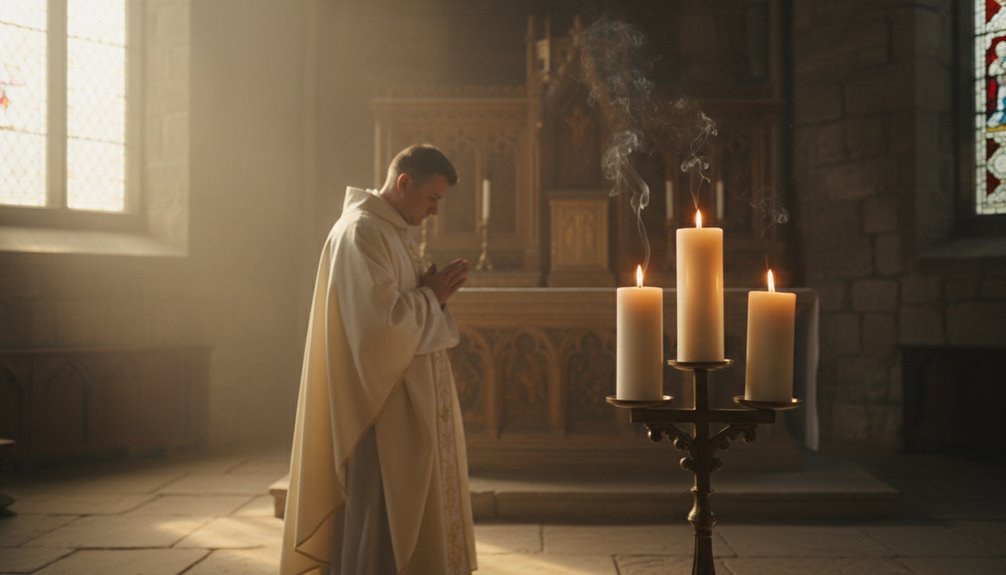
In churches you’ll see white vestments, hear hymns like “Holy, Holy, Holy,” and hear readings that focus on the Father, Son, and Holy Spirit. The feast was elevated to a first‑class celebration in 1911 by Pope Pius X, cementing its universal observance.
As you join the service, you participate in a tradition that ties the Pentecost outpouring of the Spirit to the ongoing mystery of the Trinity, reinforcing the core belief that one God exists in three persons.
History of the Trinity Feast and Its Roots
Why does the Trinity Feast feel so ancient yet surprisingly recent? You’ll notice its roots in early opposition to Arianism, when the church crafted creeds and prayers to defend the Father, Son, and Holy Spirit. By the 10th century, Bishop Stephen of Liège introduced an Office of the Holy Trinity, but it stayed a local devotion.
The feast began to spread through French Benedictine monks, and Pope John XXII later mentioned a Trinity celebration in the 14th century. Still, a universal liturgical history didn’t solidify until the 20th century. In 1911 Pope Pius X elevated Trinity Sunday to a first‑class feast, giving it the prominence it enjoys today.
Throughout, the Athanasian Creed has served as the theological backbone, spelling out the unity of the three Persons. This layered development explains why the Trinity feels both timeless and newly affirmed in your worship calendar.
The Athanasian Creed: Core Text for Trinity Sunday
Ever wondered why the Athanasian Creed sits at the heart of Trinity Sunday? You’ll find it frames the celebration by spelling out the Trinity’s mystery in clear, doctrinal language. The creed declares that the Father, Son, and Holy Spirit are three Persons who share one divine essence, preserving the unity of God while rejecting Modalism. When you hear it recited, you hear a centuries‑old guard of orthodoxy that marks doctrinal boundaries for the faithful. Its pre‑Vatican II usage offered a robust alternative to the Sunday Creed, reinforcing the co‑eternal, co‑equal nature of each Person. In worship, it anchors the liturgy, reminding you that the Trinity isn’t a vague concept but a concrete confession. By embracing the Athanasian Creed, you affirm the core of Trinity Sunday, keeping the faith’s foundation solid and unmistakable.
Reciting the Creed in the Liturgy of the Hours
How does reciting the Athanasian Creed during the Liturgy of the Hours deepen your Trinity Sunday experience? You hear the Creed’s precise language about the unity of the Trinity, reminding you that the Father, Son, and Holy Spirit are one God in three Persons. As you pray, the rhythm of the Creed aligns with the hour’s structure, reinforcing orthodox teaching against modalism. The Athanasian Creed becomes a liturgical anchor, making the mystery of co‑equality tangible. After the Creed, you join the short hymn Gloria Patri, which crowns the prayer with a do celebration of the divine mystery. Together, these elements transform the Liturgy of the Hours into a focused meditation on the Trinity, allowing you to inhabit the day’s theological depth and to carry its truth into your daily life.
Triadic Hymns for Trinity Sunday: “Holy, Holy, Holy
Ever felt the power of three voices rising together in worship? On Trinity Sunday you’ll hear triadic hymns like “Holy, Holy, Holy! Lord God Almighty” and “Come, Thou Almighty King” echoing the Trinity doctrine. Each refrain repeats three times, mirroring the Father, Son, and Holy Spirit, while the white liturgical calendar color underscores joy and purity.
As you join the congregation, the hymn’s structure becomes a musical catechesis, teaching the mystery of unity through distinct, interrelated voices. The worship tradition places these hymns between Scripture readings and, in some rites, the Athanasian Creed, creating a seamless flow that reinforces the feast’s focus.
When the choir sings “Holy, Holy, Holy,” you experience a collective affirmation of the triune God, and the hymn’s cadence invites you to contemplate the depth of the doctrine while participating fully in the celebration.
White Vestments and the Angelus: Symbols After Pentecost
Why do white vestments and the Angelus matter after Pentecost? On Trinity Sunday you’ll notice the clergy slip into white vestments, a vivid reminder of joy, purity, and the glory of the Most Holy Trinity. The color signals the transition from Paschaltide to the Time After Pentecost in the liturgical calendar, emphasizing that the celebration of Christ’s resurrection still shines brightly. At the same time, the Angelus returns, replacing the Regina Coeli that marked Easter. Its “Ave Maria” and “Gloria” verses echo the threefold nature of God, aligning perfectly with the day’s focus on the Father, Son, and Holy Spirit. When you hear the Angelus bell, you’re invited to pause, reflect, and join the Church in honoring the unity and coequality of the divine Persons. Together, white vestments and the Angelus create a visual and auditory tableau that deepens your experience of Trinity Sunday.
The Great Commission: Gospel Selections for Trinity Sunday
Celebrate Trinity Sunday by hearing the Church proclaim the Great Commission, especially Matthew 28:16‑20, where Jesus commands us to baptize “in the name of the Father, and Son, and Holy Spirit.” This passage anchors the day’s liturgy, linking the Triune baptismal formula to the mission of making disciples of all nations. You’ll notice that the Gospel readings on Trinity Sunday often pair Matthew 28 with John 16:12‑15, letting the Spirit’s role in truth shine alongside the Father and Son. This combination underscores evangelization as a living out of the Triune call.
As you listen, the words remind you that discipleship includes teaching, baptizing, and trusting the promised presence of the Father Son Holy Spirit. The liturgy therefore becomes a dynamic invitation to carry the Great Commission forward, turning each proclamation into a concrete step toward global evangelization.
Trinity Sunday Symbols: Shamrock, Triquetra, Three‑Flame Candle
Three timeless symbols—Shamrock, Triquetra, and the three‑flame candle—help you visualize the mystery of the Trinity on this feast day. You’ll notice the Shamrock’s three leaves, a Saint Patrick legend that shows one God in three persons, making the abstract concrete. The Triquetra’s interlocking loops, often encircled, reinforce unity while respecting each distinct person of the Trinity. When you light a three‑flame candle, the three flames merge into a single radiant glow, echoing the same truth. These symbols appear in liturgical banners, catechism handouts, and altar decorations, guiding worshippers toward a deeper grasp of divine unity. By placing a Shamrock on the communion table, displaying a Triquetra on the lectern, or arranging the three‑flame candle at the sanctuary, you create visual cues that invite reflection and conversation. Embrace these symbols to celebrate the Trinity’s mystery with clarity and reverence.
Trinity Sunday Potluck and Three‑Layer Cake Ideas
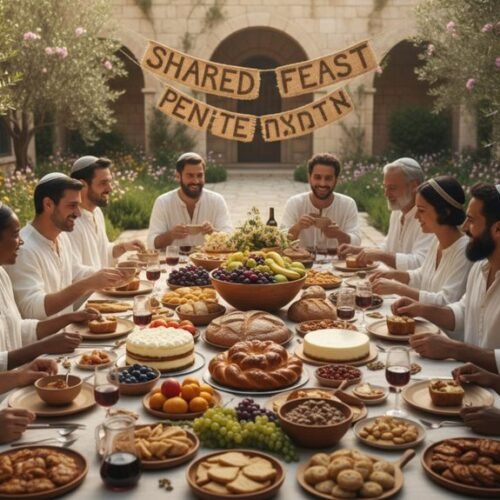
How can a Trinity Sunday potluck become both a feast and a visual sermon? You start by inviting every guest to share a dish that reflects the Father, Son, and Holy Spirit, turning the potluck into a living liturgical tradition. Label each savory or sweet contribution “Three Persons in One God” so the table itself declares unity in Trinity. For the centerpiece, bake a three-layer cake: a vanilla layer for the Father, a chocolate layer for the Son, and a red‑berry layer for the Holy Spirit. Frost it in white icing and add three‑colored accents—gold, blue, and white—to echo the Triune mystery. As people serve themselves, sing “Holy, Holy, Holy” and pause for a brief discussion that ties each bite to the doctrine. This simple, communal approach transforms ordinary food into a sermon of unity, making the celebration both delicious and doctrinally resonant.
Western vs. Eastern Observances of Trinity Sunday
What sets Western and Eastern observances of Trinity Sunday apart is their placement in the liturgical calendar: the West marks it on the Sunday after Pentecost, while the East celebrates it on Pentecost itself. In the Western calendar you’ll notice white vestments and a focus on the Athanasian Creed, with the Great Commission Gospel reading underscoring “one God in three Persons.” The service concludes Paschaltide and signals the Time After Pentecost, giving the feast a distinct post‑Pentecost identity.
Eastern observances, by contrast, merge Trinity Sunday with Pentecost, weaving the celebration into the Pentecost season’s rites and local traditions. Their liturgical calendar treats the feast as part of the same day, so readings and hymns emphasize the Spirit’s descent while still honoring the Trinity.
Though the timing differs, both traditions affirm the same mystery, using their respective calendars to shape worship rhythm and theological emphasis.
Frequently Asked Questions
What Color Do You Wear on Trinity Sunday?
You wear white on Trinity Sunday, often paired with gold or silver accents to highlight the feast’s solemnity. This bright hue reflects joy and purity, distinguishing the day from ordinary‑time violet.
In many Western churches you’ll see white vestments, altar cloths, and candles, while some Eastern traditions also favor white or bright tones on Pentecost, which they celebrate as Trinity Sunday.
The color choice emphasizes the celebration of the Holy Trinity.
Can We See God Face to Face in Heaven?
You’ll experience the Beatific Vision, so you’ll see God face‑to‑face in heaven. Catholic teaching says the blessed will behold God’s essence directly, without any veil or mediation, even though human language can’t fully capture that mystery. You’ll recognize the Triune nature, yet the encounter transcends ordinary perception. In that eternal communion, you’ll enjoy perfect knowledge of God’s glory, as promised by Scripture and tradition.
What Is the Feast Day of Trinity Sunday?
You’ll find Trinity Sunday on the first Sunday after Pentecost. In the Western liturgical calendar that date shifts each year, falling anywhere between late May and mid‑June.
The celebration marks the Solemnity of the Most Holy Trinity, and you’ll see white vestments used to symbolize joy and purity.
Because Pentecost’s date depends on Easter, you’ll need to check the specific calendar for the exact day.
What Color Flowers for Trinity Sunday?
You should choose white flowers for Trinity Sunday. White reflects the liturgical color, symbolizing joy, purity, and the glory of the Triune God. Pick simple white lilies, roses, or carnations, and you can add three‑stem bouquets to hint at the Trinity while keeping the overall white theme. Arrange them on the altar, in the sanctuary, or in vases beside the white cloths for a cohesive, reverent celebration.
Conclusion
You’ve explored how Trinity Sunday weaves history, creed, music, symbols, and community into a vibrant celebration of the triune God. By embracing the Athanasian Creed, singing triadic hymns, lighting three‑flame candles, and sharing a three‑layer cake, you’ll experience its deep spiritual resonance. Whether you follow Western or Eastern customs, these traditions invite you to honor the mystery of the Father, Son, and Holy Spirit together.






No Comments