

04 Feb Ash Wednesday: Psalm 51:1-2,17 – A Contrite Heart: The Start-Over Ritual Your Soul Needs
Ash Wednesday invites you into Psalm 51’s profound prayer of repentance, where David cries “Have mercy on me, O God” and declares that God won’t despise “a broken and contrite heart.” When ashes mark your forehead in the shape of a cross, you’re embracing an ancient start-over ritual that acknowledges your mortality while opening your soul to God’s transforming mercy. This sacred moment begins Lent’s forty-day journey of spiritual renewal, connecting you with centuries of believers who’ve discovered how genuine contrition becomes the gateway to deeper intimacy with Christ and authentic transformation.
Table of Contents
Key Takeaways
- Ash Wednesday marks Lent’s beginning with ashes symbolizing repentance, mortality, and humanity’s return to dust.
- Psalm 51 provides the spiritual framework for confession, asking God for mercy and creating a clean heart.
- The contrite heart represents genuine repentance and acknowledgment of one’s need for God’s transformative grace.
- Ashes from burned Palm Sunday palms create a tangible reminder of human frailty and dependence.
- This ancient ritual offers believers a fresh spiritual start through honest self-examination and renewal.
What Is Ash Wednesday And Why Do Christians Observe It?
When was the last time you allowed yourself to truly confront your mortality and need for God’s grace? Ash Wednesday isn’t some irrelevant topic for the spiritually minded—it’s Christianity’s profound invitation to begin again.
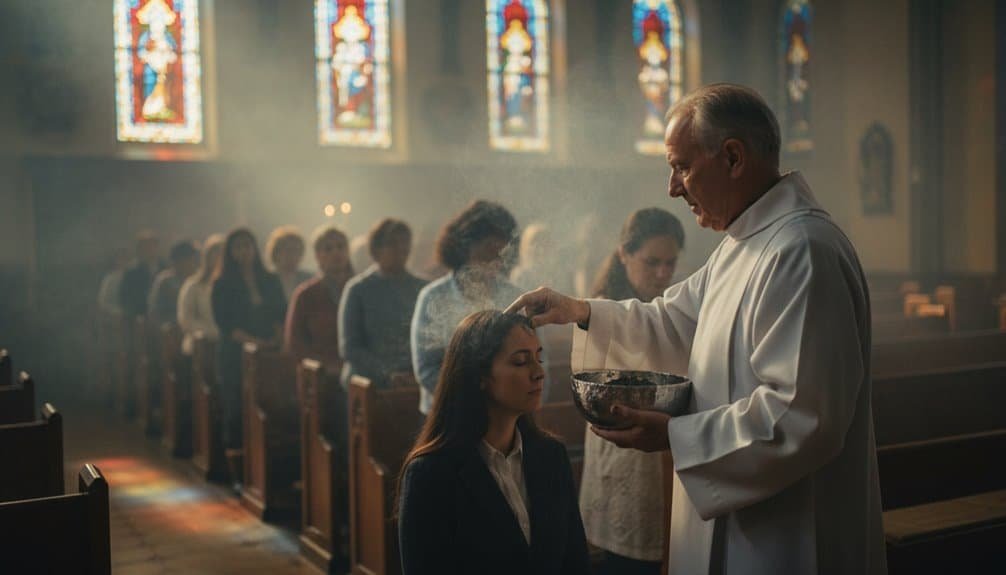
This sacred day marks the first of Lent’s forty days, launching a season of fasting, prayer, and spiritual discipline leading to Easter. When a priest or pastor places ashes on your forehead in the shape of a cross, they’re not engaging with an unrelated theme to faith—they’re addressing the core of human existence. Those ashes, made from last year’s Palm Sunday palms, carry the solemn reminder: “Remember that you’re dust, and to dust you’ll return.”
This isn’t merely ritual; it’s recognition. You’re acknowledging your frailty, your need for repentance, and your dependence on God’s mercy. Ash Wednesday calls you to embrace spiritual renewal through prayer, fasting, and almsgiving—mirroring Christ’s desert journey. The observance draws Orthodox, Catholics, Anglicans, Lutherans, Methodists, Presbyterians, and other Christian traditions together in this powerful moment of collective honesty about human weakness.

The Biblical History Behind Ash Wednesday Traditions
Though many believers participate in Ash Wednesday services, fewer understand the ancient biblical roots that give this practice its profound meaning. The ashes symbolism traces back to Old Testament saints who demonstrated repentance through sackcloth and ashes. Job repented with a contrite heart in ashes, while Daniel prayed with fasting and ashes during Babylonian captivity. Even Nineveh’s king sat in ashes after Jonah’s preaching.
This biblical foundation connects directly to Genesis, where God formed man from dust and declared we’ll return to dust. Early church fathers recognized this powerful imagery when establishing Lenten practices. By 601 AD, Pope Gregory I institutionalized Ash Wednesday as Lent’s beginning, creating our modern forty-day preparation period.
When you receive ashes on your forehead, you’re participating in millennia-old traditions that acknowledge human frailty while embracing God’s transformative grace through genuine repentance. The ashes used today are made from burned Palm Sunday branches from the previous year, connecting us to Christ’s triumphant entry before His passion.
What To Expect During Ash Wednesday Service
Have you ever wondered what unfolds during an Ash Wednesday service? You’ll enter to contemplative music that prepares your heart for this sacred moment. The service follows a meaningful rhythm: gathering with announcements about Lenten discipline, exchanging peace with “The peace of the Lord be with you always,” and hearing introductions about Ash Wednesday’s significance.
You’ll participate in responsive reading of Psalm 51—”Have mercy on me, O God”—as the congregation repeats refrains throughout. This communal ashes ceremony centers on prayers of dependence, thanksgiving over blessed dust mixed with olive oil, and quiet reflection.

When you approach for ashes, you’ll receive a cross marked on your forehead while hearing: “Remember that you’re dust; and to dust you’ll return.” This exposure temptation to pride dissolves as you kneel in humility. Communion follows by intinction, connecting you to Christ’s death and resurrection. The 45-minute service concludes with benediction, sending you into Lenten preparation.
How To Prepare Your Heart For The Lenten Season
Where does your heart stand as you approach this season of spiritual renewal?
Contemplative preparation begins with honest self-examination, requiring you to reflect on habits and attachments that distance you from God. Write these patterns in your journal, facing what needs transformation.
Your preparation involves intentional renunciation—identifying what must be surrendered to create space for deeper relationship with Christ. Consider adopting new prayer practices like morning devotions, evening examen, or Lectio Divina. Choose spiritual reading that’ll guide your daily reflections.
Plan your Confession during Lent, checking your parish schedule or arranging time with your priest. This sacrament becomes central to your heart’s preparation, offering the grace of genuine conversion.
Create prayer intentions for family, friends, and those in need. Simplify your environment, removing distractions from your prayer space. Through fasting, abstinence, and personal mortification, you’ll attune your longing for God, loosening sin’s grip and preparing for Easter’s resurrection feast.
Frequently Asked Questions
Can I Wash off the Ashes Immediately After the Service?
Yes, you can wash off the ashes immediately after service without violating Church teaching. There’s no canonical obligation requiring ashes removal at any specific time.
While wearing them throughout the day offers powerful public witness to your faith and repentance, the spiritual significance lies in receiving them and embracing their meaning. Your heart’s contrition matters more than how long the physical ashes remain visible on your forehead.
What if I’m Allergic to Palm Ash or Have Sensitive Skin?
You can absolutely request allergy safe alternatives if you’re sensitive to palm ash. Many churches offer hypoallergenic options or will apply ashes very lightly upon request. Some priests use skin friendly practices like blessed oil instead. Don’t let physical concerns prevent you from participating in this sacred ritual. God sees your heart’s intention, not the perfection of outward symbols. Your spiritual journey matters most.
Do Children Need to Participate in Receiving Ashes on Their Foreheads?
Children don’t need to participate in ash reception, but they’re absolutely welcome to. Your young ones can receive ashes regardless of age—even infants benefit from this beautiful reminder of God’s love.
Children participation helps form them in Catholic traditions, like learning the sign of the cross. The ashes mark them as God’s beloved children, teaching dependence on His grace from an early age.
Is It Appropriate to Wear Makeup Over or Under the Ash Cross?
You’re free to make personal makeup considerations as the Church offers no specific guidance on cosmetic choices with ashes. What matters isn’t ash hygiene or appearance, but your heart’s posture of repentance.
Whether you wear makeup under, over, or skip it entirely, focus on the cross’s spiritual significance rather than its visibility. Your authentic devotion to Christ transcends any cosmetic decisions you’ll make today.
What Should I Do if I Missed Ash Wednesday Service This Year?
Don’t let this missed opportunity discourage your Lenten journey. Since Ash Wednesday isn’t obligatory, you can begin spiritual repair today through prayer and repentance. The ash symbolism represents mortality and renewal—truths that remain powerful beyond one liturgical practice.
Start your forty-day pilgrimage now with confession, fasting, or almsgiving. God’s mercy doesn’t depend on ashes but on your contrite heart seeking transformation.
Conclusion
You’ve discovered that Ash Wednesday isn’t just an ancient tradition—it’s your invitation to begin again. As you receive those ashes and hear “remember you are dust,” you’re embracing the beautiful paradox of your faith: acknowledging your mortality while celebrating God’s endless mercy. Don’t let this moment pass without letting it transform you. Your contrite heart is exactly what God desires, and it’s precisely where your journey toward Easter joy begins.











No Comments