


23 Jan Honey on Daniel Fast: The Debate Dividing Christians
The honey debate on the Daniel Fast centers on biblical interpretation and fasting principles. You’ll find Christians divided: some argue honey’s a natural provision from God, pointing to Scripture’s positive honey imagery and Daniel’s focus on avoiding royal delicacies rather than all sweet foods. Others contend honey contradicts the fast’s sacrificial nature, viewing it as a pleasant luxury that compromises spiritual discipline. Your decision should align with your heart’s posture toward God and the fast’s intended purpose of drawing closer to Him through biblical discernment.
Key Takeaways
- The Daniel Fast debate centers on whether honey qualifies as a permitted natural food or prohibited sweetener.
- Scripture doesn’t explicitly mention honey, creating interpretative uncertainty about its inclusion in the biblical fast.
- Opponents argue honey contradicts the self-denial principle and Daniel’s commitment to only “pulse” and water.
- Supporters view honey as God’s natural provision, distinct from the luxurious royal foods Daniel avoided.
- Personal prayer and spiritual discernment should guide individual decisions about honey’s role in the fast.
What Is the Daniel Fast and What Can You Eat?
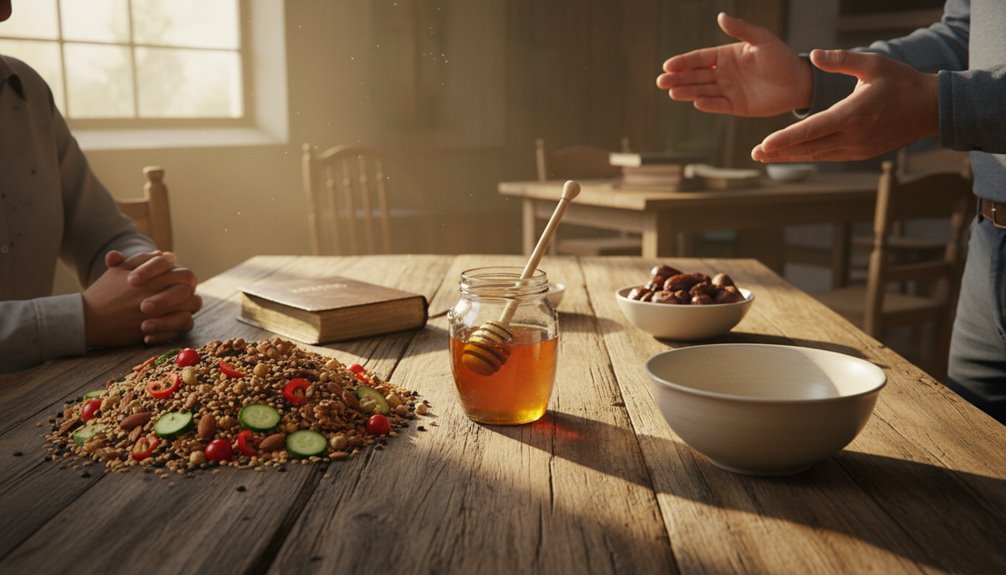
While many Christians pursue various forms of spiritual discipline, the Daniel Fast stands apart as a biblically-rooted practice that combines prayer, fasting, and dietary restrictions based on the prophet Daniel’s experiences in Babylon.
You’ll find this fast referenced in Daniel 1:12-16 and Daniel 10:3, where Daniel abstained from certain foods for spiritual purposes.
During the Daniel Fast, you’re permitted to eat vegetables, fruits, legumes, nuts, seeds, and whole grains while drinking only water.
The Daniel Fast restricts participants to a simple plant-based diet of whole foods and water for spiritual purification.
You’ll eliminate meat, dairy, refined sugars, processed foods, caffeine, and alcohol.
The dietary symbolism reflects Daniel’s refusal to defile himself with the king’s food, representing separation from worldly pleasures for spiritual focus.
This creates numerous two word discussion ideas among believers: permitted foods, spiritual discipline, biblical precedent, and dietary interpretation.
You’re essentially adopting a plant-based diet that emphasizes simplicity and dependence on God rather than culinary pleasure, fostering deeper prayer and spiritual sensitivity through physical discipline.
What Does the Bible Say About Honey on the Daniel Fast?
Where exactly does Scripture draw the line on sweeteners during Daniel’s fast, particularly regarding honey? The biblical text in Daniel 10:3 states he ate “no pleasant bread, neither came flesh nor wine in my mouth, neither did I anoint myself at all.” This passage doesn’t explicitly mention honey, creating interpretative challenges that fuel ongoing fasting debates.
You’ll find that Daniel 1:8-16 describes his initial ten-day commitment to “pulse” (vegetables) and water, rejecting the king’s delicacies. The Hebrew word “pat bag” suggests rich, luxurious foods rather than specific ingredients. Honey biblical references throughout Scripture consistently portray it as desirable—from the Promised Land’s description as flowing with “milk and honey” to Psalm 19:10’s comparison of God’s words being “sweeter than honey.
The absence of explicit honey prohibition creates doctrinal uncertainty. Conservative interpreters argue honey’s sweetness qualifies as “pleasant,” while others contend natural foods remain acceptable during this consecration period.
Why Some Christians Avoid Honey (And Why Others Don’t)
How do Christians justify their opposing positions on honey during the Daniel Fast?
Those advocating honey prohibition argue Daniel’s commitment was to “pulse and water” exclusively, representing complete abstinence from pleasurable foods. They contend honey constitutes a sweetener that contradicts the fast’s purpose of self-denial and spiritual discipline. This position emphasizes literal adherence to Daniel’s recorded diet, viewing any deviation as compromising the fast’s integrity.
Conversely, Christians supporting honey permissibility point to Scripture’s consistent portrayal of honey as God’s provision. They reference the Promised Land’s description as flowing with “milk and honey” and argue Daniel’s restriction targeted royal delicacies and wine, not natural foods. This camp interprets the fast as avoiding processed or luxurious items while maintaining foods that align with God’s original creation.
Both perspectives demonstrate sincere attempts to honor God through fasting, yet they interpret Daniel’s example differently. Your position ultimately depends on whether you prioritize historical specificity or broader scriptural principles regarding God’s natural provisions.
Should You Include Honey in Your Daniel Fast?
When deciding whether to include honey in your Daniel Fast, you must examine your personal motives and spiritual objectives rather than seeking a universal mandate. The honey debate ultimately reflects deeper questions about biblical interpretation and spiritual discipline.
Consider your fasting purpose: Are you seeking spiritual breakthrough, physical cleansing, or both? If honey’s inclusion compromises your commitment to sacrifice, exclude it. However, if dietary legality matters more and you believe Daniel consumed naturally available foods, honey may align with your interpretation.
Examine Romans 14:5-6, which teaches that each believer must be fully convinced in their own mind regarding dietary practices. Your conscience before God matters more than conforming to others’ standards.
Prayer should guide your decision. Ask the Holy Spirit to reveal whether honey serves or hinders your fast’s spiritual objectives. Remember, the fast’s power lies not in perfect rule-following but in sincere heart posture toward God.
Frequently Asked Questions
How Long Should I Do the Daniel Fast for Maximum Spiritual Benefits?
You’ll find maximum spiritual benefits through three weeks, following Daniel’s pattern in scripture. This duration isn’t arbitrary—it mirrors Daniel 10:2-3’s twenty-one day period of mourning and seeking God. While lengthy debates surround specific foods, don’t miss that these symbolic practices point beyond diet to spiritual discipline. Scripture establishes this timeframe as sufficient for breakthrough, though you can extend if God leads you to continue fasting.
Can I Use Honey Substitutes Like Maple Syrup or Agave During the Fast?
No, you shouldn’t use honey substitutes like maple syrup or agave during the Daniel Fast. These sweeteners violate the fast’s sweetness policies, which restrict all forms of added sugars and sweeteners. Daniel 1:8 shows Daniel refused the king’s delicacies, demonstrating complete dietary separation. Any honey substitute undermines the fast’s principle of denying fleshly desires and seeking spiritual purification through dietary discipline.
What Happens if I Accidentally Eat Honey While on the Daniel Fast?
If you’ve accidentally consumed honey during your Daniel Fast, don’t let condemnation overwhelm you. Scripture teaches that God’s grace covers unintentional mistakes (Numbers 15:22-29).
There’s no safety concern unless you’re pregnant and consumed raw honey, which poses botulism risks.
Simply acknowledge the accidental honey intake, refocus on your spiritual discipline, and continue your fast. Your heart’s intention matters more than perfect adherence to dietary restrictions.
Are There Specific Prayers I Should Say Before Starting the Daniel Fast?
While Scripture doesn’t mandate specific prayers before Daniel’s fast, you should establish proper prayer preparation and fasting mindset through confession, surrender, and petition for God’s strength. Consider praying Psalm 139:23-24 for heart examination, Matthew 6:11 for daily dependence, and 1 Corinthians 10:31 for God’s glory. You’ll benefit from seeking divine guidance, committing your fast’s purpose to the Lord, and asking for perseverance throughout the twenty-one day period.
Can Children and Pregnant Women Safely Participate in the Daniel Fast?
You should exercise extreme caution regarding children safety and pregnancy concerns during the Daniel Fast. Scripture doesn’t specifically address fasting for these vulnerable populations, but wisdom suggests pregnant women need complete nutrition for fetal development. Children require balanced diets for proper growth. You’d better consult healthcare providers and spiritual leaders before allowing participation, as their physical needs often supersede fasting obligations.
Conclusion
You’ll find Scripture doesn’t explicitly prohibit honey during Daniel’s fast, yet it’s not mentioned in his diet either. You’re called to examine your heart’s motivation—are you seeking spiritual discipline or finding loopholes? Daniel’s purpose wasn’t dietary restriction but spiritual devotion and dependence on God. You must prayerfully consider whether including honey aligns with your fast’s spiritual objectives. Let the Holy Spirit guide your decision, remembering that your fast’s effectiveness isn’t determined by honey’s presence but by your heart’s surrender to God’s will.











No Comments