

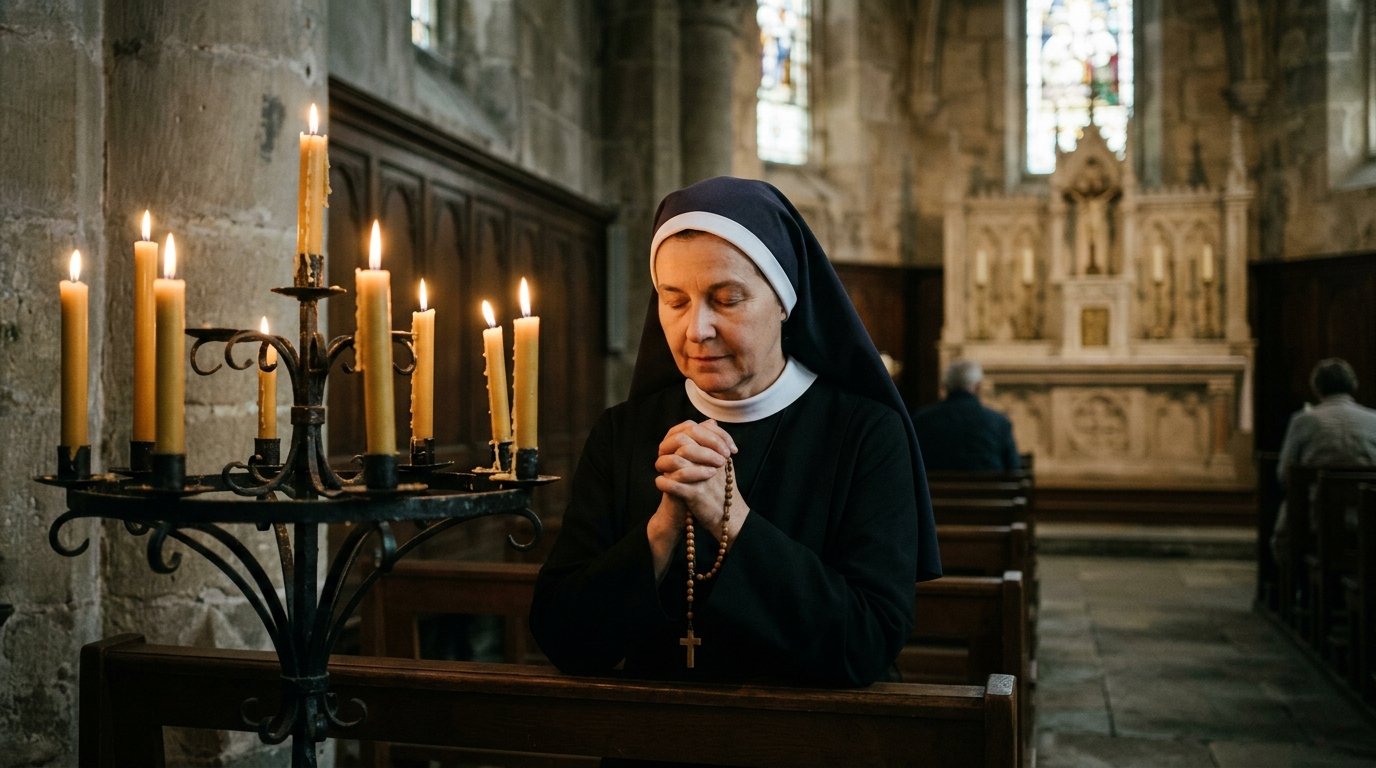
18 Mar The Biblical Healing Prayer That Modern Saint Pio Used Daily
You’ll hear Saint Pio’s daily prayer: “Lord Jesus Christ, I ask You for the healing of the sick, the comfort of the afflicted, and the strength of the faithful. May the Holy Spirit bring peace, and may Your will be done, Father, through me.” It draws on Isaiah 53, James 1:5 and the Eucharistic liturgy, echoing Catholic healing doctrine while urging responsible medical care. Keep this in mind, and you’ll discover how to integrate it into your own life.
Table of Contents
Who Was Saint Pio? A Quick Bio of the Healing Saint
Who was Saint Pio? You’ll find him a humble Italian priest born in 1887 in Pietrelcina, a small village in southern Italy. From childhood you notice his deep devotion, and after joining the Capuchin Franciscan order in 1906, he took the name “Pio of Pietrelcina.” You’ll see that his life turned extraordinary when, at age twenty‑five, he began experiencing the stigmata—wounds resembling those of Christ on his hands, feet, and side.
Despite intense pain, you’ll observe that he never abandoned his pastoral duties, hearing confessions, counseling, and offering prayers for the sick. You’ll learn that thousands traveled to his shrine, seeking his intercession, and many reported miraculous healings after his prayers.
You’ll also note that he authored countless letters, spiritual writings, and a daily “Prayer of Healing” he repeated for decades, a practice that still inspires believers worldwide. His canonization in 2002 confirmed his lasting impact on the Church.

What Scriptural Roots Inspire Saint Pio’s Healing Prayer?
You’ll see that Saint Pio’s prayer rests on a faithful Scripture foundation, drawing especially from Isaiah’s vivid healing promises. Those verses portray God as a healer who restores the broken, a theme that Pio echoes in his own petitions.
Ultimately, he aligns his supplications with Christ’s ultimate promise to bring wholeness to every afflicted soul.
Faithful Scripture Foundation
What biblical passages fuel Saint Pio’s daily healing prayer? You’ll find his core rests on James 1:5, urging believers to ask God for wisdom, and Psalm 103, which celebrates divine mercy and restoration.
He also draws from Isaiah 53:5, seeing the servant’s wounds as a source of healing, and from John 14:27, where Christ offers peace that calms the sick.
These verses shape his prayer’s structure: you invoke God’s promise to heal, acknowledge Christ’s at‑suffering, and request the Holy Spirit’s comforting peace. By weaving them together, you create a concise, scripturally grounded petition that reflects Pio’s confidence that God’s word alone can restore body and soul.

Healing in Isaiah
Often, the heart of Saint Pio’s healing prayer draws directly from Isaiah 53:5, where the servant’s wounds bring recovery and peace. You’ll notice that Isaiah repeatedly links affliction with divine restoration—verses like 34:8 proclaim “by his wounds we’re healed,” while 57:18 promises “I will restore you, O people of Israel.” These passages shape a theology where suffering isn’t random but purposeful, a conduit for grace. When you pray, you echo the prophetic vision that God’s mercy operates through the brokenness of the Messiah, turning pain into wholeness. This scriptural backdrop fuels Saint Pio’s confidence that every ailment carries a hidden promise of healing, urging you to claim that promise with faith.
Christ’s Healing Promise
How does Christ’s own promise of healing shape Saint Pio’s prayer? You see the prayer rooted in Jesus’ declaration, “I am the Lord who heals you” (Exodus 15:26) and the Gospel promise, “By my stripes you’re healed” (Isaiah 53:5, fulfilled in Christ). You feel the echo of John 10:10, where Jesus says He came “to give life and give it abundantly.” When you pray, you invoke the apostolic affirmation, “If you believe, you’ll receive healing” (James 5:15). The prayer mirrors the Samaritan’s request for mercy, “Lord, have mercy on me” (Luke 18:13). By aligning each petition with these verses, you trust that Christ’s covenant guarantees restoration, and you vocalize that assurance in every breath of the prayer.
What Are the Exact Words He Whispered Daily?
Ever wondered which short prayer Saint Pio whispered each morning before his day began? You’ll find he repeated a concise, biblical petition: “Lord Jesus Christ, I ask You for the healing of the sick, the comfort of the afflicted, and the strength of the faithful.” He began with the name of Christ, then invoked the Holy Spirit’s power, and closed with a humble surrender: “May Your will be done, Father, through me.” He whispered it quietly, often while kneeling before his crucifix, allowing the words to settle in his heart. The prayer’s rhythm mirrored the Psalms, creating a meditative cadence that steadied his mind. By using this exact formula daily, he aligned his intentions with Scripture, reinforcing his belief that divine healing flows from obedience and faith. You can adopt the same phrasing, trusting that each utterance carries the same reverent focus Saint Pio cultivated.
Why Saint Pio’s Healing Prayer Mirrors Catholic Healing Doctrine
Why does Saint Pio’s healing prayer align so closely with Catholic healing doctrine? You’ll notice it mirrors the Church’s emphasis on Christ’s atonement, the intercession of saints, and the sacraments. By invoking “Lord Jesus Christ, Son of God, have mercy on me,” the prayer echoes the biblical plea for divine mercy found in the Catechism. It also reflects the doctrine of the “sacramental worldview,” treating prayer as a conduit of grace akin to the Anointing of the Sick. The inclusion of “the Holy Spirit” ties directly to the Church’s teaching that the Spirit heals and sanctifies. Moreover, the prayer’s structure—confession, petition, and thanksgiving—parallels the liturgical pattern of the Mass, reinforcing the belief that healing flows from worship. This alignment shows you that Saint Pio’s daily whisper isn’t a private charm but a lived expression of official Catholic theology on healing.
How to Use Saint Pio’s Healing Prayer Every Day
Start each morning by finding a quiet spot, breathing deeply, and centering yourself before you begin the prayer. Keep your focus steady, letting the words guide you into consistent spiritual reflection throughout the day. By repeating this routine daily, you’ll build a habit that strengthens both faith and healing.
Daily Prayer Preparation
How can you turn Saint Pio’s healing prayer into a daily habit that steadies your spirit and opens your heart to divine grace? Begin by picking a consistent time—morning, evening, or a quiet pause between tasks. Create a simple space: a chair, a candle, a small crucifix, and a notebook. Sit upright, close your eyes, and inhale slowly, letting tension melt. Recite the prayer aloud or silently, matching each phrase to your breath. After the prayer, jot a brief note about any feeling, insight, or intention that surfaced. This brief ritual anchors the prayer, turning it from a fleeting request into a lived experience that nurtures faith and prepares you for the day’s challenges.
Consistent Spiritual Reflection
Having set up your prayer space, you can now weave the healing prayer into a steady rhythm of reflection. Begin each session by breathing deeply, then recite Saint Pio’s words slowly, letting each phrase settle in your mind. Pause after key verses to ask, “What does this reveal about my need for divine healing?” Write brief notes on any insight, then return to the prayer, reinforcing the connection between scripture and your heart. Keep a consistent schedule—morning, noon, and night—so the practice becomes a habit rather than an occasional act.
Over weeks, you’ll notice a deeper awareness of God’s presence, and the prayer will naturally guide you toward lasting spiritual renewal.
What Misconceptions About Saint Pio’s Healing Prayer Exist?
Ever wonder why so many people claim Saint Pio’s healing prayer guarantees miracles? You might think the prayer works like a magic spell, that reciting it once cures any ailment instantly. Some assume the prayer is a standalone remedy, ignoring the need for faith, humility, and ongoing spiritual growth. Others believe the prayer must be spoken in a specific language or with a precise rhythm, when Saint Pio emphasized sincere heart over technicalities. A common myth is that the prayer automatically bypasses medical treatment, leading some to reject doctors outright. You may also hear that every prayer results in a visible miracle, yet many healings are subtle, gradual, or internal. Recognizing these misconceptions helps you approach the prayer with realistic expectations, honoring both divine assistance and responsible stewardship of your health.
When Should You Seek Medical Help While Using Saint Pio’s Healing Prayer?
When pain spikes or symptoms worsen despite prayer, you should promptly consult a healthcare professional. The prayer of Saint Pio is a spiritual aid, not a substitute for medical expertise. If you notice sudden shortness of breath, intense chest pressure, uncontrolled bleeding, severe dehydration, or neurological changes such as confusion or loss of consciousness, call emergency services immediately.
Likewise, persistent fever above 101 °F, worsening infection signs, or a chronic condition that’s deteriorating despite treatment warrants a doctor’s visit. Use the prayer to find comfort, hope, and inner strength while you seek proper care. Schedule regular check‑ups for ongoing ailments, and inform your clinician that you’re praying, so they can integrate your faith into the treatment plan. Trust both the divine and the doctors; they work together for your well‑being.
Frequently Asked Questions
Can the Prayer Be Adapted for Non‑Catholic Believers?
Yes, you can adapt the prayer for non‑Catholic believers by focusing on its universal elements—faith, gratitude, and a request for healing.
Keep the language simple, replace any Catholic‑specific titles with “God” or “the Divine,” and maintain the heartfelt tone.
Feel free to add personal affirmations or scripture passages that resonate with your tradition, ensuring the prayer remains sincere and inclusive.
Is There Scientific Evidence Supporting the Prayer’s Healing Effects?
You won’t find solid scientific proof that the prayer itself triggers physiological healing, but studies show prayer and meditation can lower stress, improve mood, and boost immune markers.
Randomized trials on interfaith prayer report modest benefits, yet they can’t isolate a specific formula.
How Does the Prayer Differ From Other Catholic Novenas?
You’ll notice the prayer’s structure isn’t a nine‑day novena at all; it’s a single, continuous petition that Saint Pio repeated daily, focusing on Scripture‑based healing language rather than a fixed novena schedule.
While novenas require specific prayers each day for nine days, this prayer lets you invoke the same healing verses whenever you need, without the time‑bound framework.
It emphasizes personal, ongoing intercession over the traditional novena cadence.
Can the Prayer Be Combined With Other Spiritual Practices?
Yes, you can blend the prayer with other spiritual practices. Start by setting a quiet space, then recite the prayer while breathing deeply, allowing each phrase to settle in your heart. Follow with meditation, lectio divina, or the rosary, letting the prayer’s themes guide your reflections. You might also incorporate fasting, incense, or sacred music, ensuring each element respects the prayer’s reverence and intention.
What Language Translations Are Authentic for Daily Use?
You can use the authentic translations that Saint Pio himself endorsed: the original Italian version, the Latin “Oratio Sanctorum,” and the approved Spanish, Portuguese, French, and English texts. These are the editions vetted by the Vatican and the San Pio Foundation.
Stick to those five languages for daily prayer, and you’ll stay faithful to the original wording and intent.
Conclusion
You’ve seen how Saint Pio’s simple, scripturally‑rooted prayer can bring comfort, hope, and a sense of divine partnership to your daily life. By praying it regularly, you align yourself with Catholic healing doctrine while staying grounded in faith. Remember, the prayer isn’t a substitute for professional care—use it as a spiritual supplement, and call on medical help whenever symptoms persist or worsen. Trust the grace, stay vigilant, and let the prayer nurture both body and soul.








No Comments