

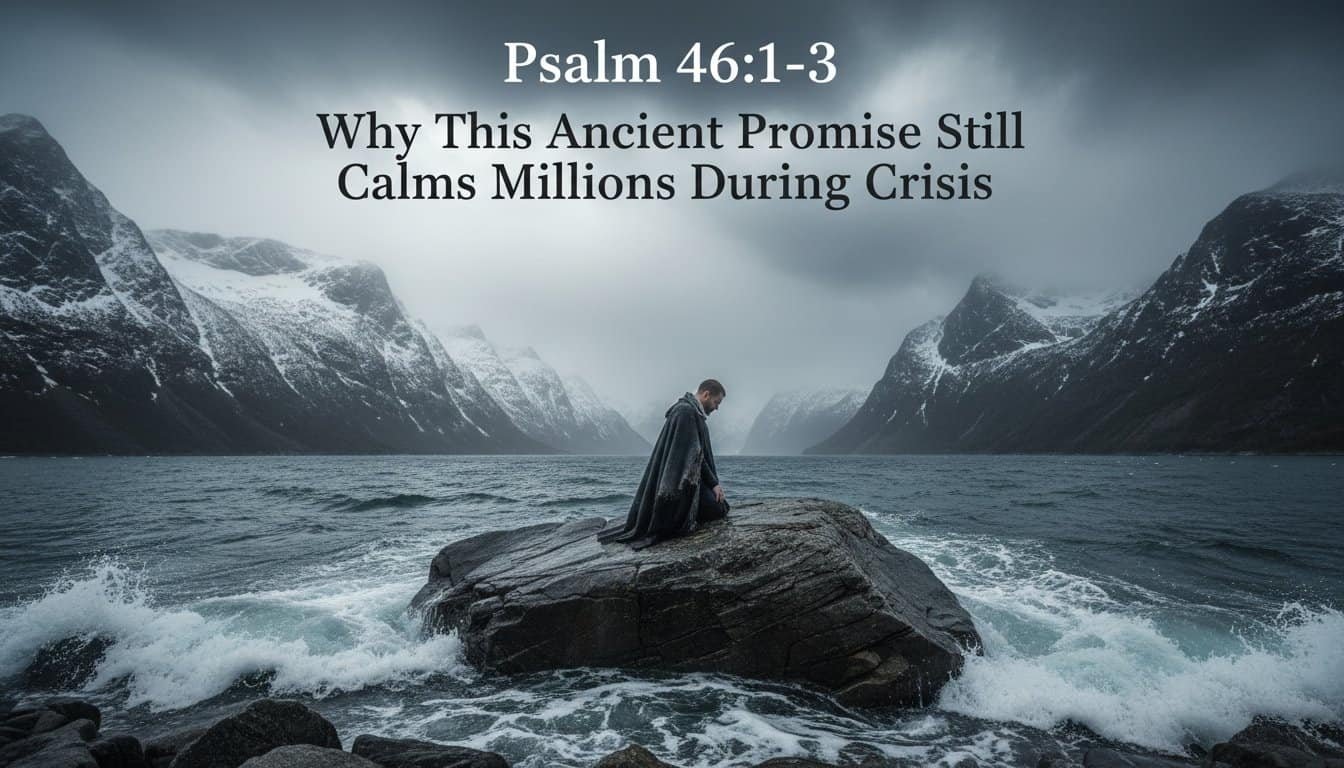
26 Jan Psalm 46:1-3 Why This Ancient Promise Still Calms Millions During Crisis
When you’re facing overwhelming circumstances, Psalm 46:1-3 offers three unshakeable promises: God as your fortress-like refuge (machaceh), divine strength that revitalizes your inner power beyond natural limitations, and His very present help that’s actively supportive and consistently available. The psalmist deliberately uses earthquake and cosmic chaos imagery—mountains sinking into waters—to emphasize that even when ultimate disorder threatens, God’s presence remains your unshakeable anchor through any crisis you’ll encounter.
Table of Contents
Key Takeaways
- God promises to be an unshakeable fortress and constant source of strength during life’s most overwhelming challenges.
- The psalm uses extreme chaos imagery to demonstrate that divine help remains available even in catastrophic circumstances.
- Ancient temple worship language translates into personal comfort, making corporate faith promises individually accessible during crisis.
- Historical proof of God’s faithfulness through generations provides tested foundation for trusting divine protection today.
- The text offers active divine engagement rather than passive consolation, promising real help for genuine threats.
What Psalm 46:1 Really Promises When Life Falls Apart

When your world crumbles and everything you’ve counted on disappears, Psalm 46:1 doesn’t offer empty platitudes—it provides three concrete promises that have sustained believers through history’s darkest moments.
First, God promises to be your divine refuge—the Hebrew *machaceh* describes a fortress-like shelter where you can hide from overwhelming circumstances. This isn’t temporary consolation but secure protection from life’s genuine threats.
Second, He’s your unfailing strength. When natural timidity or weakness leaves you vulnerable, God provides inner power that enables you to stand firm against spiritual battles. This strength revitalizes and empowers you beyond your limitations.

Third, He’s your “very present help”—constantly available and actively supportive. The phrase emphasizes His proven track record of protection, not distant observation but engaged involvement. This psalm was composed by the sons of Korah, a group of Levitical singers who understood the power of worship during crisis.
These promises cultivate faithful endurance because they’re anchored in God’s dynamic relationship with you. When everything falls apart, you’re not relying on circumstances but on His unshakeable character and demonstrated faithfulness.
Why This Ancient Psalm Uses Earthquakes and Cosmic Chaos
While modern readers might find Psalm 46’s vivid descriptions of earthquakes and cosmic upheaval unsettling, the psalmist deliberately chose these powerful images to communicate profound spiritual truths about God’s unshakeable presence during life’s most terrifying moments.
The earthquake symbolism and chaos imagery weren’t random choices. In ancient Near Eastern culture, roaring seas and shifting mountains represented the ultimate forces of disorder threatening God’s created order. When you read about mountains sinking into foaming waters, you’re encountering metaphors for life’s most devastating troubles—not literal predictions of geological catastrophe.
These images resonated powerfully with ancient audiences who understood natural disasters as manifestations of cosmic chaos. The psalmist painted the worst possible scenario—complete environmental collapse—to demonstrate that even when everything familiar crumbles beneath your feet, God remains your unshakeable refuge. The more extreme the chaos imagery, the more profound the promise of divine stability becomes.

How Psalm 46 Moved From Temple Worship to Personal Comfort
How did this powerful psalm transition from echoing through Jerusalem’s temple courts to whispering comfort in your darkest moments? Originally, Psalm 46 served as corporate worship for ethnic Israel, proclaiming Yahweh’s defense through Levitical choirs and antiphonal singing. The Korahite guild performed this during temple devotion, anchoring it firmly in Jerusalem’s liturgical culture.
But something profound happened. The psalm’s language moved beyond physical boundaries. When it declares God as your “refuge and strength,” it shifts from collective temple worship to personal assurance. The symbolic river that makes glad the “city of God” no longer pointed only to Jerusalem’s temple but to God’s presence wherever you find yourself.
This transition mirrors the prophets’ vision of God’s reign extending beyond temple walls. The Songs of Zion proclaimed universal divine presence, transforming temple-bound liturgy into portable comfort. Now, when crisis strikes, you can claim this ancient promise personally—God remains your very present help.
Why Psalm 46 Remains Humanity’s Go-To Crisis Scripture
Why does Psalm 46 continue to anchor souls across cultures and centuries whenever crisis strikes? The answer lies in its proven track record through history’s darkest moments.
This psalm emerged from genuine terror—Sennacherib’s massive Assyrian army threatening Jerusalem in 701 BC. The historical context reveals real people facing annihilation, yet declaring unshakeable trust in God’s protection. Archaeological evidence confirms the crisis: Hezekiah’s tunnel carved desperately for water, siege debris, and broken weapons matching the psalm’s imagery of shattered bows and spears.
You’re drawn to these verses because they weren’t written in comfort but forged in fire. When the psalmist declared “God is our refuge and strength,” enemy chariots surrounded the city walls. When nations raged and kingdoms tottered, Jerusalem’s survival hung by a thread.
That’s why millions still turn here during personal earthquakes. This isn’t theoretical theology—it’s battlefield-tested faith that’s sustained God’s people through every imaginable crisis for three millennia.
Frequently Asked Questions
Who Were the Sons of Korah and Why Did They Write This Psalm?
You’re witnessing God’s incredible redemption through Korah’s lineage. Though their ancestor rebelled against Moses, the Sons of Korah survived divine judgment and became devoted temple musicians. They wrote Psalm 46 from their unique perspective of experiencing God’s mercy despite family shame. Their temple guardianship and worship leadership gave them profound insight into God’s refuge during crisis, making their psalms deeply authentic and comforting.
What Does “Alamoth” Mean in the Psalm’s Musical Instructions?
“Alamoth” in this musical instruction means the psalm should be sung in a high soprano range, likely by young women’s voices or boys singing in falsetto. You’re encountering an ancient worship direction that called for voices to soar upward, matching the psalm’s triumphant theme. This high-pitched, joyful singing style perfectly complemented the celebration of God’s mighty protection and presence among His people.
How Does Psalm 46 Connect to Martin Luther’s Famous Hymn?
Luther’s “A Mighty Fortress Is Our God” directly paraphrases Psalm 46‘s opening verse, transforming the psalmist’s refuge metaphor into congregational song. When you’re experiencing faith under pressure, you’ll find both works declare God’s unshakeable protection during life’s storms.
Luther wrote this hymn after nearly losing his son to plague, discovering how ancient poetry resonates through personal crisis, making the psalm’s timeless promise accessible to millions seeking comfort.
What Other Bible Passages Contain Similar Earthquake and Chaos Imagery?
You’ll find calming imagery throughout Scripture during earth-shaking moments. Isaiah’s trembling earth meets God’s steadfast presence, while Revelation’s catastrophic quakes reveal divine sovereignty. Matthew’s earthquake at Christ’s crucifixion demonstrates God’s power over chaos. The Psalms repeatedly show waters roaring and mountains shaking, yet God remains your refuge. These passages build crisis resilience by showing that even when creation convulses, your unshakeable God controls every tremor and upheaval.
Why Does the Psalm Mention “Lord of Hosts” and “God of Jacob”?
These titles reveal why you can trust God completely during chaos. Lord of hosts” means He commands heaven’s armies with unlimited power, while “God of Jacob” shows He’s personally faithful to His covenant promises. Together, they assure you that the mighty Commander of all forces isn’t distant—He’s intimately present with you, combining cosmic authority with personal care during your darkest moments.
Conclusion
When you’re drowning in uncertainty, you don’t need platitudes—you need God’s unshakeable presence. Psalm 46:1-3 isn’t just ancient poetry; it’s your lifeline when everything’s collapsing. You’ll find that this promise transcends earthquakes, pandemics, and personal devastation because it anchors you to something eternal. Millions before you have clutched these words in their darkest hours. Today, you can rest knowing that same God who calmed Israel’s fears is your refuge too.






No Comments