

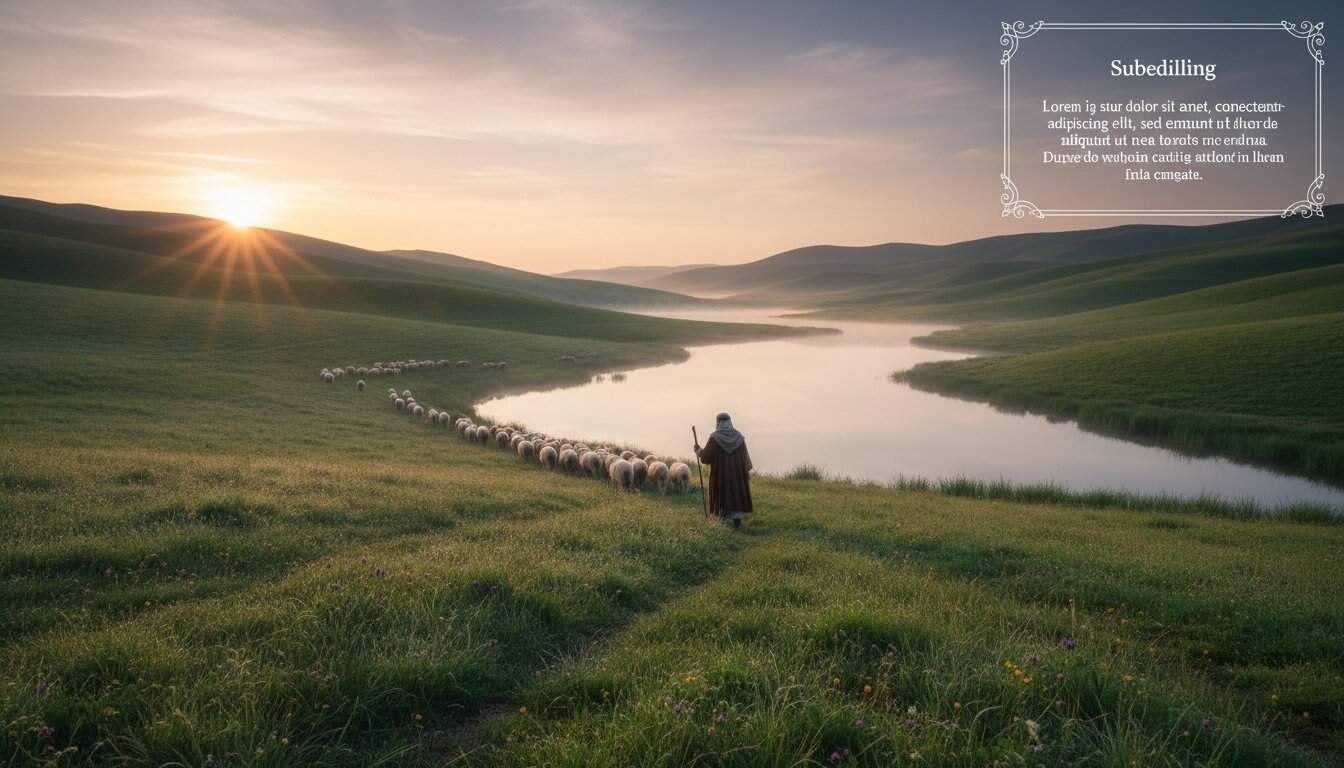
10 Jan Why Psalm 23 Remains the Most Powerful Prayer People Turn To
Psalm 23’s enduring power stems from its masterful fusion of Hebrew shepherding metaphors with sophisticated psychological progression—you’re experiencing cognitive restructuring as it guides you from vulnerability (“valley of the shadow of death”) to security (“my cup runneth over”). The text’s 118-word structure, repetitive Hebrew parallelisms, and concrete imagery make it extraordinarily memorable, while its therapeutic roadmap from fear through protection to restoration addresses universal human anxieties across all belief systems and cultural contexts throughout history.
Key Takeaways
- The shepherd metaphor taps into universal human needs for protection, guidance, and care during vulnerable moments.
- Its memorizable 118-word structure with vivid imagery creates cognitive anchors that provide comfort during crisis situations.
- The psalm transforms fear into peace through a psychological journey from danger to security and restoration.
- Hebrew “ra’ah” conveys both professional shepherding and personal friendship, bridging divine transcendence with intimate accessibility.
- Mental health professionals actively use its structured progression of fear, protection, and restoration as therapeutic framework.
What Makes Psalm 23 the World’s Most Powerful Prayer

What transforms twenty-six verses of ancient Hebrew poetry into humanity’s most enduring source of comfort across millennia?
You’ll find the answer lies in Psalm 23’s unique fusion of intimate metaphor and universal human experience.
Psalm 23’s enduring power flows from its masterful blend of personal intimacy and experiences that speak to every human heart.
The historical context reveals David’s composition during Israel’s pastoral period, when shepherding represented the ultimate expression of protective leadership.
This agricultural foundation creates imagery that transcends cultural boundaries—you don’t need theological training to understand a shepherd’s devotion to his flock.
Theology insights demonstrate how the psalm bridges the gap between divine transcendence and personal intimacy.
You’re invited into a relationship where God isn’t distant but actively present, guiding through “valleys of death’s shadow.”
The Hebrew term “ra’ah” encompasses both shepherding and friendship, suggesting divine care that’s both professional and personal.
The psalm’s power emerges from its psychological architecture: fear acknowledged, comfort provided, abundance promised.
You experience complete emotional resolution within six verses.
Why Psalm 23 Speaks to Human Psychology Across All Beliefs
How does a single psalm resonate equally with devout believers, spiritual seekers, and secular readers who’ve never opened a Bible? The answer lies in Psalm 23’s masterful use of universal psychological archetypes that transcend religious boundaries.
You’ll find that the shepherd metaphor taps into humanity’s deepest need for protection and guidance—concepts that predate organized religion by millennia.
When you read “I shan’t want,” you’re encountering language that addresses fundamental fears about scarcity and abandonment that exist across all cultures.
The psalm’s progression from vulnerability (“valley of the shadow of death”) to security (“my cup runneth over”) mirrors the psychological journey from anxiety to peace that you experience regardless of your faith tradition.
This universal comfort explains why therapists quote it, why it appears in secular literature, and why it demonstrates remarkable interfaith resilience.
The text’s psychological sophistication makes it accessible to anyone seeking solace, creating a bridge between ancient wisdom and modern human experience.
How Psalm 23 Transforms Fear Into Hope During Crisis
When crisis strikes and fear threatens to overwhelm, Psalm 23’s carefully constructed language creates a psychological transformation that moves you from despair toward hope through its deliberate progression of imagery.
The psalm’s fear transformation begins with establishing divine presence: “The Lord is my shepherd.” This declaration immediately counters isolation—the primary driver of crisis-induced panic. You’re not abandoned; you’re guided. The Hebrew verb “râ’âh” (to shepherd) implies active, protective care rather than passive observation.
As the text progresses, imagery shifts from vulnerability (“valley of the shadow of death”) to security (“your rod and your staff comfort me”). This linguistic journey mirrors trauma recovery patterns identified in modern psychology. The psalm doesn’t deny danger but reframes your relationship to it.
Hope restoration culminates in the final verses, where “surely goodness and mercy shall follow me.” The Hebrew “râdaph” (follow) suggests pursuit—positive forces actively chasing you. This reverses the typical crisis narrative where threats pursue and hope flees, offering cognitive restructuring through ancient poetry.
Why These 118 Words Stick in Memory Better Than Any Other Prayer
Although countless prayers have been composed throughout history, Psalm 23‘s remarkable memorability stems from its sophisticated use of mnemonic devices that neuroscientists now recognize as optimal for long-term retention.
You’ll notice the psalm employs consistent metaphorical frameworks—shepherd imagery in verses 1-4, host imagery in verses 5-6—creating cognitive anchors that enhance memory retention.
The text’s linguistic rhythm follows Hebrew parallelism patterns that create natural cadences. You can observe this in phrases like “He makes me lie down” and “He leads me beside,” where repetitive sentence structures establish predictable patterns your brain easily stores.
Archaeological evidence shows ancient Hebrew poetry utilized specific syllabic counts and stress patterns designed for oral transmission. You’re experiencing a 3,000-year-old memory technology when you recite these words. The psalm’s deliberate brevity—just 118 words in most translations—prevents cognitive overload while its concrete imagery (green pastures, still waters, dark valleys) creates vivid mental pictures that stick far better than abstract theological concepts.
Using Psalm 23 in Therapy, Hospice Care, and Personal Crisis Management
Why do therapists, hospice workers, and crisis counselors consistently turn to this ancient text when modern psychological interventions fail to provide comfort?
You’ll find Psalm 23’s therapeutic power lies in its structured progression through fear, protection, and restoration—a psychological roadmap that mirrors established trauma recovery models.
In hospice care, you’re witnessing how this psalm’s pastoral imagery creates safe emotional space for dying patients.
The “valley of the shadow of death” validates their experience without minimizing it, while “fear no evil” offers agency within powerlessness.
These aren’t mere religious platitudes—they’re clinically effective comfort mechanisms.
Crisis counselors use verses like “He restores my soul” during acute interventions because the text provides cognitive anchoring when emotions overwhelm rational thought.
The psalm’s familiarity becomes therapeutic shorthand, bypassing intellectual processing to reach emotional centers directly.
For caregivers experiencing burnout, reciting “my cup overflows” reconnects them to abundance mindset, countering depletion.
Ancient grief rituals incorporating these words remain therapeutically relevant because human emotional architecture hasn’t fundamentally changed across millennia.
Frequently Asked Questions
What Is the Complete Text of Psalm 23 in Different Bible Translations?
You’ll find translation variants across major Bible versions create subtle yet significant differences in Psalm 23’s text.
The King James Version uses “maketh me to lie down,” while modern translations say “makes me lie down.”
Copyright issues prevent reproducing complete texts here, but you can compare the NIV’s “quiet waters” versus ESV’s “still waters.”
Each translation reflects different manuscript traditions and interpretative choices that’ve shaped this psalm’s historical reception.
Who Was King David and What Inspired Him to Write Psalm 23?
You’ll find David’s background as Israel’s second king, who started as a shepherd before defeating Goliath and ascending to the throne.
His inspiration source likely stems from his intimate knowledge of shepherding life in Judea’s wilderness.
You can trace his personal experiences protecting flocks from predators and guiding them through dangerous terrain, which he transformed into this profound metaphor for God’s protective care and guidance.
How Do Other Religions and Faiths View or Interpret Psalm 23?
Interfaith perspectives on Psalm 23 reveal fascinating interpretations across religious boundaries.
Muslims recognize David’s psalmic authority while emphasizing Allah’s guidance.
Hindus connect the shepherd imagery to Krishna’s pastoral symbolism.
Buddhists interpret the “valley of death” through impermanence teachings.
Jewish scholars focus on Hebrew linguistic nuances.
These sacred symbols transcend denominational barriers, demonstrating how David’s metaphorical language resonates universally across faith traditions despite theological differences.
What Are the Best Ways to Memorize Psalm 23 Effectively?
You’ll master Psalm 23 through proven mnemonic methods that ancient scribes used for oral transmission.
Create visual associations for each verse’s imagery—shepherd, green pastures, still waters.
Employ spaced repetition strategies by reciting daily at consistent intervals.
Break the text into manageable phrases, focusing on Hebrew parallelism patterns.
Write it repeatedly while speaking aloud, engaging multiple senses.
Practice verse-by-verse progression rather than attempting complete memorization initially.
Can Psalm 23 Be Recited During Formal Religious Ceremonies and Rituals?
Yes, you can recite Psalm 23 during formal religious ceremonies with exceptional liturgical suitability.
It’s been incorporated into Christian funeral rites since the 4th century, Jewish Shabbat services, and countless wedding ceremonies.
The psalm’s universal themes of divine guidance and protection ensure broad audience accessibility across denominational boundaries. Its poetic structure adapts seamlessly to both spoken liturgy and musical settings in formal worship contexts.
Conclusion
You’ve witnessed how these 118 ancient words transcend religious boundaries through their psychological architecture. The psalm’s pastoral metaphors tap into humanity’s deepest anxieties about vulnerability and abandonment. When you’re facing crisis, its rhythmic structure creates cognitive anchors that override fear responses. That’s why you’ll find Psalm 23 in hospitals, therapy sessions, and moments of personal darkness—it’s humanity’s most enduring formula for transforming terror into trust.






No Comments