

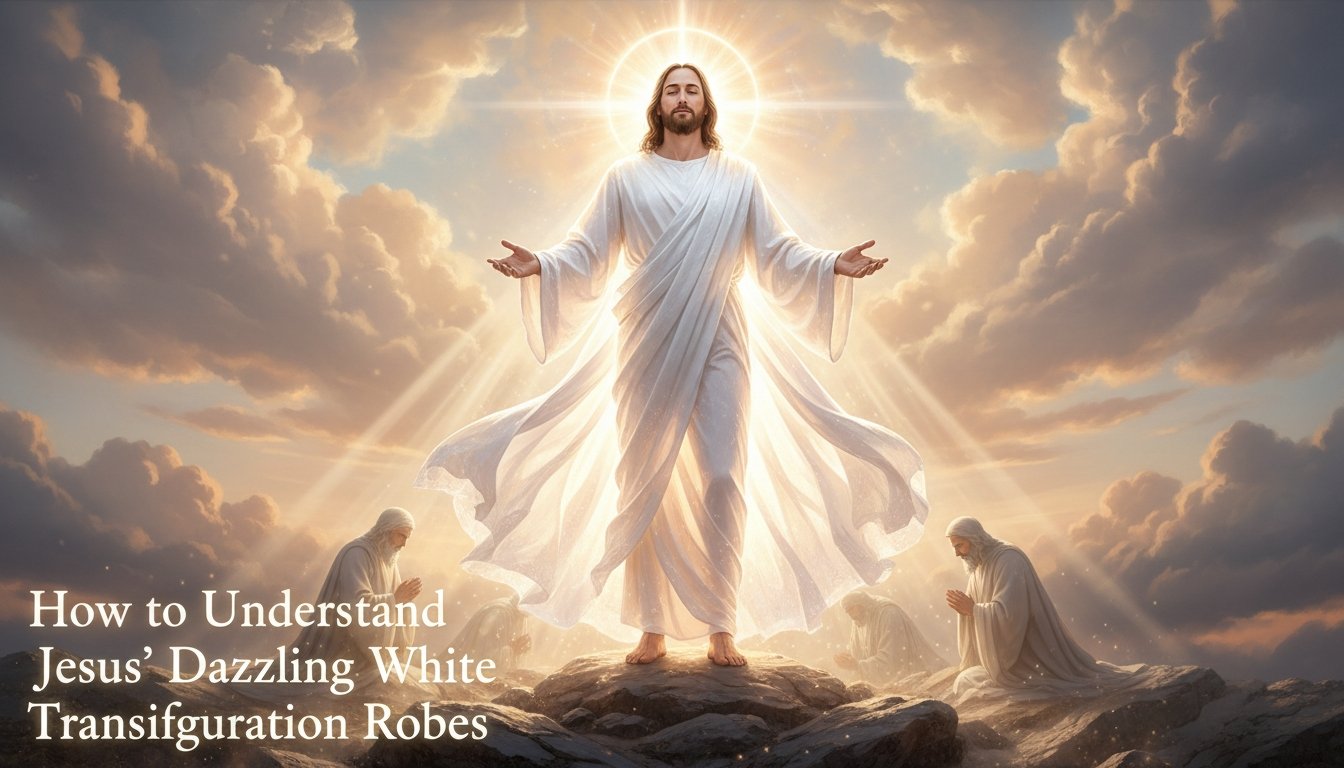
19 Apr How to Understand Jesus Dazzling White Transfiguration Robes
You’ll see the dazzling white robes as a visual proclamation of Jesus’s divine identity, linking Him to the uncreated light that surrounds God. Their brilliance echoes Old‑Testament visions—Moses’s radiant face, the seraphim’s fiery glow, the Ancient of Days clothed in snow—signaling purity, authority, and heavenly Sonship. For you, the robes model the holiness and righteousness believers should embody, inviting you to reflect divine glory in thoughts, speech, and actions, and to discover deeper meaning as you explore further.
Table of Contents
How the White Robes Proclaim Jesus as God’s Son
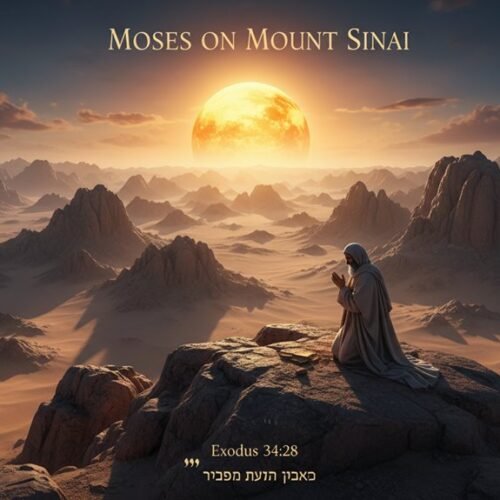
How do the dazzling white robes actually declare Jesus as God’s Son? You see, the whiteness isn’t a fashion choice; it’s a visual proclamation of divine identity. In the Synoptic accounts, the garments shine brighter than any earthly light, echoing the “uncreated light” that surrounds God. This brilliance links Jesus to the Old‑Testament figures whose faces radiated after encountering Yahweh—Moses (Exodus 34) and the Ancient of Days (Daniel 7).
By clotting Himself in such purity, He fulfills the prophetic expectation that the Son of God would be clothed in heavenly glory (Isaiah 6). The voice from the cloud confirms this visual cue: “This is My beloved Son.” The whiteness thus functions as a theological shorthand, instantly communicating that Jesus embodies divine righteousness, authority, and the promised Messiah.
You recognize the robes as a divinely ordained sign, not a mere garment.
How Old‑Testament Light Images Shape the Transfiguration White Robes
What ancient light motifs illuminate the transfiguration’s dazzling robes? You’ll notice that the Gospel writers echo Exodus 34, where Moses’ face glows after meeting Yahweh, and Isaiah 6, where seraphim surround the throne in radiant fire. Those images set a precedent: divine presence is cloaked in brilliant, uncreated light.
Daniel 7 adds the “Ancient of Days” clothed “white as snow,” reinforcing the idea that true authority wears a luminous garment. Psalm 104 describes God wrapping Himself in light like a robe, tying the visual metaphor to holiness itself. When you read Matthew’s “white as light” and Mark’s “whiter than any launderer could bleach,” you’re seeing a direct echo of those OT visions. The transfiguration’s white robes therefore aren’t a fashion choice; they’re a visual bridge, linking Jesus to Moses’ covenantal glow, Elijah’s prophetic fire, and the heavenly throne’s perpetual brilliance.
This continuity confirms that the robes embody divine purity, authority, and the uncreated light that the Old Testament already revealed.
What the Transfiguration White Robes Teach About Living a Holy Life?
The radiant white robes in the Transfiguration aren’t merely a visual echo of Old‑Testament light; they model a concrete standard for everyday holiness. When you picture those dazzling garments, you see purity, authority, and the uncreated light that envelops Christ. That image calls you to let your thoughts, speech, and actions reflect the same brilliance. You’re invited to shed hidden sin like a soiled cloak and clothe yourself in righteousness, just as Moses’ face shone after meeting God. Let the Holy Spirit transform you, day by day, into Christ’s likeness, so you become a “light” in a dark world. Remember the disciples’ awe: they were humbled, yet empowered to witness divine glory. Embrace that humility, trust God’s voice, and pursue holiness with intentional, radiant living, knowing your future glorified state mirrors the Transfiguration’s white robes.
Frequently Asked Questions
Why Did Only Peter, James, and John Witness the Transfiguration?
You’re told that Jesus chose Peter, James, and John because they were his inner circle, the three he trusted most to handle his deepest revelations. Their presence lets you see how the event prepared them for leadership, while the others stayed behind to keep the mystery until after the resurrection. This selective witnessing underscores the intimacy of the divine encounter and the responsibility it placed on those three disciples.
How Does the Transfiguration Relate to the Concept of the “Glorified Body”?
You see the transfiguration as a preview of the glorified body you’ll receive. Jesus’s radiant, white robes display the transformed, imperishable nature that awaits believers after resurrection. The event links Moses’s shining face and Elijah’s prophetic authority to Christ’s divine perfection, showing that your future body will be clothed in divine light, free from decay, and fully conformed to Christ’s resurrected form. This glimpse assures you of the promised, glorified reality.
What Is the Significance of the Mountain Setting in the Transfiguration?
You’ll find that the mountain acts as a sacred threshold where heaven meets earth, amplifying the revelation of divine glory. Its height lifts you above ordinary life, symbolizing ascent toward God’s presence.
The isolation creates a quiet stage for the voice from the cloud, while the summit recalls Israel’s historic encounters with God—Moses on Sinai, Elijah on Horeb.
Thus, the mountain frames the transfiguration as a pivotal, elevated revelation of Christ’s authority.
Why Were Moses and Elijah Specifically Chosen to Appear With Jesus?
You see Moses and Elijah because they embody the Law and the Prophets, the two foundations that Israel expected the Messiah to fulfill. Their appearance tells you that Jesus completes and validates everything Moses taught and every prophetic promise.
It also signals that heaven recognizes Him as the long‑awaited Son, uniting the old covenant with the new, and assures you that God’s plan spans Scripture’s whole story.
How Do Early Christian Artworks Depict the White Robes of the Transfiguration?
You’ll see early Christian art render the robes as luminous, almost glowing cloth that seems to emit light rather than reflect it. In 3rd‑century catacomb frescoes, Jesus’s garment appears as a radiant white veil, outlined with gold or yellow halos.
Conclusion
You now see how the dazzling white robes aren’t just a fashion statement—they’re a bold proclamation that Jesus is truly God’s Son. Old‑Testament light imagery fuels this symbolism, linking Him to divine glory. By grasping this, you’re called to mirror that holiness in everyday life, letting the same radiant purity guide your thoughts, actions, and relationships. Let the transfiguration inspire a walk that reflects God’s light.






No Comments