

24 Jan Biblical Prayer Shawls: The Ancient Practice Making a Comeback
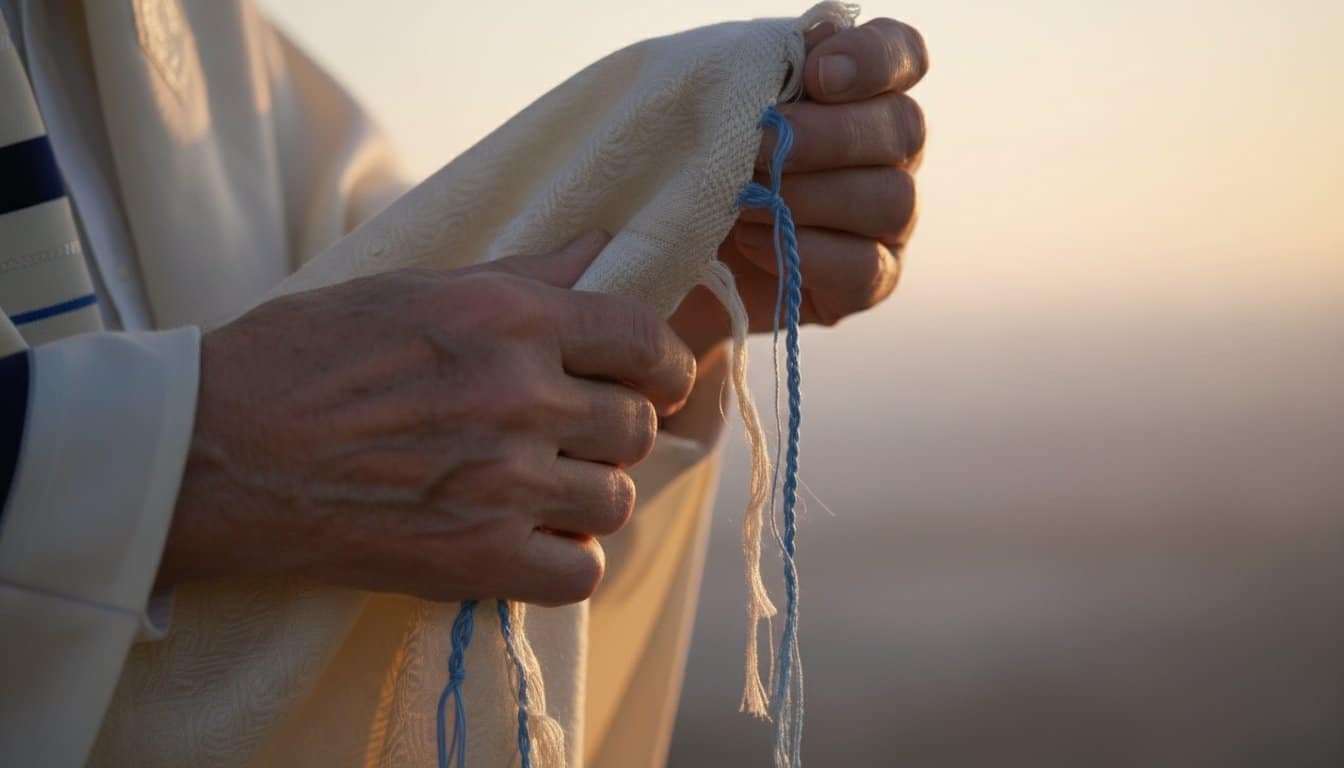
Prayer shawls, or tallitot, represent a 3,500-year-old biblical tradition rooted in Numbers 15:38-41 and Deuteronomy 22:12, where you’ll find God’s commandment for tasseled four-cornered garments. You’re participating in ancient covenant reminders when wearing these sacred textiles, as the knotted fringes (tzitzit) symbolically represent the 613 Torah commandments. Modern practitioners—from Orthodox Jews to Messianic Christians—embrace this practice to create personal sanctuaries during worship, connecting contemporary spiritual discipline with millennia-old traditions that shaped both Judaism and early Christianity through tactile divine remembrance.
Table of Contents
Key Takeaways
- Prayer shawls (tallit) originate from biblical commands in Numbers and Deuteronomy requiring tasseled four-cornered garments.
- Tzitzit fringes contain 613 knots symbolizing Torah commandments, with blue threads representing divine grace and heaven.
- Modern practitioners use prayer shawls to create personal sacred space during worship and daily devotions.
- Contemporary Messianic Judaism incorporates traditional tallits with Christian symbols, bridging ancient Jewish and modern Christian practices.
- The practice connects believers to millennia-old traditions while enhancing spiritual focus through tactile and visual worship cues.
What Are Prayer Shawls and Why Do They Matter?
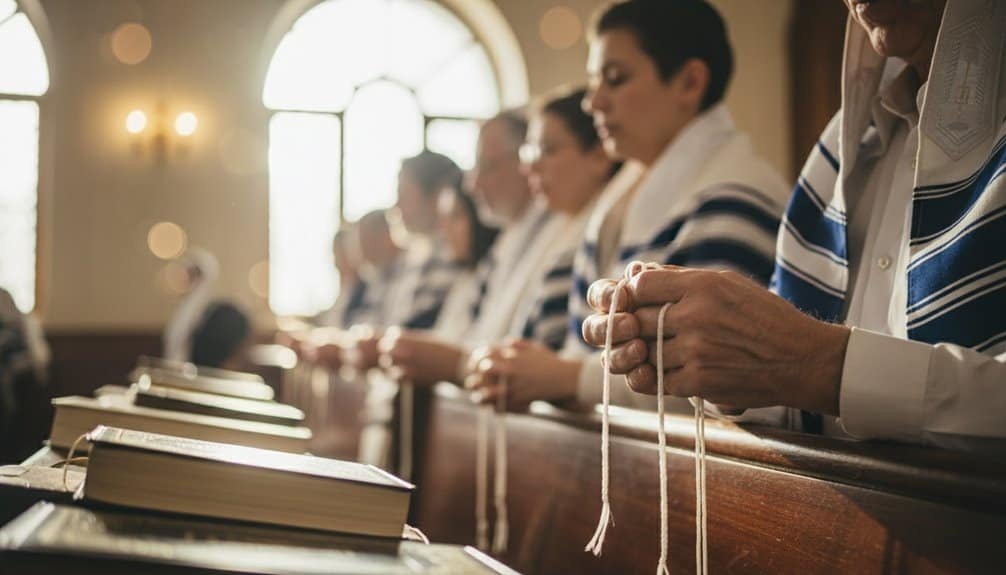
When you observe Jewish men draped in white, fringed garments during synagogue services, you’re witnessing one of Judaism’s most enduring ritual practices—the wearing of the tallit, or prayer shawl. This fringed garment transcends modern fashion by embodying profound theological significance rooted in biblical commandment (Numbers 15:37-41). You’ll notice the tzitzit—knotted fringes on four corners—serve as tangible reminders of the 613 Torah commandments, their numerical value embedded within eight threads and five knots per corner.
The tallit’s construction follows strict halakhic guidelines, utilizing wool, silk, or synthetic materials while avoiding prohibited linen-wool combinations. The design draws inspiration from Bedouin outer garments that provided protection in desert environments, typically featuring white fabric with distinctive black stripes. Unlike secular symbolism found in contemporary religious artifacts, the prayer shawl maintains its ancient purpose: creating sacred space during worship. When you don the tallit with its prescribed blessing, you’re establishing a personal sanctuary that enhances prayer intention and reinforces your covenant relationship with the Divine.
Biblical Origins: The 3,500-Year Story Behind Sacred Prayer Shawls
You’ll discover that prayer shawls trace their origins to God’s explicit command in Numbers 15:38-41, where Moses instructed the Israelites to attach tassels with blue cords to their garment corners as perpetual reminders of divine commandments. This 3,500-year-old practice emerged during the Exodus period, establishing requirements that extended beyond ceremonial use to daily wear throughout ancient Hebrew society. The original four-cornered outer garments served both practical and spiritual purposes, creating a tangible connection between the wearer and their covenant obligations while providing physical protection in desert conditions.
God’s Original Command
Where did this ancient practice truly begin, and what divine purpose did God intend for these sacred garments? You’ll find the foundational command in Numbers 15, where God instructed Moses to tell the Israelites to make tassels on their garment corners throughout generations. Each tassel required a blue cord, serving as a visual reminder of God’s commandments. This ritual attire wasn’t merely decorative—it carried profound contextual symbolism linking the wearer to divine covenant obligations.
Deuteronomy 22:12 reinforced this precept, mandating tassels on four corners of cloaks for ongoing generations. The blue cord symbolized royalty within the priestly context, while the garment marked separation for God’s service. These tzitzit functioned as physical-spiritual reminders, ensuring you’d observe all commandments and avoid sin through constant visual cues.
Exodus Era Requirements
How did the practical realities of desert life shape God’s commandment for sacred garments during the Exodus era? You’ll discover that Moses received this divine instruction specifically for Israelites navigating post-Exodus wilderness conditions. The commanded tassels adorned outer garments designed like Bedouin shawls, providing essential sun protection in harsh desert environments. These four-cornered garments weren’t merely functional—they carried subtopic veiled symbolism connecting daily survival with spiritual remembrance.
The minimum size requirement ensured even small walking children could participate in this sacred practice. Ancient tradition demanded that any four-cornered garment receive proper tzitzit attachment, establishing early precedents for talit garment care. This desert-born commandment transformed practical clothing into vessels of holiness, enabling the Israelites to carry their covenant obligations wherever their nomadic journey led them through the wilderness.
Ancient Garment Purpose
Beyond their practical function in desert survival, these sacred garments carried profound theological significance that would shape Jewish religious practice for millennia.
You’ll find that the tallit’s design reflected ancient Near Eastern understanding of divine encounter, creating what scholars term a “portable sanctuary” for individual worship.
The blue cord’s color symbolism represented royalty and heavenly authority, connecting earthly worship to divine kingship.
Contrary to textile myths suggesting random fabric choices, the wool-and-linen combination held specific covenantal meaning—normally forbidden sha’atnez became sacred exception for this ritual garment.
Archaeological evidence confirms that four-cornered cloaks with attached fringes served dual purposes: identifying covenant community members while providing constant visual reminders of divine commandments throughout daily activities.
Prayer Shawl Symbolism: Sacred Materials and Spiritual Meaning
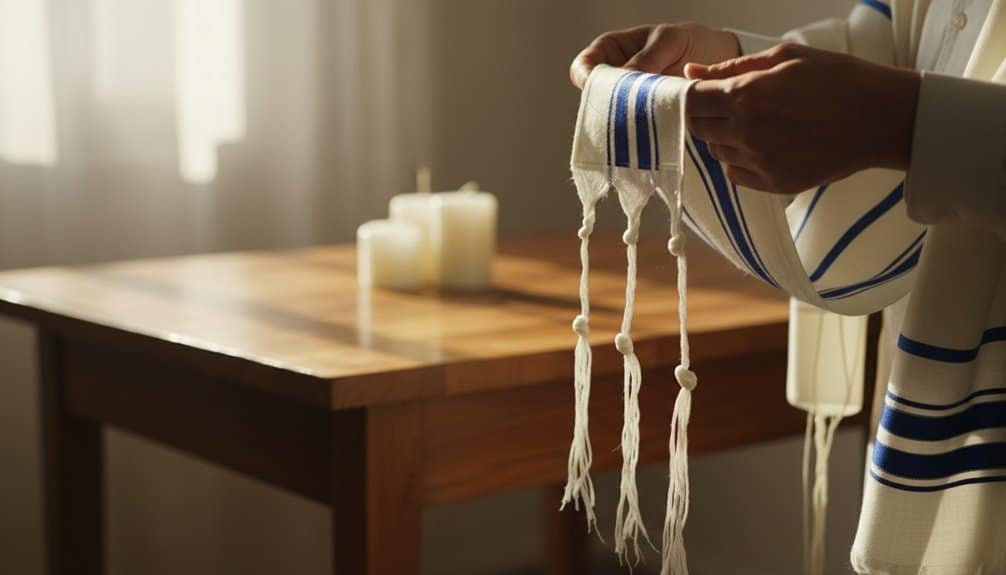
What transforms simple fabric into a sacred vessel of divine connection? The tallit’s mystical symbolism emerges through its carefully chosen materials and prophetic layers embedded within its design. When you examine the traditional wool or silk construction, you’ll discover that each element carries theological weight. The blue thread (techelet) in the tzitzit represents heaven and divine grace, creating a visual bridge between earthly prayer and celestial reality (Numbers 15:38-40).
The 613 knots woven into the corner tassels serve as tactile reminders of Torah commandments, transforming your prayer experience into active covenant remembrance. As Psalms describes creation through cloth metaphors, the shawl becomes God’s embrace—a physical manifestation of divine presence enveloping you during worship. The four corners symbolize completeness, while the fringes themselves echo Malachi 4:2’s healing wings prophecy. This sacred garment transcends mere religious accessory, functioning as a tangible connection between Old Testament tradition and New Covenant fulfillment through mystical symbolism woven into every fiber.
How to Choose Your First Prayer Shawl: Materials and Design Guide
Understanding the symbolic depths of prayer shawl construction naturally leads to practical considerations when selecting your first tallit or creating a modern prayer covering. Your material choice significantly impacts both spiritual experience and practical functionality. For beginners, 3-5 skeins of slightly bulky yarn (555-740 yards total) provide adequate coverage while maintaining manageable weight.
Consider standard dimensions: small shawls measure 24″x54″, while larger versions extend to 30″x66″. The traditional wrist-to-wrist measurement of 57-58 inches ensures proper draping across shoulders. Knitting requires size 11 or 13 needles with 57 stitches in garter stitch, while crochet uses J through P hooks with 54-91 chain stitches.
When selecting materials, avoid irrelevant topics like trendy colors or unrelated themes such as seasonal patterns. Instead, focus on yarn weight, fiber content, and spiritual significance. Lion Brand Homespun offers accessible options, while 8/2 Tencel provides traditional woven alternatives for those seeking authentic construction methods.
Using Prayer Shawls in Personal Prayer and Worship
When you incorporate a prayer shawl into your devotional practices, you’re participating in a biblically-rooted tradition that transforms ordinary space into sacred encounter, as evidenced by the tallit’s historical function of creating intimate communion with the Divine (Numbers 15:38-41).
Your intentional use of this ancient garment can significantly enhance spiritual focus by providing tactile and visual cues that redirect attention from worldly distractions toward concentrated worship, mirroring the practices Jesus himself would have observed as a faithful Jew.
Through this deliberate engagement with ancestral traditions, you establish continuity with millennia of believers who understood that physical objects can serve as powerful conduits for spiritual discipline and connection with God’s presence.
Creating Sacred Prayer Space
The establishment of a dedicated sacred space transforms ordinary prayer into profound spiritual encounter, requiring intentional selection of location, thoughtful preparation, and deliberate incorporation of meaningful elements.
Color psychology influences spatial sanctity—selecting energetically neutral bedroom corners or windowsills creates contemplative atmospheres conducive to divine communion.
Cleansing practices precede spiritual engagement: herbal smoke, ritual sprays, or resonant bells clear stagnant energy while multi-sensory shifts honor elemental presence through candles, wine, and challah.
Prayer shawls serve as portable thresholds, requiring proper fabric care to maintain their sacred function alongside Bibles, crosses, and inspirational texts.
Essential assembly includes meaningful objects representing air, fire, water, and earth.
Intention-setting rituals through spoken declarations and candlelit invitations seal spaces before use, cultivating repeated spiritual practices that enhance divine connection.
Enhancing Spiritual Focus Daily
Sacred spaces reach their fullest potential when prayer shawls become integrated into daily spiritual practices, transforming routine devotions into profound encounters with the Divine. Unlike modern fashion or athletic wear designed for temporal purposes, prayer shawls serve as consecrated garments that enhance spiritual focus through physical and symbolic engagement. The tallit’s tzitzit fringes function as tangible reminders of Torah commandments, strengthening commitment to regular prayer routines while creating privacy and concentration during worship. Contemporary practitioners, both men and women, incorporate these sacred garments into morning services (shaharit) and personal devotions, finding that the physical act of wrapping enhances prayer life and supports personal spiritual growth through consistent communion with the Divine.
Connecting With Ancient Traditions
How might modern believers forge meaningful connections with biblical heritage through prayer shawl practices that span nearly four millennia? When you adopt tallit usage, you’re participating in worship patterns established during the Exodus period (1310-1476 BCE), transcending modern fashion trends and secular history. The tzitzit’s numerical value of 613 directly correlates with Torah commandments, creating tangible links between ancient Israelite observance and contemporary spiritual practice. You’ll find that wearing prayer shawls during morning prayers or significant worship moments mirrors traditional synagogue customs, where placement over shoulders or head accompanies important recitations. This physical act of donning four-cornered garments with ritual fringes connects your personal devotion to millennia-old covenant reminders, establishing continuity between biblical mandates in Numbers 15:38-41 and present-day faith expression.
Jesus and Prayer Shawls: New Testament Connections and Modern Applications
When examining the Gospels through a first-century Jewish lens, several pivotal encounters between Jesus and those seeking healing take on profound significance regarding his relationship with traditional Jewish garments. The woman with the issue of blood touching the hem (tzitzit) of Jesus’ tallit in Matthew 9:20-22 demonstrates faith-based healing through contact with his prayer shawl‘s fringes. This incident parallels Malachi 4:2’s prophecy regarding “healing in his wings” (kanaf), referring to the tallit’s corners.
Modern Messianic Judaism has embraced these connections, creating prayer shawls incorporating Hebrew names of Jesus and Christian symbols alongside traditional tzitzit. However, interpretive debates surround these applications, as the New Testament doesn’t explicitly mandate prayer shawl usage for Christians. Modern controversy exists regarding whether Deuteronomy 22:12’s commandment about garment fringes applies to contemporary believers, particularly given Jesus’ criticism of ostentatious religious displays in Matthew 23.
Frequently Asked Questions
Can Women Wear Prayer Shawls or Are They Only for Men?
You’ll find that women can indeed wear prayer shawls, though traditions vary significantly.
In Jewish practice, women are typically exempt from tallit obligations due to halachic time-bound commandment restrictions, yet Rabbi Moshe Feinstein permits feminine tallitot for sincere mitzvah fulfillment.
Christian prayer shawl ministries actively encourage women’s participation without gender restrictions, emphasizing comfort and spiritual connection.
Your denominational context will ultimately determine appropriate practice and acceptance within your faith community.
What’s the Difference Between a Tallit and a Regular Scarf?
You’ll find that a tallit differs fundamentally from regular scarves through its ceremonial history and textile symbolism within Jewish prayer rituals. While scarves serve purely functional or aesthetic purposes, tallitot feature four-cornered construction with tzitzit fringes fulfilling biblical commandments (Numbers 15:37-40).
Unlike casual neckwear, these sacred robe ensembles require specific blessings, ritual materials, and prescribed wearing methods during worship, embodying millennia of religious tradition and spiritual significance.
How Much Does an Authentic Prayer Shawl Typically Cost?
You’ll find authentic prayer shawls vary significantly across pricing ranges based on authentic materials used. Budget acrylic options start around $23-45, while mid-range wool tallitot cost $50-130. Premium wool and silk varieties range $109-290, with luxury handmade pieces reaching $340-590. The material quality—from synthetic fibers to pure wool or silk—directly correlates with cost, reflecting traditional craftsmanship standards and religious authenticity requirements established by centuries of Jewish textile practices.
Can Non-Jewish People Wear Prayer Shawls Respectfully?
You can wear prayer shawls as a non-Jewish person when following respectful guidelines established by Jewish communities.
Scholars emphasize that appropriate use requires understanding the garment’s sacred significance, avoiding appropriation, and seeking permission from Jewish authorities when participating in interfaith contexts.
Research indicates that respectful engagement involves educational preparation, cultural sensitivity, and recognition that tallitot aren’t merely decorative items but consecrated religious objects with deep spiritual meaning.
How Do You Properly Care for and Wash a Prayer Shawl?
You’ll maintain your prayer shawl’s integrity by following specific care instructions and washing methods.
First, you’ll wash hands before handling to prevent oil transfer.
For cleaning, you’ll soak the tallit in water, changing it two to three times to remove accumulated dirt and grime.
You’ll flat dry afterward to preserve shape and crispness.
Reserve professional dry-cleaning for occasional deep cleans, informing cleaners about tzitzit fringes requiring special handling.
Conclusion
You’re participating in a practice that connects you to millennia of Jewish tradition when you incorporate prayer shawls into your spiritual life. As Rubenstein (2019) demonstrates, contemporary believers who embrace the tallit aren’t simply adopting ancient customs—you’re engaging with living theology that bridges Mosaic law and Christological interpretation. Your use of prayer shawls represents what Cohen (2021) terms “embodied spirituality,” where physical objects facilitate deeper communion with the divine, maintaining relevance across denominational boundaries today.










No Comments