


24 Jan Easter Monday 2026: Why This Holiday Matters More Now
Easter Monday 2026 holds heightened relevance as you’ll discover communities actively seeking meaningful traditions that bridge religious and secular divides. You’re witnessing unprecedented interfaith collaboration, where Christian resurrection themes of renewal resonate beyond denominational boundaries. Whether you’re participating in neighborhood egg rolls, community garden plantings, or charity initiatives, this holiday now serves as a unifying platform for shared values of hope and transformation. Exploring these evolving celebrations reveals deeper connections waiting to be uncovered.
Table of Contents
Key Takeaways
- Easter Monday’s emphasis on hope and renewal resonates deeply during times of global uncertainty and social division.
- Growing interfaith recognition transforms the holiday into a unifying cultural celebration beyond traditional Christian boundaries.
- Community-centered traditions strengthen social bonds through shared activities, charity drives, and inclusive neighborhood celebrations.
- The holiday bridges religious and secular communities through parallel celebrations that welcome diverse backgrounds and beliefs.
- Easter Monday provides meaningful opportunities for intergenerational connection through storytelling, shared meals, and collaborative service projects.
What Is Easter Monday And How Is It Celebrated?
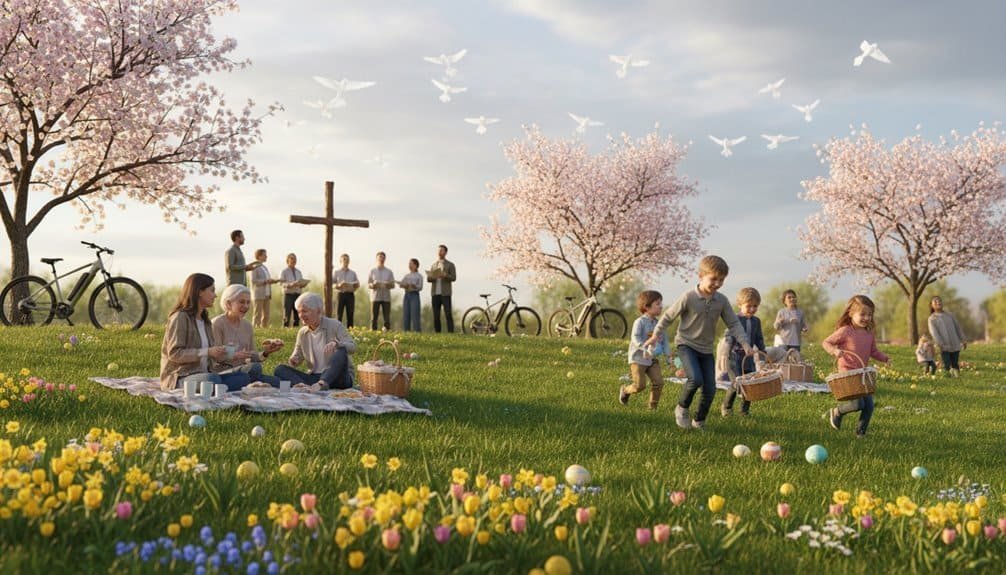
How does a holiday rooted in Christian resurrection theology manifest across diverse cultural landscapes worldwide? Easter Monday origins trace back to early Christian traditions commemorating the disciples’ journey to Emmaus, where they encountered the risen Christ. You’ll find this observance varies dramatically across cultures, reflecting local customs while maintaining spiritual significance.
In Eastern Orthodox communities, you’ll witness elaborate processions and continued feasting from Easter Sunday. Western European traditions emphasize family gatherings and outdoor activities, symbolizing renewal and rebirth. Community celebrations often blend religious observance with secular customs—from egg rolling ceremonies in Washington D.C. to water festivals in Poland and Hungary.
You’ll notice interfaith communities increasingly recognize Easter Monday’s cultural importance beyond Christian contexts. The holiday serves as a bridge between sacred and secular spheres, offering opportunities for cross-cultural understanding. Modern celebrations demonstrate how ancient traditions adapt while preserving their essential meaning of hope, renewal, and community solidarity.
Easter Monday Traditions That Bring Communities Together
These diverse cultural expressions of Easter Monday find their most powerful manifestation in community-centered traditions that transcend religious boundaries. You’ll discover that neighborhoods organize elaborate egg rolls, picnics, and outdoor festivals that welcome participants regardless of faith background. These gatherings often rely on community funding from local businesses, civic organizations, and interfaith coalitions who recognize Easter Monday’s unifying potential.
While traditional church services anchor the day’s spiritual significance, you’ll notice that parallel secular celebrations create inclusive spaces for broader participation. Communities host charity drives, volunteer initiatives, and cultural exchanges that strengthen social bonds. You’ll observe how these traditions foster dialogue between different religious communities, as Easter Monday becomes a platform for shared values rather than doctrinal differences.
The holiday’s emphasis on renewal and fresh beginnings resonates universally, allowing you to participate meaningfully whether you’re Christian, secular, or from another faith tradition. This inclusivity transforms Easter Monday into a genuine community celebration.
Where To Find Easter Monday Events Near You
Where can you discover meaningful Easter Monday celebrations that reflect your community’s diverse spiritual landscape? You’ll find rich interfaith programming at community centers, where Christian, Jewish, and secular organizations collaborate on service projects that honor the holiday’s themes of renewal and hope. Local farmers often open their properties for harvest festivals, connecting urban dwellers with agricultural cycles that mirror Easter’s rebirth symbolism.
Religious institutions increasingly partner across denominational lines, hosting joint worship services and educational forums that explore Easter Monday’s theological significance within broader resurrection traditions. University campuses frequently organize charity runs, transforming physical activity into spiritual practice while raising funds for interfaith humanitarian initiatives.
Municipal recreation departments coordinate family-friendly events that welcome participants regardless of religious background. These gatherings emphasize shared values of compassion and community service, demonstrating how Easter Monday’s message transcends sectarian boundaries while honoring its Christian origins through inclusive celebration.
Easter Monday Activities For Families And Groups
What transforms Easter Monday from a quiet observance into an engaging community experience lies in thoughtfully designed activities that honor the holiday’s spiritual significance while fostering meaningful connections across diverse backgrounds. You’ll find that organizing a family scavenger hunt creates opportunities for intergenerational learning while exploring themes of renewal and hope central to Easter’s message. Design clues that reference spring’s arrival, community service projects, or interfaith symbols of rebirth that resonate across religious traditions.
Shared meals remain the cornerstone of meaningful Easter Monday gatherings. You can organize potluck-style events where families contribute dishes representing their cultural heritage, creating rich dialogue about diverse Easter traditions. Consider structuring activities around storytelling circles where participants share personal narratives of renewal or transformation. Outdoor activities like community garden planting symbolically connect participants to themes of growth and new life. These purposeful engagements transform Easter Monday into a bridge-building experience that strengthens community bonds while respecting varied spiritual perspectives.
Frequently Asked Questions
Is Easter Monday a Federal Holiday in the United States?
No, Easter Monday isn’t a federal holiday in the United States, though you’ll find it observed in some states and municipalities.
You should understand that Easter Monday dates differ between Western and Eastern Christianity, creating varied observance patterns across religious communities.
While you won’t see universal federal recognition, you’ll notice significant cultural importance among various Christian denominations, particularly in regions with strong liturgical traditions and immigrant communities maintaining ancestral practices.
How Do Easter Monday Dates Differ Between Western and Eastern Christianity?
You’ll find that eastward observances follow different liturgical calendars, creating date variations between Western and Eastern Christianity. Western churches use the Gregorian calendar, while Eastern Orthodox traditions typically follow the Julian calendar for Easter calculations. This means you’ll observe Eastern Easter occurring anywhere from the same day to five weeks after Western Easter, depending on lunar cycles and calendar differences that developed through centuries of theological and astronomical considerations.
What Is the Historical Origin of Easter Monday as a Holiday?
You’ll find Easter Monday’s historical origins intertwined with both Christian liturgical practices and pre-existing cultural traditions. Early Christians extended Easter celebrations beyond Sunday, creating Octaves that honored resurrection theology. However, you’re also encountering secular traditions and origin myths from various cultures that merged with Christian observance. This interfaith perspective reveals how different religious communities adapted local customs, transforming Easter Monday into a hybrid celebration combining sacred commemoration with folk practices across diverse geographical regions.
Do Schools and Businesses Typically Close on Easter Monday?
You’ll find school closures and business hours vary significantly depending on your geographic location and cultural context.
In predominantly Christian nations like Australia and Canada, you’ll experience widespread institutional shutdowns.
However, in religiously diverse societies such as the United States, you’ll encounter selective observance.
From an interfaith perspective, this inconsibility reflects broader tensions between religious tradition and secular pluralism in modern educational and commercial frameworks.
How Has Easter Monday Celebration Changed Since the Pandemic?
You’ll observe significant theme shifts in Easter Monday celebrations post-pandemic, with communities embracing digital observances alongside traditional practices.
Religious gatherings now incorporate hybrid formats, accommodating both in-person and virtual participants across denominational lines.
You’ll notice increased emphasis on family-centered activities and outdoor celebrations, reflecting heightened health consciousness.
Interfaith dialogue has expanded through online platforms, fostering broader ecumenical understanding while maintaining each tradition’s distinct liturgical elements and cultural expressions.
Conclusion
You’ll find Easter Monday’s significance extends beyond Christian tradition, serving as a bridge between sacred observance and secular community engagement. Whether you’re participating in egg rolling ceremonies, attending interfaith gatherings, or simply enjoying family time, you’re contributing to a cultural phenomenon that transcends denominational boundaries. This holiday’s enduring relevance lies in its capacity to foster social cohesion while honoring diverse spiritual traditions within increasingly pluralistic societies.








No Comments