


21 Dec Bible Verses the 10 Commandments Word-For-Word
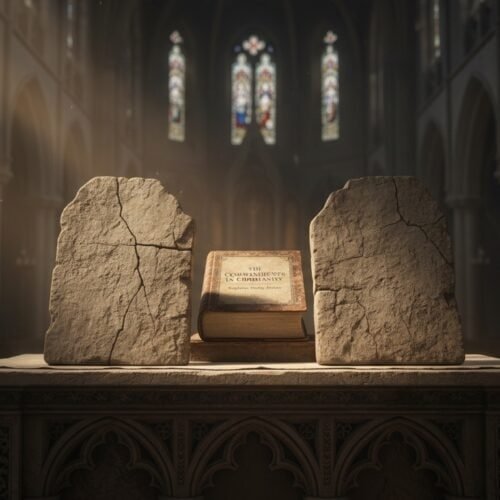
You’ll find the Ten Commandments in Exodus 20:1-17 and Deuteronomy 5:4-21, where God establishes fundamental moral law through ten precise directives. These commandments address your relationship with God (no other gods, no idols, reverent use of God’s name, Sabbath observance) and with others (honoring parents, prohibitions against murder, adultery, theft, false witness, and coveting). Given at Mount Sinai, they’ve shaped Judeo-Christian civilization’s ethical foundation for millennia. Understanding their original Hebrew context reveals deeper theological significance than surface translations suggest.
Table of Contents
Key Takeaways
- The Ten Commandments appear in Exodus 20:1-17 and Deuteronomy 5:4-21, establishing fundamental moral principles for covenant relationship with God.
- First four commandments address relationship with God: no other gods, no idols, reverent use of God’s name, and Sabbath observance.
- Fifth commandment requires honoring parents, bridging divine authority and human relationships while promising longevity for obedience.
- Commandments six through nine prohibit murder, adultery, stealing, and bearing false witness, protecting human life, marriage, property, and reputation.
- The tenth commandment uniquely addresses internal desires by forbidding coveting, establishing God’s authority over thoughts and motivations.
The First Commandment: No Other Gods Before Me

When examining the First Commandment, “You shall have no other gods before Me” (Exodus 20:3), you encounter the foundational principle that establishes Yahweh’s exclusive claim to divine authority over Israel.
This commandment doesn’t necessarily assert monotheism in the philosophical sense but demands practical monotheism—exclusive worship of Yahweh alone. The Hebrew phrase “al-panai” translates to “before My face” or “in My presence,” indicating that no rival deities can coexist with Yahweh’s sovereignty.
You’ll notice this commandment addresses Israel’s tendency toward idol worship, particularly relevant given their recent exodus from polytheistic Egypt and their impending entry into Canaan’s religiously diverse landscape. The commandment establishes covenant loyalty, demanding undivided allegiance.
The text presupposes other gods’ existence without affirming their legitimacy or power. You’re witnessing henotheism transitioning toward monotheism—acknowledging other deities while requiring exclusive devotion to Yahweh as Israel’s covenant God.
The Second Commandment: No Idols or Graven Images
You’ll find the Second Commandment in Exodus 20:4-6, where God explicitly forbids making carved images or likenesses of anything in heaven, earth, or water. This prohibition against idolatry extends beyond physical statues to encompass anything that replaces God’s rightful position in your worship and devotion.
Understanding both the Hebrew terminology and cultural context reveals how this ancient command applies to contemporary forms of misplaced worship and spiritual priorities.
Biblical Text and Translation
The second commandment prohibits the creation and worship of idols, establishing a fundamental principle that distinguishes Hebrew monotheism from surrounding ancient Near Eastern religions. You’ll find variations in biblical languages between Exodus 20:4-6 and Deuteronomy 5:8-10, though the core prohibition remains consistent.
The Hebrew terms *pesel* (carved image) and *temunah* (likeness) specify different types of representations. Ancient translations like the Septuagint render these concepts using Greek *eidolon* and *homoioma*, reflecting interpretive decisions that influenced later theological understanding.
When you examine the text carefully, you’ll notice the commandment extends beyond mere statue-making to encompass any representational worship that compromises divine transcendence. The prohibition’s scope continues generating scholarly debate regarding its application.
Meaning of Idolatry
Understanding idolatry requires examining its function as both physical representation and theological substitute for divine authority. You’ll find the Second Commandment addresses humanity’s tendency to create tangible objects representing the divine. Ancient Near Eastern cultures routinely crafted images believing they housed deities’ presence or power.
The Hebrew term “pesel” refers to carved images, while “temuwnah” denotes any likeness. You’re warned against creating substitutes that diminish God’s transcendent nature. Idolatry dangers extend beyond mere statue worship—they include elevating anything above God’s rightful position.
Modern idolatry temptations manifest through materialism, technology, or ideological systems. You must recognize that idolatry fundamentally represents misdirected worship, transferring devotion from Creator to creation. This commandment protects monotheistic faith‘s integrity by prohibiting competing objects of ultimate concern.
Modern Application Examples
Contemporary manifestations of the Second Commandment‘s prohibitions reveal themselves through humanity’s persistent tendency to elevate created things above their Creator. You’ll observe modern idolatry in society’s worship of wealth, where money becomes the ultimate security rather than God.
Technology often transforms into an idol when you prioritize devices over spiritual relationships. Career advancement can become idolatrous when professional success supersedes divine calling. Even religious practices risk becoming idolatrous when you focus more on rituals than relationship with God.
The commandment’s proper use requires you to recognize these subtle forms of modern idolatry. Responsible stewardship means acknowledging that material possessions, achievements, and even relationships are gifts from God, not substitutes for Him, demanding appropriate prioritization in your life.
The Third Commandment: Do Not Take the Lord’s Name in Vain

You’ll find the Third Commandment extends far beyond casual profanity to encompass the sacred reverence due to God’s name itself. When you examine the Hebrew text, “taking the Lord’s name in vain” (שָׁוְא) refers to emptiness, falsehood, or treating something holy as worthless through careless or deceptive speech.
Your understanding must encompass both ancient contexts—where invoking God’s name carried legal and spiritual weight—and modern applications that include false oaths, empty promises made in God’s name, and trivializing divine authority through irreverent speech.
Sacred Name’s True Meaning
The third commandment’s prohibition against taking the Lord’s name in vain extends far beyond casual profanity or irreverent speech. Understanding sacred name significance requires examining the Hebrew concept of “name” (shem), which encompasses one’s entire character, reputation, and essence.
The sacred name etymology reveals that God’s personal name YHWH (Yahweh) represents His eternal, unchanging nature and covenant relationship with humanity.
You’re called to honor God’s name through authentic worship and ethical conduct that reflects His character. Taking His name “in vain” (Hebrew: lashav) means using it emptily, falsely, or without substance. This includes making false oaths, empty promises invoking God, or claiming divine authority for personal gain. The commandment demands reverence for God’s holiness and integrity in representing His name.
Modern Misuse Examples
Modern society demonstrates numerous violations of the third commandment that extend well beyond casual profanity. You’ll find misuse manifesting when people invoke God’s name to justify personal agendas, political positions, or financial gain without genuine reverence.
Social media addiction reveals another violation—you’re essentially creating false idols while claiming divine blessing on superficial content. When you use religious language manipulatively in business dealings or make empty spiritual promises, you’re violating this commandment’s core principle.
Workplace distractions often include casual religious references that lack authentic meaning or respect. You’re also transgressing when you swear oaths carelessly, make promises “in God’s name” without intention to fulfill them, or use sacred terminology merely for emphasis. The commandment encompasses all hollow, disrespectful, or manipulative uses of divine names and attributes.
Respectful Speech Guidelines
While understanding violations helps clarify boundaries, implementing positive speech practices requires deliberate cultivation of reverence in your daily communication. You should approach God’s name with intentional reverence, using it only in prayer, worship, or genuine theological discussion.
When speaking about divine matters, maintain a respectful tone that reflects the sacred nature of your subject. This involves careful word choice and avoiding casual references to God merely for emphasis or expression.
Cultivate thoughtful dialogue when discussing faith, ensuring your words honor both God and your conversation partners. Replace careless exclamations with more appropriate expressions. Consider the weight of divine names before speaking them, remembering that reverent speech reflects your heart’s posture toward the Almighty.
The Fourth Commandment: Remember the Sabbath Day
This commandment establishes sabbath rest as both divine pattern and human necessity. You’ll notice the text grounds sabbath observance in creation itself, linking your weekly rhythm to God’s creative work.
The comprehensive nature encompasses your entire household, extending this sacred pause beyond personal practice to communal responsibility.
The Fifth Commandment: Honor Your Father and Mother

The Hebrew word “kabed” translates to “honor,” implying weightiness and gravity rather than mere obedience. This duty to parents extends beyond childhood compliance into adult responsibility for their welfare. You’re called to demonstrate respect for elders through practical care, emotional support, and maintaining their dignity.
Deuteronomy 5:16 reinforces this principle, emphasizing that honoring parents connects directly to covenant blessings. The commandment doesn’t require blind submission to parental authority when it conflicts with divine law, but it establishes an enduring obligation of reverence. This principle forms society’s foundational structure, teaching you proper relationships with all authority figures.
The Sixth Commandment: You Shall Not Murder
The Sixth Commandment’s Hebrew term “ratsach” carries specific theological weight that you must understand to grasp its full meaning within biblical law.
You’ll find that Scripture distinguishes between premeditated murder and other forms of taking life, such as accidental killing or divinely sanctioned warfare. This commandment establishes the foundational principle that human life possesses inherent sanctity because people are created in God’s image.
Sanctity of Human Life
Murder stands as one of humanity’s most serious transgressions, earning its place as the sixth commandment in God’s moral law given to Moses at Mount Sinai. You’ll discover that Scripture establishes the fundamental principle that all human life possesses inherent worth because humans bear God’s image (Genesis 1:27).
This divine imprint extends to every person regardless of age, ability, or circumstance. The sanctity of elderly life reflects God’s design for honoring those who’ve lived long (Leviticus 19:32). Similarly, the sanctity of disabled life demonstrates that physical or mental limitations don’t diminish one’s value before God.
You’re called to protect and preserve life, recognizing that each person carries divine dignity that makes murder an offense against both humanity and God Himself.
Biblical Murder Distinctions
Several critical distinctions emerge when examining biblical teachings on unlawful killing, as Scripture differentiates between intentional murder and other forms of taking life.
You’ll find that Hebrew law establishes clear manslaughter distinctions, particularly between premeditated murder (ratsach) and accidental killing. Numbers 35:11-25 outlines cities of refuge for those who kill unintentionally, demonstrating God’s justice system recognizes different degrees of culpability.
Scripture also acknowledges justified killing in specific circumstances, including capital punishment for certain crimes (Genesis 9:6) and warfare commanded by God. Deuteronomy 19:4-6 further clarifies that someone who kills accidentally without prior enmity isn’t guilty of murder. These distinctions reveal that the sixth commandment specifically prohibits unlawful, intentional murder rather than all forms of taking life.
The Seventh Commandment: You Shall Not Commit Adultery
Fidelity within marriage stands as the cornerstone of the seventh commandment, which declares “You shan’t commit adultery” (Exodus 20:14). This prohibition establishes marital fidelity as fundamental to God’s design for human relationships, protecting the sacred covenant between spouses.
The Hebrew term *na’aph* specifically refers to extramarital sexual relations, emphasizing sexual purity within marriage’s boundaries. You’ll find this commandment reinforced throughout Scripture, including Jesus’ expansion in Matthew 5:27-28, where He addresses adultery’s heart condition: “But I tell you that anyone who looks at a woman lustfully has already committed adultery with her in his heart.”
Ancient Near Eastern cultures often treated adultery primarily as property violations against husbands, but biblical law elevates it to spiritual significance. The commandment protects marriage’s integrity, ensuring trust, commitment, and exclusive devotion between partners. This divine standard maintains social stability while reflecting God’s faithful relationship with His people.
The Eighth Commandment: You Shall Not Steal
Property rights find their divine foundation in the eighth commandment, which states “You shan’t steal” (Exodus 20:15). This concise prohibition establishes fundamental principles of justice and respect for others’ possessions.
The eighth commandment’s divine prohibition against theft establishes timeless principles of justice and respect for personal property rights.
The Hebrew term “ganab” encompasses various forms of unlawful appropriation, extending beyond mere theft to include deception, fraud, and exploitation.
You’ll find this commandment addresses depriving others of property through multiple means. Ancient Near Eastern contexts reveal stealing often involved livestock, grain, or personal belongings essential for survival. The principle transcends material goods, encompassing time, labor, and reputation.
The commandment’s brevity reflects its universal application across cultures and centuries. It presupposes legitimate ownership and condemns violations of trust within community relationships.
Modern interpretations include intellectual property theft, tax evasion, and workplace dishonesty. This divine directive protects both individual rights and social stability, recognizing that respect for others’ property reflects deeper respect for human dignity and divine authority.
The Ninth Commandment: You Shall Not Bear False Witness
When truth becomes casualty in human discourse, the ninth commandment provides divine protection through its declaration “You shan’t bear false witness against your neighbor” (Exodus 20:16). This commandment establishes truthfulness as foundational to covenant community, protecting individuals from judicial corruption and social destruction.
The Hebrew term “shaqer” encompasses false testimony, perjury, and deliberate deception in legal proceedings. You’ll notice this commandment originally addressed courtroom settings where witnesses held life-and-death power over accused persons. False testimony could result in wrongful execution, property seizure, or permanent social disgrace.
Beyond legal contexts, you’re called to embrace comprehensive honesty in relationships. The commandment prohibits spreading rumors, engaging in character assassination, or distorting facts about others. Your words carry moral weight, capable of building up or tearing down your neighbor’s reputation.
This divine mandate recognizes that truth-telling preserves social fabric, ensures justice, and reflects God’s character as the source of all truth.
The Tenth Commandment: You Shall Not Covet
Unlike the previous nine commandments that primarily regulate external actions, the tenth commandment penetrates the human heart with its declaration “You shan’t covet your neighbor’s house, your neighbor’s wife, or his male servant, or his female servant, or his ox, or his donkey, or anything that belongs to your neighbor” (Exodus 20:17).
This commandment addresses internal desires rather than outward behavior, establishing divine authority over human thoughts and motivations. The Hebrew word “chamad” encompasses intense longing that leads to scheming and potential action. You’ll notice the comprehensive list—house, spouse, servants, livestock—represents every aspect of ancient Near Eastern wealth and social status.
The commandment’s significance extends beyond avoiding materialism; it cultivates godly contentment by redirecting focus from what others possess to gratitude for God’s provisions. When you covet, you’re essentially questioning God’s wisdom in distributing blessings. This final commandment serves as the foundation for all others, since coveting often motivates theft, adultery, murder, and false witness.
Frequently Asked Questions
Are There Different Versions of the Ten Commandments in Different Bible Translations?
Yes, you’ll find significant variation between translations of the Ten Commandments across different Bible versions. Hebrew textual nuances create interpretive challenges that translators handle differently.
You’ll notice denominational interpretation influences these differences—Catholics, Protestants, and Orthodox traditions number and divide the commandments distinctly. Translation choices regarding Hebrew terms like “kill” versus “murder” demonstrate how linguistic decisions affect meaning and theological understanding across faith communities.
Where Exactly in the Bible Are the Ten Commandments Found?
You’ll find the Ten Commandments in two primary locations within Scripture: Exodus 20:1-17 and Deuteronomy 5:4-21.
The location of ten commandments in these passages provides crucial context for biblical interpretation of commandments, as each account offers slightly different wording and emphasis.
Exodus presents them following Israel’s deliverance from Egypt, while Deuteronomy records Moses’ recounting before entering the Promised Land, reflecting distinct theological purposes.
Why Do Some Religions Number the Ten Commandments Differently?
You’ll find different numbering systems because religious interpretations vary regarding how to divide the commandments within the biblical text. Cultural influences shaped these traditions: Catholics and Lutherans combine the prohibitions against other gods and graven images, while Orthodox and Reformed traditions separate them.
Jews count the preamble as the first commandment. These distinctions reflect theological emphasis rather than textual differences in Scripture.
Did Jesus Replace or Fulfill the Ten Commandments in the New Testament?
Jesus fulfilled rather than replaced the Ten Commandments according to gospel fulfillment theology. You’ll find in Matthew 5:17 that Christ explicitly states he came “not to abolish but to fulfill” the law.
Through contextual analysis, you can see Jesus internalized these moral principles, emphasizing heart attitudes over mere external compliance. He deepened their meaning while maintaining their essential ethical framework for Christian living.
How Do the Ten Commandments Apply to Modern Christian Life Today?
You’ll find the Ten Commandments remain foundational principles for Christian living, though Christ’s fulfillment transforms their application. They guide your worship practices, including daily prayer habits that honor God’s supremacy.
Your financial stewardship reflects commandments against coveting and stealing, emphasizing generous giving and honest dealings. While you’re not bound by ceremonial law, these moral imperatives shape your character, relationships, and ethical decisions through the Spirit’s empowerment rather than legalistic obligation.
Conclusion
You’ve encountered the Ten Commandments as foundational ethical principles that’ve shaped Western civilization for millennia. These divine imperatives aren’t merely ancient regulations—they’re timeless moral guidelines that continue influencing contemporary legal systems and ethical frameworks. When you study these commandments within their biblical context, you’ll discover they establish both vertical relationship with God and horizontal relationships with humanity. They’ve transcended their ancient Near Eastern origins to become universal principles governing human conduct and spiritual devotion.











No Comments