

24 Apr Acts 2: The Holy Spirit’s Pentecost Descent Explained
You’ll see that Pentecost in Acts 2 is rooted in the Jewish feast of Shavuot, when the Law was given at Sinai, and the Holy Spirit’s thunderous roar and tongues of fire fulfill that ancient covenant promise. The sound like a deep, resonant wind fills the house, while flames of golden‑amber‑blue settle on each disciple, signaling God’s unmistakable presence. After the echo fades, they speak in many languages, and Peter explains the fulfillment of Joel’s prophecy, Jesus’ resurrection, and the Spirit dwelling within believers. Keep going and you’ll discover how those symbols translate into today’s bold, Spirit‑empowered life.
Table of Contents
Pentecost’s Historical Context in Acts 2
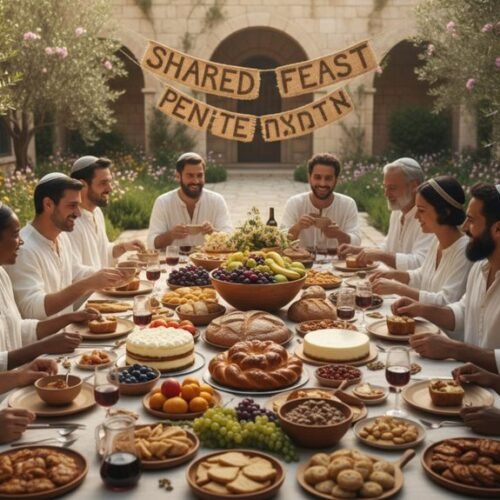
When you read Acts 2, you’ll notice that the Pentecost event isn’t just a random miracle; it’s rooted in the Jewish feast of Shavuot, which commemorated the giving of the Torah at Sinai and celebrated the first harvest. You stand in Jerusalem during the week of Shavuot, when pilgrims from every province gathered in the Temple courts, offering sacrifices and sharing meals. This timing signals that the Holy Spirit’s outpouring fulfills a covenantal promise: God’s presence that once dwelt on Sinai now descends on the people gathered to receive the Law. The Jews of that era understood Shavuot as a celebration of divine instruction and agricultural bounty, so the Spirit’s arrival links revelation with provision. Recognizing this backdrop helps you see the event as a purposeful climax of Israel’s history, not an isolated spectacle, and it frames the disciples’ ensuing bold proclamation of the gospel.
How the Holy Spirit Appeared: Sound and Flames
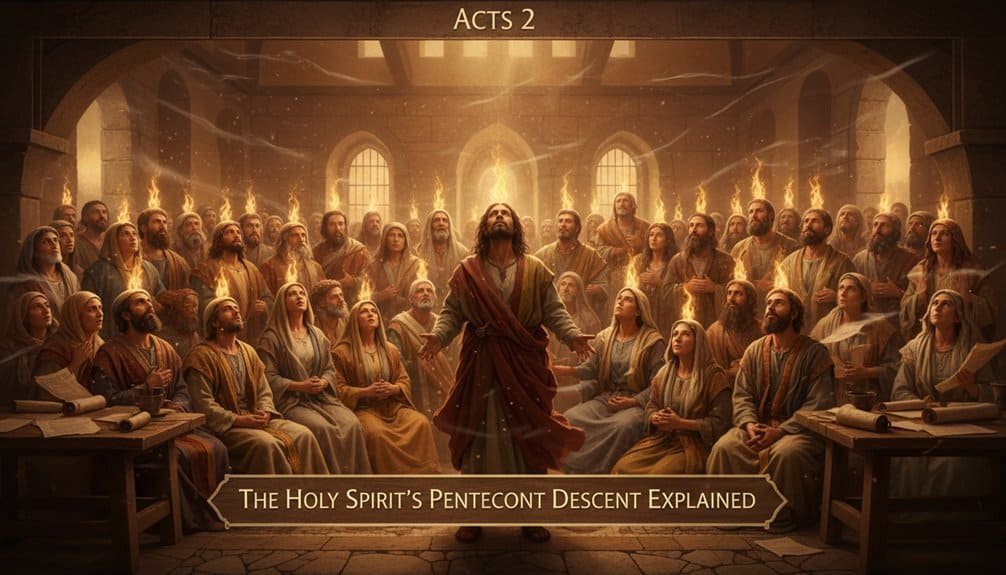
What makes the Pentecost scene unforgettable is the sudden, thunderous sound that filled the house where the disciples gathered, accompanied by tongues of fire that settled on each of them. You feel the wind‑like rush of the Spirit as a deep, resonant roar that seems to echo from the heavens and vibrate through the walls. The sound isn’t a random noise; it’s a divine proclamation that commands attention, cutting through ordinary chatter.
Simultaneously, visible flames flicker, not consuming but illuminating, each disciple’s head like a halo of holy light. You notice the fire’s colors shift—golden, amber, and a faint blue—signifying purity and power. The combination of auditory force and visual brilliance convinces you that the Holy Spirit has arrived, transforming the room from a quiet gathering into a sacred arena where God’s presence is unmistakably real.
Pentecost Aftermath: Speaking in Languages & Peter’s First Sermon
The roar and flames fade, but their echo lingers as the disciples suddenly find themselves speaking in tongues no one understands. You watch the crowd gasp, bewildered by the sudden chorus of foreign sounds. The Holy Spirit’s gift turns chaos into a bridge; each speaker conveys the same message in a language familiar to his listener. As the bewilderment settles, Peter rises, his voice steady despite the surrounding frenzy. He seizes the moment, explaining that this phenomenon fulfills Joel’s prophecy and points to Jesus’ resurrection. You feel the urgency in his words, urging repentance and baptism. He links the miracle to Christ’s crucifixion, declaring that the promised Holy Spirit now dwells within believers. The crowd’s hostility melts into curiosity, and you notice the first seeds of the early church taking root, sparked by a divine, multilingual proclamation.
Pentecost Symbolism: Tongues of Fire for Early Believers
Flames leapt from the ceiling, not just as a dramatic backdrop but as a vivid symbol of the Holy Spirit’s presence, turning ordinary believers into living torches of faith. You see the tongues of fire as more than spectacle; they embody divine empowerment that ignites boldness and clarity. Each flicker marks a personal encounter, a moment when the Spirit’s heat purifies doubts and fuels missionary zeal. The fire’s color—bright, unconsuming—signals purity, while its movement suggests the Spirit’s dynamic, spreading influence among the crowd. You recognize that these tongues don’t burn flesh; they illuminate hearts, making every word spoken a beacon for those listening. The imagery also links to Old Testament the, reminding you that God’s presence has always been accompanied by fire, a sign of holiness and transformative power. As you reflect, the flames become a template for your own spiritual awakening, urging you to become a radiant conduit of the Spirit’s love.
Pentecost’s Practical Implications for Today’s Christians
How does Pentecost shape your daily walk with Christ? You feel the Spirit’s fire urging you to love boldly, pray persistently, and serve selflessly. That same power equips you to share the Gospel without fear, trusting the Holy Spirit to guide your words. In your workplace, you become a peacemaker, letting the Spirit’s wisdom resolve conflicts. At home, you model forgiveness, letting the Holy Spirit soften hardened hearts. Your decisions reflect divine insight, because you ask the Spirit before acting. Community life transforms as you pursue unity, remembering the early believers’ shared resources and mutual care. The gifts of encouragement, teaching, and compassion flow naturally, not from effort but from the Spirit’s prompting. Ultimately, Pentecost turns routine chores into worship opportunities, letting every moment echo the heavenly chorus that began on that first Pentecost.
Frequently Asked Questions
What Date Does Pentecost Fall on Each Year?
Pentecost falls fifty days after Easter, so its date changes each year. You’ll need to calculate Easter first—usually the first Sunday after the first full moon following the March equinox—then count fifty days forward. In 2024, Easter is March 31, making Pentecost May 19. In 2025, Easter lands March 23, so Pentecost is May 11. Use a calendar or online calculator for any other year.
Did the Holy Spirit Descend on All Believers at Once?
You’ll find that the Holy Spirit didn’t descend on every believer simultaneously. In the firstcent, the Spirit fell on the gathered disciples in a dramatic, public outpouring, empowering them for witness.
Later, as Christianity spread, each person experienced the Spirit individually—through baptism, prayer, or personal conviction—so the initial event sparked a continual, personal indwelling rather than a one‑time, universal activation.
How Long Did the Sound of the Wind Last?
You’ll hear that the wind’s sound lasted only a few seconds, enough for the crowd to notice a sudden, powerful rush. The narrative says a “mighty wind” blew, and the disciples felt an immediate, intense presence. It isn’t described as a prolonged roar; it’s a brief, dramatic burst that signals the Spirit’s arrival, then the tongues of fire appear, marking the event’s climax.
Are the “Tongues” Literal or Metaphorical?
You’ll find that the “tongues” in Acts 2 are understood both ways, but most scholars treat them as literal languages.
The text says people heard “the sound of a mighty wind” and then heard each other speaking in “their own tongues,” which implies actual foreign languages.
Yet some traditions view the event symbolically, representing the Spirit’s ability to communicate across cultures.
Can Non‑Christians Experience the Holy Spirit’s Fire?
You can feel the Holy Spirit’s fire even if you’re not a Christian, because the Spirit isn’t limited to a single religion. Many people report profound inner warmth, conviction, or transformative insight during prayer, meditation, or moments of deep compassion. Those experiences often align with what Scripture describes as the Spirit’s fire—purifying, empowering, and drawing hearts toward truth. So, while the theological framing may differ, the fire can touch anyone open to it.
Conclusion
You’ve seen how Pentecost turned a modest gathering into a fiery launchpad for the church. The Spirit’s sound and flames sparked bold speech, united believers across languages, and gave Peter the courage to proclaim Christ. Today, that same fire fuels your faith, urging you to share the gospel, embrace diversity, and walk confidently in the Spirit’s power, just as the early disciples did.






No Comments