

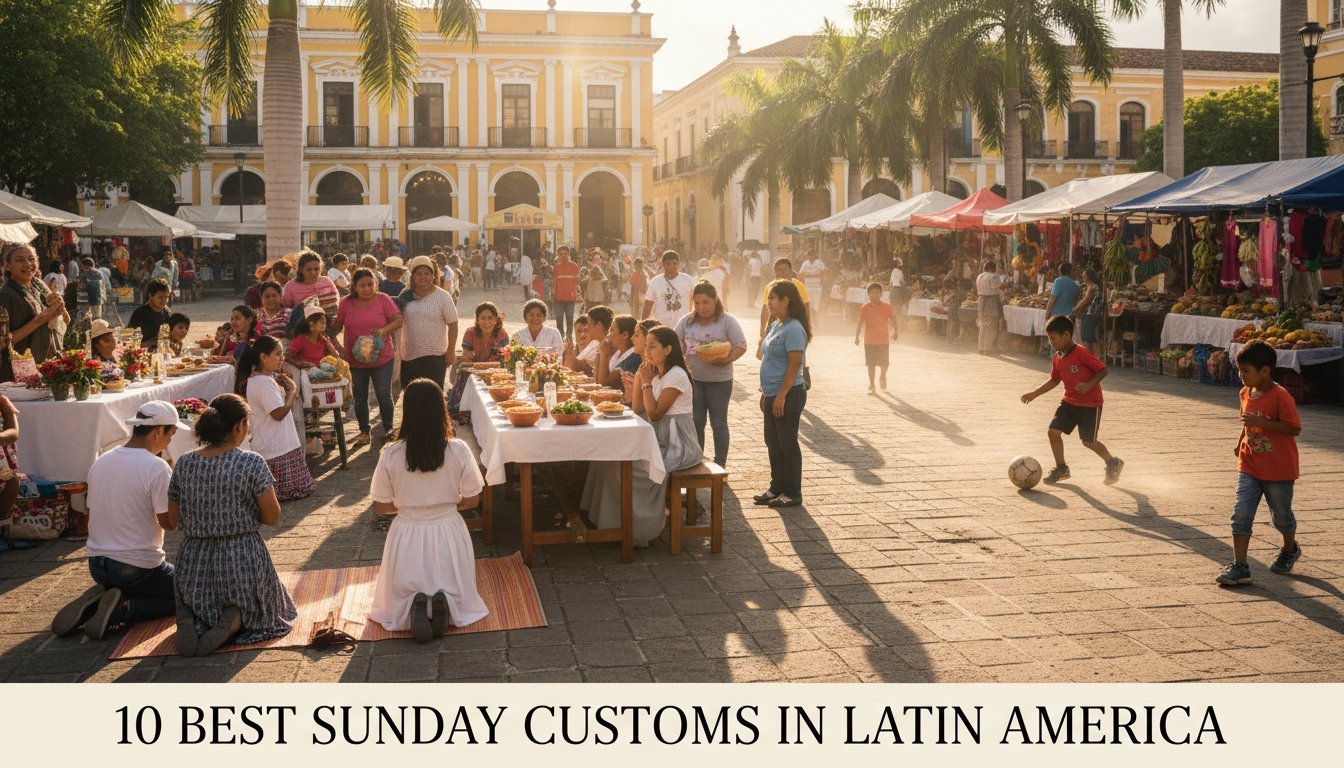
28 Feb 10 Best Sunday Customs in Latin America
You’ll find vibrant floral parades, the blessing of palm fronds and crosses, dramatic reenactments of Jesus’ entry, sharing symbolic branches with loved ones, celebratory Palm Sunday masses, hearty communal meals, charitable community service, captivating storytelling, and lively regional festivals across Latin America. These rich customs showcase the deep faith and cultural heritage of these communities – and there’s even more to discover.
Table of Contents
Key Takeaways
- Vibrant floral processions with decorated palm fronds and flowers are a hallmark of Palm Sunday celebrations across Latin America.
- Palm fronds and crosses are blessed on Palm Sunday to represent Christ’s entry into Jerusalem, and these blessed items are displayed in homes.
- Reenactments and dramatic performances commemorate Jesus’ triumphant entry into Jerusalem, with costumed actors, parades, and theatrical productions.
- Families gather to exchange blessed palms and olive branches, symbolizing peace, prosperity, and divine protection, reinforcing unity and faith within communities.
- Palm Sunday meals feature traditional dishes like fried or roasted pork, fish, hearty stews, and tamales wrapped in palm leaves, enabling families to commemorate the day together.
Welcoming Palm Sunday With Floral Processions
What better way to welcome Palm Sunday than with vibrant floral processions across Latin America? From Mexico to Brazil, worshippers carry elaborately decorated palm fronds and flowers through the streets, celebrating the holiday in a colorful display. In some regions, parades feature colorful costumes, music, and dancing, creating a festive atmosphere. The processions often culminate at churches, where the blessed palms are distributed to the faithful. These traditions not only honor the religious significance of the day but also showcase the rich cultural heritage of Latin American communities. Whether you witness the processions in Antigua, Guatemala or Popayán, Colombia, you’ll be captivated by the joy and reverence that radiates from these vibrant celebrations.
Blessing Palm Fronds and Crosses
On Palm Sunday, you’ll witness the symbolic blessing of palm fronds and crosses. These sacred objects represent Christ’s triumphant entry into Jerusalem.
Embracing this cultural tradition connects you to the deep spiritual significance of the day.
Symbolic Spiritual Significance
Why do many Latin Americans engage in the symbolic and spiritual practice of blessing palm fronds and crosses on Palm Sunday? This tradition reflects the deep-rooted Catholic faith in the region. Palms and crosses represent Jesus’ triumphant entry into Jerusalem and his crucifixion. By blessing these symbols, worshippers seek divine protection and grace. The ritual connects the faithful to their religious heritage while reinforcing community bonds. It’s a solemn yet joyful occasion, a chance to pause, reflect, and renew one’s spiritual commitment. From Mexico to Argentina, this custom endures, a testament to the abiding role of faith in Latin American culture.
Cultural Traditions Observed
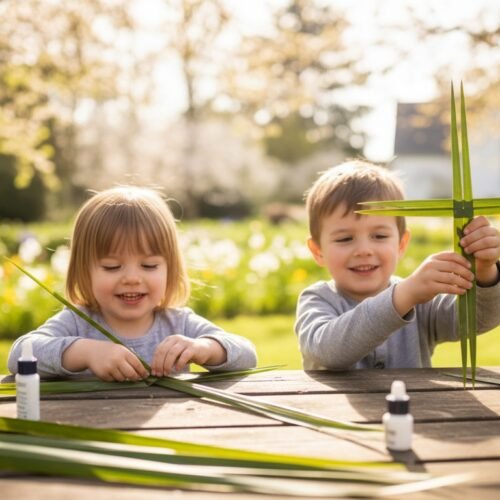
The blessing of palm fronds and crosses is a cherished cultural tradition observed across Latin America on Palm Sunday. Families attend church services to have their palm leaves and handcrafted crosses blessed, symbolizing Jesus’s triumphant entry into Jerusalem. After the ceremony, people proudly display the blessed items in their homes, believing they bring protection and good fortune. Some even weave the fronds into intricate designs or use them to adorn their homes. This ritual connects generations, as elders teach younger family members the proper techniques. The blessed palms and crosses serve as a reminder of the region’s deep-rooted Catholic heritage and the enduring spiritual traditions that unite Latin American communities.
Reenactments and Dramatic Performances of Jesus’ Entry Into Jerusalem
What better way to commemorate Jesus’ triumphant entry into Jerusalem than through reenactments and dramatic performances? Throughout Latin America, passionate locals bring this biblical event to life on Palm Sunday. In Mexico, costumed actors parade through the streets atop donkeys, waving palm fronds and chanting hosannas.
Peruvians craft intricate sand murals depicting the scene, then artfully destroy them to symbolize Christ’s sacrifice.
Colombians perform lively parades featuring robed figures on horseback, while Venezuelans enact the story through grand processions and theatrical productions. These vibrant displays capture the reverence and joy of the original occasion, allowing participants to feel immersed in the sacred narrative. For many, these annual reenactments are a cherished tradition that strengthens community bonds and spiritual connections.
Sharing Palms and Olive Branches With Loved Ones
On Palm Sunday, it’s customary to share palms with loved ones. The palms symbolize peace, while blessed olive branches represent blessings. This meaningful ritual has been passed down through generations in Latin America.
Sharing Palms Symbolizing Peace
Why not start your Sunday by sharing palms and olive branches with your loved ones? This Latin American custom symbolizes peace and connection. Gather fresh palms and olive branches, then distribute them to your family and friends. As you hand them out, wish for harmony and prosperity in the week ahead. The leaves represent fertility, renewal, and divine protection. By exchanging these natural gifts, you’ll deepen your bonds and cultivate a spirit of unity. It’s a simple yet meaningful ritual that honors your community. Embrace this tradition and let the soothing greenery inspire a tranquil mindset as your day unfolds.
Blessing Olive Branches Representation Blessings
The blessing of olive branches holds deep significance in Latin American traditions. On Sundays, families gather to have their olive branches blessed, symbolizing peace, prosperity, and divine protection. As the priest sprinkles holy water over the branches, the congregation feels a sense of reverence and unity. The blessed olive branches are then taken home and displayed prominently, reminding everyone of the blessings received. This ritual connects the community, fostering a spirit of togetherness and faith. The olive branch, a timeless symbol of peace, becomes a tangible representation of the blessings bestowed upon the faithful on this sacred day.
Tradition Passed Generations Meaningful Ritual
As the generations pass, the meaningful ritual of sharing palms and olive branches with loved ones on Sundays remains a cherished tradition in Latin American communities.
You’ll find families gathering, young and old, to exchange these symbolic blessings.
The act of passing down this custom connects you to your heritage, reminding you of the significance these plants hold.
Whether it’s the olive branch representing peace or the palm frond signifying triumph, the ritual imbues your Sundays with profound meaning.
It’s a time-honored practice that strengthens bonds, instills values, and ensures this tradition continues to be honored for generations to come.
The Traditions of Palm Sunday Mass
What customs do worshippers observe during Palm Sunday Mass throughout Latin America? They’ll wave palm fronds, representing Jesus’ triumphal entry into Jerusalem. Priests bless the palms before the service, then distribute them to the congregation. Congregants weave the palms into crosses or other decorations, which they’ll display in their homes for the year. During the Mass, worshippers may reenact Jesus’ procession by processing into the church while waving the palms. The priest’s homily focuses on Jesus’ final days before his crucifixion. After Mass, families may gather for a special Palm Sunday meal, often including fried or roasted pork. These meaningful rituals connect worshippers to the religious and cultural traditions of their ancestors.
Decorating With Palm Leaves and Olive Branches
How do worshippers across Latin America decorate their homes with palm leaves and olive branches for Palm Sunday? They weave the leaves into intricate patterns, adorning doorways, mantles, and tables. The rich green hues and soft textures evoke the triumphant entry of Jesus into Jerusalem.
Olive branches, symbols of peace, accompany the palms, creating a visually stunning display. Families gather to carefully craft these decorations, passing down techniques from generation to generation. The process is as much a sacred ritual as the Mass itself, connecting the faithful to centuries of tradition.
These humble natural elements transform homes into sanctuaries, reminding all who enter of the solemn yet joyous occasion celebrated on this holy day.
Symbolic Meals and Feasts for Palm Sunday
Across Latin America, families gather to partake in symbolic meals and feasts on Palm Sunday. The festivities often revolve around food that holds deep religious significance. In some regions, it’s customary to serve fish, as it represents Jesus. In others, a hearty stew made with pork and vegetables, known as “platillo de ramos,” is the centerpiece. Tamales wrapped in palm leaves are also common, symbolizing Christ’s triumphant entry into Jerusalem. These communal meals allow families to commemorate the holy day, passing down traditions and fostering a sense of unity.
Beyond the symbolic dishes, the gatherings often include prayers, hymns, and lively discussions about the meaning of Palm Sunday. This annual ritual nourishes both the body and the spirit, strengthening the bonds within the community.
Community Service and Charitable Acts
In addition to symbolic meals, many Latin American communities dedicate Palm Sunday to community service and charitable acts.
You’ll find locals volunteering at soup kitchens, collecting donations for the less fortunate, and organizing cleanup efforts in their neighborhoods.
Some parishes even encourage parishioners to bring canned goods or clothing to be distributed to those in need.
It’s a day to reflect on the meaning of Palm Sunday and put faith into action by giving back to the community.
Palm Sunday is a day to contemplate its meaning and express faith through community service and charitable giving.
These acts of service bring people together and foster a sense of unity, embodying the spirit of the holiday.
Storytelling and Folkloric Celebrations
Alongside the community service on Palm Sunday, many Latin American communities celebrate the day through rich storytelling and folkloric traditions. Elders gather family and neighbors to recount ancient tales of spiritual significance, often passed down orally for generations. Vibrant reenactments of religious and cultural histories bring these stories to life, captivating all who witness. Colorful costumes, lively music, and traditional dances further immerse participants in the festivities. These folkloric celebrations reinforce community bonds and preserve cherished legacies. Whether recounting the origins of a local legend or commemorating a patron saint, the storytelling and performances on Palm Sunday offer a window into the diverse cultural tapestry of Latin America.
Parades, Pageants, and Festivals Honoring Palm Sunday
While many Latin American communities venerate Palm Sunday through community service and storytelling, others celebrate the day with vibrant parades, pageants, and festivals. You’ll find colorful processions in Mexico, where costumed participants reenact Christ’s triumphant entry into Jerusalem. Across the region, towns host theatrical performances depicting biblical events, with actors portraying Jesus, his disciples, and Roman soldiers. In Guatemala, the Antigua Procesión de Palmas is a grand affair, with intricate carpets of flowers and sawdust lining the streets. Likewise, Brazil’s Semana Santa celebrations boast lively parades, lively music, and elaborate religious floats. These vibrant events not only honor the sacred holiday but also showcase each community’s rich cultural heritage.
Frequently Asked Questions
What Is the Significance of the Palm Leaves in Latin American Palm Sunday Traditions?
Palm leaves in Latin American Palm Sunday traditions symbolize Jesus’ triumphant entry into Jerusalem. They’re carried in processions, blessed, and taken home to be placed in homes, businesses, and churches. The leaves represent hope, renewal, and God’s protection. They’re used throughout the year as sacramentals, reminding you of Christ’s sacrifice and your own spiritual journey.
Are There Any Differences in Palm Sunday Celebrations Between Various Latin American Countries?
Absolutely! Palm Sunday celebrations vary across Latin America.
Venezuelans weave palm leaves into intricate crosses, while Nicaraguans carry giant palm leaves during processions.
Mexicans create colorful “palmas” with ribbons and flowers.
Brazilians bless palms and distribute them to the congregation.
Each country has unique traditions that reflect their cultural heritage and religious beliefs, making Palm Sunday a diverse and vibrant celebration throughout the region.
How Do the Palm Sunday Traditions in Latin America Compare to Those in Other Parts of the World?
Palm Sunday traditions in Latin America often feature more vibrant processions, with colorful costumes, music, and the blessing of palm fronds. This contrasts with the more somber, solemn tones found in other parts of the world. You’ll also find unique local elements, like the decoration of altars with flowers and fruits, that reflect the region’s cultural heritage.
Are There Any Unique or Lesser-Known Palm Sunday Customs Practiced in Certain Latin American Regions?
Absolutely! In parts of Latin America, it’s common to see unique Palm Sunday rituals. For instance, in Mexico, people create elaborate palm leaf decorations called “palmitas” that they’ll carry in processions.
In Ecuador, some communities weave intricate palm leaf crosses to hang in their homes.
And in Brazil, it’s popular to bless small palm crosses to keep in one’s possession throughout the year.
How Do the Palm Sunday Celebrations in Latin America Reflect the Local Culture and History?
The Palm Sunday celebrations in Latin America reflect the local culture and history through the use of unique regional palms, processions reenacting Christ’s entry into Jerusalem, and the incorporation of indigenous traditions.
You’ll find vibrant colors, lively music, and community gatherings that blend Catholic and pre-Columbian elements, creating meaningful celebrations rooted in the diverse heritage of the continent.
Conclusion
You’ll find that many Latin American communities come together on Palm Sunday to celebrate their faith and heritage through colorful processions, symbolic meals, and joyful festivities. Whether it’s blessing palm fronds or reenacting Jesus’ entry into Jerusalem, these cherished customs help strengthen the bonds of community and keep traditions alive across generations.







No Comments