

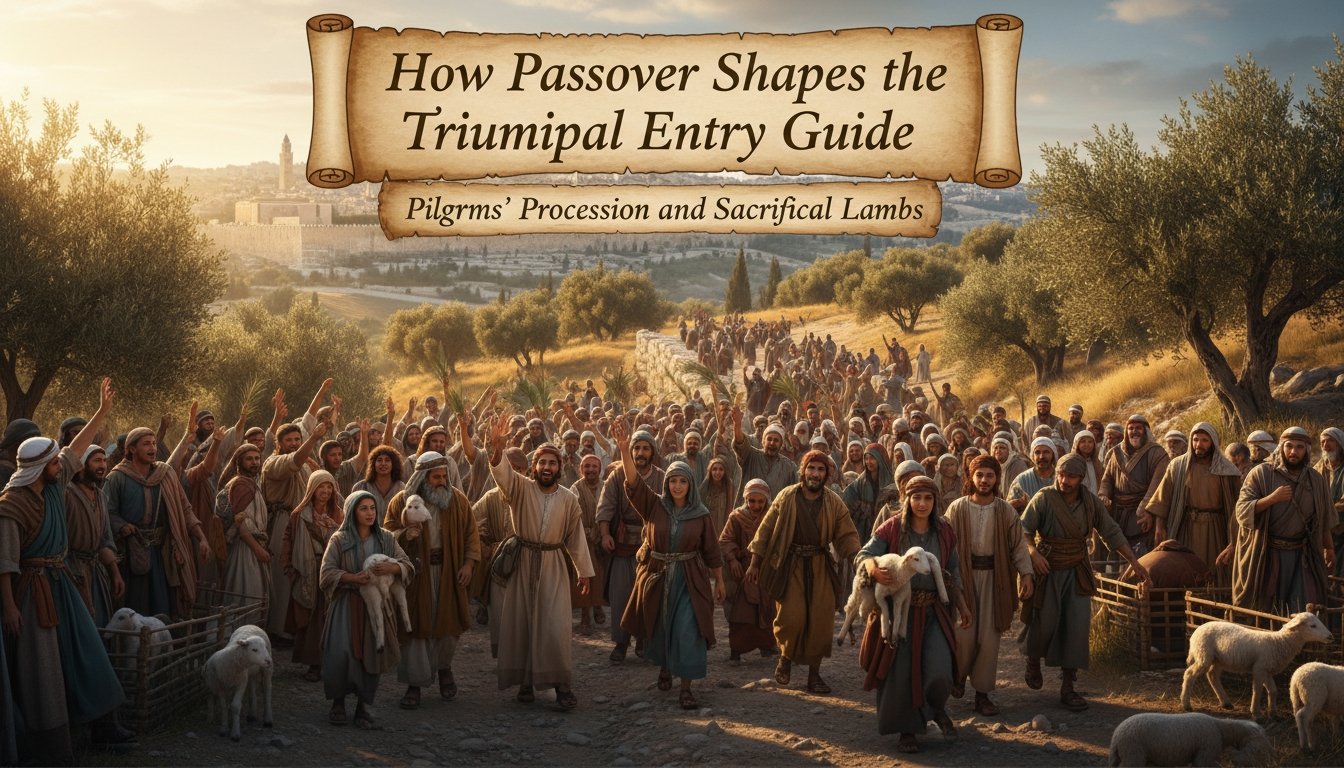
06 Mar How Passover Shapes the Triumphal Entry Guide
The Passover celebration shapes the Triumphal Entry of Jesus in profound ways. You’ll see how Passover’s themes of redemption and exodus foreshadow Jesus’ mission. His donkey ride mirrors ancient deliverance symbolism, and the crowds’ hosannas echo Passover liturgy. These Passover connections emphasize Jesus’ role as the long-awaited Messiah and the establishment of the new covenant. If you’d like to delve deeper into how Passover informs this pivotal moment, let’s explore the details.
Key Takeaways
- The Triumphal Entry occurs during Passover, linking Jesus’ redemptive mission to the Exodus narrative and Passover themes of deliverance and the new covenant.
- The Triumphal Entry mirrors Moses leading the Israelites out of Egypt, with Jesus as the Lamb of God fulfilling Passover prophecies.
- Passover imagery underscores Jesus’ liberation of humanity from the bondage of sin, foreshadowing the new covenant through his death and resurrection.
- Symbolic connections between Passover and Palm Sunday, such as the donkey entry and the crowds’ hosannas, highlight Jesus’ coronation as the long-awaited Messiah.
- The Triumphal Entry aligns with Passover’s redemptive trajectory, as the climactic fulfillment of God’s deliverance of His people through Jesus’ sacrificial work.
The Significance of Passover in Jesus’ Triumphal Entry
Why is the significance of Passover in Jesus’ Triumphal Entry so crucial to understand? You can’t fully grasp the meaning of this pivotal event without recognizing its deep connections to the Passover celebration. Jesus deliberately chose the Passover season to make His grand entry into Jerusalem, riding on a donkey. This symbolic act harkened back to the Israelites’ exodus from Egypt, when they were delivered from slavery. Just as the Passover lamb’s blood protected God’s people, Jesus, the Lamb of God, would soon sacrifice Himself to secure humanity’s freedom from sin. Passover’s themes of redemption, deliverance, and the establishment of a new covenant all find their ultimate fulfillment in Christ’s Triumphal Entry and subsequent crucifixion. Comprehending this rich context illuminates the profound significance of Jesus’ dramatic arrival in Jerusalem.
Passover’s Exodus Motif in Jesus’ Triumphal Entry
The Triumphal Entry‘s strong ties to the Exodus narrative are impossible to overlook. Jesus’ procession into Jerusalem mirrors Moses’ leading the Israelites out of Egypt. Both involve a humble king riding on a donkey, signaling peace and deliverance. Like the Passover lamb, Jesus is the Lamb of God, whose sacrifice liberates God’s people from bondage. His entry fulfills Zechariah’s prophecy of the Messiah coming to Jerusalem, just as the Exodus fulfilled God’s promise to bring His people to the Promised Land. This powerful Passover imagery highlights Jesus’ role as the ultimate Passover Lamb, whose death and resurrection secure freedom from sin and death. The Triumphal Entry thus encapsulates the Exodus motif, demonstrating how Passover shapes the grand narrative of Jesus’ redemptive work.
Symbolic Connections Between Passover and Palm Sunday
What symbolic connections can be drawn between the Passover celebration and Jesus‘ Triumphal Entry on Palm Sunday?
The Passover commemorates Israel’s exodus from Egypt, marking their liberation from slavery.
Jesus’ entry into Jerusalem on a donkey evokes the coronation of ancient Israelite kings, foreshadowing his own reign as the Messiah.
Jesus’ entry on a donkey foreshadowed his reign as the long-awaited Messiah, echoing the coronation of ancient Israelite kings.
Both events celebrate God’s deliverance of his people.
The crowds’ shouts of “Hosanna!” echo the Passover liturgy, hailing Jesus as the long-awaited savior.
The waving of palm branches, a symbol of victory, also connects the two events.
Just as the Israelites left Egypt in triumph, Jesus’ entry signifies his triumph over sin and death.
These powerful parallels invite us to see Jesus’ Triumphal Entry as the climactic fulfillment of Passover’s redemptive themes.
Frequently Asked Questions
What Is the Connection Between Passover and Jesus’ Triumphal Entry?
The connection between Passover and Jesus’ triumphal entry is that Passover commemorates the Israelites’ deliverance from slavery in Egypt, and Jesus’ entry into Jerusalem was part of his journey to deliver humanity from the bondage of sin.
As the Passover Lamb, Jesus would soon sacrifice himself to secure salvation for all who believe in him.
How Does the Exodus Motif Relate to Jesus’ Triumphal Entry?
The exodus motif is central to Jesus’ triumphal entry.
Just as God delivered the Israelites from slavery in Egypt, Jesus enters Jerusalem to deliver humanity from the bondage of sin.
His procession evokes the Exodus narrative, signifying he’s the long-awaited Messiah who’ll establish God’s kingdom.
What Are the Symbolic Meanings of Passover and Palm Sunday?
The symbolic meanings of Passover and Palm Sunday are deeply connected.
Passover commemorates the Israelites’ exodus from Egypt and freedom from slavery, foreshadowing Jesus’ ultimate triumph over sin and death.
Palm Sunday marks Jesus’ triumphal entry into Jerusalem, where He’s hailed as the Messiah, the one who’ll deliver His people from oppression.
Both events celebrate God’s deliverance and the promise of a new era.
Why Is Passover Significant in Understanding Jesus’ Triumphal Entry?
Passover is significant in understanding Jesus’ triumphal entry because it was during this annual Jewish festival that He made His grand entrance into Jerusalem, fulfilling prophecies and signaling the coming of His kingdom.
The Passover commemorates God’s deliverance of the Israelites from slavery in Egypt, and Jesus’ arrival on a donkey parallels this, demonstrating He’s the Messiah who’ll liberate His people from sin and death.
How Do the Themes of Passover Influence the Events of Palm Sunday?
The themes of Passover – God’s deliverance, freedom from bondage, and sacrificial lamb – directly influence the events of Palm Sunday. You see Jesus enter Jerusalem as the long-awaited Messiah who’ll soon sacrifice Himself to free humanity from sin’s grip. The crowds’ shouts of “Hosanna!” reflect their hope in Him as the Passover Lamb who’ll deliver them.
Conclusion
You can see how Passover’s themes of liberation and triumph shape the meaning of Jesus’ triumphal entry into Jerusalem. The Exodus motif and symbolic connections between the two events underscore Jesus’ role as the Messiah, the One who will deliver His people from oppression and usher in a new era of God’s reign.







No Comments