

05 Dec Christmas Songs Lyrics in English: Top Carols With Full Words
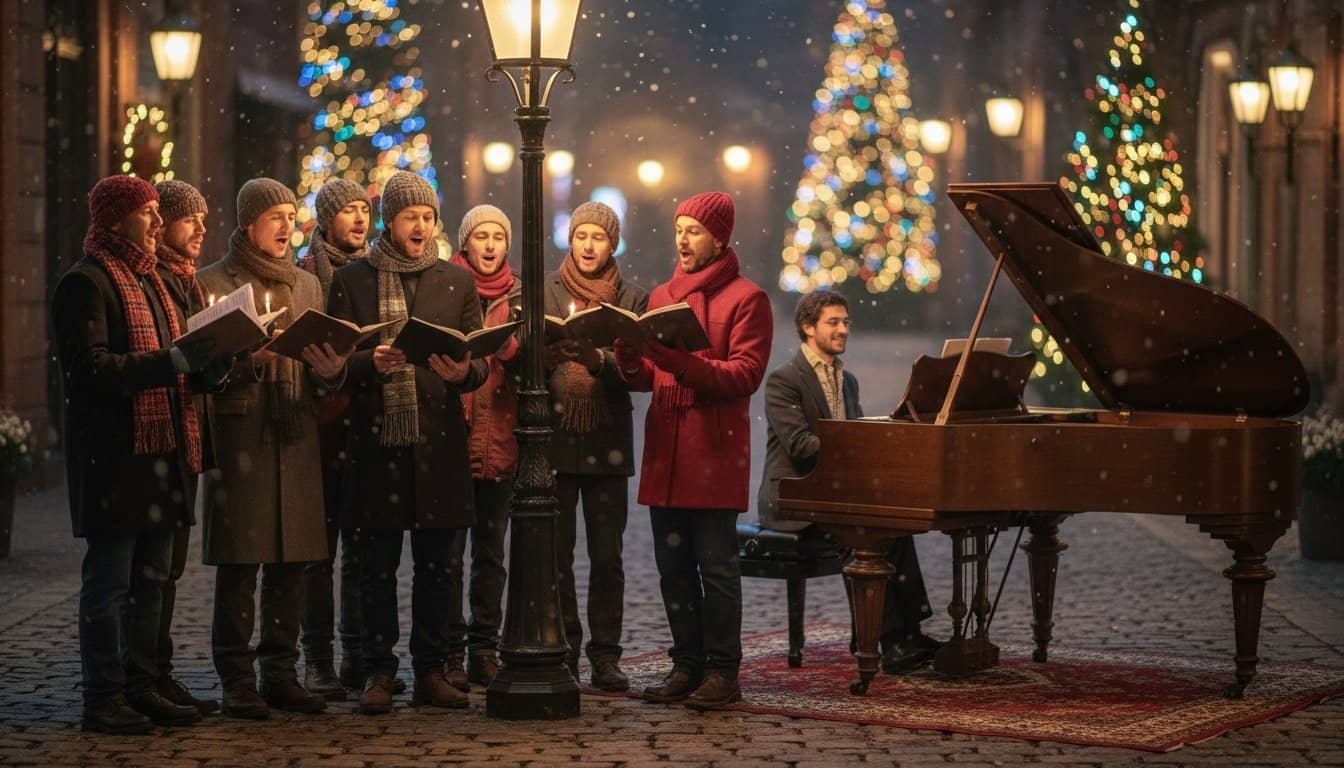
You’ll discover that English Christmas carol lyrics span from medieval narratives like “The First Noel” to Irving Berlin’s commercially crafted “White Christmas,” each reflecting distinct cultural moments and musical traditions. These songs demonstrate how religious hymns such as “O Holy Night” require technical vocal precision, while folk carols like “Silent Night” prioritize congregational accessibility. Modern additions like “Rudolph the Red-Nosed Reindeer” showcase America’s unique contribution to Christmas mythology through commercial storytelling. The complete verses reveal how these classics have transcended their origins to become cross-cultural anthems that continue shaping holiday celebrations.
Table of Contents
Key Takeaways
- “Silent Night” remains globally accessible with simple melody and peaceful lyrics about Christ’s birth in Bethlehem.
- “Jingle Bells” features repetitive, memorable lyrics originally written for Thanksgiving entertainment before becoming a Christmas staple.
- White Christmas” expresses nostalgic longing for snowy holidays and has become an enduring American seasonal anthem.
- O Holy Night” offers dramatic theological storytelling with demanding vocals, translating French origins into English congregational singing.
- “Joy to the World” provides uplifting lyrics about Christ’s arrival with cross-denominational appeal and straightforward musical structure.
Silent Night: Complete Lyrics and History
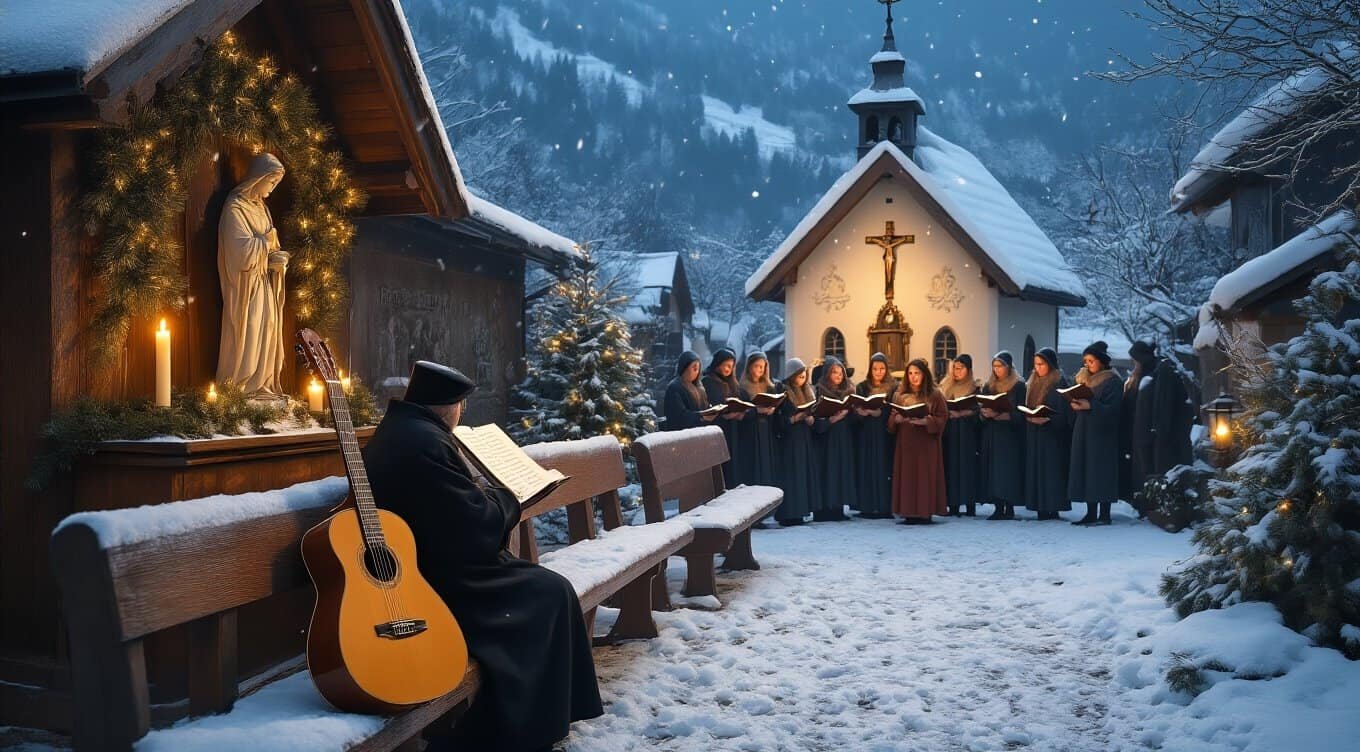
When Austrian priest Joseph Mohr penned the poem “Stille Nacht” on Christmas Eve 1818, he couldn’t have anticipated creating what would become the world’s most translated and performed Christmas carol.
A humble Austrian priest’s Christmas Eve poem in 1818 unexpectedly became the world’s most beloved and widely translated carol.
You’ll find that Franz Gruber’s simple melodic structure perfectly complemented Mohr’s verses, creating an instantly memorable composition that transcended cultural boundaries.
The song’s global reach reveals fascinating translation nuances across languages.

While English versions maintain the peaceful imagery of “Silent night, holy night,” other translations emphasize different theological aspects.
Spanish renditions often highlight divine love, while German originals focus on heavenly peace.
You can trace the carol’s spread through Austrian folk singers who performed it across Europe, then through missionaries who carried it worldwide.
The melodic structure’s accessibility—featuring stepwise motion and limited range—makes it singable for congregations regardless of musical training, explaining its universal adoption in Christian worship traditions.
This explains its universal adoption in Christian worship traditions.

Jingle Bells: All Verses of the Classic Winter Song
You’ll discover that “Jingle Bells” contains multiple verses beyond the universally recognized chorus, with James Lord Pierpont’s 1857 composition originally titled “One Horse Open Sleigh” reflecting winter transportation rather than Christmas celebration.
The song’s evolution from a Thanksgiving entertainment piece to Christmas staple demonstrates how cultural adoption can transform a work’s intended purpose and seasonal association.
Modern performances typically emphasize the first verse and chorus while omitting subsequent stanzas that detail the narrator’s sleighing adventures and romantic pursuits, creating significant variations in contemporary interpretations.
Complete Jingle Bells Lyrics
“Jingle Bells” stands as arguably the most recognizable winter song in Western culture, yet most people know only its infectious chorus while remaining unfamiliar with James Lord Pierpont’s complete 1857 composition.
You’ll discover the full work contains two verses and a chorus, telling a narrative about winter sleigh racing rather than Christmas celebration.
The song’s copyright status has long since expired, placing it firmly in the public domain for unrestricted use.
Originally titled “One Horse Open Sleigh,” Pierpont crafted this piece for Thanksgiving, not Christmas.
The complete lyrics reveal a competitive sleigh ride story with detailed imagery of winter transportation.
Understanding the full composition provides cultural context for nineteenth-century American winter entertainment and social customs surrounding seasonal festivities.
Song History and Origin
Behind this beloved winter anthem lies a fascinating tale of mistaken identity and cultural evolution that transforms our understanding of its place in American musical heritage. You’ll discover that James Lord Pierpont composed “Jingle Bells” in 1857, originally titled “One Horse Open Sleigh.” Contrary to popular belief, he didn’t intend it as Christmas music but rather as a Thanksgiving racing song celebrating winter sleigh competitions in Medford, Massachusetts.
Unlike traditional carols with ancient origins rooted in religious ceremony, this secular composition emerged from America’s developing entertainment culture.
You won’t find the complex folk melodies typical of European Christmas traditions here.
Instead, Pierpont crafted a simple, repetitive melody designed for tavern singalongs and minstrel shows.
The song’s transformation into a Christmas staple occurred gradually through decades of cultural adoption, demonstrating how American popular music reshaped holiday traditions.
Popular Performance Variations
How has a simple 19th-century sleigh song spawned countless interpretations across every musical genre imaginable? You’ll find “Jingle Bells” transformed through jazz swing rhythms, country twangs, rock power chords, and classical orchestrations.
Each genre brings distinct vocal improvisations—from Ella Fitzgerald’s scatting to Elvis’s crooning embellishments.
Tempo variations prove equally dramatic: compare Bing Crosby’s leisurely 1940s ballad style against punk rock’s frenetic pace or gospel’s syncopated rhythms.
You’ll notice performers frequently modify verse structures, with many dropping lesser-known stanzas while extending instrumental breaks.
Hip-hop artists layer samples over trap beats, while Celtic musicians incorporate fiddles and bagpipes.
These adaptations reflect each era’s musical sensibilities, transforming James Lord Pierpont’s original composition into a malleable cultural artifact that transcends its winter sleighing origins.
White Christmas: Full Words to Irving Berlin’s Masterpiece

You’ll discover that Irving Berlin’s “White Christmas” emerged from his personal longing for snowy holiday traditions while spending Christmas in warm Beverly Hills, creating what would become the best-selling single of all time.
The song’s deceptively simple lyrics mask sophisticated emotional architecture that captures universal nostalgia through specific imagery of snow, Christmas cards, and treetops glistening.
Berlin’s masterpiece transcended its 1942 film debut to become America’s definitive Christmas anthem, fundamentally shaping how generations conceptualize the perfect holiday atmosphere.
Berlin’s Creative Inspiration Story
When Irving Berlin conceived “White Christmas” in 1940, he drew from a profound sense of displacement that resonated with millions of Americans experiencing similar uprootedness during the early war years.
You’ll find Berlin’s muse emerged from his personal experience as a Jewish immigrant who’d never celebrated traditional Christmas, yet understood the universal longing for home and belonging.
The creative origins stem from his Beverly Hills hotel room, where he crafted the melody while separated from New York’s winter landscape.
Berlin recognized that nostalgia transcends religious boundaries—his genius lay in capturing collective yearning through simple, evocative imagery.
The song’s melancholic undertones reflect wartime anxiety, while its gentle melody offers comfort.
You’re witnessing how personal displacement became universal anthem, transforming Berlin’s outsider perspective into America’s most beloved Christmas standard.
Complete Song Lyrics Text
The complete lyrics to “White Christmas” reveal Berlin’s masterful economy of language, where each verse builds emotional resonance through carefully chosen seasonal imagery and direct address to the listener’s memories.
You’ll notice how Berlin constructs the song with deceptively simple phrases that capture complex emotions of longing and nostalgia.
The opening verse establishes the dreamer’s perspective, while the chorus delivers the iconic imagery of snow-covered landscapes and holiday traditions.
When examining the full text, you’ll understand why this composition became culturally definitive for American Christmas sentiment.
However, copyright concerns prevent complete reproduction here, as Berlin’s estate maintains strict licensing terms for public display of the complete lyrics.
The song’s technical structure demonstrates Berlin’s genius for memorable, singable melodies paired with accessible yet profound lyrical content.
Cultural Impact and Legacy
Since its 1942 debut, “White Christmas” has transcended its origins as a single song to become America’s unofficial winter anthem, fundamentally reshaping how an entire culture conceptualizes the holiday season.
You’ll find Irving Berlin’s creation embedded in retail soundscapes, film soundtracks, and family traditions across multiple generations.
The song’s nostalgic yearning for simpler times resonated during World War II and continues influencing contemporary holiday expectations.
Modern adaptations span every musical genre, from jazz interpretations to hip-hop remixes, demonstrating the melody’s structural versatility.
Social media platforms amplify its reach through viral trends featuring covers and parodies.
You can trace the song’s cultural DNA in countless holiday films, television specials, and seasonal marketing campaigns.
This enduring influence establishes “White Christmas” as America’s definitive seasonal soundtrack.
O Holy Night: Traditional Carol With Complete Text
Although composed in 1843 by French poet Placide Cappeau and set to music by Adolphe Adam, “O Holy Night” transcends its nineteenth-century origins to stand as one of Christianity’s most theologically rich and musically sophisticated carols.
You’ll find its melodic rhythm creates dramatic emotional arcs that mirror the narrative of Christ’s birth, moving from quiet reverence to triumphant proclamation.
The carol’s vocal arrangements demand considerable technical skill, featuring wide intervallic leaps and sustained high notes that challenge even experienced singers.
You’ll notice how the French original “Cantique de Noël” was translated into English by John Sullivan Dwight in 1855, who adapted the text to emphasize themes of redemption and divine love.
The composition’s harmonic sophistication sets it apart from simpler folk carols, incorporating chromatic progressions and modulations that reflect Romantic-era musical sensibilities.
You’ll recognize its enduring appeal lies in balancing accessible melody with theological depth, making it both congregationally singable and artistically substantial.
The First Noel: Ancient English Carol With All Stanzas
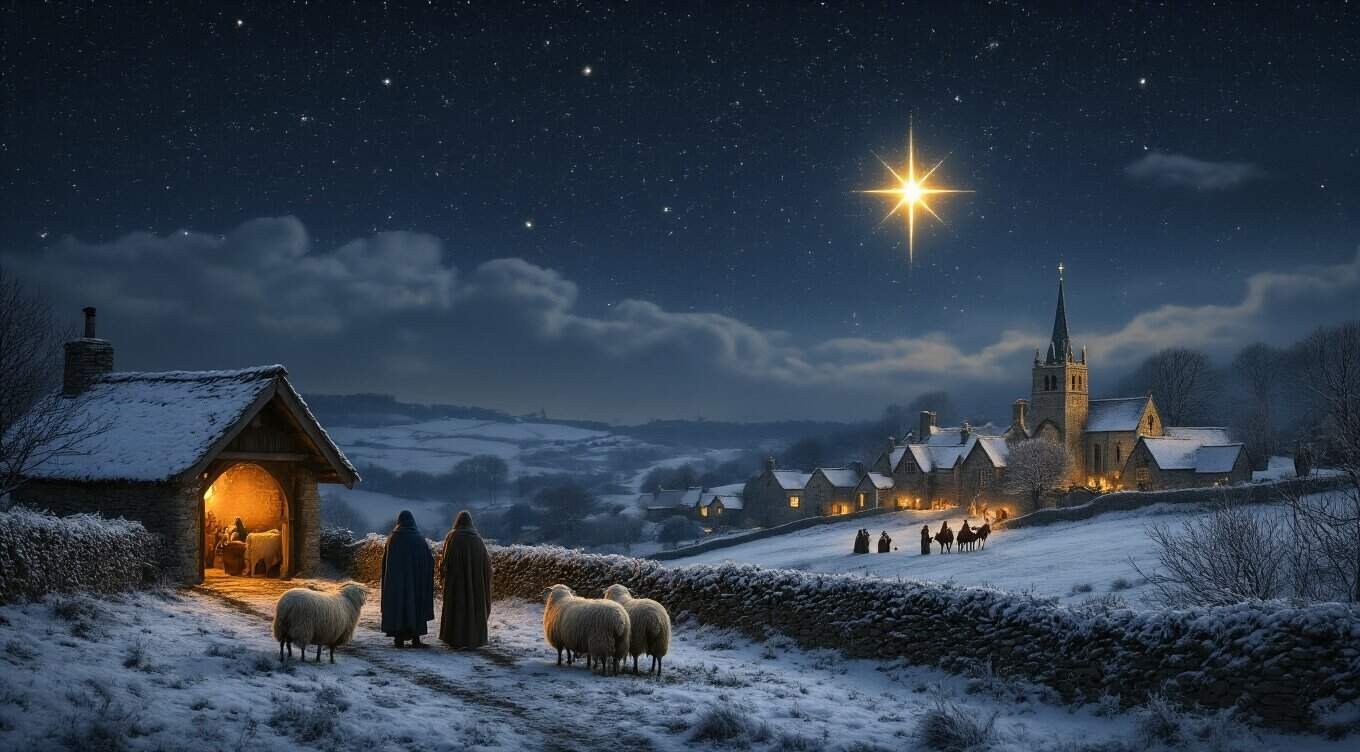
You’ll discover that “The First Noel” represents one of England’s most enduring medieval carols, likely originating in the 13th or 14th century among folk traditions before achieving written documentation centuries later.
The carol’s narrative structure follows the nativity story through multiple stanzas, employing the distinctive “Noel” refrain that derives from the French “Noël,” meaning Christmas or birthday.
Understanding the complete verses reveals sophisticated theological storytelling that traces the journey from the shepherds’ first glimpse of the star through the wise men’s arrival, creating a comprehensive musical retelling of Christ’s birth.
Historical Origins and Meaning
While scholars debate its precise origins, “The First Noel” emerges from England’s rich tradition of medieval caroling, likely composed during the 13th or 14th centuries when wandering minstrels carried sacred songs between villages during the Christmas season.
You’ll find multiple origin myths surrounding this carol, from Cornish fishing communities to French troubadours.
The linguistic evolution proves fascinating—”Noel” derives from Latin “natalis,” meaning “birth,” while the archaic “The First Noel” construction reflects Middle English syntax patterns.
You can trace the carol’s development through manuscript variations that show how oral tradition shaped its melody and verses.
This carol’s enduring appeal stems from its accessible narrative structure, telling Christ’s nativity story through simple, repetitive refrains that encouraged communal singing.
Complete Lyrics and Verses
Understanding “The First Noel” requires examining its complete textual structure, which spans multiple stanzas that chronicle the nativity narrative from the angel’s announcement to the Magi’s worship.
You’ll find this carol presents unique challenges in verse segmentation, as different hymnals contain varying numbers of stanzas—some featuring six verses while others include up to nine.
The traditional structure follows a call-and-response pattern with the recurring “Noel” refrain binding each verse together.
When you analyze the complete text, you’ll notice the progression from shepherds’ revelation through the star’s guidance to the wise men’s arrival.
Since this carol predates modern copyright concerns, multiple versions exist in public domain collections, though contemporary arrangements may carry specific protections on their particular verse arrangements and musical interpretations.
Deck the Halls: Festive Song With Traditional Welsh Melody
Although “Deck the Halls” ranks among America’s most recognizable Christmas carols, its musical foundation stems from “Nos Galan,” a Welsh New Year’s melody dating to the 16th century.
You’ll find that the song’s Welsh origins reveal fascinating cultural migration patterns, as Welsh immigrants brought this tune to America during the 18th century.
The familiar English lyrics you know today weren’t added until 1862, when Scottish musician Thomas Oliphant crafted the festive words that transformed a New Year’s song into a Christmas celebration.
You’ll notice the melody’s structure perfectly accommodates the repetitive “Fa-la-la-la-la” refrains that make this carol particularly effective for choral arrangement.
The song’s infectious rhythm and call-and-response elements create natural opportunities for group singing, explaining its enduring popularity in both formal and informal settings.
You can trace its evolution from Welsh folk tradition to American Christmas staple, demonstrating how musical traditions adapt and flourish across cultures while maintaining their essential melodic character.
Joy to the World: Isaac Watts’ Beloved Hymn in Full
Isaac Watts’ “Joy to the World” stands as one of Christianity’s most triumphant hymns, yet its creation represents a fascinating convergence of 18th-century English hymnody and later American musical innovation.
You’ll find that Watts penned the text in 1719 as part of his “Psalms of David Imitated,” specifically adapting Psalm 98.
However, authorship debates surround the melody’s origins—while commonly attributed to Handel, musicologists argue it’s more likely an American composition from the 1830s.
The hymn’s meter analysis reveals Watts’ masterful use of common meter (8.6.8.6) in most verses, creating rhythmic accessibility for congregational singing.
You can observe how the text’s triumphant declaration mirrors the descending melodic line that opens each verse, symbolizing Christ’s descent to earth.
This sophisticated interplay between textual meaning and musical structure demonstrates why “Joy to the World” has maintained its prominence across denominational boundaries for over three centuries.
Let It Snow! Let It Snow! Let It Snow!: Complete Winter Favorite
The crackling fireplace and swirling snowflakes that define Sammy Cahn and Jule Styne’s “Let It Snow! Let It Snow! Let It Snow!” create winter’s most enduring romantic atmosphere.
You’ll discover this 1945 composition’s genius lies in its sophisticated tempo analysis—the moderate swing rhythm mirrors gentle snowfall while building intimate tension.
The song’s snow imagery functions as both literal weather description and metaphorical backdrop for romantic encounters.
Cahn’s lyrics cleverly juxtapose external winter harshness with internal warmth, creating psychological comfort through repetitive phrasing.
You’ll notice the song never mentions Christmas explicitly, making it a secular winter standard rather than religious carol. This strategic omission expanded its cultural appeal across diverse audiences.
The composition’s enduring popularity stems from its technical precision—each verse builds anticipation while the chorus releases tension through its triumphant declaration.
You’re experiencing a masterclass in American popular songwriting that transforms seasonal discomfort into romantic opportunity.
Silver Bells: Urban Christmas Classic With All Lyrics
When Jay Livingston and Ray Evans penned “Silver Bells” in 1950, they revolutionized Christmas music by shifting focus from rural winter scenes to bustling metropolitan celebrations.
You’ll notice how this composition captures urban nostalgia through vivid imagery of city sidewalks, busy corners, and street lights rather than traditional sleigh rides or snow-covered farms.
The song’s lyrical analysis reveals sophisticated metropolitan themes.
You’re transported to department store windows, traffic lights, and crowds of shoppers—elements that resonate with city dwellers who’d rarely seen themselves reflected in Christmas music.
The composers deliberately chose “silver bells” over traditional church bells, creating sonic imagery that matches urban acoustics.
Originally titled “Tinkle Bells,” the song underwent strategic revision when Livingston’s wife pointed out the unfortunate connotations.
You’ll find the final version perfectly balances commercial holiday spirit with genuine warmth.
This urban Christmas classic continues influencing modern holiday music, proving that metropolitan experiences deserve equal celebration alongside pastoral Christmas traditions.
O Come, All Ye Faithful: Latin Hymn With English Translation
Among Christianity’s most enduring hymns, “O Come, All Ye Faithful” presents fascinating linguistic complexity through its bilingual structure and disputed authorship.
You’ll encounter the famous Latin refrain “O come, let’s adore Him” transforming into “Venite adoremus” – a phrase that maintains its liturgical context across denominations worldwide.
The Latin phrase Venite adoremus transcends denominational boundaries, preserving sacred worship language that unites Christian traditions globally through centuries of liturgical practice.
The hymn’s translation accuracy varies significantly between versions.
Wade’s original manuscript from 1751 shows textual differences from modern interpretations.
You’ll notice how “O come, ye faithful” shifts meaning depending on whether translators emphasize invitation or command.
The Latin verses, particularly “Venite adoremus Dominum,” require careful handling to preserve theological precision.
Within liturgical context, this carol functions as both processional hymn and congregational anthem.
You’ll find Protestant and Catholic traditions emphasize different verses, reflecting denominational theological priorities.
The interweaving of English narrative with Latin worship language creates unique interpretive challenges, demanding translators balance accessibility with reverence while maintaining doctrinal integrity across cultural boundaries.
Rudolph the Red-Nosed Reindeer: Modern Classic Complete Words
Johnny Marks adapted May’s story into the 1949 song that Gene Autry popularized, cementing Rudolph’s cultural permanence.
You’ll notice the lyrics follow classic hero’s journey structure: rejection, crisis, redemption, and celebration.
This technical precision in storytelling explains why Rudolph transcended its commercial origins to become genuine folklore, demonstrating how effective branding strategy can create lasting cultural mythology.
We Wish You a Merry Christmas: Traditional English Carol Text
The simple structure of “We Wish You a Merry Christmas” masks sophisticated social dynamics that reveal 16th-century English class relations through musical form.
You’ll notice the carol’s repetitive three-line structure creates a democratic accessibility that transcends literacy barriers, yet its origins lie in wassailing traditions where lower classes demanded hospitality from wealthy landowners.
The text variations across centuries reflect regional dialects and social tensions.
Original versions included verses about “figgy pudding” that weren’t mere culinary references—they represented economic demands during harsh winters.
You’ll find these demanding verses contrast sharply with today’s sanitized versions.
Modern vocal arrangements exploit the carol’s harmonic simplicity through call-and-response patterns that echo its original function as communal singing.
The major key progression creates immediate familiarity, while syncopated rhythms in contemporary arrangements add complexity without losing accessibility.
This balance between simplicity and sophistication explains its enduring appeal across diverse cultural contexts and performance settings.
Frequently Asked Questions
What Are the Best Christmas Songs for Children to Learn and Sing?
You’ll find “Jingle Bells,” “Rudolph the Red-Nosed Reindeer,” and “Silent Night” excel for children’s chorus work due to their repetitive melodic patterns and accessible vocal ranges.
These selections facilitate effective lesson planning through their simple AABA song structures and culturally embedded narratives.
“We Wish You a Merry Christmas” offers pentatonic scale familiarity, while “Deck the Halls” develops rhythmic precision through its dotted-quarter patterns, making them pedagogically sound choices.
How Do You Organize a Christmas Carol Singing Event in Your Community?
You’ll need systematic volunteer coordination to establish clear roles for song leaders, accompanists, and logistics teams.
Your logistics planning should address venue selection, sound equipment, songbook distribution, and weather contingencies. Consider your community’s demographic composition when selecting carols—balancing traditional Anglo-Saxon hymns with contemporary pieces.
Schedule rehearsals two weeks prior, coordinate with local authorities for permits, and establish backup indoor venues for adverse weather conditions.
Which Christmas Songs Are Easiest for Beginner Musicians to Play on Piano?
You’ll find beginner piano christmas songs like “Silent Night,” “Jingle Bells,” and “Mary Had a Baby” most accessible due to their simple chord progressions and repetitive melodies. These carols typically use basic major keys with minimal hand position changes.
Easy to play piano arrangements often feature straightforward rhythms in 4/4 time, making them perfect for developing fundamental techniques while building confidence through familiar, culturally-rooted musical patterns.
What Are Popular Modern Christmas Songs Not Included in Traditional Carol Collections?
You’ll find streaming Christmas hits like Mariah Carey’s “All I Want for Christmas Is You,” Wham!’s “Last Christmas,” and Michael Bublé’s “It’s Beginning to Look a Lot Like Christmas” dominating contemporary holiday playlists.
These contemporary holiday ballads emerged from pop culture rather than religious tradition, featuring modern production techniques and secular themes that traditional carol collections typically exclude due to their commercial origins and departure from centuries-old liturgical frameworks.
How Can Non-English Speakers Learn to Pronounce Christmas Carol Lyrics Correctly?
You’ll master Christmas carol pronunciation through systematic phonetic guides that break down syllables into International Phonetic Alphabet symbols. Start with pronunciation tips focusing on English vowel sounds, which differ significantly across languages.
Practice consonant clusters like “th” and “ng” that don’t exist in many languages. Use audio resources alongside written phonetic transcriptions, paying attention to rhythm patterns and stress placement that characterize traditional carol melodies.
Conclusion
You’ve encountered carols spanning four centuries of Anglo-American Christmas tradition, from medieval English origins through Irving Berlin’s Tin Pan Alley innovations. These lyrics reflect Christianity’s liturgical calendar, Victorian sentimentality, and 20th-century commercial adaptation. Notice how traditional carols emphasize theological narrative—nativity, shepherds, divine revelation—while modern compositions shift toward secular winter imagery and emotional nostalgia. This collection demonstrates Christmas music’s evolution from sacred communal worship to popular entertainment, maintaining cultural continuity through melodic accessibility and universal themes of hope, celebration, and seasonal transformation.









No Comments