

22 Jan White Rice on Daniel Fast: The Answer Surprises Everyone
You’ll find conflicting guidance on white rice during Daniel Fast, but the nutritional evidence reveals why stricter interpretations exclude it. White rice’s milling process strips essential bran and germ, leaving primarily starch that causes rapid glucose spikes with a glycemic index of 70-89. While it’s technically plant-based without artificial additives, you’re consuming a refined grain that contradicts Daniel’s commitment to wholesome, unprocessed foods. The complete nutritional analysis below explains why alternatives better align with fasting principles.
Table of Contents
Key Takeaways
- White rice acceptability on Daniel Fast varies dramatically between guidelines, with some allowing it while others strictly forbid it.
- Despite being plant-based, white rice’s refined processing strips away fiber, B vitamins, and minerals that whole grains provide.
- White rice’s high glycemic index (70-89) causes rapid blood sugar spikes, contradicting the fast’s health-focused intentions.
- The “surprise” lies in interpretation conflicts: some focus on minimal chemical alteration while others emphasize nutritional completeness.
- Nutritionally superior alternatives like quinoa, brown rice, and wild rice better align with Daniel’s whole-food principles.
Is White Rice Actually Allowed on the Daniel Fast?
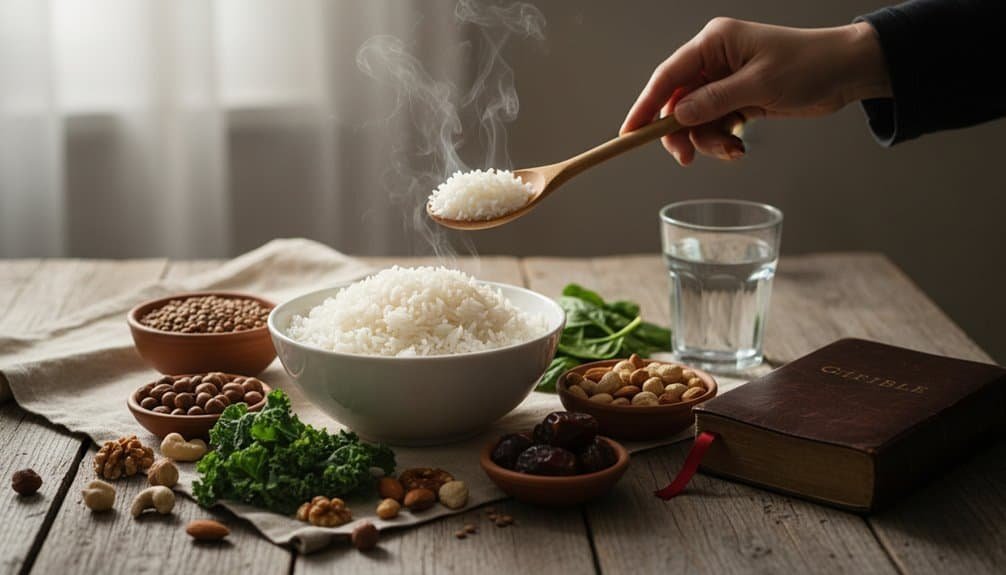
You’re essentially consuming simple carbohydrates that cause rapid glucose spikes, contradicting the fast’s spiritual discipline principles. The milling process removes the nutrient-dense bran and germ, leaving primarily starch. While technically plant-based, white rice’s processed state conflicts with the fast’s emphasis on whole, unrefined foods that nourish both body and spirit during this period of consecration.
Why Daniel Fast Guidelines Conflict on White Rice
This processing concern becomes more complex when examining how different Daniel Fast interpretations handle white rice‘s inclusion. You’ll encounter dietary conflicts stemming from varying definitions of “processed” versus “whole” foods within religious fasting frameworks.
Some guidelines classify white rice as acceptable because it undergoes minimal chemical alteration—primarily hull removal and polishing. These interpretations focus on the absence of artificial additives rather than nutritional degradation. Conversely, stricter protocols exclude white rice due to its refined nature, which strips away the bran and germ layers containing fiber, B vitamins, and minerals.

The nutritional science reveals white rice’s glycemic index ranges from 70-89, significantly higher than brown rice’s 50-55. This metabolic impact creates theological tension: does spiritual purification require optimal nutritional density, or does ingredient simplicity suffice?
These dietary conflicts reflect broader philosophical differences about whether the Daniel Fast prioritizes biochemical purity or processing methodology in food selection criteria.
The Biblical and Nutritional Problems With White Rice
When examining white rice through both scriptural and nutritional lenses, you’ll discover fundamental incompatibilities with Daniel Fast principles.
White rice nutrition reveals a highly processed grain stripped of its fiber, B vitamins, and essential minerals during milling. This industrial refinement process creates a simple carbohydrate that triggers rapid blood glucose spikes and provides minimal micronutrient density. The glycemic index of white rice reaches 73, classifying it as a high-glycemic food that disrupts metabolic stability.
The biblical conflict emerges when considering Daniel’s commitment to wholesome, unprocessed foods. Scripture emphasizes consuming foods in their natural state, yet white rice represents the antithesis of this principle. Daniel rejected the king’s refined del

Best Daniel Fast Rice Alternatives That Actually Satisfy
Why settle for nutritionally inferior substitutes when superior whole grain alternatives deliver both satiation and optimal micronutrient profiles? You’ll discover that quinoa provides complete amino acid profiles with superior protein bioavailability compared to refined grains. Brown rice maintains fiber integrity and B-vitamin concentrations that support metabolic function during fasting periods.
Wild rice delivers anthocyanins and selenium while providing sustained glucose release through complex carbohydrate structures. Cauliflower rice offers glucosinolates with anti-inflammatory properties and minimal caloric density for enhanced satiety signaling.
Barley contains beta-glucan soluble fiber that optimizes cholesterol metabolism and promotes beneficial gut microbiome diversity. Bulgur wheat provides magnesium and phosphorus concentrations essential for cellular energy production.
These discussion ideas demonstrate how strategic rice alternatives enhance nutritional density while maintaining meal satisfaction. You’ll experience improved energy stability through lower glycemic responses and increased micronutrient absorption. Each alternative offers distinct phytochemical profiles that support your spiritual fasting objectives through enhanced physiological function.
Frequently Asked Questions
Can I Eat White Rice if I’m Diabetic During the Daniel Fast?
You shouldn’t eat white rice during the Daniel Fast if you’re diabetic. White rice has a high glycemic index, causing rapid blood glucose spikes that compromise glycemic control. Diabetic considerations require avoiding refined carbohydrates like white rice. Instead, you’ll need to focus on complex carbohydrates with lower glycemic impact, such as quinoa, barley, or steel-cut oats, which provide better insulin response management.
How Long Does It Take to Adjust From White Rice to Alternatives?
Your body typically requires 3-7 days to adjust metabolically to carbohydrate substitutions when transitioning from white rice. During this adjustment duration, you’ll experience temporary digestive changes as gut microbiota adapt to increased fiber from alternatives like quinoa or cauliflower rice. Blood glucose response patterns stabilize within this timeframe, though individual adaptation varies based on your baseline insulin sensitivity and overall carbohydrate tolerance levels.
Are There Any Daniel Fast Leaders Who Specifically Allow White Rice?
Most Daniel Fast leaders don’t specifically allow white rice in their diet guidelines due to its refined, processed nature. You’ll find that established authorities like Susan Gregory and Kristen Feola emphasize whole, unprocessed grains instead.
However, some contemporary nutritionists who’ve adapted the fast acknowledge that white rice’s minimal processing compared to other refined foods creates a gray area in interpretation.
What if White Rice Is My Only Affordable Carbohydrate Option Available?
You’ll need to prioritize your nutritional requirements over strict interpretations when white rice represents your only affordable carbs option. Research shows white rice provides essential glucose for brain function and energy metabolism. If financial constraints limit your carbohydrate sources, you’re making a practical decision that supports your body’s physiological needs. Consider supplementing with whatever vegetables and legumes you can afford to optimize nutrient density.
Can I Gradually Transition off White Rice During the 21-Day Fast?
Yes, you can implement a gradual transition timeline during your 21-day fast. Start by replacing 25% of white rice with brown rice or quinoa in week one, then 50% in week two, progressing to complete substitution by week three. This approach addresses affordability concerns while allowing your digestive system to adapt to increased fiber content and nutrient density without gastrointestinal distress.
Conclusion
You’ve discovered that white rice’s extensive processing removes essential nutrients and fiber, making it incompatible with Daniel Fast principles. The glycemic impact contradicts the fast’s emphasis on whole, unprocessed foods. You’ll achieve better satiety and nutritional density by choosing quinoa, brown rice, or wild rice alternatives. These complex carbohydrates provide sustained energy release, superior micronutrient profiles, and align with biblical fasting intentions. You’re making evidence-based decisions that support both spiritual discipline and optimal metabolic function.












No Comments