

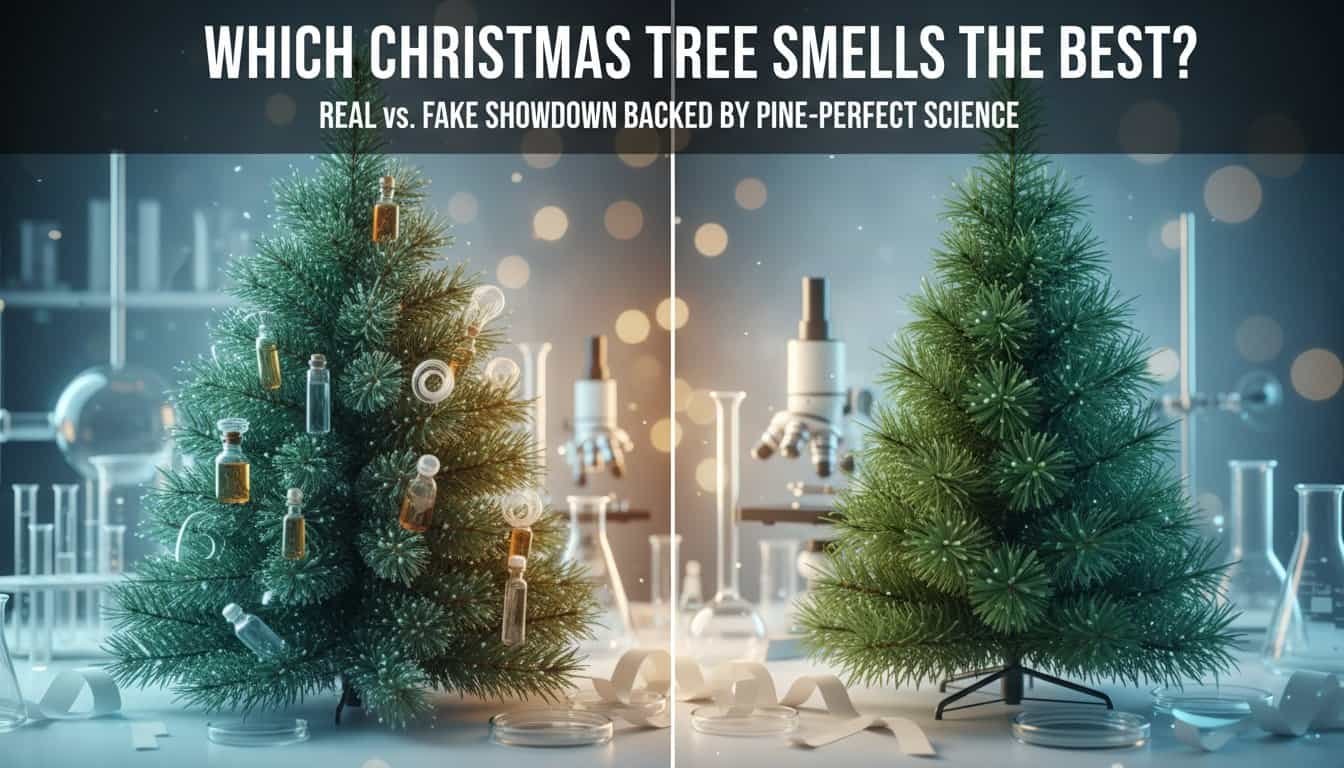
23 Dec Which Christmas Tree Smells Best? Real vs. Fake Showdown Backed by Pine-Perfect Science
You’ll experience superior fragrance from real Christmas trees because your olfactory system processes authentic monoterpenes—limonene, myrcene, and complex oleoresin compounds—through direct amygdala-hippocampal pathways that create instant emotional memory associations. Fraser firs deliver the most potent volatile organic compound profile, while artificial trees rely on synthetic scent cartridges that can’t replicate nature’s intricate terpene chemistry. Though engineered diffusion systems claim consistent performance, your neurological response to genuine conifer aromatics remains unmatched by technological alternatives that await closer examination.
Table of Contents
Key Takeaways
- Real Christmas trees contain natural terpenes, limonene, and myrcene that create authentic pine fragrance through evolved oleoresin compounds.
- Fresh real trees trigger powerful olfactory memories through amygdala-hippocampal processing, creating stronger emotional connections than artificial alternatives.
- Real trees lose approximately 80% of their natural fragrance within two weeks as volatile organic compounds evaporate.
- Artificial trees use engineered scent systems with refillable cartridges claiming consistent 30-day fragrance release through controlled thermodynamics.
- PVC artificial trees emit potentially harmful phthalates and lack the complex natural monoterpene blend that defines authentic conifer aroma.
The Science Behind Real Christmas Tree Fragrance and Why Your Nose Knows Best
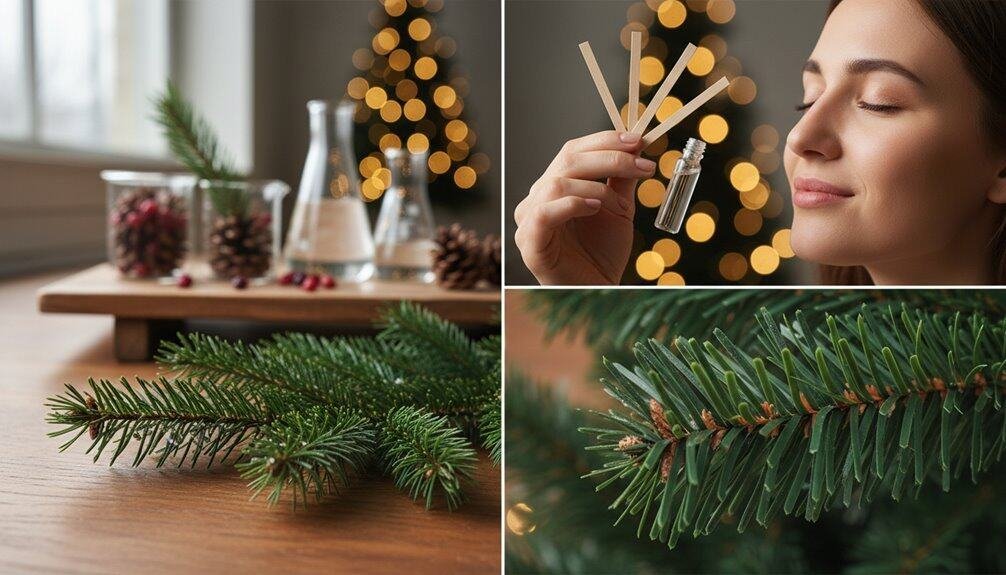
Your brain’s amygdala-hippocampal complex processes these volatile organic compounds instantly, triggering olfactory memory associations faster than conscious thought.
Additional terpenes like limonene contribute citrusy notes, while myrcene adds thyme-like undertones.
Temperature elevation causes oleoresin to evaporate, releasing these defensive compounds that conifers originally evolved to repel pests and pathogens. Fraser firs account for approximately 40% of U.S. holiday tree sales, making them a prime candidate for scientific fragrance research.
Artificial Tree Scent Solutions: Can Technology Beat Mother Nature’s Pine Perfection?
How effectively can engineered scent delivery systems replicate the complex aromatic compounds that real conifers produce through millions of years of evolutionary refinement?
AromaCoreTechnology’s patented central column utilizes capillary action and controlled thermodynamics to deliver sustained fragrance release over 30-day cycles.
Smart diffusers in premium artificial trees now integrate seamlessly with heating elements, providing consistent monoterpene distribution that outperforms naturally declining real tree aromatics.
You’ll find scent personalization options through refillable cartridges containing sustainably-sourced pine, fir, and spice blends.
These systems maintain stable volatile organic compound release while real trees lose 80% of their fragrance within two weeks.
Advanced manufacturers like EvergreenTech employ concentrated oil reservoirs that eliminate the irregular scent fade characteristic of cut conifers, creating superior olfactory consistency throughout extended holiday periods.
Health, Environment, and Your Holiday Decision: What the Research Really Says
While aromatic preferences might drive your initial tree selection, comprehensive toxicological data reveals significant health disparities between natural conifers and synthetic alternatives. PVC artificial trees emit phthalates linked to cognitive impairment and ADHD in children, plus cardiovascular dysfunction in adults.
Lead exposure from PVC stabilizers affects approximately 57,500 children annually across 50 million households using synthetic trees, causing neurological damage and learning disabilities. Real trees demonstrate superior fire safety, catching fire at one-third the rate of artificial alternatives.
Environmental analysis shows artificial trees’ landfill longevity creates permanent waste streams, while biodegradable conifers support 100,000 jobs annually. Laboratory testing confirms real trees eliminate toxic exposure risks entirely, making them the scientifically superior choice for household safety.
Frequently Asked Questions
How Long Does a Real Christmas Tree’s Scent Last Indoors?
Your real Christmas tree’s scent persists 4-6 weeks indoors with proper maintenance. Needle degradation accelerates fragrance loss as volatile terpenes dissipate from desiccated foliage.
You’ll maximize aromatic longevity by maintaining adequate indoor humidity levels above 40% and ensuring consistent water uptake. Fraser fir and balsam fir species retain their resinous compounds longest. Daily watering prevents needle drying, which directly correlates with scent preservation through sustained essential oil production.
Which Specific Tree Species Has the Strongest Pine Fragrance?
Balsam Fir produces the strongest pine fragrance through highest concentrations of monoterpene aromatic compounds, particularly α-pinene and β-pinene.
You’ll find its resin comparisons show significantly elevated terpene levels versus other species.
The dark green needles contain specialized resin ducts that release volatile organic compounds more abundantly than Fraser, Canaan, or Douglas varieties, creating that intensely recognizable coniferous scent profile you’re seeking.
Do Scented Ornaments Actually Make Artificial Trees Smell Like Real Ones?
Scented ornaments can’t perfectly replicate authentic pine fragrance due to fundamental differences in fragrance chemistry. While you’ll achieve approximation through synthetic terpene compounds, consumer perception varies significantly.
Real trees emit complex volatile organic compounds like α-pinene, β-pinene, and limonene that synthetic recreations can’t fully match. You’re getting olfactory similarity rather than botanical equivalence—the molecular composition differs substantially from natural coniferous emissions, limiting authentic replication.
Can You Spray Real Pine Scent on Fake Christmas Trees?
You can absolutely spray real pine scent on artificial trees using plant-based formulations.
Apply safety precautions by selecting non-toxic, chemical-free compounds suitable for indoor environments.
Employ proper application techniques through generous branch coverage and concentrated lower-area treatment.
The synthetic polymer materials in artificial trees absorb terpene compounds differently than natural coniferous substrates, requiring repeated applications every 22-47 minutes to maintain perceptible monoterpene concentrations above olfactory detection thresholds.
Why Don’t Artificial Trees Come Pre-Scented From the Manufacturer?
Manufacturers avoid pre-scenting artificial trees due to warranty risks from volatile organic compounds damaging PVC materials, shipping constraints that accelerate terpene degradation, and allergen concerns requiring extensive labeling compliance.
You’ll find production costs prohibitive since essential oil infusion demands specialized encapsulation processes, while diverse consumer preferences for alpha-pinene versus bornyl acetate profiles necessitate multiple SKUs.
Pre-applied fragrances lose potency during storage, compromising olfactory authenticity.
Conclusion
You’ll experience optimal olfactory satisfaction with fresh-cut conifers due to their volatile organic compounds—primarily α-pinene, β-pinene, and limonene. These monoterpenes can’t be replicated synthetically with botanical accuracy. Your chemoreceptors detect authentic terpene profiles that artificial alternatives simply don’t possess. While synthetic fragrances attempt mimicry through isolated compounds, they’ll lack the complex molecular symphony of living coniferous tissue. You’re biochemically programmed to recognize genuine pine aromatics—trust your evolved sensory apparatus.












No Comments